 Lynden Siding
 Built for Blaine's Coastline, Not Just the Whatcom County Average
Blaine sits right where Puget Sound weather meets the U.S.-Canada border, and that position matters more than most homeowners realize until they've lived through a few winters here. A house a mile inland from the water can weather very differently than one that catches wind straight off the water. Salt-laden air, driving rain that comes in sideways during winter storms, and a moss season that can stretch from October through April all put steady pressure on a home's exterior. Siding here isn't just a cosmetic choice — it's the first line of defense against a climate that never really lets up.
We work throughout Lynden and the surrounding Whatcom County communities, including Blaine, and we've built our business around one material because we believe it's the right one for this specific climate: James Hardie fiber cement siding. This page walks through what Blaine homes are up against, how we approach siding (and the roofing, window, and deck work that often goes with it), and what to expect if you're considering an exterior upgrade.
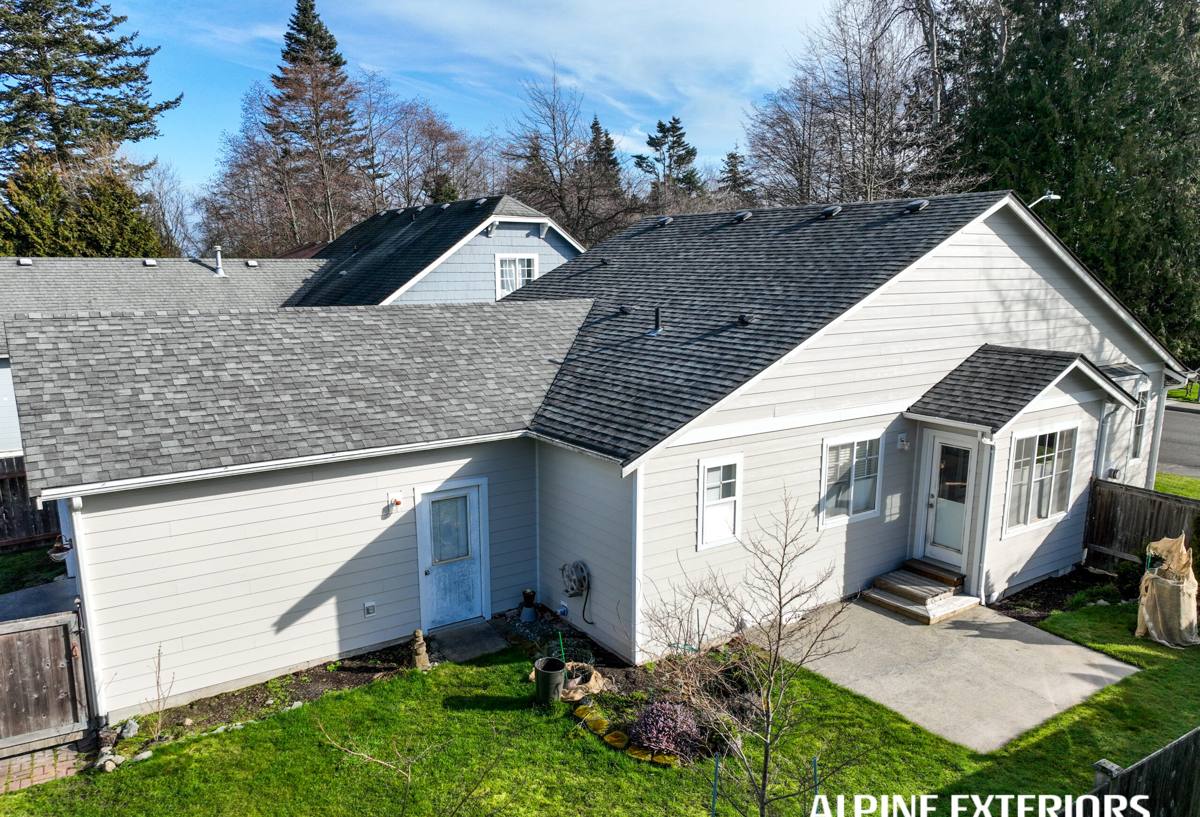
What Blaine's Climate Actually Does to a House
Salt Air and Corrosion
Coastal air carries fine salt particles that settle on every exterior surface — siding, trim, fasteners, and window frames. Over years, that salt exposure accelerates corrosion in metal components and breaks down finishes that weren't engineered to handle it. Paint on wood or composite siding tends to chalk and fade faster near the water, and any exposed fastener that isn't corrosion-resistant becomes a weak point sooner than it would inland.
Driving Rain and Wind-Driven Moisture
Winter storms off the Pacific don't just drop rain straight down — wind pushes it sideways and up under laps, trim, and poorly sealed joints. Siding materials that swell, warp, or absorb water when saturated are especially vulnerable in this pattern, because the moisture doesn't just sit on the surface — it works its way behind it. Flashing details and proper lap sequencing matter more here than they would in a drier climate.
A Long Moss and Algae Season
Cool, damp, and often shaded conditions for much of the year create ideal conditions for moss and algae growth on north-facing walls, under eaves, and anywhere airflow and sun exposure are limited. Beyond the appearance issue, moss holds moisture against the siding surface for extended periods, which is exactly the kind of sustained dampness that shortens the life of moisture-sensitive materials.
Why We Standardized on James Hardie Fiber Cement
We made a deliberate decision to install James Hardie exclusively — not LP SmartSide, not vinyl, not Cemplank or Allura, not primed spruce or cedar. That's not a marketing angle; it's a professional judgment call based on what holds up in this climate over the long haul.
Non-Combustible Composition
Hardie siding is fiber cement — primarily cellulose fiber, sand, and cement — which means it doesn't burn, warp from heat, or provide fuel in a fire the way wood-based products can. That's a meaningful difference in long-term risk, independent of climate.
Engineered for Wet, Coastal Conditions
Hardie's HZ5 product line is specifically engineered for climates like ours — areas with sustained moisture exposure, freeze-thaw cycling, and the kind of driving rain Blaine sees regularly. The material doesn't swell, rot, or delaminate the way some wood-based composites can when repeatedly saturated.
ColorPlus Factory Finish
Rather than relying on job-site painting, Hardie's ColorPlus finish is baked on in a controlled factory process, which produces better UV and fade resistance than field-applied paint — a real advantage against salt air and sun exposure over a 15-plus year span.
A Warranty Built Around the Material's Actual Behavior
Hardie backs its siding with a strong, transferable limited warranty, which reflects the manufacturer's own confidence in the product's longevity when installed to spec. That transferability also matters to resale value, since a new owner inherits the coverage.
What We Don't Install, and Why We're Upfront About It
Vinyl siding is inexpensive and easy to source, but it can become brittle in cold snaps, fade unevenly in sun exposure, and it isn't a viable choice in fire-conscious construction the way fiber cement is. LP SmartSide and other engineered wood products have improved over the years, but they're wood-based at their core, and wood-based products face a harder path in a climate defined by sustained moisture — spending more of the year damp than dry is exactly the condition that stresses wood fiber over time. Primed spruce and untreated cedar require an ongoing maintenance commitment — refinishing, caulking, and vigilant moisture management — that most homeowners don't want to sign up for indefinitely. None of these are "bad" products in every context. They're just not what we choose to stand behind on a coastal Whatcom County home, which is why our crews install Hardie exclusively.
How the Installation Process Works
- Assessment: We inspect the existing siding, sheathing, and moisture barrier condition, and check for any rot or damage hiding behind the current cladding.
- Weather barrier and flashing: Before a single piece of siding goes up, we confirm the water-resistive barrier and flashing details around windows, doors, and penetrations are correct — this is where most long-term failures actually originate, not in the siding material itself.
- Installation to manufacturer spec: Hardie's performance depends on correct fastening patterns, gaps, clearances, and caulking practices. Installing it like a generic lap siding defeats much of its advantage.
- Finish and trim: Trim, corners, and transitions are detailed to shed water rather than trap it — especially important on walls that take direct wind-driven rain.
- Final walkthrough: We review the finished work with the homeowner before considering the job complete.
Siding Rarely Stands Alone: Roofing, Windows, and Decks
A home's exterior works as a system. Siding can be installed perfectly and still underperform if the roof is shedding water onto it wrong, if windows are leaking at the flange, or if a deck ties into the wall in a way that traps moisture. We handle all four trades so these details get coordinated rather than left to chance between separate contractors.
| Component | Common Blaine-Area Stress | What We Check |
|---|---|---|
| Roofing | Wind-driven rain, moss buildup, gutter overflow onto walls | Flashing at wall intersections, gutter capacity, moss/algae-resistant materials |
| Windows | Wind-driven moisture at the flange, condensation | Proper flashing integration with the new siding, sealant condition |
| Decks | Ledger board moisture intrusion, algae on shaded boards | Ledger flashing, proper spacing for drainage and airflow |
| Siding | Salt air corrosion, driving rain, moss on shaded walls | Fastener corrosion resistance, lap sequencing, finish durability |
What Affects the Cost of a Siding Project
| Factor | Why It Matters |
|---|---|
| Home size and complexity | More linear footage, corners, and trim detail means more labor and material |
| Existing wall condition | Rot or moisture damage found behind old siding needs repair before new siding goes on |
| Siding profile chosen | Hardie lap, shingle, and panel products vary in material and labor cost |
| Trim and accessory work | Corner boards, window trim, and fascia detailing add scope |
| Access and site conditions | Steep lots, tight access, or multi-story walls affect labor time |
We don't quote a number without seeing the home — anyone who does is guessing. What we can say honestly is that fiber cement typically costs more upfront than vinyl but less in lifetime maintenance and refinishing than wood-based siding, which narrows the real gap considerably once you look past the initial invoice.
Questions Worth Asking Before You Hire Anyone
- Are they licensed and insured to work in Washington, and will they show you proof without being asked twice?
- Do they install to the manufacturer's written specifications, or their own shortcuts?
- Will they inspect and address sheathing and moisture barrier issues before installing new siding over them?
- Can they explain, in plain terms, why they recommend the specific material they're proposing for your home?
- Do they offer a written warranty on labor, separate from the manufacturer's material warranty?
- Are they familiar with coastal Whatcom County conditions specifically, not just siding in general?
Living With Hardie Siding in Blaine's Climate
Once installed correctly, Hardie siding asks relatively little of homeowners. Periodic rinsing to clear salt residue and organic buildup, keeping gutters clear so water doesn't sheet down the wall face, and trimming back vegetation that shades walls and traps moisture will go a long way. It won't need repainting on the same cycle wood siding does, since the ColorPlus finish is designed to hold color far longer than field-applied paint. That said, no siding is entirely maintenance-free in a marine climate — a home right on the water will simply need more attention than one set back from it, regardless of material.
If you're weighing a siding, roofing, window, or deck project on a home in Blaine or anywhere else in Whatcom County, we're glad to take a look and talk through what your house specifically needs — no pressure, no obligation. Use the form below to request a free estimate.