 Lynden Siding
 Two Materials, Two Different Philosophies
Vinyl and fiber cement are the two most common siding choices we get asked to compare, and homeowners deserve a straight answer instead of a sales pitch. Vinyl is an extruded PVC plastic panel, formed thin and light, snapped into place over a wall. Fiber cement is a composite of Portland cement, sand, and cellulose fibers, pressed dense and heavy, then factory-finished before it ever reaches a job site. Those two starting points explain almost every difference you'll read about below — how each one handles water, how it ages, what it costs to install correctly, and how long it actually lasts on a house in Whatcom County.
We're not a distributor trying to move whichever product has the best margin this quarter. We're a local contractor that made a deliberate decision to install James Hardie fiber cement exclusively, and we think homeowners comparing the two products are better served by understanding why than by a generic pros-and-cons list.
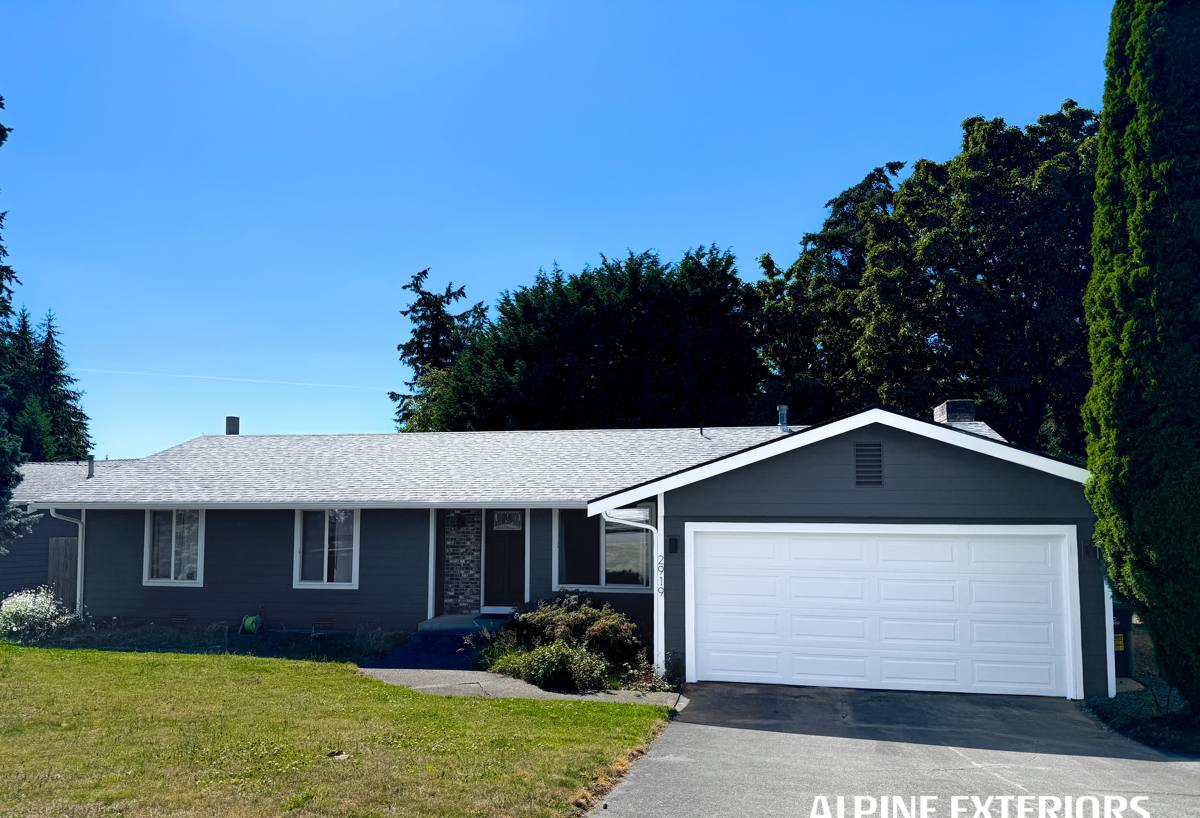
How Each Product Handles Our Climate
Lynden and the rest of Whatcom County sit in a wet marine climate — long stretches of driving rain in fall and winter, humid air moving in off the Salish Sea, and enough shade and moisture on north-facing walls to grow moss on almost anything that holds still long enough. Siding here isn't just a cosmetic choice; it's a weather system.
Vinyl in a wet climate
Vinyl itself doesn't absorb water — it's plastic. But vinyl siding is installed with intentional gaps and is designed to let water get behind it and drain back out, which means the water-resistive barrier and flashing underneath are doing the real work, not the siding. Vinyl also expands and contracts noticeably with temperature swings, which is why panels are hung loosely rather than fastened tight. Over years of freeze-thaw cycles and driving rain, that loose fit is exactly where moss spores, mildew, and grime find a foothold — especially in shaded side yards and under eaves where things don't dry out quickly.
Fiber cement in a wet climate
James Hardie fiber cement is dense and dimensionally stable — it doesn't expand and contract the way vinyl or wood does, so seams stay tighter over time. It's also non-combustible and doesn't feed mold the way wood-based products can. That said, fiber cement is not waterproof either; it's cement-based, so uncaulked gaps, poor flashing, or panels installed too close to grade will let it wick moisture just like any other siding installed wrong. The difference is that a correctly installed Hardie system — proper clearances, factory-primed cut edges, correct fastening — is built specifically for the kind of sustained wet-side exposure we get on the west side of the Cascades.
Appearance and How It Ages
Vinyl comes color-molded through the panel, so scratches don't usually show a different color underneath, but that color is also its ceiling — it can chalk and fade over a decade or two of UV exposure, and it cannot be painted a different color without risking heat distortion or voiding manufacturer warranties. It also has a recognizable sheen and flex that many buyers can spot from the street or a listing photo.
James Hardie's ColorPlus finish is baked on in a factory process, not brushed on-site, and it's engineered to resist fading and chipping far better than field-applied paint. It also holds up to true wood-grain or smooth textures without the plastic look, and — unlike vinyl — it can be repainted down the road if a homeowner wants to change the color, since it's a genuine cementitious substrate underneath.
Side-by-Side Comparison
| Factor | Vinyl Siding | James Hardie Fiber Cement |
|---|---|---|
| Base material | Extruded PVC plastic | Cement, sand, cellulose fiber |
| Fire behavior | Combustible, can melt/warp near heat | Non-combustible |
| Dimensional stability | Expands/contracts with temperature | Very stable, minimal movement |
| Finish | Color molded through panel | Factory-baked ColorPlus finish |
| Repaintable | Not recommended by most makers | Yes |
| Typical lifespan installed to spec | 20-30 years | 30-50+ years |
| Upfront material + install cost | Lower | Higher |
| Moss/mildew resistance | Moderate; depends on drainage detailing | Good when installed with proper clearance |
Durability: Impact, Wind, and Wildlife
Vinyl can crack in cold temperatures under impact — a thrown branch, a ladder bump, even a hard hailstone — and once a panel cracks, the whole run of siding often needs to be unzipped and replaced because color-matching an older panel is rarely possible. Vinyl is also lighter, which makes it more susceptible to wind uplift or rattling in the county's winter storms if it wasn't fastened with the correct clearance for expansion.
Fiber cement is heavier and denser, which gives it real resistance to impact damage, hail, and the kind of woodpecker and pest damage that wood-based sidings can suffer. It won't warp in heat the way vinyl can near a barbecue, dark-colored deck, or reflective window glare — a real issue we've seen on vinyl-sided additions with modern low-E windows nearby.
Installation Is Not Interchangeable
This is the part that gets glossed over in most comparisons: vinyl and fiber cement are installed by completely different methods, and mixing up the techniques is where most siding failures start.
- Vinyl hangs on a nailing hem and must float loosely — nailed too tight, it can't expand and will buckle or bow.
- Fiber cement is fastened solid and requires correct nail penetration, joint treatment, and caulking at every seam and penetration.
- Hardie panels need factory-primed or field-primed cut edges sealed before installation, or the cut ends become a moisture entry point.
- Clearance from grade, roofing, and decks differs by product and manufacturer spec — get it wrong on either product and water finds its way behind the wall.
- Fastener spacing, house-wrap integration, and flashing details are product-specific, not universal.
A crew that's fast and experienced with vinyl isn't automatically qualified to install fiber cement correctly, and vice versa. That's part of why we chose to specialize rather than offer both — installing one system well, on every job, beats being average at two.
Cost and Long-Term Value
Vinyl almost always wins on day-one price. It's lighter, faster to install, and the material itself costs less per square foot. If budget is the only factor and the home is being flipped or held short-term, that math is real and we won't pretend otherwise.
Fiber cement costs more upfront — both in material and in the labor to install it correctly — but it holds value differently. It's frequently cited by appraisers and real estate agents as a stronger resale feature than vinyl, it doesn't need replacement as often, and it tends to hold its painted appearance longer without chalking. For a homeowner planning to stay in a Lynden home for the long haul, or one weighing resale value in Whatcom County's competitive market, the total cost of ownership over 20-30 years often favors fiber cement even though the initial invoice is bigger.
Maintenance You'll Actually Do
Neither product is maintenance-free, despite what "no maintenance" marketing sometimes implies. Here's what ongoing care realistically looks like for each:
- Vinyl: periodic power washing to remove mildew and grime buildup, inspecting for cracked or loose panels after storms, and accepting that faded color cannot be restored by painting.
- Fiber cement: occasional washing to keep moss and algae from taking hold in shaded areas, re-caulking joints as part of normal home upkeep, and repainting on a much longer cycle than wood — but it can be repainted, which vinyl generally cannot.
- Both: keeping gutters clear and grade sloped away from the house matters more than the siding material itself when it comes to preventing moisture problems.
Warranty Structure
Vinyl warranties vary widely by manufacturer and are often prorated — meaning the payout shrinks the longer you've owned the siding, and many exclude labor for reinstallation entirely. James Hardie backs its fiber cement products with a 30-year non-prorated limited warranty on the substrate, and ColorPlus finishes carry their own finish warranty separate from the substrate coverage. When we install Hardie, we register the job so that warranty coverage transfers correctly if the home sells — a detail that matters more than people expect when they eventually list the house.
Why We Only Install James Hardie
We're not telling homeowners vinyl is a bad product — it does what it's designed to do, and plenty of it is out there performing fine. But when we looked at what actually holds up on the wet side of Whatcom County over decades — the driving rain off the water, the shaded moss-prone elevations, the freeze-thaw swings — we decided we'd rather install one system exceptionally well than offer a lower-cost option we couldn't fully stand behind. James Hardie's HZ5 product line is engineered for this exact climate zone, the ColorPlus finish holds up to the UV and moisture cycle here, and the non-combustible, dimensionally stable panel gives us a product we're comfortable putting our name on for the long term.
If you're weighing vinyl against fiber cement for a home in Lynden or anywhere else in Whatcom County, we're happy to walk your specific house — sun exposure, shaded walls, existing moss patterns — and give you an honest read on what makes sense. Reach out for a free, no-pressure estimate using the form below.