 Lynden Siding
 Serving Aldergrove Homeowners From Just Across the Line
Aldergrove sits close enough to Lynden that many homeowners there already cross the border regularly for work, shopping, and errands — and for exterior work, that same short drive puts a Whatcom County crew within easy reach. Lynden Siding Company works throughout the Pacific Northwest border region, and Aldergrove is a natural extension of our regular service area. You get a contractor who shows up on schedule, knows the regional climate cold, and stands behind the work with the same warranty and communication we give every customer.
Whatcom County and the Fraser Valley share the same weather pattern: wet winters, a long shoulder season of drizzle, and enough marine influence that moss, mildew, and moisture problems on homes look almost identical on both sides of the border. That's the backdrop for everything below.
What the Local Climate Does to Siding, Roofs, and Trim
Aldergrove doesn't get the direct salt spray of a coastal town, but the region still deals with driving rain off the Strait of Georgia and Puget Sound weather systems, high humidity for much of the year, and short winter days that leave exterior surfaces damp for hours at a stretch. A few consequences show up on almost every older home we look at in this corridor:
- Moss and algae staining on north-facing walls and anywhere siding sits in shade for most of the day
- Paint that fails early on wood or engineered wood siding because moisture gets behind the finish rather than staying on top of it
- Soft or delaminating trim and fascia boards where water has been wicking in slowly for years, often unnoticed until a repaint reveals the damage
- Caulk joints that crack and open gaps faster than manufacturers' published lifespans suggest, because the region simply sees more wet-dry cycling than drier climates
None of this is unusual for the Pacific Northwest — it's just what happens to a house over 15-20 years in a temperate rainforest climate. The question isn't whether your siding will be tested by moisture, it's whether the material and installation were built to handle it.
Why "Moss Season" Matters More Than People Think
Homeowners in this area sometimes treat moss as a cosmetic nuisance — something to pressure wash off once a year. In reality, moss holds moisture directly against whatever surface it's growing on. On wood-based siding products, that sustained dampness is exactly the condition that leads to swelling, soft spots, and eventual rot at seams and butt joints. The siding material you choose has a real impact on how much that moss season actually costs you over time, in both maintenance labor and eventual repair.
Why We Install Only James Hardie Fiber Cement
Lynden Siding Company made a deliberate decision years ago to install James Hardie fiber cement exclusively — not vinyl, not LP SmartSide, not primed spruce or cedar, not other fiber cement brands like Cemplank or Allura. That's a narrower lineup than a lot of contractors offer, and we think that's the point. We'd rather stand fully behind one system we trust in this climate than spread our warranty and our expertise across several products with different failure modes.
Fiber cement is non-combustible, dimensionally stable in wet-dry cycling, and doesn't feed moss and mildew the way wood fiber products can. James Hardie's ColorPlus factory finish is baked on under controlled conditions rather than field-applied, which matters a lot in a region where field-painted finishes are fighting rain for a good chunk of the year. Hardie also engineers specific product lines (their HZ5 line, for example) for climate zones like ours, rather than selling one generic board everywhere in North America.
What We Tell Homeowners About the Alternatives
We're not going to tell you vinyl or engineered wood siding are bad products in every application — they're not. But here's the honest trade-off conversation we have with every homeowner who asks why we don't install them:
- Vinyl siding is inexpensive and low-maintenance, but it can warp or crack in temperature swings, and it doesn't hold up structurally the way fiber cement does in high-wind or impact situations.
- LP SmartSide and other engineered wood products perform well when installation and caulking are perfect and stay perfect for decades — a big ask in a climate that's testing every seam with rain more months than not.
- Primed spruce and cedar are traditional and attractive, but they're wood, and wood in a marine-influenced climate needs consistent maintenance to keep moisture from winning eventually.
Our position isn't that these products are junk — it's that after years of installing and repairing exterior products in this exact climate, fiber cement gives homeowners the best long-term match for what this region actually does to a house.
Full Exterior Services, Not Just Siding
Siding is what we're known for, but a house is a system — the siding, roof, windows, and trim all work together to keep water out. We handle all four:
Roofing
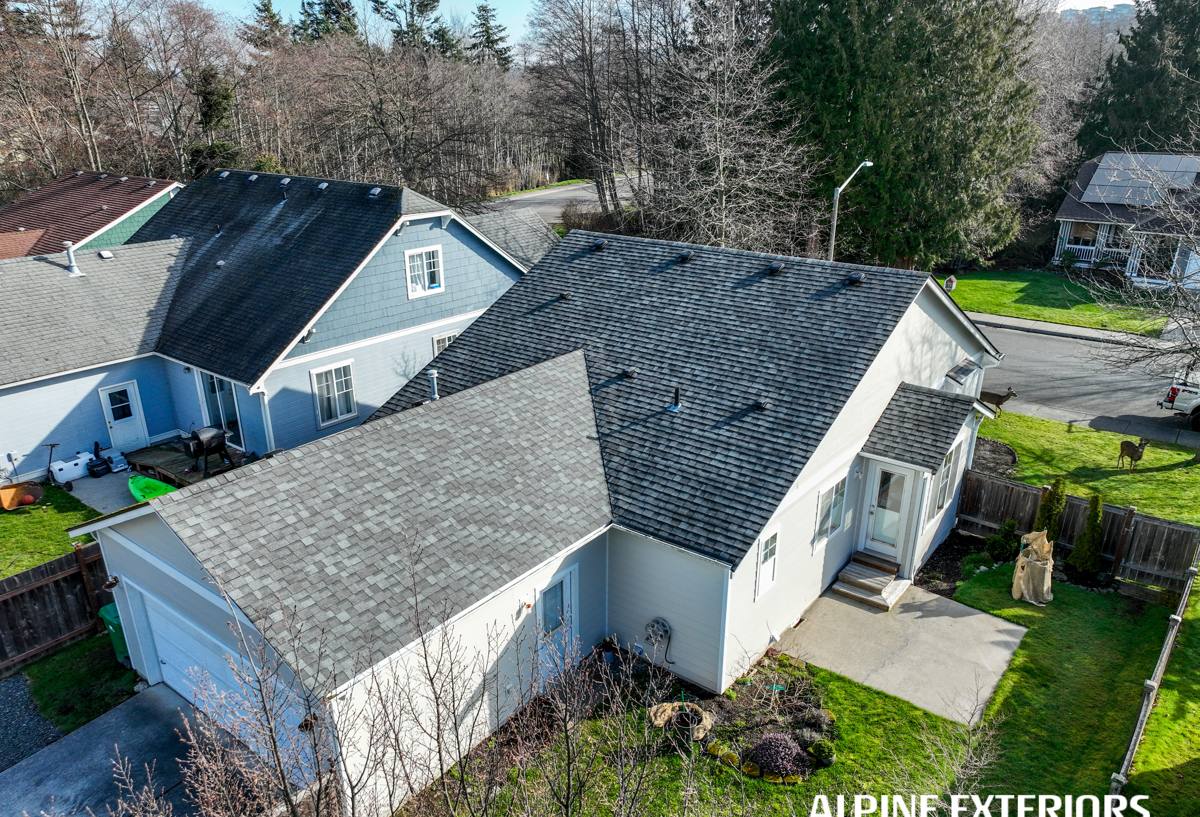
A roof in poor condition undermines even the best siding installation, since water that gets past bad flashing or worn shingles ends up running down behind the wall assembly. We inspect roof condition as part of any siding project and can handle roof replacement and repair directly.
Windows
Old or poorly flashed windows are one of the most common sources of hidden water intrusion we find when we open up a wall during a siding tear-off. Replacing windows at the same time as siding lets us integrate the flashing correctly the first time, instead of patching around an existing window that's already failing.
Decks
Decks in this climate take a similar beating to siding — constant damp, freeze-thaw cycles, and UV exposure between rain events. We build and repair decks with the same attention to water management we bring to wall systems.
What a Siding Project Looks Like With Us
| Stage | What Happens |
|---|---|
| Initial estimate | On-site walkthrough, honest assessment of current siding condition and any hidden moisture damage we can identify |
| Product and color selection | Choosing the right James Hardie plank or panel profile and ColorPlus finish for the home |
| Tear-off and inspection | Removing old siding reveals the sheathing and framing underneath — this is when hidden rot or moisture issues get caught and addressed |
| Weather barrier and flashing | Correct house wrap, flashing details around windows and doors, and proper drainage plane installation — this is the step that determines whether siding lasts 10 years or 40 |
| Hardie installation | Installed to manufacturer specification for fastening, clearances, and joint treatment |
| Final walkthrough | Review the finished work and warranty paperwork together |
Cost Factors Homeowners Should Understand Upfront
Every home is different, so we won't quote a number without seeing the house, but a few factors consistently drive cost on projects in this area:
- How much of the existing wall sheathing needs repair once old siding comes off — this is the single biggest variable and impossible to know precisely until tear-off begins
- Home size and complexity of the exterior (number of corners, window and door openings, roof lines that intersect walls)
- Siding profile chosen — lap siding, panel systems, and shingle-style Hardie products differ in material and labor cost
- Whether roofing, window, or trim work is bundled into the same project
We'd rather walk a homeowner through these variables honestly upfront than surprise anyone mid-project.
Questions to Ask Before Hiring Any Exterior Contractor
- Are they licensed and insured to work in your jurisdiction, and can they provide proof?
- Do they specialize, or are they generalists who do siding occasionally alongside a dozen other trades?
- Will they show you the weather barrier and flashing details, or just talk about the finish material?
- What does their warranty actually cover, and is it backed by the manufacturer or just the installer?
- Can they explain why they recommend a specific product for your specific climate, rather than a one-size-fits-all pitch?
A Crew That Knows This Climate
There's real value in working with a contractor who deals with this exact weather pattern day in and day out, rather than a crew that installs siding across wildly different climates and treats every job the same. We know what moss season does to a north wall in this region, what kind of flashing details actually keep water out through a Pacific Northwest winter, and which parts of a wall assembly tend to fail first when they're not done right. That local knowledge shows up in the details — the ones you don't see once the project is finished, but that determine whether it holds up.
If you're in Aldergrove and thinking about siding, roofing, windows, or a deck project, we're glad to come take a look. Reach out for a free, no-pressure estimate — we'll walk the exterior with you, answer your questions honestly, and give you a clear picture of what your home actually needs.