 Lynden Siding
 Roofing in Blaine Isn't the Same Job as Roofing Inland
Blaine sits close enough to saltwater that the air itself is different — it carries fine salt spray on windy days, stays damp longer after a storm passes, and rarely gives a roof a long stretch of dry, direct sun to fully recover between rain events. Combine that with Whatcom County's driving winter rain, coming in sideways off the water more often than it falls straight down, and you get a roofing environment that's noticeably harder on asphalt shingles than a typical inland install a few miles east. We work throughout the Lynden area, and Blaine roofs consistently show wear patterns — granule loss on windward slopes, dark streaking, soft valleys — that we just don't see as often further from the coast.
None of that means asphalt shingles are the wrong choice for a Blaine home. They're still one of the most practical, cost-effective roofing systems available, and a correctly specified, correctly installed shingle roof holds up fine here. It does mean the details matter more — the underlayment, the ventilation, the flashing, and the shingle rating itself all need to be chosen with the coastal exposure in mind, not just picked off a shelf because they're the standard option.
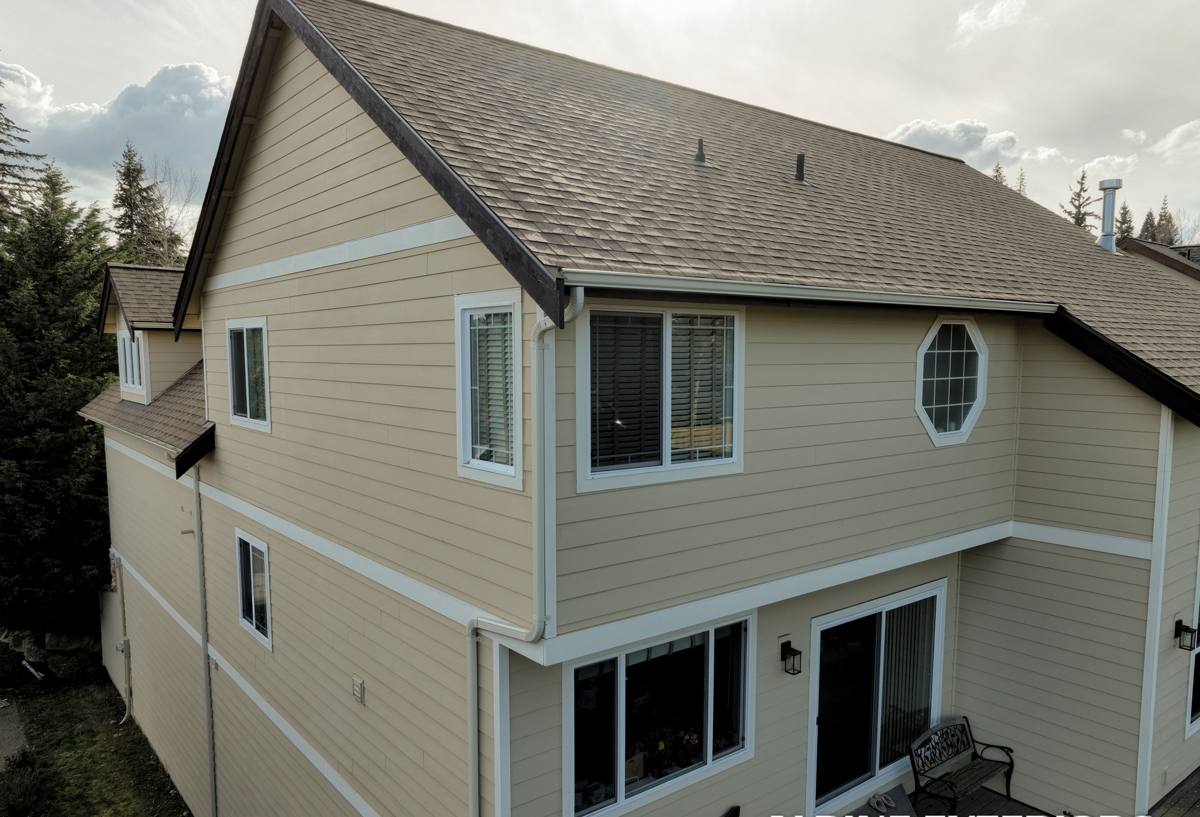
What Blaine's Climate Actually Does to a Roof Over Time
Salt Air and Metal Components
Salt-laden air accelerates corrosion on unprotected or lower-grade metal — nails, flashing, vent boots, and drip edge. Over years, this shows up as rust streaking down the shingle face below a fastener or flashing point, and eventually as leaks where a corroded flashing seam opens up. It's a slow process, but it's a real one, and it's specific to homes near the water.
Driving Rain and Wind-Driven Water
When rain comes in at an angle instead of straight down, it can work its way up under shingle tabs, into valleys, and around penetrations in ways that vertical rain doesn't. This is why fastening patterns, valley construction, and underlayment coverage matter more here than the shingle brand printed on the wrapper.
Moss and Algae Growth
Western Washington's long wet season, shaded rooflines, and moderate temperatures are close to ideal conditions for moss and algae. Moss doesn't just look bad — it holds moisture against the shingle surface, works its way under tab edges, and can lift shingles enough for wind and rain to get underneath. Left unaddressed for years, moss growth shortens a roof's usable life more than almost any other single factor we see in this region.
What a Correct Asphalt Shingle Install Involves
A shingle roof is a system, not just a layer of shingles nailed to plywood. Skipping or shortcutting any one part of that system is usually where premature leaks and shortened lifespans come from.
- Deck inspection and repair — soft, rotted, or delaminated sheathing gets replaced before anything new goes down, not covered over.
- Ice-and-water shield at eaves, valleys, and around penetrations — critical in areas that see wind-driven rain and occasional ice.
- Synthetic underlayment across the full deck as the roof's real waterproofing backstop, not just the shingles themselves.
- Corrosion-resistant flashing and fasteners — a meaningful upgrade for coastal-exposed homes like Blaine's.
- Proper nailing pattern matched to the shingle manufacturer's high-wind specification, not a generic pattern.
- Balanced attic ventilation — intake at the eaves, exhaust at the ridge — so moisture doesn't get trapped under the deck from the inside.
- Valley and penetration detailing done with actual flashing and correct shingle weaving or cutting, not just extra sealant.
Choosing a Shingle That Makes Sense for Blaine
Not every asphalt shingle is rated or built the same way, and the differences matter more in a coastal, moss-prone climate than they would somewhere drier. This is a general comparison of the categories homeowners typically choose between — we'll walk through specific manufacturer options and warranties during an in-person estimate.
| Shingle Type | Wind & Water Performance | Moss/Algae Resistance | Typical Lifespan Here |
|---|---|---|---|
| Standard 3-tab | Lower wind rating, less mass to resist driving rain | None built in | Shorter end of the range in this climate |
| Architectural / laminate | Heavier, better wind rating, more resistant to lifting | Available with algae-resistant granules | Solid mid-to-long range with proper install |
| Algae-resistant (copper/ceramic granules) | Same as base architectural line | Meaningfully slows algae and moss regrowth | Longer effective life due to less moisture retention |
| Impact-resistant (Class 4) | Highest resistance to wind and debris impact | Depends on granule type — ask specifically | Longest, often with the strongest manufacturer warranty |
For most Blaine homes, we lean toward a laminate or architectural shingle with algae-resistant granules as the practical baseline — it directly addresses the moss issue that shortens roof life here, without pushing the budget into premium-only territory. Impact-resistant shingles are worth discussing for exposed roof faces or homeowners who want to minimize maintenance and maximize warranty coverage over the long run.
Repair or Full Replacement? What Actually Drives That Decision
Homeowners often assume a leak means a full new roof is needed. Sometimes it does — but often a targeted repair is the honest answer, and we'll tell you which is which before we ever talk about pricing.
| Factor | Leans Toward Repair | Leans Toward Replacement |
|---|---|---|
| Roof age | Under roughly two-thirds of expected shingle life | At or past expected shingle life |
| Extent of damage | Isolated area — one valley, one penetration, storm damage to a section | Widespread granule loss, curling, or multiple leak points |
| Moss/algae condition | Light, surface-level, treatable | Heavy, long-term growth that's lifted shingles or degraded the mat |
| Deck condition | Sound, no rot found during inspection | Soft spots or rot found, requiring deck work anyway |
| Underlying system | Ventilation and flashing already correct | Ventilation, flashing, or underlayment need upgrading too |
Our Process, Start to Finish
- On-site inspection — we get on the roof (not just a look from the ground), check the deck where accessible, and document actual condition.
- Straight answer — repair, partial replacement, or full replacement, explained in plain terms with the reasoning behind it.
- Written estimate — material options, scope of work, and timeline, with no pressure to decide on the spot.
- Protection and prep — landscaping, siding, and gutters protected before tear-off begins.
- Tear-off and deck repair — old roofing removed, deck inspected and repaired as needed before anything new goes down.
- Full system install — underlayment, flashing, ventilation, and shingles installed to manufacturer spec.
- Cleanup and magnetic sweep — job site and yard cleared of debris and stray fasteners.
- Final walkthrough — we review the finished roof with you before calling the job done.
Maintenance That Actually Extends a Blaine Roof's Life
A well-installed roof still needs some upkeep in this climate — mostly to stay ahead of moss and keep water moving off the roof the way it's supposed to.
- Clean gutters at least twice a year so water doesn't back up under the shingle edge.
- Treat moss growth early, before it spreads across a slope or works under tab edges.
- Keep overhanging branches trimmed back to reduce shade and debris buildup on the roof.
- Have flashing around chimneys, vents, and valleys checked periodically, especially on older roofs.
- Clear valleys of leaves and debris before the wet season sets in.
- Watch for granules collecting in gutters or downspouts — a sign of accelerating wear.
Signs You Shouldn't Ignore
Some warning signs are easy to write off as cosmetic when they're actually early indicators of a roof nearing the end of its service life.
- Shingle edges curling or cupping upward, especially on the side of the roof that faces prevailing weather.
- Dark streaking or thick moss growth that keeps returning after cleaning.
- Granules consistently showing up in gutters after normal rain, not just after a storm.
- Soft or spongy spots when walking the roof, or visible sagging in a valley.
- Daylight visible through the roof deck from inside the attic.
- Water staining on interior ceilings, particularly near chimneys, skylights, or valleys.
Why a Crew That Already Works Blaine Matters
Roofing crews that mostly work drier, inland areas can miss the details that matter on a coastal roof — they may spec a standard shingle where an algae-resistant one would serve the home better, or skip the corrosion-resistant fasteners that make sense this close to the water. We work throughout Whatcom County, including Blaine and the surrounding Lynden area, and that means we're not guessing at what this climate does to a roof over ten or twenty years — we've seen it firsthand on homes with the same salt air and moss exposure yours has. That local familiarity shapes the material and detailing recommendations we actually make, not just the sales pitch.
If you're dealing with an aging roof, active leaks, or just want an honest read on how much life your current shingles have left, we're glad to take a look. Use the form below to request a free, no-pressure estimate — we'll walk the roof, tell you what we actually see, and lay out your options in plain terms.