 Lynden Siding
 Why New Construction in Blaine Needs a Different Approach
Blaine sits right on the water at the top of Whatcom County, which means new-construction windows here are fighting a different battle than windows going into a home twenty miles inland. Salt-laden air off Semiahmoo Bay and the Strait of Georgia works on metal hardware and finishes year-round, not just during storms. Add Whatcom County's long stretch of driving rain — often pushed sideways by wind off the water — and a moss season that can run eight or nine months out of the year, and you have a climate that punishes any shortcut in window selection or installation. New construction is actually the best time to get this right, because the window opening, the flashing, and the weather barrier are all being built at once instead of retrofitted around an existing wall.
We install new-construction windows across Whatcom County, and Blaine jobs get treated differently from the start. The frame material, the flashing sequence, and even the hardware finish get chosen with salt exposure and wind-driven rain in mind, not just a stock spec sheet.
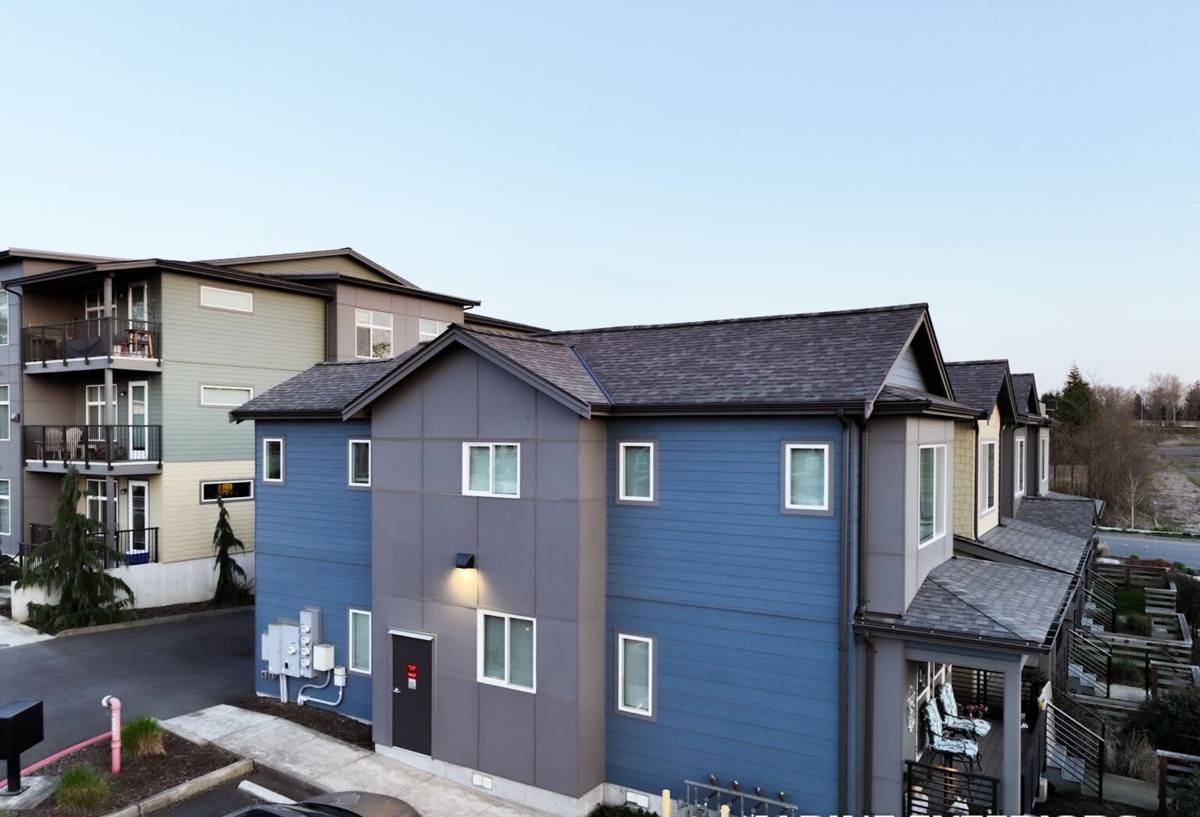
What "New-Construction" Windows Actually Means
There's real confusion between new-construction and replacement windows, and it matters for cost and performance. New-construction windows have a nailing fin (sometimes called a flange) built into the frame that gets fastened directly to the wall sheathing before siding or stucco goes on. That fin is what ties the window into the weather-resistive barrier and flashing system as a continuous seal. Replacement windows, by contrast, are built to slide into an existing frame with no fin — they rely on the old opening's structure and are a different product entirely.
If you're building new, doing an addition, or fully re-siding down to the sheathing, you want true new-construction windows installed with a proper flashing sequence. Trying to save money by using replacement-style windows in new framing skips the fin-and-flashing integration that keeps wind-driven rain out of the wall cavity — a real risk in a location that gets as much sideways rain as Blaine does.
When New-Construction Windows Are the Right Call
- Ground-up new home builds
- Additions or bump-outs where new wall framing is being built
- Full re-siding projects where the wall is opened to the sheathing anyway
- Garage or shop conversions with new framed openings
Frame Material: What Actually Holds Up to Salt Air
Every window brand will tell you their product is built for coastal exposure. In practice, frame material and hardware finish matter more than the marketing. Here's how the common options compare for a Blaine-area build:
| Frame Material | Salt-Air Performance | Maintenance | Typical Cost Tier |
|---|---|---|---|
| Vinyl | Good — inert to corrosion, but can chalk and become brittle over decades of UV and salt exposure | Low — occasional rinse, no painting | Lower |
| Fiberglass | Very good — dimensionally stable, resists corrosion and UV chalking better than vinyl | Low — rinse, no painting needed | Mid to upper |
| Aluminum-clad wood | Depends heavily on hardware and clad finish quality — exposed fasteners and lower-grade cladding corrode faster near salt water | Moderate — clad exterior is low-maintenance, wood interior needs normal upkeep | Upper |
| Bare wood | Poor for this exposure without diligent, frequent refinishing | High — repainting/sealing on a strict schedule | Varies |
For most Blaine new-construction jobs, we steer homeowners toward vinyl or fiberglass frames with stainless or corrosion-resistant hardware. It's not that wood-clad windows can't work near the water — it's that they demand a maintenance commitment a lot of owners don't want to sign up for, and any gap in that upkeep shows up faster here than it would twenty miles inland.
Hardware and Glass Details That Matter Here
The frame gets most of the attention, but hardware and glass selection quietly determine how a window performs over time in salt air.
Hardware Finish
Standard mill-finish aluminum hinges, cranks, and locks corrode visibly within a few years this close to the water. We spec stainless steel or coated hardware rated for coastal or marine-grade exposure whenever the budget allows it — it costs more up front and saves a service call three or four years down the road.
Glass and Gas Fill
Double-pane, argon-filled, low-E glass is the baseline we install on new construction in this climate — it's less about salt air and more about Whatcom County's cool, wet winters and the desire to keep heating costs down. Triple-pane is worth discussing on north- and west-facing walls that take the brunt of wind-driven rain and winter wind off the water, but it's a cost-versus-benefit conversation, not an automatic upgrade.
Weep Holes and Drainage
Every window needs functioning weep holes to drain any water that gets into the frame track. In a driving-rain environment, we check that weep paths aren't blocked by trim, paint, or debris during installation and again at final walkthrough — a clogged weep hole is one of the more common, avoidable causes of window failure we see on coastal jobs.
Flashing and the Weather Barrier: Where Most Failures Start
Nearly every window leak we're called to diagnose traces back to flashing, not the window itself. New construction gives us the chance to do this correctly because the wall is open. The sequence matters and it doesn't change based on budget:
- Weather-resistive barrier (house wrap) installed and lapped correctly over the rough opening
- Sill pan flashing installed at the bottom of the opening, sloped to drain outward, not into the wall
- Window set into the opening, shimmed level and plumb, fastened through the nailing fin
- Jamb and head flashing tape applied in the correct shingle-lap order — sides first, then the top, so water sheds down and out at every layer
- Head flashing or drip cap installed above the window to break the water path before it reaches the top of the frame
- Siding or cladding installed with proper clearance and back-ventilation where the material calls for it
Skip or reverse any step in that order and you create a shingle-lap in the wrong direction — which means water gets directed into the wall instead of away from it. It can take years for that kind of mistake to show up as a stain or soft spot, by which point the damage is behind the siding. This is the single biggest reason new-construction window work should not be treated as a commodity install.
Our Installation Process
On Blaine jobs, our process is built around getting the envelope right the first time, since re-opening a finished wall is far more expensive than doing it correctly during framing:
- Verify rough openings are square, level, and sized correctly before any window arrives on site
- Confirm weather barrier lap direction and integrity around each opening
- Install sill pan flashing at every opening, sloped and sealed
- Set and fasten windows per manufacturer spec, checking for square and even reveal on all four sides
- Apply flashing tape in correct shingle-lap sequence, sides then top
- Install head flashing above each window
- Test operation of every sash, crank, and lock before closing in the wall
- Photograph flashing details before siding covers them, for the homeowner's records
We coordinate directly with the general contractor or framer on new builds so window installation happens at the right point in the schedule — not so early that framing hasn't settled, not so late that it holds up siding and interior trim.
Mistakes We See on New Builds in This Area
A lot of what we get called to fix isn't a bad window — it's a shortcut taken during rough-in that only shows up years later.
| Mistake | Why It Matters Near the Coast |
|---|---|
| No sill pan flashing, relying on caulk alone | Caulk degrades faster in salt-laden, UV-heavy coastal exposure and isn't a substitute for physical drainage |
| Flashing tape applied top-to-bottom instead of bottom-to-top | Directs wind-driven rain into the wall cavity instead of shedding it |
| Standard-grade hardware instead of coastal-rated finish | Corrodes and seizes within a few years in salt air |
| Weep holes taped or painted shut | Trapped water sits in the frame track and accelerates rot and seal failure |
| No head flashing above the window | Removes the last line of defense against sheet rain running down the siding |
Maintenance in a Salt-Air, Moss-Prone Climate
Even a correctly installed window needs some seasonal attention in this environment. None of it is difficult, but it's easy to forget:
- Rinse frames and hardware a couple of times a year to clear salt residue, especially on west- and water-facing walls
- Check weep holes each fall to make sure moss, needles, or paint haven't blocked them
- Inspect exterior caulk lines annually and re-caulk hairline gaps before winter rains set in
- Lubricate cranks, hinges, and locks with a manufacturer-approved lubricant once a year
- Keep nearby moss and organic debris cleared from sills and trim — trapped moisture under moss growth is what starts wood and finish deterioration
- Watch for stiff or sticking hardware, which is often the first sign of corrosion before it's visible
Whatcom County's moss season is long enough that "once a year" maintenance really does mean checking before it builds up, not after.
Timeline and Working with Your Builder
On a typical new-construction schedule, windows need to be ordered as soon as the plans are finalized — lead times for quality vinyl or fiberglass units commonly run several weeks, longer for custom sizes or upgraded glass packages. We work off the builder's framing schedule so windows arrive and get installed at the right point, before siding starts but after the structure has had time to settle. If you're the homeowner working with your own general contractor, we're happy to coordinate directly with their crew rather than requiring you to be the go-between.
Why Hire a Crew That Already Works Blaine
Window installation looks the same on paper anywhere in Whatcom County, but a crew that regularly works Blaine has already seen what this specific exposure does over time — where corrosion shows up first, which flashing details actually get tested by wind-driven rain off the water, and which frame and hardware choices hold up versus which ones look fine for a few years and then don't. That's not something you get from a spec sheet; it comes from doing the work here repeatedly and following up on it.
If you're planning a new build, an addition, or a re-side in Blaine, we're glad to walk the plans with you, talk through frame and glass options for your specific exposure, and give you a straightforward, no-pressure estimate using the form below.