 Lynden Siding
 Exterior Work in Maple Falls: A Different Set of Conditions
Maple Falls sits at the edge of the Whatcom County foothills, closer to the North Cascades than to the water, and that changes what a house has to deal with year-round. Homes here tend to sit under heavier tree cover than a typical Lynden or Bellingham property, which means more shade, more standing moisture on siding and roofing after a storm, and a longer window each year for moss and algae to take hold before direct sun ever dries things out. Add in the rain patterns that define this whole corner of Washington, and you get exterior materials that are wet more often than they're dry for a good stretch of the year.
That combination — shade, moisture, and a long moss season — is hard on cladding that isn't built to handle it. It's also exactly the kind of environment where the difference between a product that's engineered for the Pacific Northwest and one that's just marketed for it becomes obvious within a few years, not a few decades.
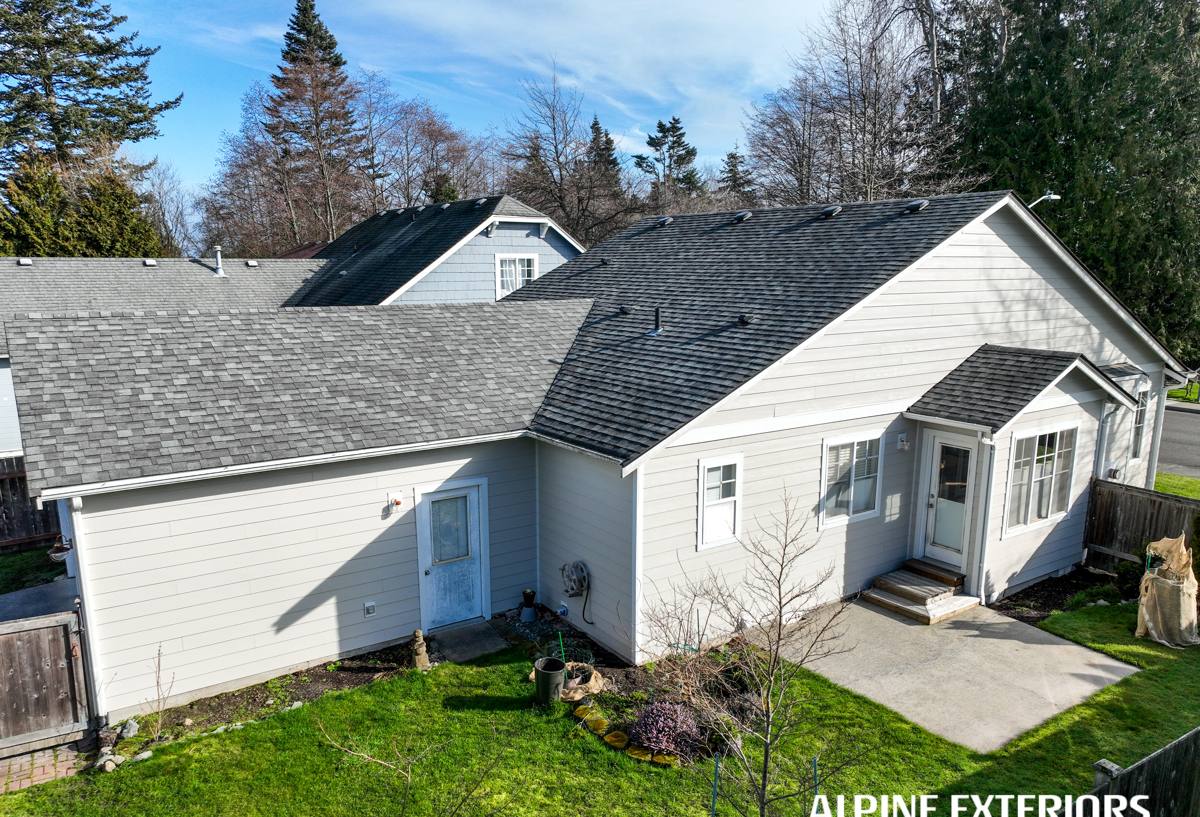
Why We Install Only James Hardie Fiber Cement Siding
We made a decision a while back to stop installing anything other than James Hardie fiber cement siding, and we stand behind it on every job, including here in Maple Falls. Fiber cement is non-combustible, it doesn't absorb water the way wood-based products do, and Hardie's factory-applied ColorPlus finish is baked on under controlled conditions rather than rolled or sprayed on-site. In a climate that keeps siding damp for extended stretches, that combination matters more than it does somewhere dry.
We're not saying every other siding product is worthless — some have real strengths, and we'll get into that honestly below. What we are saying is that after years of doing this work in this specific climate, we settled on one system that consistently performs the way we need it to, and we'd rather install that one product correctly on every home than juggle several products we have less confidence in.
What Homeowners Actually Notice Over Time
- Less moss and algae staining on shaded, north-facing walls compared to wood-based siding
- Color that doesn't need repainting every 6-8 years, thanks to the factory finish
- No swelling, delaminating, or soft spots at butt joints and lower courses after repeated wet-dry cycles
- A cladding that isn't a fuel source, which matters more each summer as wildfire smoke and dry-season risk creep further into the PNW conversation
Why We Don't Install LP SmartSide, Vinyl, or Cedar
LP SmartSide and Other Engineered Wood Products
Engineered wood siding like LP SmartSide has come a long way and does a reasonable job in moderate climates. It's lighter than fiber cement, easier on installers' backs, and it takes paint well. The trade-off is that it's still wood at its core — strand-based wood, but wood — treated with a resin binder and a zinc borate additive to resist moisture and insects. That treatment works, but it depends on caulking, flashing, and paint maintenance staying ahead of every cut edge and joint. In a shaded, high-moisture pocket like Maple Falls, where siding can stay damp for days after a storm, we've seen that margin for error shrink. If a homeowner falls behind on repainting or a joint opens up, moisture has a much easier path into the substrate than it does with fiber cement.
Vinyl Siding
Vinyl is inexpensive and low-maintenance in the sense that it never needs painting, but it's a thin plastic product that expands and contracts with temperature swings, can crack in a cold snap, and fades unevenly in UV exposure over time. It also can't be painted a different color down the road without specialty paint that voids most warranties. For a house that's going to sit under wet, mossy tree cover for a good part of the year, vinyl doesn't offer anything that outperforms fiber cement — it's just a different set of compromises, mostly in exchange for a lower upfront price.
Cedar and Primed Spruce
Real wood siding has a look a lot of people love, and we understand the appeal, especially on a foothill property surrounded by evergreens. But solid wood siding needs the most maintenance of anything on this list — regular refinishing, vigilant caulking, and quick attention to any spot where paint has failed. In a climate that keeps wood wet more than it keeps it dry, that maintenance schedule gets demanding fast, and skipping a cycle can mean rot that's expensive to repair. We'd rather steer homeowners toward a product that gives them the durability without that ongoing burden.
The James Hardie System We Actually Use
Hardie makes different product lines engineered for different climate zones, and for Whatcom County that means HZ5-rated products, built specifically for regions with freeze-thaw cycles and sustained moisture exposure. We install lap siding, panel siding, and trim depending on the home's style and the homeowner's preference, all finished with Hardie's ColorPlus Technology — a factory-cured finish that resists fading and chipping far better than field-applied paint.
| Feature | What It Means for a Maple Falls Home |
|---|---|
| Non-combustible core | Doesn't feed a fire the way wood or wood-composite siding can |
| HZ5 climate engineering | Formulated for freeze-thaw and high-moisture regions like ours |
| ColorPlus factory finish | Consistent color, better fade resistance, no need for repainting on the standard schedule wood siding requires |
| Rigid fiber cement board | Resists warping and swelling under repeated wet-dry cycles from shaded, rainy conditions |
| Transferable warranty | Backed by the manufacturer and tied to correct installation practices |
That last line is worth underlining: Hardie's warranty coverage depends heavily on the siding being installed to their specifications — correct fastening, proper clearances, flashing detail at every window and door. A product's engineering only holds up if the installation matches it, which is part of why we treat installation training as seriously as the material choice itself.
Beyond Siding: Roofing, Windows, and Decks Facing the Same Conditions
Siding is rarely the only part of a Maple Falls home dealing with shade and moisture. We also handle roofing, windows, and decks, and the same climate logic applies across all of them.
Roofing
A roof under heavy tree cover accumulates moss and needle debris faster than one in the open, which can shorten the effective life of shingles if it's not managed. We look at ventilation, underlayment, and moss-resistant materials as part of any roofing conversation, not just the shingle color.
Windows
Old or poorly flashed windows are one of the most common places we find hidden moisture damage during a siding tear-off. Replacing failing windows at the same time as siding lets us address flashing and water management as one continuous system instead of patching around old gaps.
Decks
Outdoor living space in a shaded, damp setting needs materials and fastening details that account for slower drying times. We build and repair decks with that in mind, whether the goal is a full rebuild or extending the life of an existing structure.
Why a Local Crew Matters Here
A lot of exterior problems in this part of Whatcom County trace back to details that only show up when a crew has actually worked in conditions like these — flashing choices around a shaded north wall, ventilation gaps that let moisture sit too long under tree cover, or fastening patterns that hold up through repeated wet-dry cycling instead of just looking fine on installation day. A crew that mostly works in drier or more exposed parts of the state doesn't always carry that instinct into a job here. We're based in Lynden and work throughout Whatcom County, including Maple Falls, so the moss, the rain patterns, and the shade aren't unfamiliar variables — they're what we plan around on every project.
What Drives Cost on a Project Like This
| Factor | Why It Matters |
|---|---|
| Home size and wall complexity | More corners, gables, and trim detail mean more labor and material |
| Existing siding removal | Tear-off and disposal of old wood, vinyl, or damaged siding adds time |
| Substrate condition | Hidden rot found once old siding comes off can add scope |
| Product selection | Lap vs. panel siding, trim style, and color all affect material cost |
| Access and site conditions | Steep or heavily wooded lots can affect staging and labor time |
We don't quote broad numbers without seeing the home — every property in this area carries its own combination of these factors, and the only honest way to price a job is to walk it first.
Before You Hire: A Practical Checklist
- Confirm the contractor is licensed and insured for exterior work in Washington
- Ask specifically what siding product they install and why — a contractor who installs everything often has less depth of experience with any single system
- Ask how they handle flashing at windows, doors, and roof transitions, since that's where most moisture problems start
- Get a written scope that includes tear-off, substrate repair allowances, and warranty terms
- Ask whether the crew doing the labor is direct employees or subcontracted, and who's accountable if something needs to be fixed later
If your home in Maple Falls is due for new siding, a roof, replacement windows, or deck work, we're glad to come take a look and put together a straightforward, no-pressure estimate. There's no cost to have us walk the property and tell you honestly what we'd recommend.