 Lynden Siding
 Siding in Deming: A Different Kind of Whatcom County Climate
Deming sits up along the Mt. Baker Highway corridor, closer to the foothills and the Nooksack River than the open farmland around Lynden proper. That changes what a house has to deal with. Homes here tend to sit under more tree cover, get less direct sun and wind to dry them out, and stay damp longer after a storm passes through. Being farther inland and up in elevation, Deming sees less of the salt-laden air that coastal pockets of Whatcom County deal with, but it more than makes up for it with heavier shade, denser vegetation, and a longer stretch of the year where siding, trim, and roofing simply don't get a chance to dry.
Add in the driving rain that comes through the county most of the fall, winter, and spring, and you've got a climate that's hard on exterior materials in a specific way: not one big storm event, but months of sustained moisture exposure. That's the environment we're actually building for out here, and it's a big part of why we're picky about what goes on a wall.
Rain That Doesn't Let Up
Wind-driven rain finds its way into lap joints, butt seams, and anywhere caulking or paint has started to fail. On a home with poor flashing or a siding product that swells or wicks moisture, that constant exposure is what eventually shows up as soft trim, peeling paint, or rot behind the cladding — usually years after the original install, once it's expensive to fix.
Shade, Moss, and Slower Drying
Tree-covered lots are common around Deming, and shade is a mixed blessing for a house. It keeps things cooler in summer, but it also means north- and east-facing walls can stay damp for days after a rain. That's exactly the environment moss and mildew like, and it's why homes in shadier parts of the county tend to show more surface growth and more finish breakdown than homes out in the open, all else being equal.
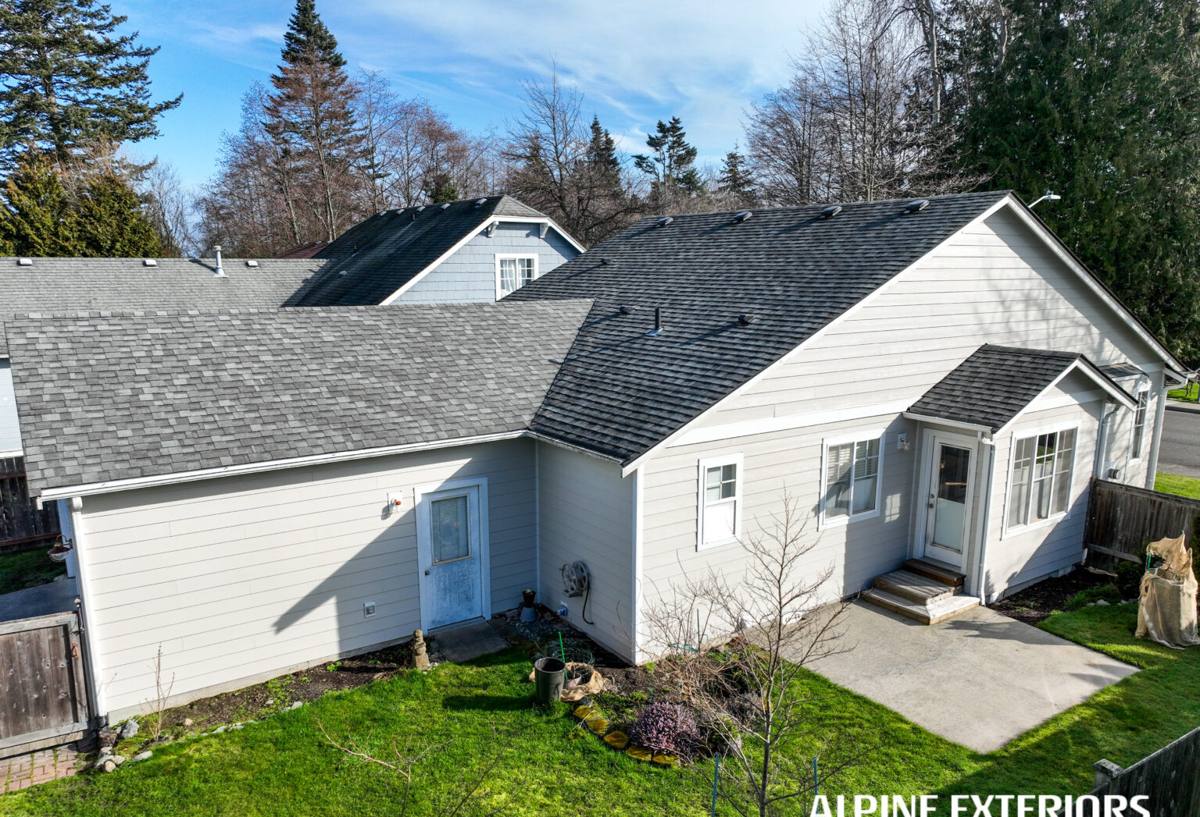
Why We Only Install James Hardie Fiber Cement
We get asked fairly often why we don't offer vinyl, LP SmartSide, or one of the other fiber cement brands like Cemplank or Allura. The honest answer is that after years of installing and repairing siding around Whatcom County, James Hardie is the only product we're willing to put our name behind — especially in a climate that stays wet as long as this one does.
What We Won't Install, and Why
- Vinyl siding is inexpensive and low-maintenance in the short term, but it's a petroleum-based product that expands and contracts with temperature swings, can crack in cold snaps, and traps moisture behind it if the water-resistive barrier isn't perfect. It also fades over time and isn't repairable in small sections without a visible mismatch.
- LP SmartSide is an engineered wood product with a resin-treated strand core. It performs reasonably well when installed and maintained correctly, but any wood-based siding depends on caulking, paint, and flashing staying intact. In a region with our rain totals and long damp season, that's a maintenance schedule we don't think most homeowners want to be locked into.
- Primed spruce and cedar are traditional, attractive, and completely dependent on the homeowner keeping up with repainting and sealing on a tight cycle. Skip a cycle in a wet climate and the clock starts running on rot.
- Other fiber cement brands (Cemplank, Allura) are legitimate products on paper, but we don't have the same track record with them locally, and Hardie's factory finish, regional engineering, and warranty structure are simply stronger.
None of these are "bad" products in a vacuum — they're just trade-offs we're not interested in making on a home that has to survive a Whatcom County winter every single year for decades.
What Hardie Does Differently
James Hardie fiber cement is cement, sand, and cellulose fiber — non-combustible, dimensionally stable, and engineered specifically for wet climates through its HZ5 product line. It doesn't swell, rot, or feed insects the way wood-based products can, and its ColorPlus factory finish is baked on under controlled conditions, which holds up better and longer than field-applied paint. That combination matters more in Deming's shaded, moisture-heavy pockets than it does almost anywhere else in the county.
Hardie Product Lines We Install
| Product | Style | Best Fit For |
|---|---|---|
| HardiePlank | Horizontal lap siding, several profiles | Traditional and farmhouse-style homes, the most common choice countywide |
| HardieShingle | Staggered or straight-edge shingle panels | Craftsman or cottage-style homes wanting texture and dimension |
| HardiePanel | Vertical panel siding | Board-and-batten looks, accents, and modern designs |
| HardieTrim | Fascia, corner boards, window trim | Finishing details that match the siding's durability |
All of it comes in factory-applied ColorPlus finishes, which means the color and texture are consistent, backed by their own finish warranty, and don't rely on us getting a field paint job right in changing weather — a real advantage during Deming's shorter dry-weather install windows.
What Correct Installation Looks Like Out Here
Fiber cement siding is only as good as the install underneath it. Hardie's own warranty is tied to installation following their specifications, and in a high-moisture area like Deming, the details that get skipped on a rushed job are exactly the ones that cause problems five or ten years down the line.
- Proper water-resistive barrier and rainscreen gap so walls can drain and dry
- Correct flashing at every window, door, and roofline transition
- Manufacturer-specified fastener type, spacing, and penetration depth
- Minimum clearance between siding and ground, decks, roofs, and grade
- Caulking only where Hardie specifies it — not as a substitute for proper flashing
- Factory-cut or properly sealed field cuts to protect the cut edge from moisture
Skipping any one of these doesn't usually show up right away. It shows up as a moisture problem behind the wall years later, which is a far more expensive fix than doing it right the first time.
Beyond Siding: Roofing, Windows, and Decks
Siding doesn't work in isolation. On a lot of the homes we look at around Deming, the roofline, window flashing, and deck ledger connections are just as important to how well the walls hold up as the siding material itself.
Roofing
A roof with degraded flashing or clogged valleys sends water somewhere — often straight down the wall behind the siding above a porch or bump-out. We look at roof condition as part of any siding job, especially on tree-covered lots where debris buildup is a factor.
Windows
Old or poorly flashed windows are one of the most common sources of hidden wall moisture we find when we open up a house. Replacing siding around failing window flashing just resets the clock on the same problem.
Decks
Deck ledger boards attached directly to a house need proper flashing too, or they become a direct water path into the wall assembly. If you're planning deck work alongside a siding project, doing them together lets us handle the flashing details as one continuous system instead of two separate jobs meeting at an unprotected seam.
Why a Local Crew Matters
A crew that works around Lynden, Deming, and the rest of Whatcom County day in and day out knows which walls take the worst of the weather, how long a Hardie job needs to cure before painting or caulking in our humidity, and what a healthy versus failing wall assembly actually looks like once it's opened up. That's not something a crew passing through on a regional route picks up. It also means someone local is answering the phone if a question comes up on your siding years after the install — not a call center for a franchise that's moved on to the next region.
Cost Factors for a Deming Siding Project
| Factor | Why It Matters |
|---|---|
| Home size and wall complexity | More corners, gables, and dormers mean more cutting, flashing, and labor time |
| Current siding removal | Tear-off and disposal of old siding adds cost versus building over a compliant surface |
| Trim and detail work | HardieTrim, window casing, and fascia work add to material and labor totals |
| Access and site conditions | Steep lots, tree cover, or tight access around Deming properties can affect staging and timeline |
| Finish selection | Standard ColorPlus colors versus premium or custom options shift material pricing |
| Repair scope | Rot or moisture damage found once old siding comes off adds to the project, but it's better caught now than later |
Get a Straight Answer for Your Home
Every Deming property is a little different — how much sun it gets, how close the trees are, how old the current siding and trim are. We'd rather walk your place and tell you honestly what it needs than guess from a truck. If you're weighing a siding, roofing, window, or deck project, we're happy to come take a look and put together a free, no-pressure estimate.