 Lynden Siding
 Kendall sits in the foothill country east of Lynden, where the valley starts giving way to timber and the Nooksack River drainage keeps everything a little greener, a little damper, and a little slower to dry out than town. If you own a home out here, you already know the trade-off: it's a beautiful place to live, and it's a hard place on exterior building materials. We've been doing siding, roofing, window, and deck work throughout Whatcom County long enough to know that what works on a south-facing lot in town doesn't always hold up the same way on a shaded, tree-lined property closer to the foothills.
What Kendall's Climate Does to a House
The same things that make this area feel like a retreat — mature trees, proximity to the river, elevation gain toward the mountains — are exactly what stack the deck against exterior materials. A few patterns show up again and again on homes we look at out here:
Moss and Shade
Tree cover is heavier in and around Kendall than it is on more open lots closer to Lynden proper, and that means longer shade periods on north- and east-facing walls. Less direct sun means slower drying after every rain, and slower drying means moss, algae, and mildew get a real foothold on siding, trim, roofing, and deck surfaces. Whatcom County's moss season isn't a two-week thing — on a shaded lot it can run most of the fall through spring.
Driving Rain and Wind-Driven Moisture
Storms coming off the Pacific pick up speed and moisture as they move inland, and this part of the county catches plenty of it. Rain here isn't always falling straight down — wind pushes it sideways into wall assemblies, especially on exposed gable ends and around window and door openings. That's a moisture-management problem as much as a materials problem, and it's why flashing, house wrap, and siding installation details matter as much as the siding product itself.
Salt Air, Farther Than You'd Think
Whatcom County isn't right on the open coast, but the marine influence off Bellingham Bay and the Salish Sea reaches inland further than people expect, riding on the prevailing weather patterns. Combined with the general moisture load of a Pacific Northwest winter, it adds up to a slow, steady corrosive and moisture stress on fasteners, metal flashing, and lower-grade siding materials over the years.
Freeze-Thaw at the Margins
Kendall's elevation is modest but real, and on cold snaps it can see frost and light freezing that town lots a few miles away don't get quite as often. Materials that absorb moisture and then freeze are the ones that crack, spall, or delaminate over time. It's not the dramatic freeze-thaw cycling of a mountain climate, but it's enough to matter over a 20- or 30-year timeline.
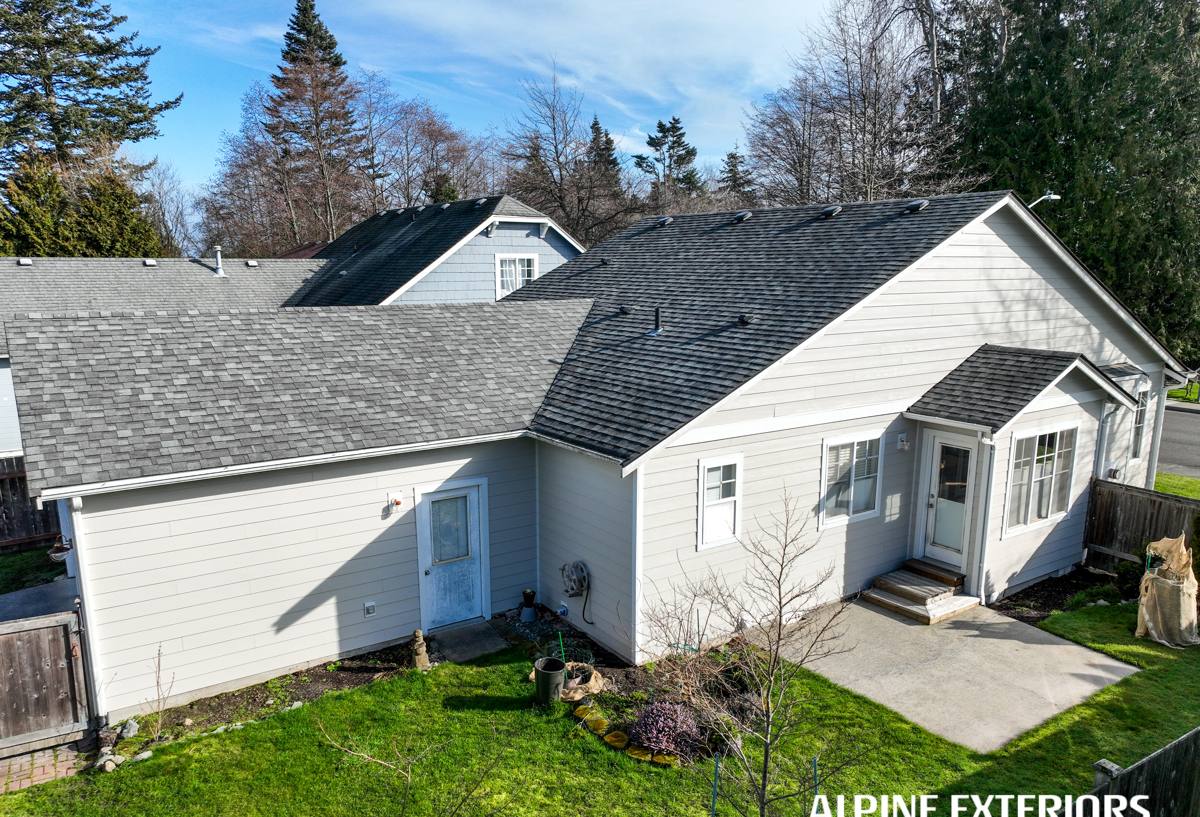
Why We Only Install James Hardie Fiber Cement
We get asked fairly often why we don't offer vinyl, LP SmartSide, or one of the other fiber cement brands like Allura or Cemplank. The honest answer is that we standardized on James Hardie products because, product for product, they hold up best against exactly the conditions Kendall throws at a house — moisture, shade, and years of repeated wetting and drying.
- Non-combustible core: fiber cement doesn't burn, unlike vinyl or wood-based products, which matters in a county where wildfire smoke and dry-summer risk have both become more part of the conversation.
- Moisture behavior: Hardie's fiber cement doesn't swell, rot, or delaminate from repeated wetting the way engineered wood siding can if a seam or cut edge isn't sealed correctly.
- Factory-applied ColorPlus finish: baked-on in a controlled environment rather than field-painted, so the finish resists the fading and peeling that shaded, damp walls are hardest on.
- Climate-engineered HZ10 formulation: Hardie makes region-specific product lines, and the HZ10 line is built for exactly the wetter, milder climate zones the Pacific Northwest falls into.
- Warranty structure: a long, transferable limited warranty backed by a large manufacturer, which matters more on a rural property that may change hands someday than a lot of homeowners initially realize.
We're not going to tell you vinyl or engineered wood siding is junk — vinyl is inexpensive and low-maintenance in the sense that it doesn't need paint, and LP SmartSide has a real following for a reason. But vinyl can warp and fade in prolonged damp-and-sun cycling, and any wood-based product lives or dies by how well every cut edge and seam gets sealed and maintained. On a shaded, moisture-heavy lot like a lot of Kendall properties, that's a maintenance bet we don't want to make on your behalf. Fiber cement removes most of that risk from day one.
Siding, Roofing, Windows, and Decks — Treated as One System
A house is a system, not a set of separate products, and nowhere is that more obvious than on a shaded, damp lot. Siding that's installed perfectly but backed by a failing roof edge or a leaking window flashing will still take on water. That's why we look at the whole exterior envelope, not just the trade we're there to quote.
Siding
James Hardie lap siding, panel siding, and trim, installed to manufacturer spec with correct fastening, clearances, and flashing details — the details that matter most in a high-moisture microclimate like Kendall's.
Roofing
Roofing takes the first hit from driving rain and moss buildup. We pay close attention to underlayment, ventilation, and valley and flashing details, since a roof that traps moisture underneath the surface will show it in the attic and eaves long before it shows on the shingles themselves.
Windows
Window flashing and sealing is one of the most common failure points we find on older homes in shaded, wind-exposed locations. Wind-driven rain finds any gap in the flashing sequence around a window opening, and on a tree-covered lot that gap gets tested constantly.
Decks
Decks in a moss-prone, shaded area need material choices and drainage details that account for slow drying — good gapping, ledger flashing, and surface materials that won't turn slick and green within a season or two.
Comparing Common Siding Options for a Kendall-Area Home
| Material | Moisture Resistance | Maintenance | Fire Resistance | Typical Lifespan |
|---|---|---|---|---|
| James Hardie Fiber Cement | Excellent — engineered for wet climates (HZ10) | Low — factory finish, occasional wash | Non-combustible | 30+ years |
| Vinyl Siding | Fair — can trap moisture behind panels | Low, but can fade/warp in sun-shade cycling | Combustible, can melt/deform | 20-30 years |
| LP SmartSide / Engineered Wood | Good if sealed correctly, vulnerable at cut edges | Moderate — edge sealing and paint upkeep matter | Combustible | 20-30 years with upkeep |
| Cedar / Primed Spruce | Fair — natural material, needs consistent finish upkeep | High — repainting/staining cycle | Combustible | Varies widely with maintenance |
None of these are bad materials in the abstract — they're just built around different trade-offs. Given how much shade and moisture a Kendall-area lot can carry through the year, we've found that the lower long-term maintenance burden and moisture stability of fiber cement pays for itself in fewer callbacks, less repainting, and less worry.
What a Project Looks Like Out Here
Rural and semi-rural lots around Kendall come with their own logistics — longer driveways, septic systems to work around, well locations, sometimes limited staging space near the house. A crew that's used to working in-town on tight suburban lots isn't always thinking about those things ahead of time. We plan material staging, dumpster placement, and access around the property's actual layout before the first day of work, not after we've already blocked the driveway.
What to Expect From Us Locally
- An in-person estimate that looks at drainage, shade patterns, and existing moisture damage — not just a square-footage number
- Straight talk about what your existing siding, roof, or windows actually need versus what can wait
- James Hardie fiber cement as our siding recommendation, with the reasoning explained, not just assumed
- A crew that shows up on the schedule we give you and communicates if weather in the foothills pushes a date
- Attention to flashing, ventilation, and moisture details — the parts of the job that don't show up in photos but decide how the house performs in year 10
Why a Local Crew Matters Here
There's a real difference between a contractor who's driven through Whatcom County and one who works in it every week. We know which parts of the county hold moisture longer, which lots need extra attention to shade and drainage, and how the coastal-influenced weather patterns coming off the Salish Sea tend to hit different parts of the county unevenly. That local knowledge shapes real decisions — how we detail flashing, which side of a house needs the most attention, how we sequence a project around the wetter months.
It also means accountability. A local company with a physical presence in the community isn't going anywhere after the invoice is paid, and that matters on exterior work where problems — if they show up — often don't appear until a full wet season has passed.
Maintenance Realities for Kendall-Area Homes
Whatever siding, roofing, or deck material a home has, a shaded, damp lot needs a bit more attention than a sunny in-town one. A few honest, non-alarmist basics:
- Keep gutters clear — clogged gutters send water down the wall face instead of away from it, and that's where moss and staining start
- Trim back vegetation that's shading walls or resting against siding, since airflow is one of the cheapest ways to fight moss
- Have roofing and flashing checked periodically rather than waiting for a visible leak, since moisture problems in a shaded assembly tend to build quietly
- Wash siding surfaces occasionally rather than letting moss and algae establish for multiple seasons
None of this is exotic — it's the same short list we'd give any homeowner in a shaded, high-moisture part of the county. The point is just that it matters more here than it does on an open, sunny lot.
Getting Started
If your Kendall-area home is showing moss buildup, staining, soft spots, or you're just planning ahead for a siding, roofing, window, or deck project, we're glad to come take a look. We'll walk the property, talk through what we see, and give you a straightforward estimate with no pressure to sign anything on the spot.