 Lynden Siding
 Blaine's Coastline Is Hard on Decks
Homes near Semiahmoo Bay and Drayton Harbor sit in a different environment than most of Whatcom County. The same salt-laden air that makes Blaine's waterfront desirable also speeds up corrosion on anything metal, and the wind off the Strait of Georgia drives rain sideways into places a deck was never designed to shed water from. Add in a wet season that can stretch from October well into spring, and you get long stretches where a deck surface barely dries out between storms. That combination of salt, driving rain, and prolonged dampness is what separates deck repair in Blaine from deck repair twenty minutes inland in Lynden, where the air is drier and the wood movement is more predictable.
None of this means a deck in Blaine is doomed to fail early. It means the repair work has to account for corrosion and moisture in ways that a generic repair job often skips.
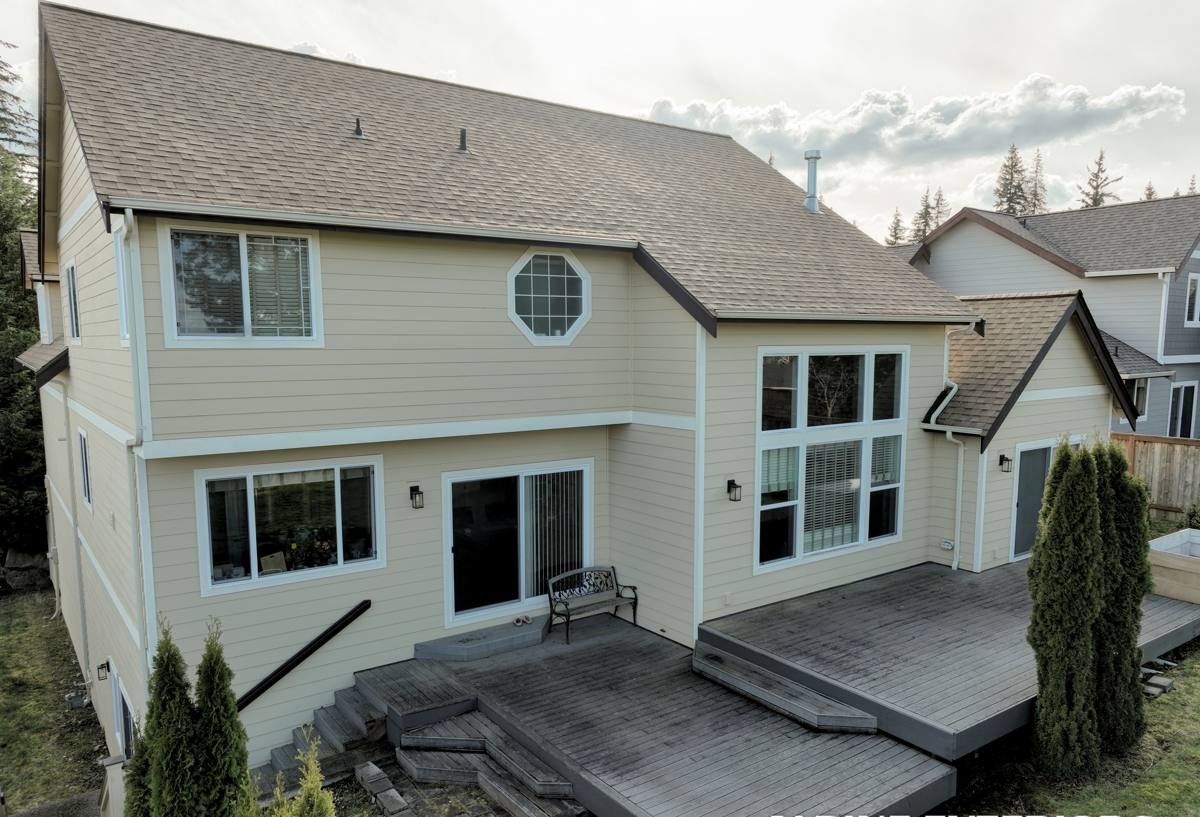
Where Coastal Deck Damage Actually Starts
Fastener and Hardware Corrosion
Standard galvanized nails, screws, and joist hangers hold up fine in most inland settings, but salt air attacks the zinc coating faster near open water. Once that coating is compromised, rust takes hold at the fastener heads first — often the earliest visible sign of trouble, even while the surrounding lumber still looks fine. Left alone, corroded fasteners lose their grip strength long before the wood around them shows obvious rot.
Ledger Board and Flashing Failures
The ledger board — where the deck attaches to the house — is the single most common point of structural failure on any deck, coastal or not. In Blaine, driving rain pushes water up and under flashing details that would stay dry in a calmer climate. Once water gets behind the ledger, it can rot the band joist and the ledger itself from the inside, often invisible until the deck starts to feel spongy or pull away from the house.
Moss, Algae, and Slick Surfaces
Long wet seasons grow moss and algae on horizontal wood surfaces, especially shaded decks or areas that don't get afternoon sun. Beyond the slip hazard, moss holds moisture against the decking boards continuously, which accelerates rot in a way that occasional rain on a dry-drying surface does not.
Signs Your Blaine Deck Needs Repair, Not Just Cleaning
A pressure wash or a coat of sealant can mask surface problems for a season, but it won't fix what's happening underneath. Watch for:
- Soft, spongy, or bouncy spots when you walk across the deck
- Boards that stay damp or dark long after the rest of the deck has dried
- Rust streaks running down from screw heads or joist hangers
- Any gap or separation where the deck meets the house (ledger board)
- Railing posts that wiggle or feel loose at the base
- Stair stringers that flex or creak under normal weight
- Persistent moss or algae that returns within weeks of cleaning
- Visible cracks running with the grain on structural framing members (not just surface checking on decking boards)
Any one of these on its own might be minor. Several together usually mean water has been getting into the structure for a while.
Repair or Replace? What Actually Drives the Decision
Not every deck problem calls for a full rebuild, and not every deck problem should be patched. The honest answer depends on what's failing and where.
| What We Find | Likely Cause | Typical Scope |
|---|---|---|
| Surface graying, minor splinters, cosmetic wear | UV exposure, age, normal weathering | Cleaning, sanding, refinishing — no structural repair needed |
| A few soft boards, isolated rust at fasteners | Localized water pooling or aging hardware | Spot repair: replace boards, swap fasteners to corrosion-resistant hardware |
| Soft framing near the ledger, gap at the house | Failed or missing ledger flashing | Ledger and flashing repair, possible band joist replacement |
| Loose railing posts, code-height issues | Rotted post base or outdated railing construction | Railing and guard system rebuild to current code |
| Widespread soft or rotted framing across the deck | Long-term moisture intrusion, deferred maintenance | Full or near-full rebuild — repair would not be cost-effective |
We'll always tell you plainly when a deck has crossed the line from "repairable" to "better off rebuilt." Patching a deck whose framing is compromised throughout isn't a favor to you — it just delays a bigger job and adds cost.
What a Correct Deck Repair Actually Involves
Structural Framing First
Before anything cosmetic happens, we check the ledger board, band joist, beams, and posts. This is where the deck's real strength lives, and it's the part that's hardest to inspect once the decking boards are back down. Any repair that skips a hands-on check of the framing — probing for soft wood, checking hanger condition, confirming the ledger attachment — is incomplete, no matter how good the new boards look on top.
Ledger and Flashing Detail
If the ledger flashing is the problem, it gets properly corrected, not just resealed with caulk. That typically means removing enough siding or trim to install flashing that actually sheds water away from the house framing, sized and lapped correctly for a home taking on driving rain from the water side.
Decking and Fastening
Replacement boards get fastened with hardware rated for the exposure — not whatever happens to be on the shelf. On a Blaine deck, that generally means stainless steel or high-grade coated fasteners rather than standard galvanized, especially anywhere close to open water.
Railings and Code
Guardrail height, baluster spacing, and stair railing requirements are governed by Washington building code, and older decks sometimes predate the current standard. Any time we're rebuilding a railing section, we bring it up to current code rather than matching an outdated original.
Our Deck Repair Process
The process is the same whether the job turns out to be a small fix or a larger rebuild — we just don't know which one it is until we look closely.
- Full inspection. We walk the deck, probe suspect boards and framing with a screwdriver or moisture meter, and check the ledger connection from underneath where possible.
- Honest diagnosis. We tell you what's cosmetic, what's structural, and what's somewhere in between — before any work starts, not after we've opened things up.
- Written scope and estimate. You get a clear description of what will be repaired, what materials and hardware we're using, and why.
- The repair itself. Framing and flashing corrections happen first, then decking, then railings — in that order, because each layer depends on the one underneath being sound.
- Final walkthrough. We check the deck together before we consider the job done, including a look at drainage and any spots prone to standing water.
Materials and Hardware We Use Near Salt Air
Coastal exposure changes what counts as the right material for the job, not just the right technique.
Fasteners and hardware: our standard for Blaine repairs is stainless steel or marine-grade coated fasteners and connectors, not standard galvanized. It costs more up front and it's worth it — replacing rusted-out hardware in five years costs more than doing it right once.
Decking material: both wood and composite decking work in Blaine's climate, but they carry different trade-offs. Wood decking is less expensive initially and repairs board-by-board easily, but it needs regular cleaning, sealing, and moss management to hold up in a wet climate. Composite decking resists moisture and moss better and needs less annual upkeep, but it costs more up front, and not every composite product handles ground-level or poorly ventilated installations equally well — we'll talk through what fits your specific deck rather than defaulting to one answer.
Flashing: we use flashing rated for the exposure at hand, correctly lapped and sealed at the ledger, rather than relying on caulk alone to keep water out over the long run.
Keeping a Blaine Deck Healthy Between Repairs
A repaired deck still needs seasonal attention in this climate. A few habits go a long way:
- Sweep debris and standing leaves off the deck regularly through fall, since trapped organic matter holds moisture against the boards
- Address moss as soon as it appears rather than waiting for a spring deep-clean
- Check railing posts and stair treads for looseness once a year, ideally before the wet season starts
- Keep an eye on the ledger area where the deck meets the house — it's the spot most likely to show early water damage
- Reseal or refinish wood decking on the manufacturer's recommended schedule rather than stretching it an extra year or two
Why Work With a Crew That Already Knows Blaine
Deck repair in a coastal Whatcom County town isn't the same trade as deck repair inland, even a short drive away. A crew that regularly works Blaine already knows which fastener grade holds up near the water, how far driving rain travels under a poorly flashed ledger, and how aggressive moss growth gets on a shaded, unheated deck through a Pacific Northwest winter. That familiarity means fewer surprises mid-repair and a more accurate estimate the first time — not a change order once the old decking comes up and the real condition of the framing is visible.
It also means straight answers. A deck doesn't need a full rebuild just because it's easier to sell than a targeted repair, and it shouldn't get a quick patch when the framing underneath is already compromised. We'll tell you which situation you're actually in.
If you've got soft spots, rust stains, a shaky railing, or a deck that just doesn't feel right underfoot, we're happy to take a look. Reach out for a free, no-pressure estimate using the form below — we'll give you a straight read on what's going on and what it would take to fix it right.