 Lynden Siding
 Roofing in a Coastal Wind Corridor
Blaine sits at the northwest corner of Whatcom County, right where Boundary Bay and Semiahmoo Bay funnel wind and weather straight off the water. Homes here take a different kind of beating than roofs ten miles inland. It's not just the occasional big windstorm — it's the steady, year-round combination of salt-laden air, wind-driven rain, and long stretches of damp shade that wear a roof down faster than most homeowners expect.
Storm damage doesn't always announce itself with a dramatic hole in the roof. More often it shows up as a handful of lifted shingles after a windy night, a slow leak that starts three storms after the wind event that actually caused it, or flashing that's worked itself loose and just hasn't let water in yet. Our job is to find that damage before it becomes a bigger repair, and fix it in a way that holds up to the next storm — not just patch it and hope.
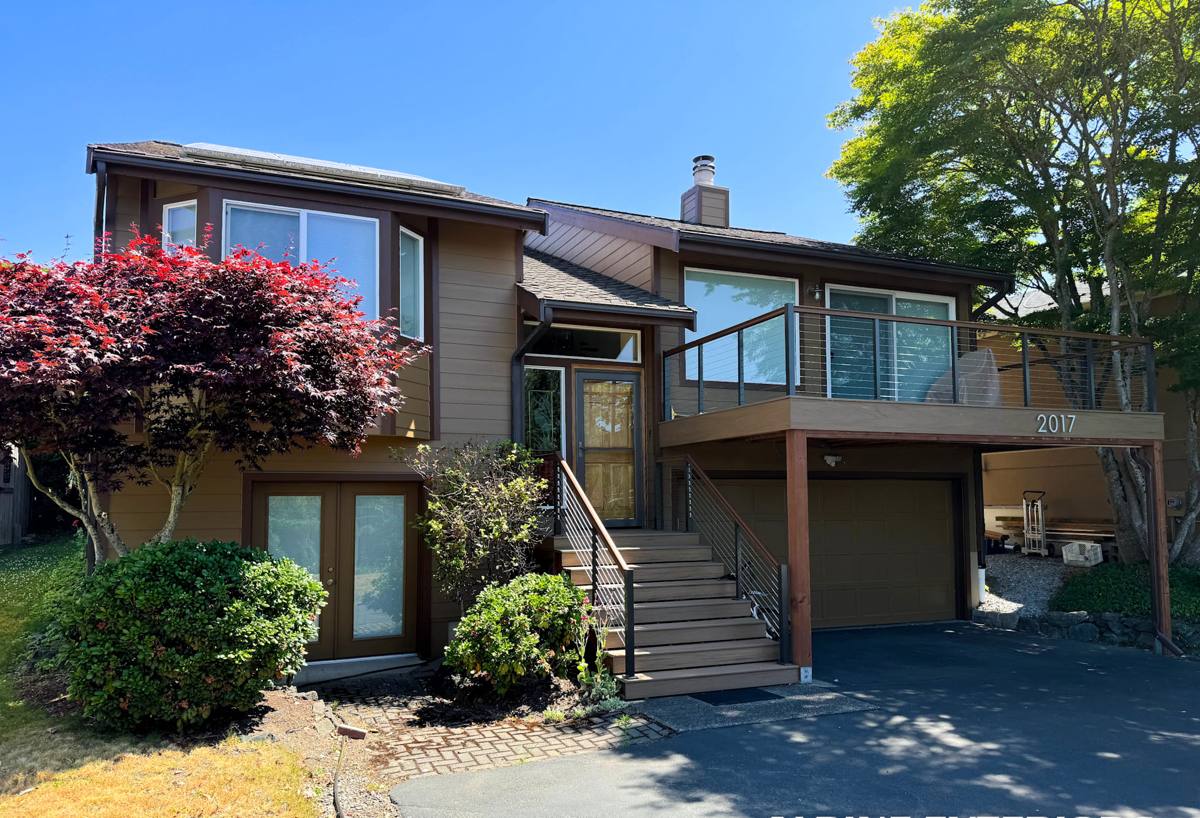
What Makes Blaine's Climate Hard on Roofs
Salt Air and Metal Fatigue
Proximity to saltwater accelerates corrosion on anything metal on a roof — flashing, nail heads, vent stacks, gutter hardware, and the fasteners holding shingles or metal panels down. Salt air doesn't need a storm to do damage; it works slowly, every day, on top of whatever a storm does mechanically. When we're repairing storm damage in Blaine, we're always checking whether the metal components nearby are already compromised, because a repair built around corroding flashing won't last.
Driving Rain
Wind off the water pushes rain sideways, not straight down. That matters because a roof system designed only to shed water vertically can still leak under wind-driven rain, even with intact shingles, if the underlayment, flashing laps, and edge details aren't done correctly. A lot of the "mystery leaks" we get called out for after a storm trace back to water being forced uphill or sideways under a lap that was never sealed for that kind of exposure.
Moss and Prolonged Dampness
Whatcom County's long wet season and heavy tree cover mean moss isn't a cosmetic issue — it's a structural one. Moss holds moisture against the roofing material, lifts shingle edges as it grows, and creates channels for wind-driven rain to get underneath. A storm that would have caused minor granule loss on a clean roof can tear moss-lifted shingles loose entirely, because the moss has already broken the seal that normally keeps them locked down.
What Actually Counts as Storm Damage
Homeowners often assume storm damage means missing shingles or a visible hole. In practice, most of what we repair after weather events in this area falls into a few categories:
- Wind-lifted or creased shingles — the sealant strip breaks, the shingle lifts, and it may not blow off entirely but no longer seals properly
- Granule loss from wind-driven rain and debris, which exposes the asphalt mat to UV and moisture
- Flashing displacement around chimneys, skylights, and roof-to-wall transitions, where wind can work fasteners loose over time
- Debris impact from branches, especially on tree-lined lots common around Blaine
- Ridge cap and hip damage, since these are the highest-exposure points on a roof
- Gutter and fascia damage that lets water track back into the roof edge or soffit
Some of this is visible from the ground. A lot of it isn't, which is why a proper storm inspection means getting on the roof, not just looking up from the driveway.
What a Correct Storm Repair Involves
A storm repair done right isn't just replacing what's obviously missing. It has a few consistent steps regardless of the size of the job:
1. A Full-Roof Inspection, Not a Spot Check
Wind damage rarely stays in one tidy area. We check the whole roof — all slopes, all penetrations, all edges — because the spot a homeowner noticed is often not the only spot affected. Missing this is how a "small repair" turns into a callback six weeks later.
2. Matching Materials, Not Just Available Materials
Patching a storm-damaged section with mismatched shingles or the wrong flashing profile might solve the leak short-term but creates a weak point and an eyesore. We match shingle type, color line, and exposure as closely as the existing roof allows, and we use flashing and fasteners rated for coastal exposure rather than whatever's cheapest.
3. Correct Flashing and Underlayment Detail
Given how much of our leak repair work traces back to flashing and lap details rather than the shingles themselves, we treat this as the part of the job that actually determines whether the repair lasts. That means proper step flashing at walls, correctly lapped underlayment, and sealed fastener penetrations — not just caulk over the old problem.
4. Temporary Protection When Needed
If a repair can't happen immediately — parts on backorder, weather not cooperating, insurance process still running — we tarp and secure the area properly so the interior of the home stays protected in the meantime.
How Our Process Works
- Contact and initial description. You tell us what you noticed and when the storm hit; we get a rough sense of scope before we come out.
- On-site inspection. We get on the roof, document what we find with photos, and identify every affected area — not just the one you saw.
- Written scope and estimate. You get a clear explanation of what's damaged, what needs repair versus what's cosmetic, and an honest cost range.
- Insurance documentation, if applicable. If you're filing a claim, we provide the photos and written findings your adjuster will need.
- Repair work. Matched materials, correct flashing detail, and cleanup of the work area — including magnet-sweeping for stray nails and debris.
- Final walkthrough. We show you what was done and what to watch for going forward.
Repair or Replace? How to Think About It
Not every storm-damaged roof needs to be replaced, and not every repair is the right long-term call either. The decision usually comes down to the roof's age, how widespread the damage is, and what condition the rest of the roofing system is in.
| Factor | Repair Is Usually Right | Replacement Should Be Considered |
|---|---|---|
| Roof age | Under roughly 10-12 years, in otherwise sound condition | Nearing or past the manufacturer's expected service life |
| Extent of damage | Isolated to one section or a handful of shingles | Spread across multiple slopes or recurring in the same areas |
| Underlying condition | Decking and underlayment are sound where exposed | Soft decking, widespread moss damage, or prior repairs stacking up |
| Moss and granule condition | Minimal moss, granules intact on most of the roof | Heavy moss history or significant granule loss roof-wide |
| Insurance outcome | Claim covers targeted repair scope | Adjuster scopes full replacement due to age or damage extent |
We'll give you a straight answer on which category your roof falls into. There's no benefit to us in talking you into a full replacement when a proper repair will genuinely hold — and no benefit to you in patching a roof that's going to keep costing you money in repeat repairs.
Working With Insurance on Storm Claims
Most storm damage repair in this region involves a homeowner's insurance claim at some point. We're not your insurance company and we don't control what gets approved, but we can make the process smoother:
- We document damage thoroughly with dated photos, taken before any repair work covers it up
- We provide a written scope of damage that matches what your adjuster will be looking for
- We can walk the roof with your adjuster if that's helpful
- We give you an honest assessment of what's storm-related damage versus what's pre-existing wear, because insurers scrutinize that distinction closely
We won't inflate a scope to chase a bigger payout, and we won't tell you something is storm damage when it's really just an aging roof catching up to itself. That kind of honesty is what keeps claims from getting denied or delayed.
Materials Built for This Exposure
For repairs and replacement flashing in a salt-air, high-wind environment like Blaine, we favor corrosion-resistant fasteners and flashing over standard-grade hardware, even when it costs a little more upfront. Standard galvanized fasteners can start showing rust streaks within a few years this close to the water, and once a fastener corrodes, the seal around it goes with it. We also pay close attention to shingle wind ratings when matching or replacing material — a shingle rated for a higher wind exposure holds its seal better through the kind of gusts that come off the bay.
Where moss has been a recurring issue, we'll talk through options like zinc or copper strips near the ridge, which discourage regrowth without chemical treatments that can shorten a roof's life if overused. We're not going to recommend a product because it's trendy — we'll tell you honestly what trade-offs come with each option, including maintenance and cost.
Why a Crew That Already Works Blaine Matters
Storm damage repair isn't just a technical skill — it's knowing the conditions you're building for. A crew that's worked roofs across Whatcom County's coastal edge already knows which slopes in this kind of exposure take the worst wind-driven rain, how fast moss comes back on shaded, tree-covered lots, and what flashing details actually hold up here versus what looks fine on paper. That local pattern recognition is the difference between a repair that's technically correct and one that's built for the specific weather this roof will actually face.
It also means faster response. Storm season brings a wave of calls at once, and having local crews who aren't driving in from far outside the county means quicker inspections and quicker temporary protection when a roof is actively letting water in.
After-Storm Checklist for Homeowners
If you suspect storm damage, here's what's worth doing before a contractor even arrives:
- Check the attic or top-floor ceilings for new water stains, especially after wind-driven rain
- Look at the ground and gutters for granules, shingle pieces, or flashing that's blown loose
- Take photos from the ground of anything visibly out of place — don't get on the roof yourself
- Note the date and general weather conditions of the storm for insurance purposes
- Avoid DIY tarping on steep or wet roofs — it's a common cause of fall injuries after storms
- Call for an inspection promptly; small lifted shingles left through another storm often become full leaks
Preventing the Next Round of Damage
A storm repair is a good moment to address the conditions that made the damage worse than it needed to be. If moss contributed to shingles lifting, that's worth tackling separately from the repair itself. If flashing elsewhere on the roof is showing early corrosion, replacing it now is far cheaper than waiting for it to fail during the next windstorm. We'll always point out what we see, even outside the immediate repair scope, so you can plan ahead instead of getting surprised again next storm season.
If you've got storm damage on your Blaine roof — or you're just not sure whether what you're seeing needs attention — we're glad to take a look. Estimates are free, there's no pressure to move forward, and you'll get a straight answer about what your roof actually needs.