 Lynden Siding
 Siding in Sumas: A Climate That Doesn't Let Up
Sumas sits at the edge of the Nooksack Valley, close enough to the water and the weather systems that roll off the Pacific that homes here take a steady beating from moisture almost year-round. It's not one dramatic storm that wears down a house in this part of Whatcom County — it's the accumulation. Salt-tinged marine air, driving rain that comes in sideways during the fall and winter months, and a moss season that can stretch from October well into spring all work on exterior surfaces at the same time, and most siding materials weren't built to handle all three at once.
We're a Lynden-based crew, and Sumas is part of the territory we know well. That matters more than it sounds like it should. A siding job here isn't the same job you'd bid in a drier inland climate or a sheltered urban lot — the moisture load, the exposure, and the way water moves around a farmhouse or a newer subdivision build out here all shape how the work needs to be done.
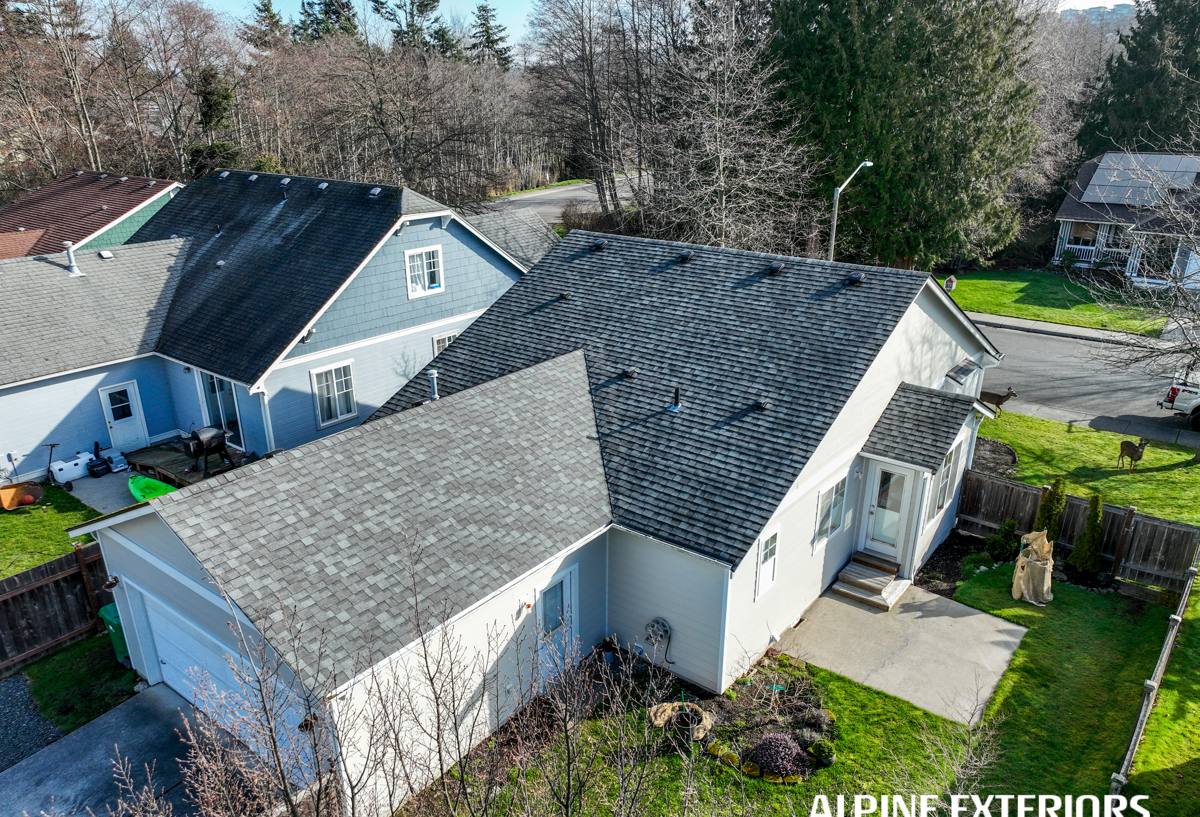
What Constant Moisture Does to a House
Every siding material reacts differently to sustained dampness, and the difference shows up over years, not months. Understanding what's actually happening behind the surface helps explain why we've standardized on one product for this region.
Wood and Wood-Based Products
Cedar and primed spruce siding look good on day one. The problem is what happens after the finish starts to break down — usually faster here than in drier climates because the wood rarely gets a real chance to dry out between rain events. Once moisture gets past the coating, wood siding can cup, split, or start feeding rot and moss growth from the inside out. Repainting and recaulking on a wood-clad home in this climate isn't optional maintenance; it's a recurring cost that homeowners often underestimate when they buy the house.
Engineered Wood Products (LP SmartSide)
LP SmartSide is a legitimate product, and it holds up reasonably well in a lot of markets. It's still a wood-strand product with a resin binder, which means its long-term performance depends heavily on every seam, cut edge, and fastener being sealed correctly and staying that way. In a climate where siding stays wet for days at a stretch through the winter, any gap in that seal — from a missed caulk line to a settling crack — gives moisture a path in, and engineered wood swells and deteriorates once water gets past the coating. We don't install it, not because it's a bad product everywhere, but because we don't think it's the right call for the moisture load this part of Whatcom County sees.
Vinyl Siding
Vinyl won't rot, which is a real advantage. But it's a thin material that flexes with temperature swings, can crack in a hard impact, and — most relevant here — doesn't stop moisture from getting behind it. Vinyl siding is installed loose by design, which means water that gets past the seams has to find its way back out through the wall assembly. In a climate with this much sustained rain, that assumption puts a lot of faith in a house wrap and flashing system that may or may not have been installed perfectly. Vinyl also fades unevenly under UV exposure over time, which is its own long-term appearance problem.
Other Fiber Cement Brands (Cemplank, Allura)
These are genuine fiber cement products and share Hardie's core resistance to moisture and fire. Where they tend to differ is in finish quality, warranty structure, and how consistently they're engineered for specific climate zones. We made a decision to standardize on one manufacturer so we can guarantee installation practices, product performance, and warranty coverage without having to qualify our answer by brand.
Why We Install Only James Hardie Fiber Cement
James Hardie siding is cement, sand, and cellulose fiber — not wood, and not vinyl. It doesn't absorb water the way wood-based products do, and it doesn't rely on flexible seams the way vinyl does. That's the core reason it performs differently in a climate defined by prolonged dampness rather than short, hard storms.
A few specifics that matter for a Sumas home:
- Non-combustible core — fiber cement doesn't burn, feed, or spread fire the way wood-based siding can.
- HZ5 climate engineering — Hardie manufactures siding formulated for specific climate zones, and the HZ5 line is built for the Pacific Northwest's wet, moss-prone conditions rather than a generic national spec.
- ColorPlus factory finish — the color is baked on in a controlled factory process, not brushed on at the jobsite, which is a meaningfully different (and more durable) finish than field-applied paint.
- Dimensional stability — fiber cement doesn't swell and shrink with moisture the way wood and engineered wood products do, so seams and paint lines stay tighter for longer.
- Transferable warranty — a real factor if a Sumas home changes hands, since the coverage isn't tied to the original owner.
None of that means Hardie is maintenance-free. It's a cement product, so it's heavy, it needs to be cut and fastened correctly, and it still needs periodic cleaning to keep moss and mildew from taking hold in a climate like this one. But the failure modes that plague wood and engineered wood siding in wet climates — rot, swelling, delamination — aren't a factor with fiber cement installed to spec.
Beyond Siding: Roofing, Windows, and Decks
Siding doesn't work in isolation. A house is a system, and the same moisture that attacks siding attacks the rest of the exterior envelope, so we handle the full picture rather than treating siding as a standalone project.
Roofing
A roof that's shedding granules, holding moss, or leaking at the flashing will undermine even a brand-new siding job by pushing water down behind the wall assembly. When we're on-site for a siding estimate in Sumas, we'll flag roof issues that are likely to become your next problem.
Windows
Old or poorly flashed windows are one of the most common sources of hidden water intrusion behind siding. Replacing siding around failing window flashing just buries the problem under new material. We check window condition and flashing detail as part of any siding scope.
Decks
Outdoor living structures take the same rain and moss exposure as siding, just horizontally instead of vertically, which is actually harder on materials. If your deck is part of the same exterior refresh, we can scope that work alongside the siding so the whole project is coordinated instead of scheduled separately with different crews.
What a Siding Replacement Project Actually Involves
A proper tear-off and re-side isn't just swapping old boards for new ones. Here's the general sequence for a full siding replacement:
- On-site inspection and estimate, including a check of sheathing, flashing, and window/door integration
- Removal of existing siding down to the sheathing
- Sheathing repair or replacement where moisture damage is found
- Installation or correction of the water-resistive barrier (house wrap) and flashing details
- Installation of James Hardie fiber cement siding per manufacturer fastening and clearance specifications
- Trim, caulking, and final paint-line detailing
- Cleanup and final walkthrough
Step 3 is the one homeowners are most often surprised by. In a climate this wet, it's common to find some degree of sheathing damage once old siding comes off, especially around window corners and lower wall sections where water tends to pool or wick. A contractor who rushes past that step to get siding back on faster is doing the house a disservice.
What to Check Before You Sign a Siding Contract
- Does the bid specify James Hardie (or your chosen product) by name, line, and color — not just "fiber cement siding"?
- Is sheathing inspection and repair addressed explicitly, or only mentioned as a possible change order?
- Does the contractor carry current WA state licensing and insurance, and will they provide proof without being asked twice?
- Is the manufacturer's installation spec (fastener pattern, clearances, flashing) part of the written scope?
- Does the warranty cover both material and labor, and is it clear who you'd contact if an issue shows up in year five?
- Are they local enough to respond quickly if a warranty or weather issue comes up after the job is done?
Cost Factors for a Sumas Siding Project
Every house is different, so we don't publish blanket per-square-foot pricing — a real number requires seeing the house. But the following factors are what actually move a bid up or down, and knowing them ahead of time makes for a more useful conversation with any contractor.
| Factor | Why It Matters |
|---|---|
| Sheathing condition | Hidden moisture damage found during tear-off adds repair scope that can't always be predicted from the outside |
| Home size and wall complexity | Dormers, multiple gables, and cut-up wall lines take more labor per square foot than a simple rectangular footprint |
| Siding profile and accessories | Lap siding, shingle-style panels, and trim/batten details vary in material and labor cost |
| Color program | ColorPlus factory finishes come in a standard palette; custom field-painted color adds cost and changes the warranty picture |
| Access and site conditions | Steep grades, tight lot lines, or landscaping close to the house can slow tear-off and staging |
| Bundled work | Combining siding with window, trim, or deck work in one mobilization is usually more efficient than scheduling separately |
Why a Local Crew Matters in Sumas
Sumas is a small, close-knit community, and it's easy for it to fall outside the standard service radius of siding companies based further south or focused on bigger metro markets. Being based in Lynden means we're not treating a Sumas job as an out-of-territory trip — it's part of the area we work in regularly, which affects everything from how quickly we can get to an estimate to how we respond if a warranty question comes up years down the road.
It also means we've seen how houses in this specific pocket of Whatcom County actually age. The combination of driving rain, moss pressure, and the agricultural, semi-rural character of a lot of Sumas properties shapes what we look for during an inspection — things like moss buildup patterns on north-facing walls, moisture staining near grade, and how older farmhouse-style siding has held up compared to newer builds.
Living With Fiber Cement Siding: Maintenance Reality
Hardie siding is low-maintenance, not no-maintenance, especially in a climate that grows moss this readily. A realistic annual routine:
- Rinse siding with a garden hose or soft wash setup — avoid high-pressure washing directly at seams and edges
- Trim back vegetation and tree limbs that keep sections of wall shaded and damp
- Check caulking at trim, window, and door edges yearly and re-caulk where it's cracked or pulled away
- Clear debris from window sills, deck ledgers, and anywhere water can pool against the siding
- Address moss on siding early with a gentle cleaning solution rather than letting it establish and spread
Keeping up with this short list is the difference between siding that looks good for its full service life and siding that starts showing moss streaking and grime buildup within a few years.
If you're weighing a siding project on a Sumas home — or want a second opinion on what a previous estimate included — we'll walk the exterior with you, point out what we actually see, and put together a straightforward, no-pressure estimate. There's no cost or obligation to have us take a look.