 Lynden Siding
 James Hardie Siding for Blaine: Matching the Product to the Coastline
Blaine sits right at the water, along Semiahmoo Bay and Drayton Harbor at the northern edge of Whatcom County, and that position shapes what a siding system actually has to survive here. This page isn't a general overview of exterior work in Blaine — it's focused on one product and one job: James Hardie fiber cement siding, and what it takes to install it correctly on a Blaine home so it holds up the way it's rated to. We're based in Lynden, a short drive down the road, and Blaine is regular territory for our crew, not a town we bid occasionally and move on from.
James Hardie is the only siding system we install, anywhere. That standard matters more in a town like Blaine than it does further inland, because salt air, wind-driven rain, and a long moss season all narrow the gap between a siding job that lasts decades and one that starts showing problems within a handful of wet seasons.
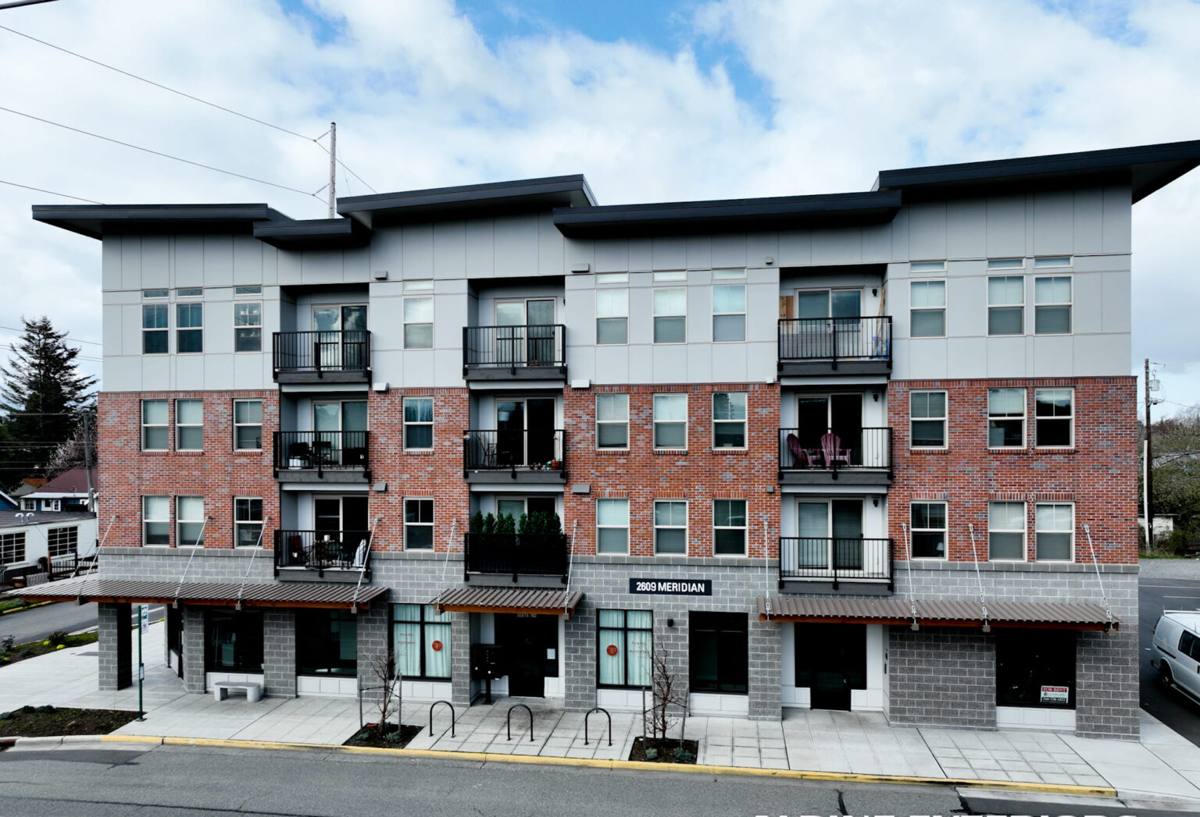
What Salt Air and Storms Off the Water Put a Wall System Through
Salt-Laden Air, Not Just at the Waterfront
Homes close to the bay and harbor take a steady, near-daily dose of salt-carrying marine air, and it doesn't stop at the properties with a water view. Salt accelerates corrosion on fasteners, flashing, and any exposed metal trim, and it wears down lower-grade finishes faster than they'd wear inland. For siding specifically, that means the fastener type and the finish quality matter as much as the cladding material itself — a great material installed with the wrong hardware still corrodes early.
Wind-Driven Rain
Storm systems coming off the water rarely drop rain straight down. Wind pushes it sideways into wall assemblies, trim joints, and the seams where a roof meets a wall, which puts more pressure on flashing and joint details than a simple rainfall total would suggest. A siding installation that would hold up fine in a calm, dry climate can fail here specifically because water finds a sideways path in, not a straight-down one.
A Moss Season That Runs Most of the Year
Mild temperatures and near-constant moisture give moss and mildew a long growing season on shaded or north-facing walls. Any cladding material that holds moisture against the substrate, or that's even slightly porous, becomes a growth surface over time. That's one of the reasons material choice matters as much as maintenance here — some products fight this tendency better than others by design.
The James Hardie Product System We Install
"James Hardie siding" isn't one product — it's a system of profiles that get matched to different parts of a house. Understanding which piece does what helps explain why the finished result on a Blaine home looks and performs differently than a single generic siding panel run wall to wall.
| Product | Typical Use on a Blaine Home | Why It Fits This Climate |
|---|---|---|
| HardiePlank lap siding | Primary field material on most walls | Wide, overlapping courses shed wind-driven rain downward rather than trapping it at a seam |
| HardiePanel vertical siding | Accent walls, gable ends, modern-style facades | Fewer horizontal laps means fewer places for driving rain to test a seam |
| HardieShingle | Shake-look accents on gables and dormers | Delivers a traditional look without wood's moisture sensitivity |
| HardieTrim boards | Corners, fascia, window and door trim | Dimensionally stable trim that won't cup or split the way painted wood trim can near salt air |
Every one of those profiles carries Hardie's factory-applied ColorPlus finish, baked on under controlled conditions rather than brushed on at the job site. That matters in Blaine because a field-applied paint job is the first thing salt air and UV exposure go after; a factory finish holds color and adhesion measurably longer under the same conditions. The boards themselves are built to Hardie's HZ5 formulation, engineered for regions with sustained moisture and freeze-thaw cycling rather than a mild, dry climate — a better match for a bayfront town than a generic fiber cement product built for the national average.
What Correct Installation Actually Involves Here
Hardie siding performs the way the manufacturer's warranty assumes only when the installation follows their published spec, and in a town this exposed to salt air and driving rain, the details that are easy to skip are also the ones most likely to cause a problem first. Before we start a Blaine job, we treat the following as non-negotiable baseline work, not upgrades:
- Rain screen drainage gap: a small cavity behind the siding that lets any moisture past the outer surface drain and evaporate instead of sitting against the sheathing
- Corrosion-resistant fasteners: stainless steel or hot-dip galvanized nails, at Hardie's specified spacing, rather than whatever fastener happens to be cheapest that week
- Properly lapped house wrap and flashing: every seam and penetration shedding water downward and outward, especially on walls that catch wind-driven rain directly
- Sealed butt joints and trim transitions: backer rod and quality sealant at every board end, since open joints are where salt-laden moisture finds its way behind the cladding first
- Correct clearance above grade, roofline, and decks: Hardie specifies minimum clearances for a reason, and shortcutting them traps moisture at the bottom edge
- Sealed or primed field cuts: any edge cut on-site gets treated before it goes up, since a raw cut edge is more absorbent than the factory-finished face
None of this is exotic. It's the manufacturer's own installation spec, applied consistently instead of shortcut on the parts that are hardest to inspect once the siding is up and the scaffolding comes down.
How a Hardie Siding Project Runs on a Blaine Home
Inspection, Wall by Wall
We walk the whole house before writing an estimate, because exposure varies wall to wall on the same property — a bay-facing wall takes a different beating than a sheltered side yard, and the estimate should reflect that instead of treating every elevation the same.
Tear-Off and Substrate Check
Once old siding comes off, we check the sheathing underneath for rot or soft spots before anything new goes up. Covering damaged sheathing with new siding just hides a problem that gets worse behind the wall.
Weather Barrier and Flashing First
This is the step that's invisible once the job is done and the hardest to fix later, so it gets full attention before a single course of siding goes up — house wrap, window flashing, and every penetration.
Installation to Spec
Fastener type and spacing, drainage gap, clearances, and joint treatment all follow Hardie's published installation guide as the baseline, because that's also what keeps the manufacturer's warranty intact.
Final Walkthrough
We walk the finished job with the homeowner and cover basic care expectations before calling it complete.
Cost Factors for a Blaine Hardie Siding Project
| Factor | Why It Affects Cost in Blaine |
|---|---|
| Profile choice (lap, panel, or shingle accents) | More detailed profiles and accent work take more labor time than a straight lap-siding run |
| Trim and corner complexity | Homes with more window returns, corners, and architectural detail need more precise cutting and sealing |
| Tear-off vs. overlay | Removing and disposing of old siding adds labor but lets us inspect and fix the sheathing underneath |
| Substrate repair | Moisture that's already gotten behind older siding, which we see more often this close to the water, adds scope once discovered |
| Site exposure and access | Waterfront and wind-exposed lots can affect scaffolding, scheduling around weather windows, and material handling |
These are general drivers, not a quote. Two Blaine homes a few blocks apart can need very different scopes once we're actually pulling old siding and looking at the sheathing, which is why we walk the property before putting a real number on the work.
Maintenance That Actually Matters This Close to the Water
A correctly installed Hardie system is genuinely low-maintenance, but "low" isn't "none," especially in Blaine. Keeping gutters and downspouts clear reduces splash-back onto lower courses of siding, and an occasional gentle wash keeps grime and early moss from taking hold on shaded walls. It's worth periodically checking caulked joints and trim transitions for cracking or separation, since sealant is the one part of the system that ages faster than the board itself and is cheap to touch up before it becomes an entry point for moisture. Fastener heads are worth a glance too — any sign of rust staining running down from a nail head is worth a call before it becomes a larger repair.
Why a Crew That Already Works Blaine Makes a Real Difference
A siding crew that only sees Blaine occasionally is guessing at things a crew working here regularly already knows: which walls stay wet the longest through a normal winter, how differently a bayfront-facing elevation ages compared to a sheltered lot a couple of streets back, and which fastener and flashing choices are worth the extra time on this stretch of coastline specifically. That familiarity shows up in small, practical decisions on install day rather than in anything a homeowner would think to ask about upfront — where to add extra flashing attention, which corners deserve a second look before they're sealed up, and what's worth doing differently here than on a job forty miles inland. Being based in Lynden means those lessons carry over from one Blaine job to the next instead of starting from scratch each time.
If your Blaine home needs new siding, or you're weighing James Hardie against another product and want a straight answer about what actually fits this location, we're glad to take a look. Reach out using the form below for a free, no-pressure estimate.