 Lynden Siding
 Siding Built for Ferndale's Coastal Edge of Whatcom County
Ferndale sits close enough to Bellingham Bay and the Salish Sea that homes here deal with a different mix of weather stress than properties further inland in Whatcom County. Salt-tinged air off the water, long stretches of driving rain through fall and winter, and a moss season that seems to start earlier and last longer each year all work on exterior siding at the same time. We install and service exteriors throughout the Ferndale area, and this page walks through what that climate actually does to a house and how we build and maintain siding, roofing, windows, and decks to hold up against it.
We are a Lynden-based crew, not a call center dispatching subcontractors from out of the area. That matters more in a town like Ferndale than people expect — knowing which streets sit in a wind corridor off the water, which neighborhoods get shaded long enough to stay damp into the afternoon, and which older homes were built before modern moisture barriers were standard practice all change how we approach a job.
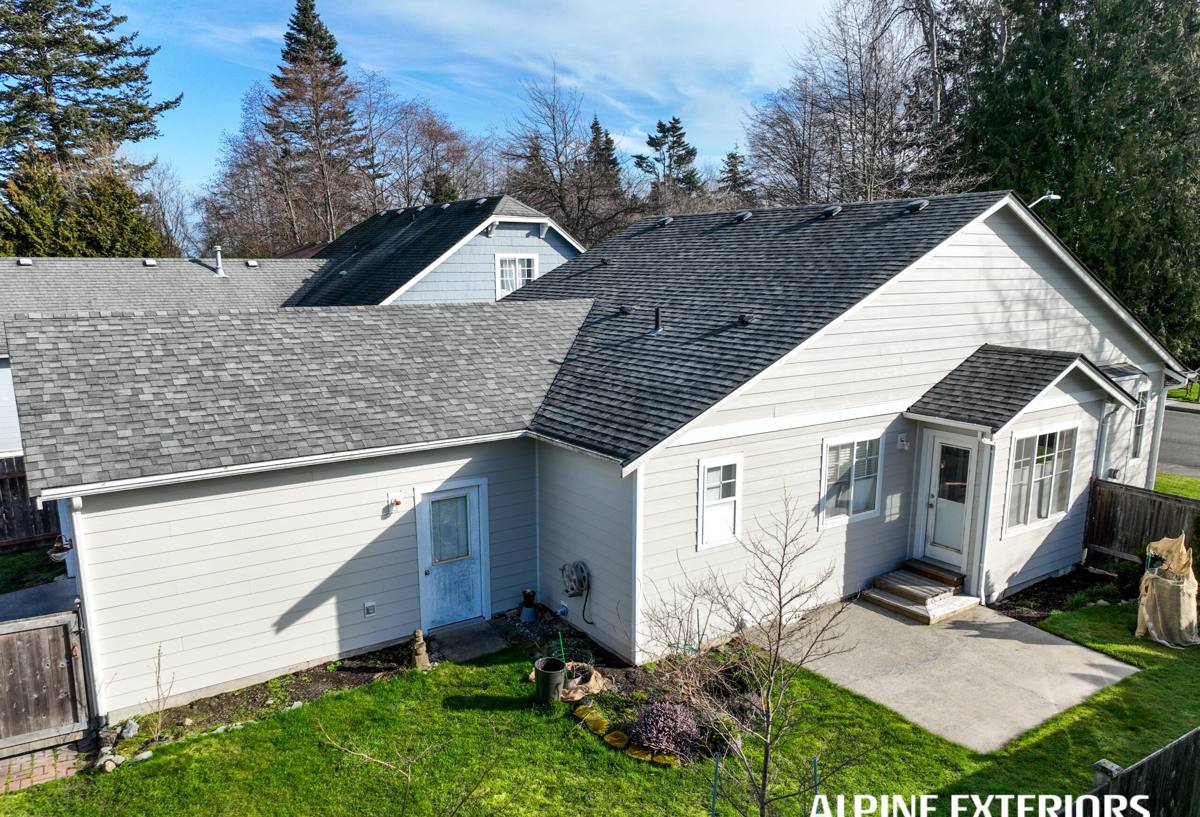
What Ferndale's Climate Does to Exterior Siding
Salt Air and Coastal Moisture
Homes closer to the water pick up airborne salt that settles on exterior surfaces along with everything else. It's not the aggressive corrosion you'd see right on a dock, but over years it contributes to fastener corrosion, accelerates the breakdown of lower-grade paint finishes, and adds to the general moisture load a wall assembly has to manage. Materials and finishes that aren't built to handle repeated wet-dry cycling in a coastal-adjacent climate show it first in fading, chalking, and soft spots at butt joints and trim.
Driving Rain
Whatcom County gets a lot of rain, but it's the wind-driven rain off open exposures near Ferndale that causes the real damage — water pushed sideways into laps, seams, and trim edges rather than just falling straight down. Siding that isn't installed with correct overlaps, flashing, and gapping will let that water behind the cladding, where it doesn't dry out fast in our climate.
Moss and Prolonged Dampness
A long, wet, mild season is exactly what moss wants. It gets a foothold on north-facing walls, under eaves, and anywhere siding stays shaded and damp for days at a stretch. Moss itself doesn't eat through fiber cement, but it holds moisture against the surface longer than bare siding would see on its own, which matters more for wood-based products than for Hardie.
Why We Install Only James Hardie Fiber Cement
We made the decision to install exclusively James Hardie siding — no LP SmartSide, no vinyl, no Cemplank, no Allura, no primed spruce or cedar. That's not a marketing position, it's a standard we hold because of what we've seen these materials do over time in exactly the kind of climate Ferndale sits in.
- Non-combustible core: Hardie's fiber cement composition doesn't burn, which matters in a region where wildfire smoke and dry summer stretches have become a bigger concern than they used to be.
- Engineered for wet climates: Hardie's HZ5 product line is formulated specifically for wetter, harsher climate zones like the Pacific Northwest, not a generic national product retrofitted for our conditions.
- Factory-applied ColorPlus finish: baked-on color resists fading and chalking far longer than field-applied paint, which matters where UV and salt air both work against a finish.
- Doesn't feed moss the way wood-based products can: fiber cement isn't an organic food source, so damp, shaded walls don't create the same long-term surface breakdown you can get with wood or wood-composite siding.
- Strong transferable warranty: backed by installation to spec, which is why our install process follows Hardie's fastening, clearance, and flashing details exactly rather than treating them as optional.
We're upfront that other products have real strengths — LP SmartSide's engineered wood is lighter to handle and less expensive up front, and vinyl is famously low-maintenance in mild, dry climates. But given what salt air, driving rain, and a long moss season do to a house near Ferndale over ten or twenty years, we decided the trade-offs weren't worth it, and we only stand behind one product now.
Siding Installation Details That Matter Here
Water Management Behind the Cladding
Correct installation starts before a single piece of siding goes up. A properly lapped weather-resistant barrier, correctly integrated window and door flashing, and a rainscreen gap where called for all work together to keep wind-driven rain from ever reaching the sheathing. Skipping or shortcutting any one of these steps is exactly how a wall assembly ends up with hidden rot years later, regardless of how good the surface cladding is.
Fastening and Clearances
Hardie siding has specific fastener spacing, penetration depth, and ground-clearance requirements. Getting these wrong doesn't usually show up as a problem in year one — it shows up in year eight or ten as cracking, splitting at fastener heads, or moisture intrusion at the bottom course. We follow the manufacturer's installation specifications because that's also what keeps the warranty valid if something ever does go wrong.
Trim and Joint Detailing
Butt joints, corner boards, and trim-to-siding transitions are where driving rain finds its way in if they're not detailed correctly. We treat these as the most important part of the job, not an afterthought once the field siding is up.
Beyond Siding: Roofing, Windows, and Decks in Ferndale's Climate
Siding doesn't work in isolation — it's one piece of an exterior envelope that also includes the roof, windows, and any exterior decking, and all of them face the same salt air, rain, and moss pressures.
Roofing
Roofs take the brunt of moss growth in this climate, particularly on north- and shade-facing slopes. A roof that's shedding water properly and free of moss buildup also protects the siding below it — clogged gutters and moss mats holding water against a roofline are a common source of water tracking down onto top courses of siding.
Windows
Window flashing integration is one of the most common failure points we find on older Ferndale homes during siding replacement. If a window wasn't flashed correctly to begin with, new siding installed around it without correcting that detail just covers the problem back up.
Decks
Exterior decks near the coast see the same salt air exposure as siding, plus standing water and freeze-thaw cycling in winter. Fastener corrosion and ledger board attachment to the house are the two spots we pay closest attention to.
Cost Factors for Ferndale Siding Projects
Every home is different, but the factors that most often move a project's cost up or down are consistent. This isn't a price list — it's what to expect will be discussed during an estimate.
| Factor | Why It Matters |
|---|---|
| Existing siding removal | Tear-off of old wood, vinyl, or damaged siding adds labor and disposal cost, and can reveal sheathing damage that needs repair before new siding goes on. |
| Home size and complexity | Multiple stories, dormers, and cut-up wall lines take more time to flash and trim correctly than a simple rectangular footprint. |
| Hardie product line and profile | Lap siding, panel systems, and shingle-style profiles differ in material and labor cost; HZ5 formulation is standard for our climate. |
| Trim and accessory work | Corner boards, window trim, and fascia detailing add cost but are where long-term water performance is decided. |
| Underlying moisture damage | Rot or damaged sheathing found during tear-off has to be repaired before new siding goes up — this is common on older homes near the water. |
Maintenance for Ferndale Homes
James Hardie siding is low-maintenance compared to wood, but "low-maintenance" doesn't mean "no maintenance" in this climate. A short annual routine keeps a Hardie exterior performing the way it's designed to.
- Rinse siding annually to remove salt residue and surface grime, especially on sides facing prevailing weather off the water.
- Keep gutters and downspouts clear so roof runoff isn't dumping onto siding below.
- Trim back vegetation and tree cover that keeps a wall shaded and damp longer than it needs to be, which slows moss growth.
- Inspect caulking at trim joints and window perimeters yearly and re-caulk where it's cracked or pulling away.
- Check the bottom starter course periodically for any signs of moisture staining, which can indicate a clearance or flashing issue worth addressing early.
Why a Local Crew Matters for This Job
A crew that works across Whatcom County regularly, rather than one dispatched from another region for a single job, has a working sense of which Ferndale-area conditions to plan around before the first board goes up — how much wind exposure a given lot gets, how long a shaded wall stays wet after a storm, and how older housing stock in this part of the county was typically built and flashed. That local knowledge shows up in the small decisions made on-site, not just in the estimate.
If you're weighing a siding, roofing, window, or deck project on a Ferndale-area home, we're happy to walk the property, look at what your current exterior is dealing with, and put together a straightforward, no-pressure estimate — just fill out the form below.