 Lynden Siding
 Why Blaine Decks Wear Differently Than Decks Inland
Blaine sits right on Semiahmoo Bay and Drayton Harbor, which means any deck built here is dealing with a different set of stresses than a deck going in twenty miles east in Lynden proper. Salt-laden air moves in off the water and settles on every exposed surface — fasteners, flashing, railing hardware, even the underside of the decking itself. Add Whatcom County's driving rain, which tends to come in sideways off the Strait, and a long stretch of the year where moss and algae have every reason to take hold, and you've got a structure that needs to be built for moisture and corrosion resistance from day one, not just for looks.
None of this means a deck in Blaine has to be more expensive or complicated than one anywhere else. It means the material choices, fastener grades, and drainage details need to be right the first time, because this climate does not forgive shortcuts. A deck that would hold up fine in a drier part of the state can start showing corrosion streaks, soft spots, or slick moss growth within a couple of wet seasons if it wasn't built with this specific environment in mind.
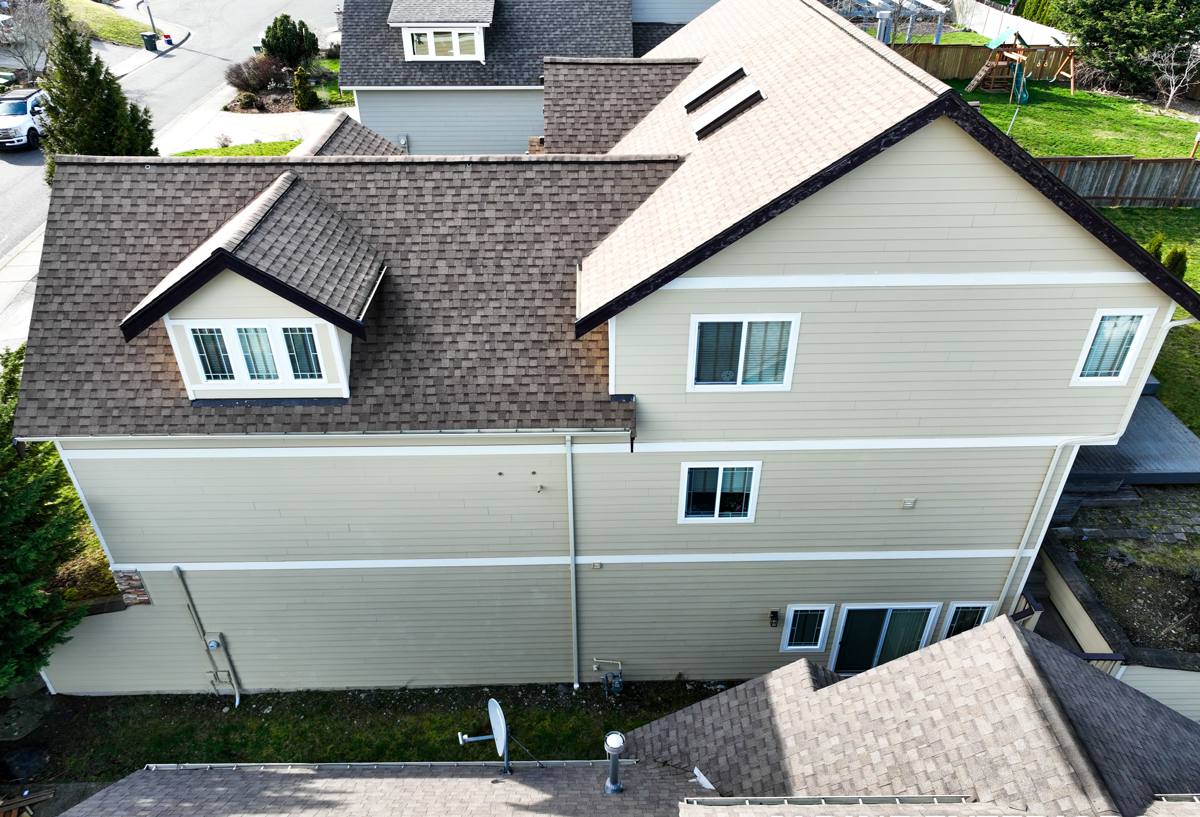
What a Correctly Built Deck Looks Like Here
A deck built for Blaine's conditions starts below the surface, not with the boards on top. The framing, the fasteners, the flashing where the deck meets the house, and the way water is directed away from the structure all matter more here than in a dry inland climate. A good build accounts for:
- Corrosion-resistant fasteners and hardware rated for coastal or treated-lumber exposure, not standard interior-grade hardware
- Proper ledger board flashing where the deck attaches to the house, so water can't get trapped against the siding
- Joist tape or a comparable moisture barrier on top of framing members to slow rot at the point where water sits longest
- Gapping and drainage planning between boards so water sheds instead of pooling
- Post bases that hold wood posts off the ground and away from standing water
- Ventilation underneath the deck so the substructure can actually dry out between rain events
Skip any one of these and the deck may still look fine for a season or two. The failures in this climate tend to show up slowly — a soft joist, a rusted bracket, a railing post that's gone spongy at the base — which is exactly why the build details matter more than they might in a milder environment.
The Ledger Connection Is the Most Important Detail
Where the deck attaches to the house — the ledger board — is the single most common point of failure on decks anywhere, and it's especially unforgiving in a wet coastal climate. Water that gets behind the ledger and into the house framing can cause rot that's expensive to find and worse to fix. Correct flashing here, tied properly into the home's existing water management, is not optional trim work — it's the difference between a deck that lasts decades and one that causes a structural problem inside the wall it's attached to.
Choosing a Decking Material for Salt Air and Driving Rain
There's no single "best" decking material for every home — it depends on budget, how much upkeep you're willing to do, and how close to the water the home sits. Here's how the common options actually perform under Blaine's conditions:
| Material | How It Handles Salt Air & Moisture | Maintenance | Typical Lifespan |
|---|---|---|---|
| Pressure-treated wood | Good if fasteners and flashing are corrosion-rated; wood itself still needs sealing | Annual cleaning, re-seal every 2-3 years | 15-20 years with upkeep |
| Cedar | Naturally rot-resistant but still needs sealing against salt air and rain | Cleaning plus regular sealing/staining | 15-20 years with upkeep |
| Composite decking | Handles moisture and salt air well; some early composite products showed moss/mildew staining on the surface | Periodic washing to prevent surface algae buildup | 25-30+ years |
| PVC/capped polymer decking | Fully moisture-sealed; best resistance to salt air and standing water | Occasional washing only | 25-30+ years |
Composite and PVC decking have become the more common choice for homes closer to the water because they don't absorb moisture the way wood does, which matters when a deck is exposed to salt spray and long stretches of damp weather. That said, we'll install quality wood decking correctly when that's the look and budget a homeowner wants — the key is matching the fastening and finishing approach to the material, not assuming every decking product behaves the same way once it's exposed to this climate.
Moss, Algae, and the Whatcom County Wet Season
Whatcom County's long stretch of overcast, wet months is exactly the environment moss and algae need to take hold on any horizontal surface that stays damp — decking included. This isn't a cosmetic issue only. Moss and algae hold moisture against the board surface, and on wood decking that moisture retention accelerates rot underneath the growth. On composite decking, surface algae is mostly a slip hazard and an appearance issue, but it's still worth addressing before it builds up.
The best defense is designed in during construction, not added afterward: proper board spacing so air can move and water can drain, decking run in a direction and slope that sheds water away from the house, and enough ventilation underneath the deck that the underside isn't sitting in a permanently damp microclimate. A deck built without this in mind will need more aggressive cleaning and will show moss and staining faster, regardless of what material sits on top.
Permits and Code Considerations for a Blaine Deck
Most deck projects in Whatcom County require a building permit, and the requirements scale with the size, height, and attachment method of the deck. A permitted project typically involves review of the footing depth, the ledger attachment, guardrail height and spacing if the deck is elevated, and stair geometry if stairs are part of the build. We handle the permit process as part of the job rather than leaving it to the homeowner to sort out — it's a normal part of building a deck correctly, not an extra hurdle.
Homes near the water in Blaine may also have setback or shoreline considerations depending on the specific lot, which is worth checking before a project is finalized. We'll flag anything site-specific during the estimate rather than assuming every lot is straightforward.
Our Deck Building Process
The process for a new deck or deck replacement in Blaine generally runs through the same core steps, though the specifics get tailored to the site and the home:
- On-site assessment — we look at the existing structure (if there is one), the ledger connection point, drainage around the home, and sun/wind/salt exposure for that specific lot
- Material and layout discussion — matching decking material, railing style, and layout to the homeowner's budget and how the space will actually be used
- Permit submission — handled on the homeowner's behalf where the project requires it
- Demolition of the old deck, if applicable, with attention to what condition the ledger and framing are in underneath
- Framing and flashing — corrosion-resistant fasteners, proper ledger flashing, joist protection, and post footings sized for the site's soil conditions
- Decking, railing, and stair installation
- Final walkthrough — going over the finished deck and what upkeep it will need going forward
We don't treat any of these steps as optional or skip them to save a day on the schedule. A deck that's going to sit exposed to salt air and driving rain for the next two decades needs every one of these steps done right the first time.
What Drives the Cost of a Blaine Deck Project
Deck pricing varies widely based on size, material, height off the ground, and site access, so we won't quote a number without seeing the specific project. But the main cost factors tend to be the same across most jobs:
| Factor | Why It Affects Cost |
|---|---|
| Decking material | Wood costs less upfront; composite and PVC cost more initially but require less long-term upkeep |
| Height and footings | Elevated decks need more substantial framing, footings, and guardrails than ground-level decks |
| Railing style | Cable, glass, and composite railing systems cost more than standard wood or aluminum |
| Site access | Waterfront or sloped lots can add complexity to footing placement and material delivery |
| Demolition | Removing and disposing of an existing deck adds labor before rebuilding starts |
We walk through these factors during the estimate so there's a clear picture of where the money is going, rather than a single bottom-line number with no explanation behind it.
Keeping a Blaine Deck in Good Shape Year to Year
Even a well-built deck needs some ongoing attention in this climate. A simple annual routine goes a long way toward protecting the investment:
- Sweep debris off the deck regularly, especially in fall when leaves and needles trap moisture against the boards
- Wash the surface at least once a year to remove salt residue, pollen, and early moss or algae growth
- Check railing posts and stair stringers for movement or soft spots, particularly near ground contact
- Reseal or restain wood decking on a 2-3 year cycle depending on sun and rain exposure
- Keep gutters and downspouts near the deck clear so runoff isn't dumping directly onto or under the structure
- Look underneath the deck once a year for standing water, moss buildup, or signs of rot on framing members
Homeowners who stay on top of this short list tend to get the full expected lifespan out of their deck, while decks that get ignored show problems years earlier — usually starting with the framing and hardware rather than the visible decking surface.
Why It Matters to Hire a Crew That Already Works in Blaine
Building a deck that holds up on a lot two blocks from Drayton Harbor is a different job than building the same deck twenty miles inland, even though the blueprint might look identical. A crew that already works this specific stretch of Whatcom County knows which fastener grades actually hold up to the salt exposure here, how to detail flashing for the rain patterns this area sees, and how deck framing in this climate tends to fail when it's built without those details in mind. That's not something a crew coming from outside the region necessarily accounts for — and it's the difference between a deck that needs attention in five years and one that's still solid in twenty-five.
If you're planning a new deck or need to replace one that's showing its age, we're glad to come take a look and put together a straightforward, no-pressure estimate for your Blaine property — just fill out the form below.