 Lynden Siding
 Why We Narrowed Our Product List to One
Most siding contractors will install whatever the homeowner picks off a sample board — vinyl, LP SmartSide, fiber cement, even primed wood, in whatever style and price point moves a job forward. We used to do the same. Over enough jobs in Lynden and the rest of Whatcom County, a pattern showed up: the callbacks, the moisture problems, the faded and warped siding we got asked to repair or replace early, almost never involved one product. That product was James Hardie fiber cement. Everything else showed up in our callback list at some point. So a few years back we made a business decision that's unusual in this trade: we stopped bidding vinyl, LP SmartSide, Cemplank, Allura, and bare wood siding jobs altogether. If a homeowner wants one of those products installed, we're not the right contractor for that job, and we'll say so up front.
This page explains the reasoning, not to talk down other products, but so homeowners in Lynden understand what "we only install James Hardie" actually means and why it isn't a sales gimmick.
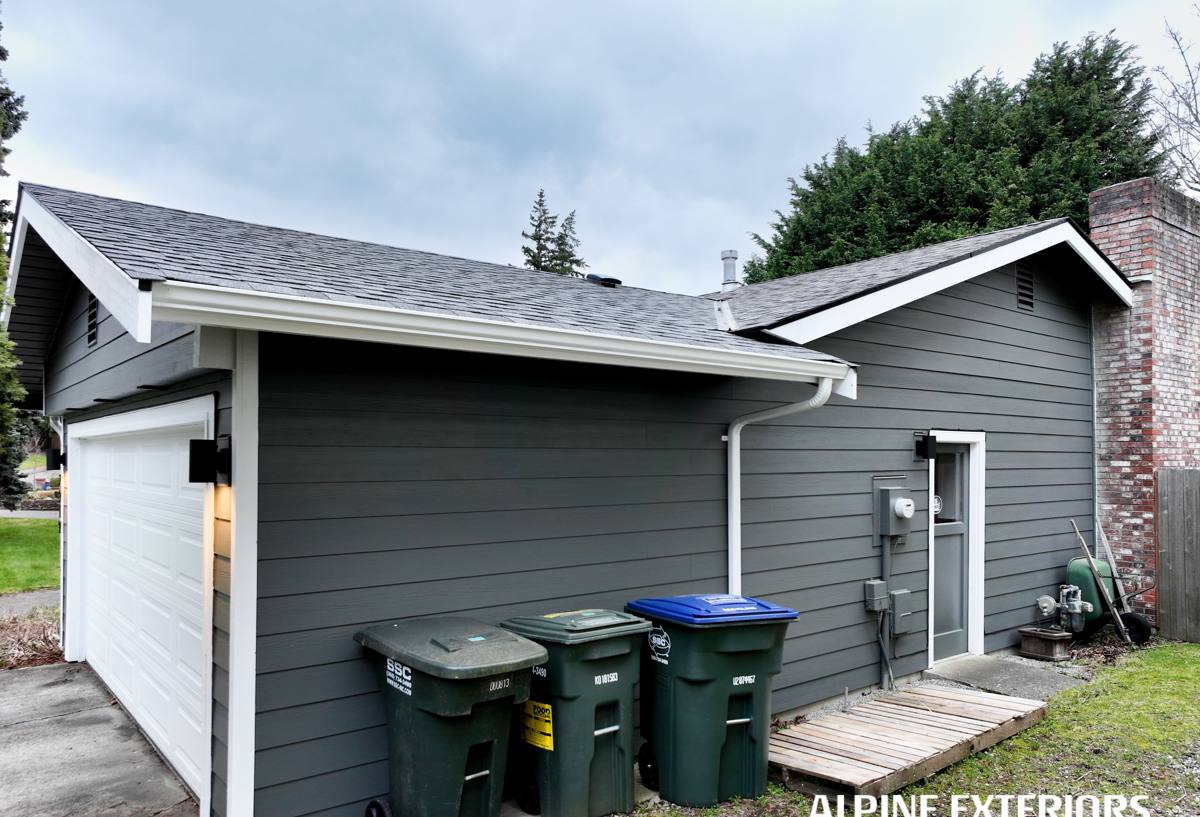
What Lynden's Climate Actually Does to Siding
Lynden sits inland from Bellingham Bay but still gets meaningful marine influence — damp air moving up the Nooksack valley, long stretches of driving rain off the Pacific systems that roll through Whatcom County from October through April, and a moss and algae season that can run most of the year on north-facing walls and anything shaded by trees or fences. None of that is exotic weather. It's just relentless. Siding here doesn't fail from one dramatic event, it fails from years of cycling — wet, dry, wet, dry — plus UV exposure in the brief but real summer stretch, plus organic growth feeding on any surface that holds moisture.
Products that tolerate a dry climate fine can struggle here. Products engineered around a maritime Pacific Northwest climate specifically hold up. That distinction drives most of what's below.
Salt Air and Moisture Cycling
Even away from the immediate shoreline, blown salt-laden moisture accelerates corrosion of fasteners, trim, and any siding edge that isn't properly sealed or back-primed. Materials that swell and shrink with moisture content — wood-based products in particular — move more in this cycling than they would in a drier interior climate, which stresses paint film, joints, and caulk lines over time.
Why We Stopped Installing LP SmartSide, Vinyl, and Wood-Based Products
Each of these products has legitimate strengths — we're not claiming otherwise. But each also has a real-world trade-off that shows up specifically in a climate like Whatcom County's, and that trade-off is what pushed us to standardize.
LP SmartSide and Engineered Wood
LP SmartSide is a strand-based engineered wood product with a resin binder and a factory-applied treatment. It's a genuine improvement over old-style hardboard siding and performs reasonably in moderate climates when every cut edge is sealed and maintenance stays current. The trade-off: it is still wood at its core, meaning cut edges, joints, and any point where caulking fails become entry points for moisture, and once moisture gets in, swelling and eventual rot can follow — especially under Lynden's long wet season where surfaces don't get much of a chance to fully dry out between rain events. Warranty coverage on these products also typically requires strict, ongoing maintenance documentation to stay valid, which is a burden many homeowners don't realize they've signed up for until a claim is denied.
Vinyl Siding
Vinyl is inexpensive and low-maintenance in the sense that it never needs painting. But it's a thin plastic product that expands and contracts significantly with temperature swings, can crack in impact or in a hard freeze, fades unevenly in UV exposure over the years, and — critically — is not a fire-resistant material. It also doesn't add meaningful structural rigidity to a wall assembly, and it's very difficult to repair a section without the replacement panel being a visibly different shade from sun-faded originals.
Primed Spruce and Cedar
Cedar has real appeal and a long regional history here, and a well-maintained cedar exterior can look excellent. The honest trade-off is maintenance frequency and cost — refinishing on a real cycle, not a deferred one, and constant vigilance against moss and moisture in a climate that hands moss every advantage. Primed spruce is a budget-grade version of the same wood-based risk profile without cedar's natural rot resistance.
The James Hardie System We Install
James Hardie fiber cement is a mix of cement, sand, and cellulose fiber, cured into a rigid, non-combustible board. It doesn't absorb water the way wood-based products do, it doesn't expand and contract the way vinyl does, and it holds paint and factory finish far longer than either.
Product Lines
- HardiePlank lap siding — the most common choice, available in several exposure widths and textures (smooth, cedarmill).
- HardiePanel vertical siding — used for board-and-batten style and modern facade sections.
- HardieShingle — for shingle-style accent sections and gable detailing.
- HardieTrim — matching trim boards for corners, fascia, and window/door surrounds.
- HZ5/HZ10 engineered zones — James Hardie engineers certain product formulations for specific climate zones; Western Washington falls into a zone the company specifically formulates for wet, moderate-temperature climates rather than a one-size-fits-all national product.
ColorPlus Factory Finish vs. Job-Site Painting
One of the most underrated parts of the James Hardie system is ColorPlus Technology — a factory-applied, baked-on finish rather than paint rolled or sprayed on-site. It goes through multiple coats and a curing process under controlled conditions, which produces more even coverage and better long-term color retention than field-applied paint, which is at the mercy of weather, temperature, and application conditions on install day.
Why This Matters in a Wet Climate
Field-painting siding in Whatcom County means chasing dry weather windows, which can compress or delay a job and affect cure quality. A factory finish sidesteps that entirely and comes with its own finish warranty separate from the product warranty. Touch-up paint matched to ColorPlus colors is available for the rare repair, but the field never has to fully repaint a wall to keep it looking uniform.
Fire Resistance: A Real Difference, Not a Marketing Line
Fiber cement is non-combustible. That's a material fact, not a brand claim — cement and sand don't burn. Vinyl melts and can contribute fuel in a fire; wood-based sidings are combustible by nature. For homeowners near wildland-adjacent areas of Whatcom County, or simply for the peace of mind of a non-combustible envelope, this is one of the more concrete, non-cosmetic reasons a homeowner might specifically want fiber cement over the alternatives, independent of appearance or cost.
Installation Quality Decides the Outcome More Than the Brand Does
We'll be direct about this: a poorly installed James Hardie job can still fail, and a carefully installed lesser product can still last a long time. Material choice sets the ceiling; installation determines whether you get anywhere near it. That's why our decision to install only one product isn't just about the board itself — it's about being able to train crews to one spec, one set of flashing and clearance details, one caulking and fastening standard, rather than switching methods job to job.
| Factor | Vinyl | LP SmartSide | Cedar | James Hardie Fiber Cement |
|---|---|---|---|---|
| Moisture tolerance | Doesn't absorb, but seams trap moisture behind it | Vulnerable at unsealed cuts/edges | Vulnerable without regular refinishing | Does not swell/rot from moisture |
| Fire rating | Combustible (melts) | Combustible | Combustible | Non-combustible |
| Finish | Integral color, fades unevenly | Factory primed, field-painted | Stained or painted, needs recoating | ColorPlus factory-baked finish |
| Maintenance cycle | Low, but limited repair options | Regular caulk/paint upkeep required | Frequent refinishing (few years) | Long intervals between recoat needs |
| Typical lifespan (Whatcom climate) | 20-30 years, earlier fade/cracking | 15-25 years with strict maintenance | Varies widely with upkeep | 30-50 years when installed to spec |
Warranty: What Actually Transfers
James Hardie's product warranty is one of the more straightforward, transferable warranties in the fiber cement category, and the ColorPlus finish carries its own separate coverage. Warranty terms and transfer conditions change over time and by product line, so we go over the current written terms with every homeowner at the estimate — we're not going to print specific year figures here that could go stale, but we will hand over the actual manufacturer documentation so you can read it yourself rather than take a contractor's word for it.
What Can Void a Warranty
- Installation that doesn't follow James Hardie's published fastening, clearance, and flashing specifications.
- Missing ground clearance or improper grade slope against the foundation.
- Caulking or paint products used outside the manufacturer's approved list during touch-ups.
What to Ask Before Hiring Any Siding Contractor
Whether you end up hiring us or someone else, these are worth asking any contractor bidding a siding job in Lynden or elsewhere in Whatcom County:
- Is your crew factory-certified to install the specific product you're proposing?
- What clearance from grade and from roof lines/decks does your install plan follow?
- Who is responsible if a warranty claim gets denied due to an installation defect?
- Can I see the manufacturer's written installation instructions for this product?
- What's your plan for flashing around windows, doors, and penetrations — not just the field siding?
- Do you carry liability insurance and workers' comp coverage, and can I see current certificates?
If you're weighing a siding replacement or new install in Lynden and want a straight answer about what James Hardie would cost and involve on your specific home, we're happy to come out, look at the existing siding and wall condition, and put together a free, no-pressure estimate — no obligation either way.