 Lynden Siding
 Everson's Exterior Challenge: A Damp Climate That Never Really Lets Up
Everson sits in the Nooksack River valley in Whatcom County, close enough to the water and the foothills that homes here deal with a specific combination of weather stress: salt-tinged air drifting in off the Puget Sound region, long stretches of driving rain through fall and winter, and a moss and mildew season that can run eight months or longer on north-facing walls and shaded rooflines. None of that is dramatic on any given day. It's the cumulative effect that wears down a house — moisture that never fully dries out between storms, siding seams that stay damp longer than they should, and organic growth that gets a foothold on anything porous or poorly ventilated.
Homes in and around Everson also tend to sit on lots with mature trees and heavier shade than you'd find in a more open, sun-exposed neighborhood. That's a nice feature for summer comfort, but it means less sun exposure to dry out siding, gutters, and roof surfaces after a storm. If you've noticed green or black streaking on the north or east side of your house, or soft, spongy trim boards near ground level, that's the Whatcom County damp cycle doing its slow work.
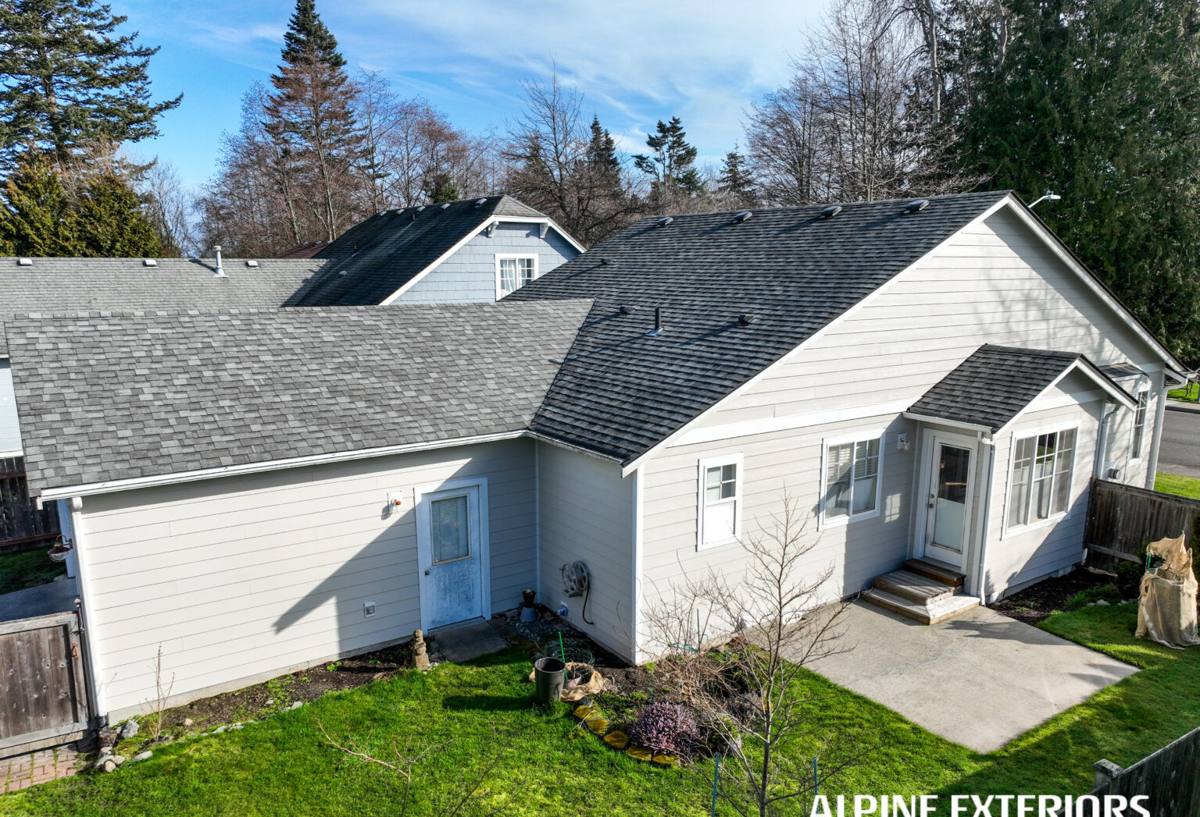
Why the Siding Material You Choose Matters More Here Than in Drier Climates
In a dry, low-humidity region, the difference between siding products is mostly cosmetic and budget-driven. In Everson, it's structural. A siding material that swells, delaminates, or holds moisture against the wall sheathing doesn't just look bad after a few seasons — it can lead to rot, mold behind the cladding, and expensive repairs that go well beyond the surface.
This is the core reason our company made a deliberate decision: we install James Hardie fiber cement siding exclusively. We don't install vinyl, LP SmartSide, Cemplank, Allura, primed spruce, or cedar. That's not a knock on every homeowner who has one of those products on their house today — plenty of them perform fine for years with the right maintenance. It's a statement about what we're willing to warranty and stand behind on a house in this specific climate.
What We're Weighing When We Say No to Other Products
- Vinyl siding is affordable and low-maintenance in mild climates, but it expands and contracts with temperature swings, can crack in cold snaps, and doesn't hold up as well against wind-driven rain infiltration at seams and panel laps.
- LP SmartSide is an engineered wood product. It performs reasonably well when installation and caulking are perfect and stay perfect, but any breach in the factory coating exposes wood fiber to moisture — a real risk in a region where wall surfaces rarely get a long, uninterrupted dry stretch.
- Cemplank and Allura are also fiber cement, and structurally they're closer cousins to Hardie than the other options. Our decision there comes down to product line depth, factory finish warranty terms, and consistency of supply and support in our market — not a claim that the raw material is unsound.
- Primed spruce and cedar are beautiful, traditional choices, but they're wood. Wood requires a maintenance discipline — recoating, caulking, moisture checks — that a lot of busy homeowners don't keep up with, and in a marine-influenced, high-moss climate, gaps in that discipline show up fast.
James Hardie fiber cement doesn't absorb water the way wood-based products can, it's non-combustible, and it carries a factory ColorPlus finish that's engineered to resist fading and hold up against the kind of prolonged damp exposure Everson sees every winter. That combination is why it's the only siding system we put our name behind.
The James Hardie System We Install
Hardie's HZ5 product line is engineered for climates with freeze-thaw cycles and sustained moisture exposure, which fits Whatcom County well. We typically work with lap siding, board-and-batten configurations, and shingle-style panels depending on the home's architecture — Everson has a mix of older farmhouses, mid-century ranches, and newer construction, and the right profile depends on the house, not a one-size template.
ColorPlus factory finish matters more here than in a drier region because it's baked on and cured under controlled conditions, rather than field-applied paint that has to cure properly in a climate where you don't always get a reliable dry window. Field-painted siding in a wet spring or fall install can trap moisture under the coating if it doesn't cure right — that's a risk we avoid by using factory-finished product wherever possible.
Installation Details That Actually Matter in This Climate
Correct installation is what makes any siding product perform to its rating, and it's where a lot of problems on older homes actually originate — not the material itself. For a Hardie installation to hold up through Everson winters, a few things have to be right every time:
- Proper weather-resistive barrier and flashing details behind the siding, especially at windows, doors, and any horizontal trim where water tends to collect.
- Correct fastener spacing and nailing pattern per Hardie's published specs — under- or over-driven nails are one of the most common causes of premature siding failure.
- Minimum clearance between the bottom of the siding and grade, decks, roofing, and walkways, so splash-back moisture doesn't sit against the board.
- Properly caulked and sealed joints where fiber cement meets trim, corners, and penetrations — sealed with a product rated for the exposure, not just whatever's on the truck.
- Adequate ventilation behind the cladding so any moisture that does get in has a path to dry out.
Beyond Siding: Roofing, Windows, and Decks for the Same Climate
Siding doesn't work in isolation. A house is a system, and in Everson the roof, windows, and any exterior decking all face the same salt air, driving rain, and moss pressure as the walls. We handle all four because they interact directly with each other.
Roofing
Roof moss and algae growth is one of the most common calls we get from this area, particularly on shaded, north-facing roof planes. Beyond periodic cleaning, the underlying issue is often ventilation and underlayment quality — a roof system that traps moisture underneath is going to grow moss faster than one that breathes and drains properly, regardless of the shingle brand on top.
Windows
Window flashing and integration with the siding plane is one of the highest-risk failure points on any home in a wet climate. When we replace windows, we make sure the flashing ties into the water-resistive barrier correctly — a mismatch here is a common source of hidden water damage that doesn't show up until there's rot in the wall cavity.
Decks
Decks in Everson take a beating from standing moisture, moss on walking surfaces, and UV-plus-rain cycling on fasteners and ledger connections. Proper ledger flashing against the house and material choices that handle wet-dry cycling well go a long way toward avoiding the soft-spot and fastener-corrosion issues we see on older decks in this area.
Cost Factors to Understand Before You Budget a Project
Every home is different, and we don't quote sight unseen, but these are the variables that most affect the cost of a siding, roofing, window, or deck project in the Everson area:
| Factor | Why It Affects Cost |
|---|---|
| Existing siding removal | Tear-off and disposal of old material, especially if there's hidden rot to repair underneath |
| Home size and wall complexity | Dormers, multiple gables, and cut-up wall planes take more labor per square foot than a simple rectangular footprint |
| Siding profile and trim detail | Board-and-batten and shingle-style accents cost more in labor than straight lap siding |
| Moisture or structural repair | Rotted sheathing or framing found during tear-off adds cost but shouldn't be skipped or covered up |
| Access and site conditions | Mature trees, slopes, and tight lot lines common in Everson can add setup and staging time |
| Scope bundling | Combining siding with roofing, window, or deck work in one project can reduce overlapping setup costs |
What to Look for When Hiring a Contractor in This Area
Whatcom County has plenty of contractors who'll travel in for a job and disappear once it's done. A local crew that's used to this specific climate — the moss cycle, the wind-driven rain direction, the way homes here are typically framed and vented — tends to catch the details that matter before they become callbacks.
- Ask specifically how they detail flashing around windows and doors, not just what siding brand they carry.
- Confirm they're a licensed, bonded, and insured contractor in Washington State, and ask to see current documentation.
- Ask how they handle hidden rot or sheathing damage discovered mid-project, and how that's communicated and priced.
- Check whether the manufacturer warranty is registered properly in your name after installation — this step gets missed more often than people realize.
- Ask about their experience specifically with fiber cement installation, since the fastening and flashing requirements differ from wood and vinyl.
Maintenance: What Owning Hardie Siding in Everson Actually Looks Like
One of the practical advantages of fiber cement in this climate is how little upkeep it demands compared to wood. It won't rot, and it doesn't need periodic recoating the way cedar or primed wood does. That said, "low maintenance" isn't "no maintenance" anywhere in Whatcom County:
- Rinse siding periodically to keep moss, algae, and pollen from building up, especially on shaded elevations.
- Keep gutters clear so overflow doesn't run down the wall face repeatedly.
- Trim back vegetation and tree limbs that keep a wall section shaded and damp longer than the rest of the house.
- Re-caulk joints and penetrations if you notice cracking or gaps, since caulk is the one component that does wear out over time even on a fiber cement wall.
- Walk the exterior once or twice a year and look for any soft trim, staining, or gaps at corners and flashing — catching a small issue early is far cheaper than repairing hidden damage later.
Why a Local Crew Matters for a Project Like This
We're not describing a generic climate problem — Everson's mix of river-valley humidity, shaded lots, and proximity to the marine air coming off the Sound creates a specific set of conditions that show up differently than they would twenty miles inland or up in the foothills. A crew that works across Whatcom County regularly sees which details fail first on which type of home, and builds the installation around avoiding those specific failure points rather than following a generic spec sheet.
If you're planning a siding, roofing, window, or deck project on your Everson home, we're happy to take a look and walk you through what we're seeing and what we'd recommend — no pressure, no obligation. Reach out using the form below to schedule a free estimate.