 Lynden Siding
 Exterior Work Built for Laurel's Corner of Whatcom County
Laurel sits in that stretch of Whatcom County where the lowland fog off the Nooksack valley meets the damp air rolling in from the bay, and homes here take a slow, steady beating from it. It's not one dramatic storm that wears out siding in this area — it's the accumulation of hundreds of gray, wet weeks a year, the salt-tinged air, and the moss that finds a foothold on anything that stays shaded and damp long enough. We've built our business around exterior materials and installation methods that hold up to exactly that kind of weather, working out of Lynden and covering the surrounding communities, Laurel included.
A lot of exterior contractors treat every job the same regardless of where the house sits. We don't think that works well in Whatcom County. A home a few miles from open water or exposed to prevailing wind needs different detailing — flashing, ventilation, product selection — than one tucked into a more sheltered spot. Knowing the difference is part of what a local crew brings to the table.
What Laurel Homes Are Up Against
Moisture That Doesn't Let Up
Whatcom County gets a long wet season, and Laurel is no exception. Siding, trim, and roofing here spend months at a time damp rather than getting the quick dry-out that inland, sunnier climates allow. Materials that absorb water and swell — or that trap moisture behind them due to poor installation — start failing years before their rated lifespan. This is the single biggest factor we weigh when we talk to homeowners about what to put on a house out here.
Salt Air and Corrosion
Proximity to Puget Sound and Bellingham Bay means a measure of salt-laden air reaches even inland communities like Laurel on the right wind pattern. Salt air accelerates corrosion on fasteners, flashing, and any metal component of a roof or siding system. It also degrades certain paint and coating systems faster than a dry inland climate would, which is one reason factory-applied, baked-on finishes matter more here than in drier parts of the country.
Moss, Algae, and Shade
Mature trees and the marine-layer humidity that sits over Whatcom County create ideal conditions for moss and algae to colonize roofs, north-facing siding, and anything that doesn't get much direct sun. Beyond looking bad, moss holds moisture against the surface it's growing on, which is exactly the condition that rots wood trim, delaminates weaker siding products, and shortens the life of a roof.
Driving Rain and Wind-Driven Water
Rain in this part of Washington doesn't always fall straight down. Wind off the water can drive it sideways into wall assemblies, around window frames, and up under poorly lapped siding. Weather-resistive barriers, flashing details, and proper siding overlap matter more here than they would in a calmer climate, because the margin for error is smaller.
Siding: Why We Standardize on One Product
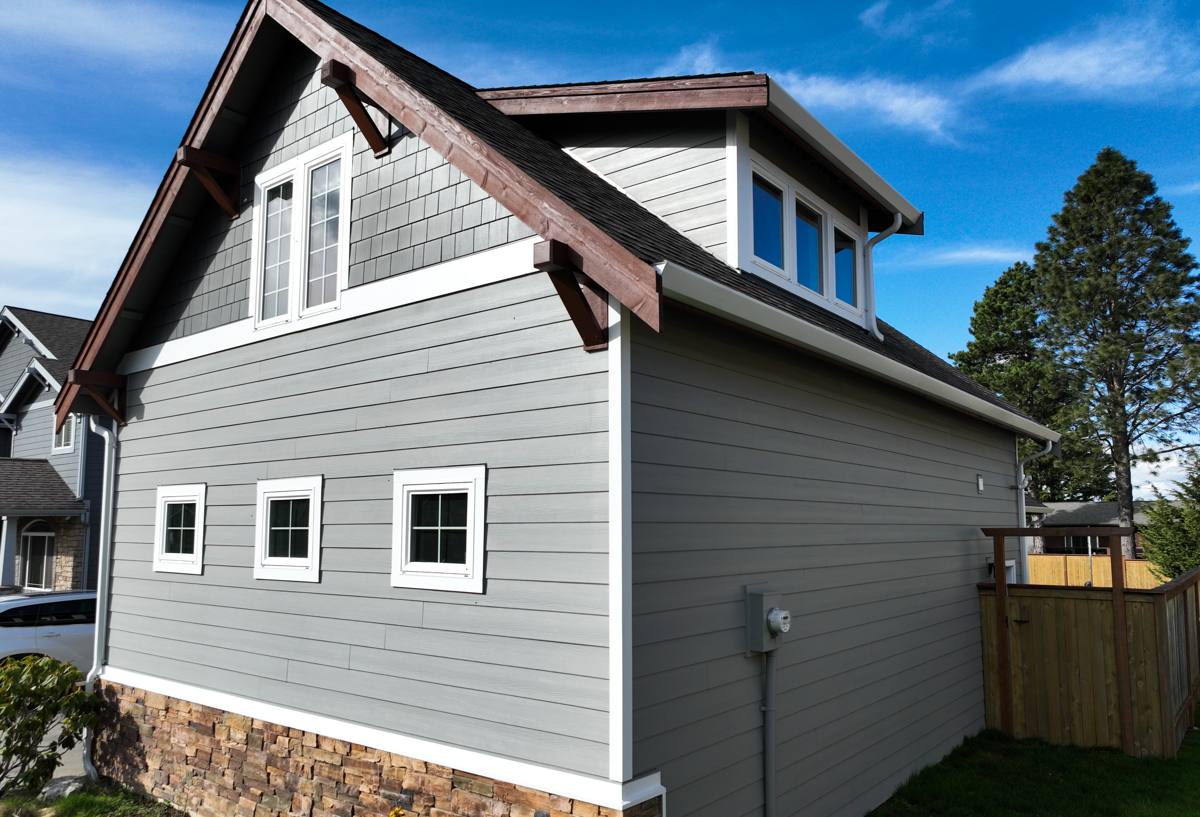
We install James Hardie fiber cement siding exclusively. We don't offer vinyl, LP SmartSide, Cemplank, Allura, primed spruce, or cedar, and that's a deliberate choice rather than a limitation of what we're capable of installing. After years of exterior work in this climate, we settled on Hardie because it's engineered specifically for the kind of moisture cycling and humidity Whatcom County delivers.
What Makes Hardie Different Here
- Non-combustible core: fiber cement doesn't feed a fire the way wood-based products can, which matters for insurance and long-term risk regardless of region.
- Moisture stability: Hardie's cement composition doesn't swell, rot, or delaminate the way engineered wood or untreated wood products can when they stay damp for extended periods — a real concern given how long Laurel homes sit under wet conditions each year.
- Factory-applied ColorPlus finish: the color is baked on in a controlled factory environment rather than field-painted, which holds up better against the humidity and salt air that degrade job-site paint faster.
- HZ5 product engineering: Hardie makes climate-specific formulations, and the versions suited to the Pacific Northwest are engineered around freeze-thaw cycling and moisture exposure rather than a one-size-fits-all approach.
- Transferable warranty: a real, well-documented warranty structure that follows the house, not just the original owner.
We're upfront that other products have their own selling points — vinyl and LP SmartSide are less expensive up front, and cedar has a look some homeowners specifically want. But we've made a professional decision that the trade-offs on those products (moisture sensitivity, field-applied finishes that fade or fail sooner, seam and caulk maintenance, or in some cases combustibility) aren't ones we're willing to install and stand behind in this climate. Hardie is what we put on homes because it's what we're comfortable warrantying long-term.
Roofing in a Moss-Prone Climate
Roofing decisions in Laurel need to account for the same moss and moisture pressures that affect siding. A roof with poor ventilation traps warm, humid air against the underside of the decking, which accelerates moss growth and can shorten shingle life regardless of the material. We look at attic ventilation, underlayment quality, and valley/flashing detailing as carefully as we look at the shingle or panel choice itself, because in this climate the installation details often matter more than the brand on the wrapper.
Windows: Managing Condensation and Drafts
Older single-pane or early dual-pane windows in this region tend to show their age through condensation between panes, fogging, and drafts that get noticeably worse in the damp months. Replacing windows here isn't just about energy bills — it's about controlling interior humidity, which in turn affects mold and mildew risk inside the home. Proper flashing and sealing at the window opening is just as important as the window unit itself, especially on walls exposed to wind-driven rain.
Decks: Built to Survive Standing Water and Shade
A deck in Laurel that sits under tree cover or doesn't get much afternoon sun will hold moisture far longer after a rain than one in full exposure. That affects fastener choice, board spacing for drainage, and how often a deck needs cleaning to keep moss and algae from taking hold on the walking surface, where they create a real slip hazard. We build and repair decks with drainage and material choices suited to how much sun and shade a specific property actually gets, not a generic spec sheet.
Comparing Common Siding Options for This Climate
| Material | Moisture Behavior in Wet Climates | Finish Durability | Our Position |
|---|---|---|---|
| James Hardie fiber cement | Dimensionally stable, does not swell or rot | Factory-baked ColorPlus finish resists fading and salt-air wear | What we install |
| Vinyl | Doesn't rot, but can warp or crack in temperature swings; seams can allow water intrusion | Color molded through material but can fade and chalk over time | Not installed by us |
| LP SmartSide (engineered wood) | Treated to resist moisture but still wood-based; edge and cut-end sealing is critical | Field or factory finish, more maintenance-sensitive than fiber cement | Not installed by us |
| Cedar | Natural material, absorbs moisture, needs regular refinishing to resist rot in wet climates | Requires ongoing staining or sealing maintenance | Not installed by us |
What to Expect When You Call a Local Crew
A contractor based in Lynden and working the surrounding Whatcom County communities sees the same climate patterns repeatedly — which sides of a house take the worst weather, which roof valleys collect moss first, where wind-driven rain typically finds its way into a wall assembly. That familiarity shows up in the details: flashing choices, ventilation, and product selection that's suited to how a specific property sits relative to sun, wind, and tree cover.
A Practical Checklist Before Hiring for Exterior Work
- Ask what siding, roofing, and window products the contractor actually installs, and why — not just what's cheapest.
- Confirm they carry current Washington contractor licensing and insurance, and ask to see it.
- Ask how they handle moisture management specifically — flashing details, weather-resistive barrier, ventilation — not just the finish material.
- Get a written scope and estimate before any work begins.
- Ask about warranty terms in writing, including whether they're transferable if you sell the home.
- Look for a crew that's done work in your specific area and understands the local exposure conditions.
Getting Started
Whether you're dealing with moss-stained siding, a roof that's showing its age, foggy windows, or a deck that never quite dries out, it helps to have someone look at the whole picture rather than one product in isolation. We offer free, no-pressure estimates for homeowners in Laurel and the surrounding Lynden area — reach out through the form below and we'll take a look at what your home actually needs.