 Lynden Siding
 Why Color Choice Matters More Here Than Most Places
Picking a siding color is usually thought of as a design decision. In Whatcom County, it's also a maintenance decision. Lynden sits close enough to the Salish Sea to catch salt-laden air, gets a genuine wet season that keeps siding damp for weeks at a stretch, and grows moss on anything that holds shade and moisture — fences, roofs, north-facing walls. A finish that looks great in a showroom in Arizona can chalk, fade, or show lap marks within a few years out here. That's the backdrop for how we think about James Hardie color options: not just what looks good on the elevation drawing, but what still looks good in year twelve.
What ColorPlus Technology Actually Is
Most of the color conversation with Hardie siding comes down to one system: ColorPlus Technology. It's a factory-applied, baked-on finish, not a coat of paint rolled or sprayed on site. The color is cured onto the fiber cement panel or plank under controlled conditions before it ever reaches a jobsite, using multiple coats and a process designed to bond to the substrate rather than sit on top of it like field-applied paint does.
Why That Process Matters in a Wet Climate
Field-applied paint on any siding material is only as good as the weather on install day and the surface prep underneath it. In a region where it's genuinely hard to find a stretch of dry, moderate-temperature days outside of summer, factory finishing removes that variable entirely. The color goes on in a plant, not on a scaffold in April drizzle. That's a meaningful difference in a county where painters routinely have to work around rain windows.
What You Give Up With Primed Hardie
Hardie also sells primed panels meant for field painting, and there are legitimate reasons a project ends up primed — matching a very specific custom color, for instance. But primed siding puts the coating quality back in the hands of local weather and whoever's holding the sprayer, and it shifts long-term color maintenance onto the homeowner much sooner. We'll walk through that trade-off in more detail below.
The ColorPlus Collections
Hardie organizes its ColorPlus palette into a few curated collections rather than an open-ended custom swatch wall. That's intentional — the colors are engineered and tested as a system, not picked freehand.
| Collection | General Character | Typical Use |
|---|---|---|
| Statement Collection | Bolder, more saturated tones | Accent walls, shutters, trim contrast, modern facades |
| Dream Collection | Warm, approachable mid-tones | Whole-house siding on traditional and craftsman homes |
| Century Collection | Muted, historically inspired neutrals | Farmhouse, colonial, and older Lynden-area homes |
Within those collections you'll find the deep charcoals, soft grays, muted greens, and warm whites that show up across the Pacific Northwest most often — colors chosen in part because they read well under overcast light, which is most of our light.
HardieZone HZ5 and Why It's Specific to This Region
Less known to homeowners: James Hardie doesn't manufacture one universal product. It engineers its fiber cement formulation by climate zone, called HardieZone. Whatcom County falls into the HZ5 zone, which covers regions with more moisture exposure, freeze-thaw cycling, and humidity swings than the drier HZ10 formulation used in the Southwest.
HZ5 panels are formulated for that moisture load before color even enters the picture — the substrate itself is built for a wet climate, and the ColorPlus finish is applied over that HZ5 base. When you buy Hardie siding through a properly credentialed installer in Lynden, you should be getting HZ5 product, not a generic panel meant for a dry-zone install. It's worth confirming with any contractor which zone formulation they're quoting.
Matching Color to Trim, Roof, and Local Architecture
Whatcom County's housing stock runs from older farmhouses on Guide Meridian and the outlying county roads to newer builds closer to town, and color choices tend to fall into a few reliable patterns.
Trim and Body Contrast
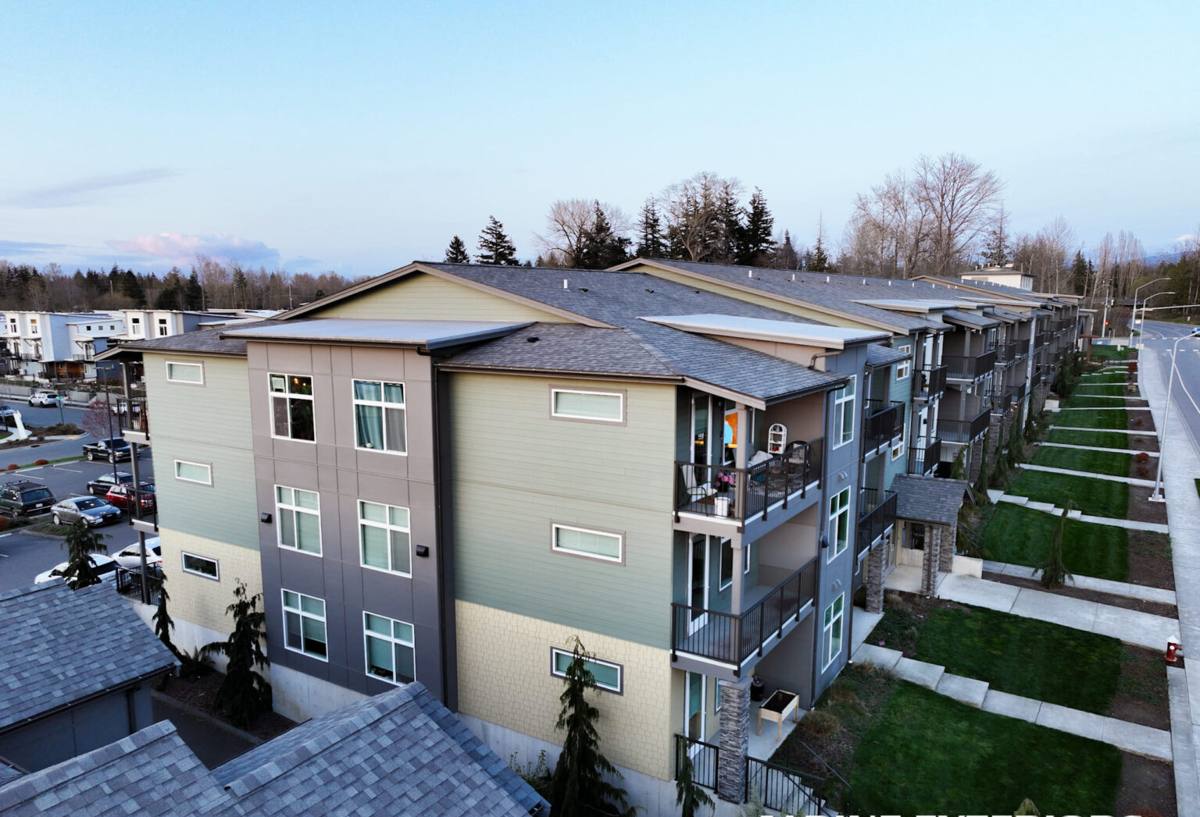
A common approach here is a Century or Dream Collection body color paired with a crisp white or black trim package — it holds up visually against the region's gray-sky days better than low-contrast schemes, which can look flat under diffuse light.
Roof Coordination
Most roofing in this area runs toward charcoal, weathered wood, or brown-black composite shingle. Cooler siding tones (grays, muted blues, soft greens) tend to coordinate more naturally with those roof colors than warm tones do, though this is ultimately a preference call, not a rule.
HOA and Neighborhood Patterns
Some newer Lynden developments carry HOA color guidelines. It's worth checking your covenants before finalizing a selection — Hardie's collections are broad enough that most HOA-approved palettes have a workable match, but it's a five-minute check that saves a headache later.
ColorPlus vs. Primed: The Real Cost-Over-Time Picture
The sticker price on primed panels is usually a little lower than ColorPlus. Over the life of the siding, that gap tends to reverse.
| Factor | ColorPlus (Factory Finish) | Primed (Field Painted) |
|---|---|---|
| Initial cost | Slightly higher | Slightly lower |
| Finish warranty | Backed by Hardie's finish warranty | Backed by the paint manufacturer/painter, not Hardie |
| First repaint needed | Typically well beyond a decade | Often within 5-8 years in wet coastal climates |
| Application conditions | Controlled factory environment | Dependent on local weather during install |
| Color consistency | Uniform panel to panel | Dependent on applicator technique and coverage |
In a climate that gives painters a narrow dry-weather window, that repaint timeline difference is the part homeowners feel first, usually as an unplanned expense a few years after move-in.
Color, Moss, and Salt Air: The Practical Trade-offs
Lighter Colors and Moss Visibility
Lighter siding colors show moss and algae streaking sooner than darker tones, simply because the contrast is higher. That doesn't mean avoid light colors — it means a north-facing wall under tree cover in a light color will need an occasional rinse-down more often than the same wall in a darker tone.
Darker Colors and Heat/Fade Considerations
Darker ColorPlus tones handle UV fade better than older-generation painted siding did, because the factory finish is formulated for it, but very dark colors on south- and west-facing walls will still run warmer in direct summer sun. It's a minor consideration here compared to drier inland climates, but worth knowing.
Salt Air Exposure
Homes closer to Bellingham Bay and the county's western edge see more airborne salt than properties further inland toward the foothills. ColorPlus finish resists that better than field paint, but any siding in a salt-exposed location benefits from periodic rinsing to keep residue from building up in laps and joints.
Caring for Colored Hardie Siding: A Homeowner Checklist
- Rinse siding with a garden hose (not a pressure washer aimed directly at seams) once or twice a year, more often on shaded or moss-prone walls
- Keep gutters clear so overflow doesn't streak down the face of the siding
- Trim back vegetation and tree cover that keeps a wall shaded and damp longer than the rest of the house
- Inspect caulking at trim, windows, and butt joints annually — failed caulking lets moisture behind the finish, which no color technology can protect against
- Use Hardie's matched touch-up kits for small chips or scratches rather than a generic exterior paint, so the repair actually matches
- Avoid abrasive cleaners or wire brushes on moss buildup — a soft brush and mild soap solution is enough
Touch-Ups and Long-Term Repainting
Even factory-finished ColorPlus siding will eventually need attention at the far end of its service life, usually decades out. When that day comes, it can be repainted with standard exterior products, but the point of ColorPlus is that most homeowners in this climate won't be dealing with that for a long time — a very different maintenance rhythm than field-painted siding, which usually goes back on the schedule within the first decade.
Getting the Color Decision Right the First Time
Color samples look different under a showroom light than they do under Whatcom County's cloud cover, and different again on a large wall versus a small chip. Whenever possible, look at full-size samples outdoors, on an overcast day, against your actual roof and trim colors, before committing. It's a small step that avoids a costly do-over.
If you're weighing color options for a new install or a full re-side in Lynden or elsewhere in Whatcom County, we're glad to bring samples out, talk through what holds up best on your specific exposure, and put together a free, no-pressure estimate.