 Lynden Siding
 Exterior Work Built for Bellingham's Marine Climate
Homes in and around Bellingham sit close enough to the water that the weather off the Salish Sea shapes almost every exterior decision worth making. Salt-laden air moves inland on a regular basis, driving rain comes in sideways during the fall and winter storm cycles, and the region's long, cool, damp stretches give moss and algae months at a time to get established on roofs, siding, decks, and anything else that stays shaded and wet. None of this is unusual for Whatcom County — it's just the baseline a house here has to be built to handle. We work throughout the Bellingham area doing siding, roofing, windows, and decks, and every one of those trades gets planned around the same set of local conditions.
What that means in practice is that we don't treat Bellingham jobs the same way a contractor in a dry inland climate would treat theirs. Flashing details, ventilation, product selection, and maintenance recommendations all get adjusted for a place where a house can go weeks without a real drying period in the winter.
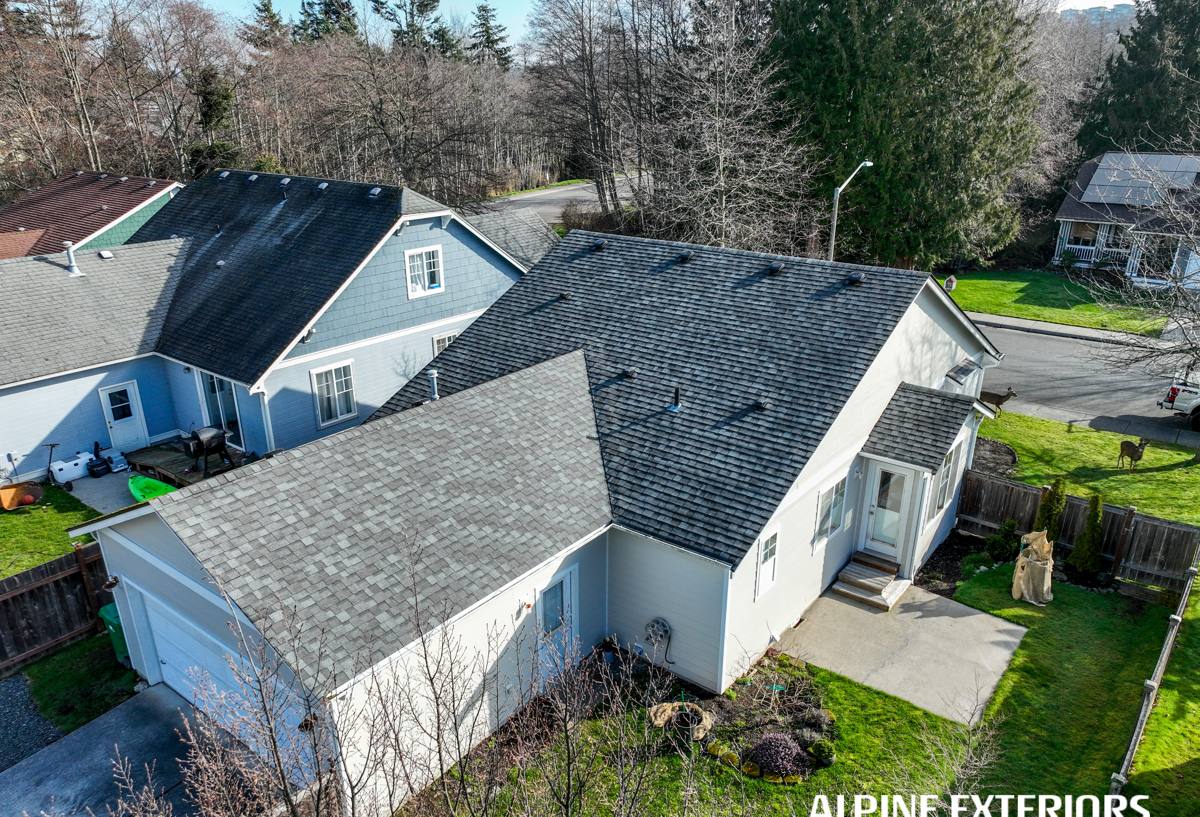
What Salt Air and Driving Rain Actually Do to a House
Salt air is corrosive to exposed metal — fasteners, flashing, gutter hardware, and hinges all wear faster near the water than they would twenty or thirty miles inland. On siding specifically, salt exposure combined with constant damp cycling accelerates paint and finish breakdown, which is one of the reasons factory-applied, baked-on finishes hold up so much better here than field-applied paint does.
Driving rain is a different problem. When wind pushes rain sideways instead of letting it fall straight down, water gets forced into laps, seams, and joints that were never designed to handle standing water pressure. A siding system with weak water management at the seams, or housewrap and flashing that wasn't detailed correctly during installation, will eventually let moisture behind the cladding. Once that happens, the damage usually isn't visible until it's already significant — rot in the sheathing or framing, not just a cosmetic issue on the surface.
Where This Shows Up First
- Bottom edges of siding boards, especially near grade or over decks and porches
- Window and door trim, where caulking and flashing take the brunt of wind-driven rain
- North- and west-facing walls that stay shaded and wet longer after storms
- Deck ledger boards and any wood-to-wood contact points that trap moisture
- Roof valleys and low-slope sections where moss gets a foothold and holds water against shingles
Moss Season Isn't Just a Roofing Problem
Whatcom County's moss season runs long — cool temperatures, shade, and consistent moisture are exactly what moss needs, and a lot of Bellingham-area lots have enough tree cover to keep roofs and north-facing siding damp well after a storm has passed elsewhere. Moss on a roof holds water against the shingles and can work its way under the edges over time. Moss and algae staining on siding is mostly cosmetic on a product that can handle it, but on a product that can't, sustained moisture contact contributes to swelling, softening, or finish failure.
This is one of the areas where product choice matters as much as installation quality. A siding material that absorbs moisture readily is going to have a harder time in a place with a moss season this long than one that's dimensionally stable and doesn't take on water through the face of the board.
Why We Install James Hardie Fiber Cement Siding — and Nothing Else
We made a deliberate decision to install only James Hardie fiber cement siding. We don't install vinyl, LP SmartSide, Cemplank, Allura, primed spruce, or cedar. That's not a knock on every homeowner who has one of those products on their house today — plenty of them perform fine for years under the right conditions and with regular upkeep. It's a statement about what we're willing to warranty our labor on and stand behind in a climate like this one.
Vinyl siding is affordable and low-maintenance in mild, dry climates, but it's a thin material that can warp with heat and become brittle in cold snaps, and its seams and butt joints are a weak point for wind-driven rain to exploit over time. Wood-based products — cedar, primed spruce, and engineered wood siding like LP SmartSide — offer a natural look but require real diligence around caulking, painting, and moisture management to avoid rot, especially somewhere with a moss season this long. Cemplank and Allura are also fiber cement products, and they're not fundamentally different materials from Hardie — but we've standardized on one manufacturer's system so our crews install one set of details correctly every time, rather than switching install methods and trim profiles between competing product lines, and so every homeowner gets the same factory-backed color and finish warranty rather than a patchwork of different manufacturer terms.
What James Hardie Gets Right for This Climate
- Non-combustible material — fiber cement doesn't burn, which matters increasingly for insurance and building code considerations in Washington
- ColorPlus factory finish — baked on in a controlled environment, which holds up better against salt air and UV than field-applied paint
- HZ5 product engineering — Hardie's HZ product lines are formulated for specific climate zones, including the wetter, cooler conditions common in the Pacific Northwest
- Dimensional stability — fiber cement doesn't expand, contract, warp, or rot the way wood-based products can when they take on moisture
- Strong transferable warranty — backed by the manufacturer, not just our own labor guarantee, which matters if you sell the house before the warranty period ends
How Hardie Siding Compares on the Factors That Actually Matter Here
| Factor | James Hardie Fiber Cement | Vinyl | Wood / Engineered Wood |
|---|---|---|---|
| Moisture resistance | High — doesn't absorb water through the face | Moderate — seams are the weak point | Variable — depends heavily on maintenance |
| Finish durability in salt air | High — factory-baked ColorPlus finish | Moderate — can fade and chalk over time | Low to moderate — repaint cycle needed |
| Fire resistance | Non-combustible | Combustible | Combustible |
| Typical maintenance | Occasional wash, minimal upkeep | Occasional wash | Regular repainting/resealing |
| Manufacturer warranty structure | Long-term, factory-backed, transferable | Varies by manufacturer | Varies; often shorter on finish |
None of this means every alternative product is a bad choice for every homeowner — it's why we're upfront that we simply don't install them, rather than pretending they're all equivalent.
Beyond Siding: Roofing, Windows, and Decks for This Climate
Siding is only part of how a house sheds water. We also handle roofing, window replacement, and decks in the Bellingham area, and all four trades get coordinated around the same climate realities.
Roofing
Roofs here need to manage sustained rain volume and resist moss buildup over a long wet season. Proper ventilation, underlayment, and valley detailing matter more in a climate that doesn't give a roof much of a chance to fully dry out between storms.
Windows
Window flashing is one of the most common failure points on older homes in wind-driven-rain climates. Replacing windows is also a good opportunity to correct flashing details that may not have been done to current standards when the house was originally built.
Decks
Decks take direct weather exposure and often sit against the house at vulnerable ledger connections. Proper flashing at the ledger board, moisture-resistant fasteners, and drainage away from the structure all matter more here than in a drier climate.
What to Expect Working With a Local Crew
A crew that works this area regularly knows which details actually matter for Whatcom County homes — where driving rain tends to hit hardest, how much shade a typical lot gets, and what a roof or wall looks like after a few moss seasons if it wasn't detailed correctly the first time. That local knowledge shows up in small decisions throughout a project: how flashing gets lapped, where extra attention goes on north-facing walls, and what maintenance advice actually applies to this climate versus generic advice that doesn't account for it.
Signs Your Exterior May Need Attention
- Visible moss or algae staining on siding or roofing that keeps coming back after cleaning
- Soft spots, bubbling, or discoloration near the bottom of siding boards or around windows
- Caulking that's cracked, shrunk, or pulled away from trim and window edges
- Peeling or chalky paint on wood-based siding or trim
- Soft or spongy decking, especially near ledger boards or in shaded areas
- Visible sagging or granule loss on roofing, particularly in valleys
Planning a Project in the Bellingham Area
Timing matters here more than in drier climates — scheduling exterior work around the wetter months isn't always possible, but a crew familiar with the region knows how to sequence work to minimize exposure during installation. Whether you're dealing with an aging original siding product, storm damage, or simply planning ahead before a problem develops, it helps to have someone look at the whole exterior system rather than just the one visible issue, since siding, roofing, windows, and decks all interact with the same moisture path around your home.
If you're in Bellingham, Lynden, or elsewhere in Whatcom County and want a straightforward look at where your home stands, we're happy to come take a look. We'll walk the exterior with you, point out anything worth watching, and put together a free, no-pressure estimate for whatever work makes sense — no obligation either way.