 Lynden Siding
 Why Blaine Homes Are Tougher on Windows Than You'd Think
Blaine sits right on the water in Whatcom County, close enough to the Strait of Georgia that salt-laden air is part of daily life. That air doesn't just smell different — it behaves differently on a house. Salt spray settles on glass, frames, and hardware, and combined with the near-constant moisture of a Pacific Northwest winter, it accelerates corrosion on anything metal and speeds up the breakdown of seals and finishes that would last much longer twenty or thirty miles inland.
Add in driving rain that comes sideways off the water during winter storms, and a moss season that can stretch from October well into May, and you've got a climate that's genuinely harder on window assemblies than most manufacturers design for on paper. Frames stay damp longer. Sills don't get the drying window they'd get in a drier climate. Moss and algae take hold on north-facing trim and shaded sills, holding moisture against wood and vinyl for months at a stretch. None of this is dramatic on its own, but it adds up year after year, and it's why windows in Blaine often show wear well before their rated lifespan.
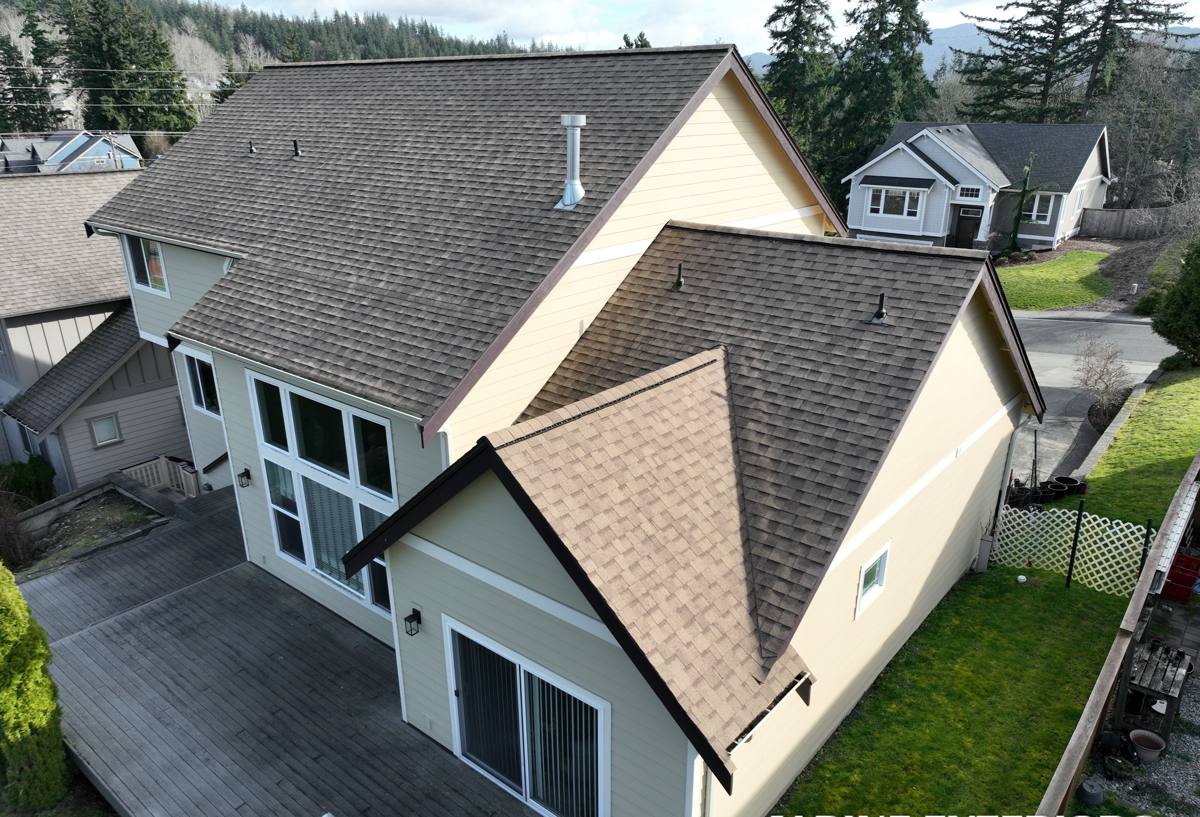
Signs a Blaine Home Needs Window Replacement
Some of these show up gradually, others all at once after a hard winter storm. Worth checking your windows against this list at least once a year, especially before the wet season sets in:
- Fogging or a hazy film between panes on double- or triple-glazed windows — the seal has failed and the gas fill is gone
- Frames that feel soft, spongy, or discolored, especially at the bottom corners and sill
- Windows that stick, won't latch fully, or take real effort to open and close
- Noticeable drafts even when the window is latched
- Rust streaks or corrosion on hinges, cranks, or locks
- Paint that's peeling or bubbling specifically around the window opening, not the wall in general
- Visible moss, black staining, or persistent green film on the sill or lower frame
- A jump in heating costs without any other explanation
Any one of these alone might just need a repair. Several together, especially rot or persistent moisture at the frame, usually mean it's time to talk about replacement rather than patching the same spot again next year.
What a Correct Window Replacement Job Actually Involves
Checking What's Behind the Old Window
A window replacement done right isn't just popping out an old sash and dropping in a new unit. Before anything goes in, the opening gets checked for hidden rot in the sheathing and framing underneath. In a climate like Blaine's, water that's been getting behind an old, failing window for years can do real damage to the structure that the window itself was hiding. Skipping this step is the single biggest reason window replacements fail early — the new window looks great, but it's sitting on compromised wood.
Flashing and Water Management
Given how much driving rain the area sees, flashing detail matters more here than in drier regions. That means proper flashing tape at the sill and jambs, a sill pan that directs any water that does get past the window back outside rather than into the wall cavity, and head flashing that sheds water away from the top of the opening. This is the part of the job nobody sees once it's finished, which is exactly why it's worth asking about before work starts.
Sealing Without Trapping Moisture
It might seem like sealing a window completely airtight on every side is the safest bet, but in a wet climate that can trap moisture that gets in some other way, with nowhere to escape. A correct install seals the interior tightly for air and thermal control while leaving the exterior detail able to drain and dry. It's a balance, and it's one of the details that separates a window that performs for twenty-plus years from one that fails at the frame in five.
Choosing Materials That Hold Up to Salt Air
Material choice matters more here than in a lot of inland markets, mainly because of how salt exposure affects finishes and hardware over time. There's no single "best" window for every home — it depends on your budget, your home's style, and how much maintenance you want to take on.
| Frame Material | Salt Air Performance | Maintenance | Typical Cost Tier |
|---|---|---|---|
| Vinyl | Good — won't corrode or rot, some color fade over time near the coast | Low | Lower |
| Fiberglass | Very good — dimensionally stable, resists moisture and salt exposure well | Low | Mid to upper |
| Aluminum-clad wood | Depends heavily on cladding quality and finish; interior wood still needs protection from any moisture intrusion | Moderate | Upper |
| Bare wood | Weakest in this climate without diligent upkeep; most exposed to rot and moisture damage | High | Varies |
Hardware deserves as much attention as the frame. Standard-grade hinges, cranks, and locks can start showing corrosion within a few years this close to the water. We favor stainless steel or corrosion-resistant hardware on replacement jobs in Blaine specifically because it holds up to salt exposure far better than the hardware that comes standard on some budget window lines. It's a small upcharge that pays off in how the windows operate five and ten years down the road.
Our Window Replacement Process
The process is the same whether it's two windows or a whole house, just scaled differently:
- On-site assessment — we measure every opening, check for rot or moisture damage behind existing trim, and note anything unusual about the framing before quoting anything
- Product selection — we walk through material, glazing, and hardware options based on your home, your budget, and how exposed that side of the house is to wind and rain
- Scheduling around the weather — install day gets picked with the forecast in mind, and openings are never left exposed overnight; if weather turns mid-job, the opening gets protected before crews leave
- Removal and inspection — old windows come out carefully so we can see the condition of the framing underneath before anything new goes in
- Installation — proper flashing, sill pan, shimming for level and square, and sealing that manages moisture rather than just trying to block it entirely
- Final walkthrough — every window gets operated, checked for square, and reviewed with you before we call the job done
What Window Replacement Costs in Blaine
Pricing depends on more than just the window itself. Here's what actually moves the number on most jobs:
| Cost Factor | Why It Matters |
|---|---|
| Number of windows | Per-window cost typically drops on larger jobs due to shared setup and labor |
| Frame material | Vinyl runs lowest, fiberglass and clad-wood run higher |
| Size and style | Standard double-hung costs less than large picture windows, bays, or custom shapes |
| Condition of existing framing | Rot repair discovered during removal adds cost, but it's not optional if it's found |
| Access and second-story work | Harder-to-reach openings take more time and sometimes equipment |
| Glazing package | Upgraded Low-E coatings or gas fills add a modest cost for better energy performance |
Most single-window replacements land in a broad low-to-mid four-figure range per window installed, with whole-house jobs priced by volume; we won't know your real number until we've actually looked at the openings, which is why the estimate is free and comes with no pressure attached.
Why Hiring a Crew That Already Works in Blaine Matters
A crew that regularly works homes in Blaine already knows which side of a house typically takes the worst weather, how quickly moss builds up on shaded sills in this specific area, and what kind of framing and window ages are common in the neighborhoods here. That familiarity shows up in small ways — knowing to check certain spots for hidden rot before quoting, recommending hardware upgrades that make sense for this exposure, and being realistic about install timing given how often the forecast changes near the water. It also means we're not learning the local climate on your project. We already know what it does to a window over time, because we've replaced plenty of them.
Keeping New Windows Performing Through Moss Season
New windows installed correctly will hold up for decades, but a little seasonal attention keeps them performing at their best through the wettest months:
- Rinse salt residue and grime off exterior glass and frames a few times a year, especially after winter storms
- Clear debris and moss buildup from tracks and weep holes so water can drain the way it's designed to
- Check exterior caulking each fall before the rains set in, and touch up any spots that have cracked or pulled away
- Trim back vegetation that's shading a window or holding moisture against the siding nearby, since that's usually where moss gets its start
- Operate every window at least a few times a year, even ones you don't open often, to keep hardware from seizing up
If you're noticing drafts, fogged glass, sticking sashes, or moisture problems around your windows, it's worth having someone take an honest look before another wet season adds to the damage. We offer free, no-pressure estimates for window replacement in Blaine — use the form below and we'll get a look scheduled.