 Lynden Siding
 Nooksack Sits Right in the Path of Whatcom County's Toughest Weather
Nooksack is a small community on the eastern edge of Whatcom County, close enough to Lynden that homeowners here deal with the same exterior challenges we see across the valley. The Nooksack River corridor and the surrounding farmland keep humidity high for much of the year, and the marine air that moves inland off the Sound and the Strait of Georgia carries a fine mist of salt that settles on siding, trim, and roofing far more often than most homeowners realize. Combine that with driving rain that comes in sideways during fall and winter storms, and you have an exterior that is under constant, low-grade attack twelve months a year.
None of this is dramatic on its own. A house in Nooksack doesn't usually fail because of one bad storm. It fails slowly, from years of moisture finding its way into seams, fasteners, and end cuts that weren't sealed correctly the first time. That's the pattern we see over and over on service calls in this area, and it's the reason our approach to siding, roofing, windows, and decks here is built around moisture management first and appearance second — even though we care plenty about appearance too.
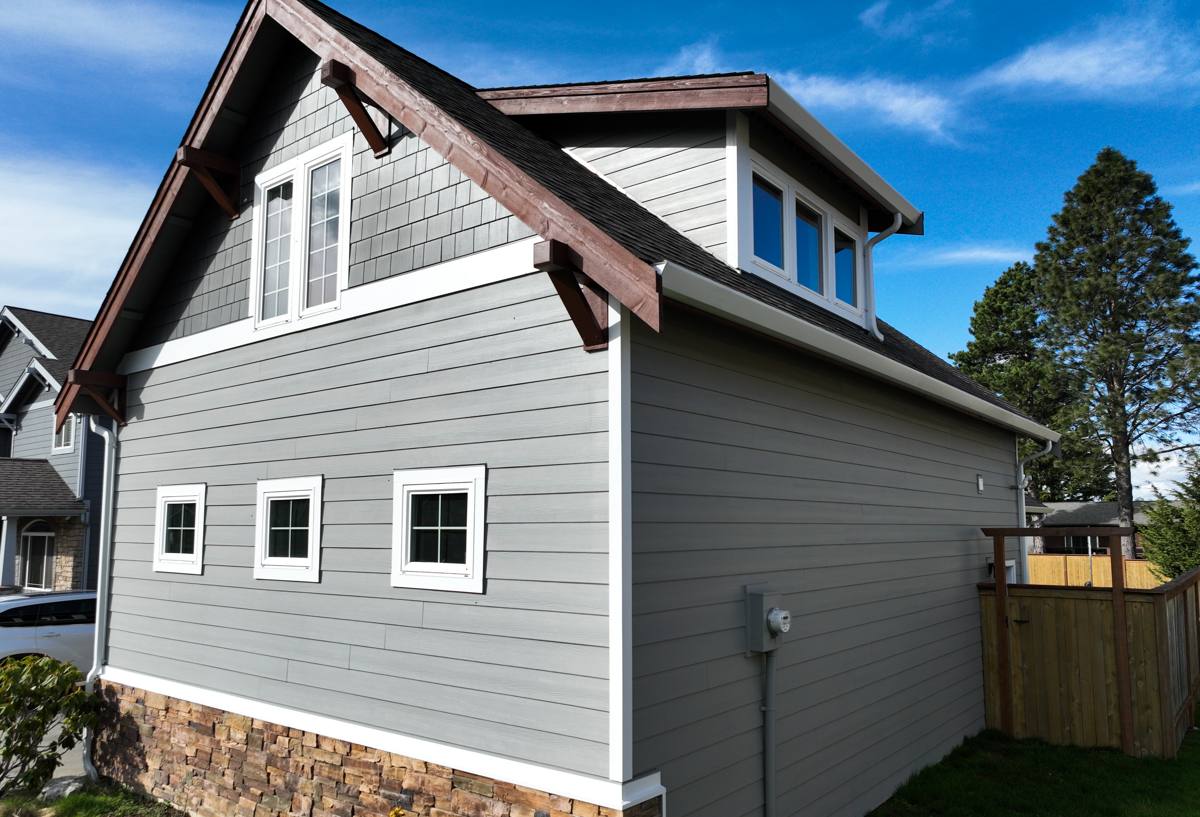
What Whatcom County Weather Actually Does to a House
Salt Air and Slow Corrosion
Salt-laden air doesn't just affect homes right on the water. Wind carries fine salt particulate well inland, and in a river valley like the one Nooksack sits in, that air can linger rather than clear out quickly. Over time it accelerates corrosion on fasteners, flashing, and any metal trim that isn't rated for coastal exposure. It also breaks down cheaper paint films faster than inland climates would, which is part of why factory-applied, baked-on finishes hold up so much better here than field-applied paint.
Driving Rain and Wind-Driven Moisture
Whatcom County storms rarely fall straight down. Wind pushes rain sideways and up under laps, trim, and window flashing that wasn't detailed with that in mind. A siding system that looks fine on a calm day can still be letting water behind it during a January windstorm if the installation didn't account for wind-driven rain. This is one of the most common root causes we find behind rot and hidden water damage on older homes in this area.
The Long Moss Season
Whatcom County's growing season for moss and algae is long — shaded, north-facing walls and roof planes can stay damp for weeks at a stretch, especially under tree cover, which is common on Nooksack properties with mature landscaping. Moss holds moisture directly against the surface it's growing on. On a roof that means accelerated wear on shingles. On siding it means trapped moisture, staining, and in the worst cases, a foothold for rot in wood-based products.
Why We Install Only James Hardie Fiber Cement Siding
We made a deliberate decision as a company to install one siding system: James Hardie fiber cement. We don't install vinyl, LP SmartSide, Cemplank, Allura, primed spruce, or cedar, and homeowners in Nooksack sometimes ask why we're so narrow about it. The honest answer is that this climate is unforgiving of the weak points in those other products, and we got tired of being the crew called back out to repair or replace siding that failed years before it should have.
Wood-based and engineered-wood siding products can perform well in dry climates, but they depend heavily on paint film integrity and correct field sealing of every cut edge. In a valley with this much sustained moisture and moss growth, that margin for error is thin, and callbacks for swelling, delamination, or rot at seams are a known risk. Vinyl is inexpensive and low-maintenance in one sense, but it moves with temperature swings, can crack in cold snaps, and doesn't hold up structurally the way a fiber cement product does under wind-driven rain. These aren't defects unique to any one brand — they're inherent trade-offs of the material categories, and we'd rather be straightforward about that than sell something we don't believe holds up here.
James Hardie fiber cement is non-combustible, dimensionally stable, and comes with a factory-applied ColorPlus finish that's baked on and warranted separately from the substrate — which matters in salt air, since it's the finish, not just the board underneath, that takes the weathering. Hardie also engineers specific product lines (HardiePlank, HardiePanel, HardieTrim) for different climate zones, and the HZ5 formulation used in this region is built for freeze-thaw cycling and sustained moisture exposure rather than a generic, one-size-fits-all board.
How the Two Compare on the Points That Matter Locally
| Factor | James Hardie Fiber Cement | Vinyl / Wood-Based Alternatives |
|---|---|---|
| Moisture & rot resistance | Cement-based, does not rot or swell | Wood-based products can swell or rot at cut edges and seams |
| Finish durability in salt air | Factory-baked ColorPlus finish, separately warranted | Field-applied or lower-grade coatings fade and chalk faster |
| Performance in wind-driven rain | Rigid, engineered lap system when installed to spec | Vinyl can flex, gap, or crack in wind and cold |
| Fire resistance | Non-combustible | Combustible (wood, LP) or heat-sensitive (vinyl) |
| Typical warranty | Long-term, transferable manufacturer warranty | Varies widely; often prorated or non-transferable |
It's Not Just Siding — the Whole Exterior Has to Work Together
A house is a system. Siding, roofing, windows, and decking all interact at the details — flashing, kick-out diverters, window head trim, deck ledger connections — and a weakness in one area can undermine the others. That's why we handle all four for homes in the Nooksack and Lynden area rather than treating siding as an isolated project.
Roofing
A roof that's shedding moss-related granule loss or has failing flashing will send water down behind siding even if the siding itself is installed correctly. When we're on a roof for repair or replacement, we're also looking at how it ties into the wall assembly below.
Windows
Old or poorly flashed windows are one of the most common sources of hidden water intrusion we find in this region. Replacing siding around a window that isn't properly flashed just repackages the same problem behind a new surface.
Decks
Deck ledger boards attach directly to the house structure, and a poorly flashed ledger connection is a well-documented source of rot in wet climates. We build and repair decks with the same moisture-first mindset we apply to siding.
Why a Local Crew Matters for a Community Like Nooksack
Nooksack isn't a big commercial market, and it doesn't get the same attention from larger regional contractors that Bellingham or the bigger Puget Sound cities do. A crew based here and working regularly throughout Whatcom County sees the same houses, the same weather patterns, and the same recurring problems year after year — which means we're not guessing at how a wall assembly will perform in this specific valley climate. We're also here for warranty work and follow-up, not just the install.
What to Ask Any Contractor Before You Hire Them
- Are they licensed and insured in Washington State, and can they provide proof?
- Do they install to the manufacturer's specific installation instructions, not just "industry standard"?
- Who handles warranty claims — the installer, the manufacturer, or both — and how is that documented?
- Will they show you the flashing and moisture-barrier details before siding goes on, not just the finished look?
- Do they have experience with this specific product line in this specific climate, not just siding in general?
What to Expect When You Get a Quote
We start with a walk-around of the exterior, looking at current siding condition, trim, window flashing, roof edges, and any visible moss or moisture staining. For a full siding project we'll talk through product options within the Hardie lineup — lap width, texture, and color — and give you a written estimate that reflects the actual scope, not a rough per-square-foot guess. There's no pressure and no obligation to move forward on the spot.
Maintenance That Fits Whatcom County's Seasons
Even a well-installed, durable exterior benefits from basic seasonal attention in this climate:
- Rinse siding and trim once or twice a year to remove salt residue and organic buildup, especially on north-facing and shaded walls.
- Trim back vegetation and tree limbs that keep siding or roofing shaded and damp longer than necessary.
- Check caulking around windows and trim annually — it's cheap insurance against wind-driven rain finding a gap.
- Have gutters cleared before the fall rains start; overflowing gutters are a direct path for water to get behind siding at the roofline.
- Address any moss growth on roofing promptly rather than letting it establish for another season.
Get a Straightforward Estimate
If you're weighing a siding replacement, dealing with a roof or window issue, or planning a new deck at your Nooksack property, we're happy to take a look and give you an honest read on what your home actually needs. Fill out the form below for a free, no-pressure estimate.