 Lynden Siding
 Roof Repair in Blaine: Built for a Coastal Climate
Blaine sits right up against Semiahmoo Bay and the Strait of Georgia, which means roofs here take a different kind of beating than roofs even a few miles inland in Lynden or Ferndale. Salt-laden air corrodes metal fasteners and flashing faster than it does elsewhere in Whatcom County. Wind-driven rain off the water finds its way into laps and seams that would stay dry on a calmer site. And the shaded, damp conditions common to this part of the county keep moss and moisture active on rooflines for most of the year. A roof repair here needs to account for all three, not just patch the obvious leak.
We're based in Lynden and have worked rooflines across Whatcom County long enough to know that a repair done for a dry inland climate doesn't always hold up on the coast. This page is about what roof repair actually looks like when it's done right for a Blaine home.
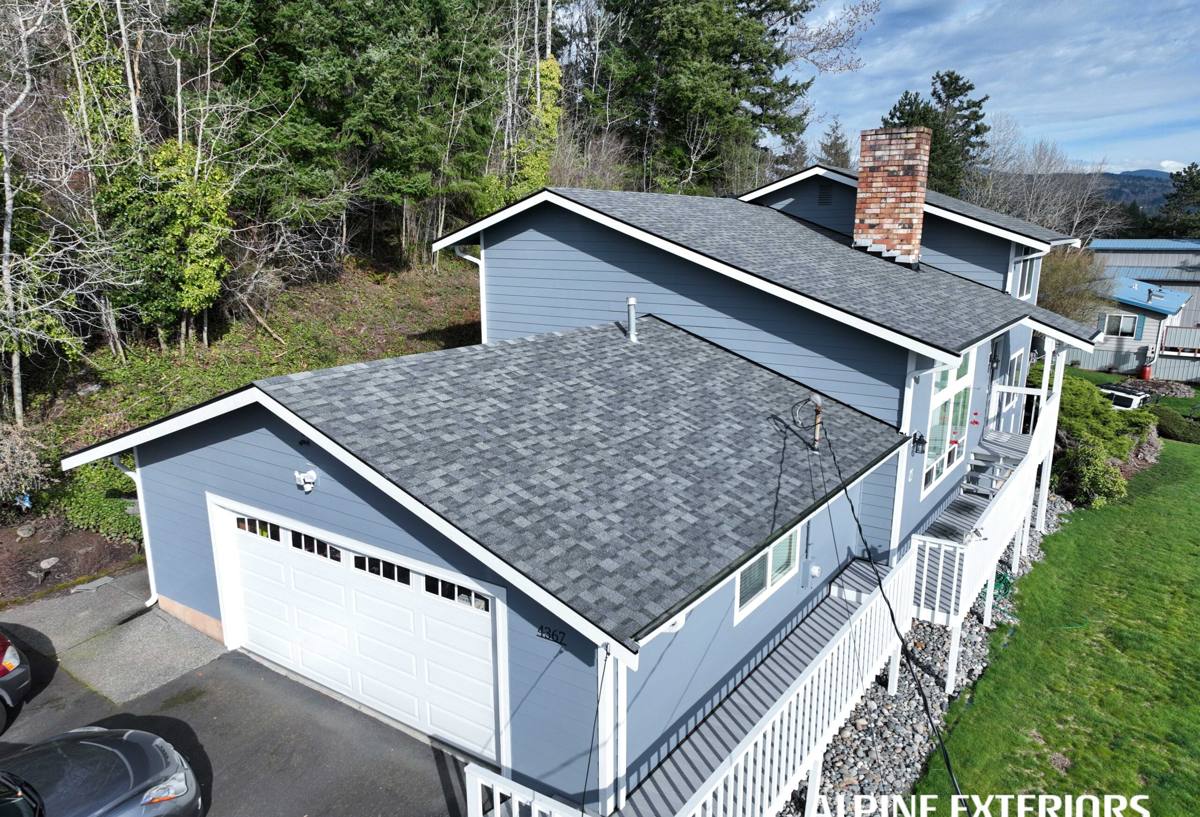
What Blaine's Weather Does to a Roof
Salt Air and Corrosion
Airborne salt accelerates corrosion on exposed metal — nail heads, flashing, gutter hardware, and any fasteners that aren't rated for coastal exposure. A repair that uses standard-grade fasteners might hold for a season or two before rust streaks and loosened nails create new leak points. We factor corrosion resistance into every repair we quote in Blaine, not just the initial fix.
Driving Rain
Rain that comes in sideways off the water tests every lap, seam, and penetration on a roof. Water doesn't just run downhill here — wind can push it uphill under shingles or siding laps that were only ever designed to shed water moving one direction. Roofs with marginal flashing details or under-lapped courses that would be fine in a calmer inland yard can leak in Blaine.
Moss and a Long Wet Season
Shaded roof sections and north-facing slopes stay damp for long stretches of the year in this part of Whatcom County, which is exactly what moss needs to take hold. Moss doesn't just look bad — it lifts shingle edges, holds moisture against the roof deck, and works its way into fastener holes over time. A roof repair that doesn't address the moss causing the damage usually just delays the next leak.
Signs Your Blaine Roof Needs Repair
Most roof problems announce themselves before they become emergencies, if you know what to look for. Walk your property and check for:
- Moss buildup on shaded slopes, ridges, or valleys, especially anything thick enough to hold a shingle edge open
- Streaking, rust-colored staining, or discoloration around flashing, vents, or metal fasteners
- Curling, cracked, or missing shingles, particularly on the side of the roof that faces the prevailing wind and rain
- Granules collecting in gutters or at downspout outlets, a sign the shingle surface is wearing thin
- Soft spots, sagging, or visible daylight in the attic where the roof deck meets a wall or chimney
- Water stains on interior ceilings or walls, even faint ones that come and go with weather
- Gaps or lifted caulking around skylights, vent pipes, or chimney flashing
Any one of these on its own might be minor. Two or three together, especially after a stretch of wind-driven rain, usually means it's worth having someone take a closer look before the next storm.
What a Correct Roof Repair Actually Involves
A roof repair that's done right starts with understanding why the damage happened, not just covering the visible symptom. That matters more on the coast than almost anywhere else in the county, because a leak in Blaine can have more than one contributing cause — a failed flashing detail combined with wind-driven rain, or moss holding moisture against a spot where fasteners have already started to corrode.
A thorough repair typically includes:
- Diagnosis at the source. Water often travels before it shows up as a stain, so the visible damage isn't always directly above the actual failure point.
- Removal of compromised material. Cracked, curled, or saturated roofing material gets removed rather than shingled over, along with any deteriorated underlayment or decking underneath.
- Deck inspection. If water has been getting in for a while, the roof deck itself may be soft or delaminated and needs to be addressed before new material goes down.
- Correct flashing and fastener choices. Given the salt exposure here, we use fasteners and flashing rated for coastal conditions rather than the minimum standard grade.
- Matching materials properly. Patch repairs should tie into the existing roofing correctly at laps and courses so water sheds the way it's supposed to, not just cosmetically match.
- Moss and debris treatment. If moss contributed to the damage, we address the moss and improve drainage in that area so the same failure doesn't repeat in a year.
Common Roof Repairs We Handle in Blaine
Not every repair is the same scope or cost. Here's a general picture of what factors into a typical roof repair project, so you know roughly what you're dealing with before we even come out.
| Repair Type | Typical Cause on the Coast | What Drives the Cost |
|---|---|---|
| Flashing repair or replacement | Corrosion, wind-driven rain forcing water under seams | Number of penetrations, roof pitch, accessibility |
| Shingle patch or section replacement | Wind damage, granule loss, curling from age and moisture | Size of the area, matching existing material, roof height |
| Moss removal and treatment | Prolonged shade and dampness common in this area | Roof size, moss severity, whether treatment or full removal is needed |
| Deck and sheathing repair | Long-term undetected leaks softening the wood beneath | Extent of rot, framing access, whether interior finishes are affected |
| Fastener and hardware upgrades | Standard-grade fasteners corroding faster in salt air | Roof size, hardware type, labor to remove and replace |
Exact pricing depends on what we find during inspection — we'd rather give you an honest number after actually looking at your roof than a broad estimate that doesn't hold up once we're up there.
Our Repair Process
1. Inspection
We start by getting on the roof (weather permitting) and in the attic if needed, looking specifically for the coastal issues common in Blaine: corroded fasteners, flashing that's failed at seams, and moss holding moisture against the deck.
2. Honest Assessment
We'll tell you plainly whether you're looking at a targeted repair or whether the damage points to a bigger issue worth knowing about, like a roof nearing the end of its service life. We're not going to sell you a full replacement when a repair will genuinely hold, and we're not going to patch something that needs more attention just to keep the job small.
3. The Repair Itself
We remove compromised material, address the actual cause, and rebuild the repair area with materials and fasteners suited to coastal exposure — not just whatever's fastest.
4. Cleanup and Walkthrough
We clear debris, check gutters and downspouts near the repair area for anything that fell during the work, and walk the repair with you so you know exactly what was done.
Materials and Products We Use
Our standard on coastal jobs in Blaine is to use fasteners, flashing, and underlayment rated for higher moisture and corrosion exposure, even when a lower-grade product would technically meet code. It costs a bit more up front, but it avoids the common failure pattern we see on the coast: a repair that looks fine for a year or two, then fails again at the same fastener line once corrosion sets in.
We're also selective about which shingle products we install as part of a repair. Some lower-cost lines have thinner mat construction that doesn't perform as well under sustained wind-driven rain, or warranty structures that don't account well for coastal wear patterns. That's a professional judgment call on our part about long-term performance and maintenance burden — not a claim that any particular product is defective, just a reflection of what holds up best in this specific environment.
Why a Crew That Already Works Blaine Matters
A roofer who mostly works drier, inland sites can do good general work and still miss the details that matter here — under-specified flashing, standard fasteners in a salt-air environment, or a moss problem treated as cosmetic instead of structural. Working Whatcom County's coastal areas regularly means we've seen how these roofs actually fail over time, not just how they're built on paper.
That local pattern-recognition is most of what you're paying for in a repair. Anyone can nail down a new shingle. Knowing why the old one failed, and building the fix so it doesn't happen again in the same spot next winter, is the part that actually saves you money over the life of the roof.
Get a Free Estimate
If you've noticed moss buildup, staining, curling shingles, or a leak that comes and goes with the weather, it's worth having a second set of eyes on it before the next storm rolls in off the water. We offer free, no-pressure estimates for roof repair work in Blaine and the surrounding Whatcom County coastline — fill out the form below and we'll take a look.