 Lynden Siding
 Siding Rarely Fails From the Outside In
When a homeowner in Lynden calls about "bad siding," they're almost always describing a symptom, not the cause. Bubbling paint, soft spots near the bottom of a wall, a musty smell in a closet on an exterior wall, siding boards that have visibly swollen or separated at the seams — these are the visible end of a process that started weeks, months, or years earlier, behind the siding, where nobody was looking. By the time damage shows up on the surface, moisture has usually already been working on the wall assembly for a while.
Understanding what's actually happening behind the cladding changes how you think about siding. It's not just a decorative shell. It's the first line of a system that's supposed to manage water — and when that system breaks down, the siding material itself is often the last thing to show it.
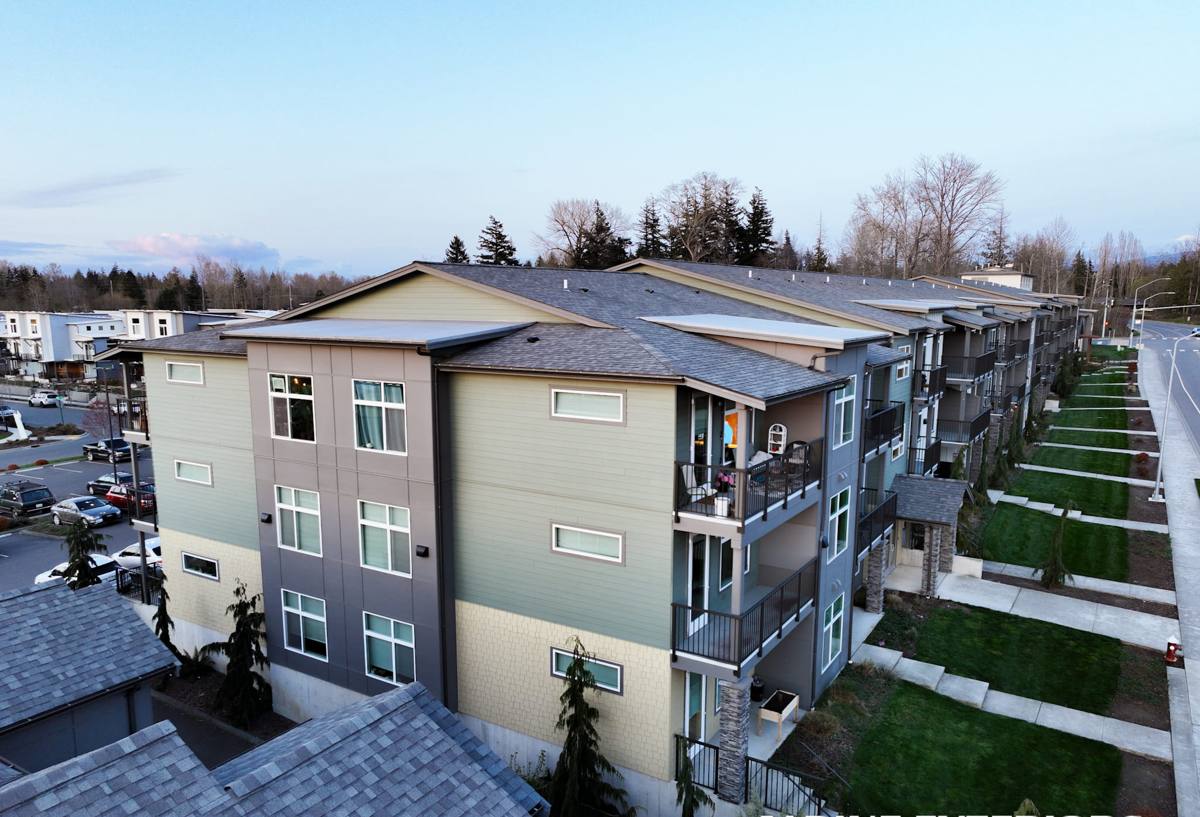
How Water Gets Behind Siding in the First Place
No siding product, including the best ones, is expected to be 100% waterproof on its own. Every wall assembly is designed around the assumption that some water will get past the outer layer — the question is whether the wall behind it can dry out and drain before that moisture does damage. Water typically finds its way in through:
- Gaps or failed caulking at trim, corners, windows, and doors
- Missing, undersized, or incorrectly lapped flashing above windows, doors, and horizontal trim boards
- Nail penetrations that were driven too high, too low, or through warped material
- Butt joints between siding pieces that weren't properly flashed or backed
- Siding installed with insufficient clearance from grade, decks, or roof lines, letting splash-back and standing water wick in
- Deteriorated caulk joints that were never maintained after the original install
Any one of these is a small problem on its own. Combined with a wall that has no way to drain or dry — no rainscreen gap, no house wrap detailing, no weep path — a small entry point becomes a chronic moisture source.
What's Actually Happening Inside the Wall
Once water gets past the siding and the water-resistive barrier, it moves into the wall cavity. From there, a few things typically happen, roughly in order:
Sheathing Saturation
OSB or plywood sheathing absorbs moisture and begins to swell and soften. This is usually the first structural material affected, and it's invisible from both inside and outside the home until it's advanced.
Framing Decay
If moisture reaches wood framing — studs, sill plates, header material — and stays wet long enough, fungal decay sets in. Wood-destroying fungi need repeated wetting, not a single event, which is why chronic small leaks are often more damaging than one big storm.
Insulation Compromise
Wet insulation loses most of its R-value and can hold moisture against framing even longer, extending the drying time and the decay window.
Secondary Damage
Interior finishes — drywall, baseboards, flooring near exterior walls — can show staining, bubbling, or soft spots long after the original entry point. Mold growth on the interior face of exterior walls is a common downstream sign.
None of this happens overnight. It's the accumulation of repeated wetting and slow, incomplete drying over multiple seasons that turns a minor installation flaw into a structural repair.
Why Whatcom County's Climate Makes This Worse
Lynden's siding doesn't get a break the way homes further inland or in drier climates do. Whatcom County sits close enough to the Salish Sea and Puget Sound that homes here regularly deal with salt-laden air, which accelerates the breakdown of fasteners, caulk, and unprotected wood fiber compared to a drier interior climate. Add in the driving, wind-pushed rain that comes through this corridor off the Pacific — rain that hits walls at an angle instead of falling straight down — and you get far more water contact on vertical wall surfaces than most siding products were tested for in their marketing photos.
Then there's moss. Lynden's long, wet, mild-temperature stretch from fall through spring is close to ideal moss and algae growing conditions, and moss doesn't just sit on a surface — it holds moisture against it. On siding, moss and algae buildup in shaded areas, north-facing walls, and anywhere airflow is restricted keeps that surface damp far longer than an exposed, sun-facing wall, which is exactly the condition that lets slow moisture intrusion turn into decay. A siding product and finish that can shed water quickly and resist moss adhesion isn't a luxury in this climate — it's a practical requirement.
Warning Signs Worth Checking For
Most siding-related moisture damage is much cheaper to address early than after it reaches the framing. A homeowner can catch a lot of it with a simple seasonal walk-around:
- Soft or spongy spots when you press on siding, especially near the bottom courses
- Visible swelling, delamination, or bubbling of the siding surface
- Peeling or bubbling paint that keeps coming back in the same spot after repainting
- Dark staining or streaking below trim, window sills, or butt joints
- Cracked, shrunken, or missing caulk at corners, trim, and penetrations
- A musty odor near an exterior wall inside the home
- Visible mold, moss, or algae buildup that returns quickly after cleaning
- Warping or gapping siding boards, particularly at seams
Finding one or two of these isn't automatically a crisis, but it's a reason to have someone look behind the siding in that area rather than just repainting or re-caulking over it.
How Different Siding Materials Handle This Reality
Not every siding material responds to moisture exposure the same way. The material matters, but so does how forgiving it is of the small installation imperfections that happen on every real job site.
| Material | Moisture Behavior | Installation Sensitivity |
|---|---|---|
| Primed spruce / dimensional wood | Absorbs and swells readily; decays if repeatedly wetted without a chance to dry | High — depends heavily on paint maintenance and joint sealing |
| Cedar | Naturally decay-resistant but still absorbs moisture and moves seasonally; needs ongoing finish maintenance | Moderate to high — finish upkeep is non-negotiable |
| Vinyl | Doesn't absorb water itself, but doesn't stop water either — relies entirely on the wall behind it to manage drainage | Moderate — gaps and poor flashing pass moisture straight through |
| Engineered wood (LP-type products) | Wood-based core is vulnerable at cut edges and joints if the factory edge seal is compromised or maintenance lapses | High — edge and joint treatment is critical and easy to get wrong |
| Fiber cement (James Hardie) | Non-combustible, dimensionally stable, engineered to resist swelling and moisture-driven decay when installed to spec | Moderate — still requires correct flashing and clearances, but the material itself isn't the weak point |
The pattern that shows up across all of these: material quality matters, but installation quality is what actually determines whether moisture becomes a problem. A great material installed poorly will still fail. A good material installed correctly, with proper flashing, clearances, and joint treatment, gives a wall the best chance of managing the water that inevitably gets past the surface.
What Correct Installation Actually Involves
The details that prevent the moisture problems described above aren't glamorous, but they're what separates siding that lasts decades from siding that needs attention in year eight or ten:
Drainage Plane and Rainscreen Gap
A proper water-resistive barrier behind the siding, ideally with a drainage gap, lets any water that gets past the cladding drain and lets the wall dry from both sides instead of trapping moisture against the sheathing.
Flashing at Every Penetration
Windows, doors, hose bibs, light fixtures, and horizontal trim all need flashing detailed to shed water downward and outward, lapped correctly so upper courses always drain over lower ones.
Correct Fastening
Nailing pattern, fastener depth, and fastener placement all affect how siding handles seasonal movement and whether it stays tight against the wall over time.
Clearance From Grade and Hard Surfaces
Siding installed too close to soil, patios, decks, or roof lines invites splash-back and wicking that no amount of good material can fully resist.
Joint and Seam Treatment
Butt joints, corners, and trim intersections need to be treated as the moisture-entry points they are, not just cosmetic seams.
Repair, Recoat, or Full Replacement
Not every moisture issue means tearing off an entire wall. The right response depends on how far the damage has spread and how the original installation was done.
| Situation | Typical Response | Key Cost Factor |
|---|---|---|
| Isolated caulk failure, no sheathing damage | Re-caulk and reseal affected joints | Low — localized labor only |
| Localized board swelling or rot, sheathing intact | Spot repair — remove and replace affected boards, correct the underlying flashing flaw | Moderate — depends on how many courses are affected |
| Sheathing or framing decay found behind siding | Open the wall, dry out or replace framing/sheathing, then re-side that section | Higher — structural repair drives cost more than the siding itself |
| Widespread aging siding with recurring moisture issues across the home | Full removal and replacement with a properly detailed wall assembly | Highest — but often more cost-effective long term than repeated spot repairs |
A contractor who's honest with you will tell you which category your home falls into before recommending a full replacement — and will actually open up a suspect area to check, rather than guessing from the outside.
Why We Only Install James Hardie
Given everything above, our standard on new installs and full replacements is James Hardie fiber cement siding, and only James Hardie. It's non-combustible, dimensionally stable across the temperature and moisture swings this region sees, and factory-finished with ColorPlus technology so the color layer isn't dependent on field painting to hold up. Hardie's HZ5 product line is engineered specifically for climates like ours — freeze-thaw cycling, sustained moisture, and coastal-influenced air — and it comes with a strong transferable warranty that reflects the manufacturer's confidence in how the material performs when installed to spec.
We won't install materials we don't believe hold up to Whatcom County's combination of driving rain, salt air, and a moss season that runs most of the year. That's not a knock on every homeowner's existing siding — a lot of it was a reasonable choice when it went up. It's why, when we're the ones putting new siding on a home, we put on the product we trust to handle what this climate actually does to a wall.
If you're seeing any of the warning signs above, or you just want a second opinion on what's going on behind your siding, we're happy to take a look and give you a straight answer — no pressure, no obligation. Use the form below to request a free estimate.