 Lynden Siding
 Siding Replacement Built for Nooksack's Weather
Nooksack sits in the same weather system that shapes every home we work on across Whatcom County: marine air moving in off the Strait of Georgia and Puget Sound, wrung out over the foothills as driving rain, and a damp shoulder season that turns north-facing walls green if nothing is done about it. Add the salt-laced moisture that rides in with the wind and settles on siding, trim, and fasteners, and you have a climate that is genuinely harder on exterior cladding than most of the country ever deals with. Siding here isn't just cosmetic. It's the one layer standing between your framing and a nine-month wet season.
We're a Lynden-based crew, and Nooksack is inside our regular service area — not a stretch job we drive an hour for once a year. That matters more than it sounds like it should, and we'll get into why further down.
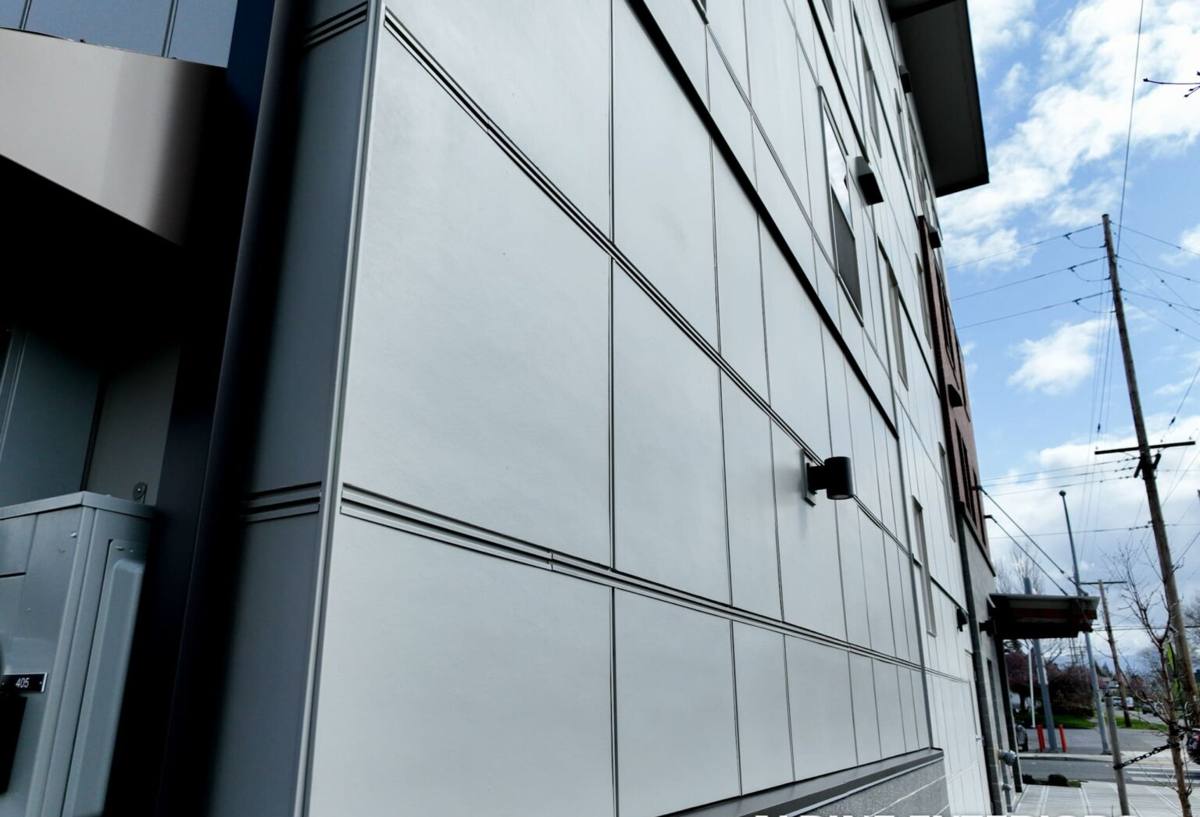
What Actually Wears Out Siding Around Nooksack
Before talking about replacement, it's worth being clear about what's actually failing on most of the homes we look at in this area. It's rarely one dramatic thing — it's usually three slow-moving problems stacking up.
Moisture That Doesn't Get a Chance to Dry
Whatcom County doesn't get hard freezes as often as it gets long, low-grade wet stretches. Siding that can absorb and hold water — or siding installed without proper drainage gaps and flashing — never fully dries between rain events. Over years, that trapped moisture is what rots sheathing, delaminates panels, and feeds mold behind the wall, long before anything looks wrong from the driveway.
Moss, Algae, and Organic Growth
Shaded walls, tree cover, and the long damp season give moss and algae exactly what they need to take hold on siding surfaces and in seams. Beyond looking bad, sustained organic growth holds moisture against the material and accelerates whatever degradation is already happening underneath.
Salt-Laced Wind and UV Cycling
Coastal-influenced air carries fine salt content that settles on painted and coated surfaces, and combined with UV exposure it breaks down paint film and caulking faster than an inland-only climate would. That's why homes here often show chalking, fading, and caulk failure years ahead of the manufacturer's expected timeline for lower-exposure regions.
Signs Your Nooksack Home Needs Siding Replacement — Not Just Paint
- Soft or spongy spots when you press on the siding, especially near the bottom courses or window trim
- Panels that are bowing, cupping, or visibly separating from the wall
- Persistent moss or algae staining that comes back within a season of cleaning
- Cracked, peeling, or bubbling paint that keeps failing even after repainting
- Visible gaps at seams, corners, or trim where caulking has pulled away
- Rising energy bills that track with drafts or cold spots along exterior walls
- Any sign of rot, discoloration, or a musty smell near the base of exterior walls
Any one of these on its own might just need attention. Several together, especially on a home more than 15-20 years old, usually means the siding system itself has reached the end of its useful life.
What a Correct Siding Replacement Involves
Replacing siding well is mostly about what happens before the new material ever goes up. A fast tear-off and re-clad job can look fine for a season or two and then fail in exactly the same ways as what it replaced, because the underlying moisture management was never fixed.
Tear-Off and Inspection
Old siding comes off in sections so we can actually see the sheathing underneath — not guess at its condition from the outside. This is where hidden rot, past water intrusion, and failed old flashing usually show up. It needs to be found and addressed now, not discovered later.
Weather-Resistive Barrier and Drainage Plane
A properly lapped weather-resistive barrier goes over the sheathing, and in a climate like Whatcom County's, we build in a drainage gap behind the siding so incidental moisture that does get behind the cladding has somewhere to go instead of sitting against the wall.
Flashing at Every Penetration
Windows, doors, hose bibs, light fixtures, and anywhere else something punctures the wall plane need correctly lapped flashing. This is the single most common place we find failures on older Whatcom County homes — flashing that was skipped, reversed, or sealed with caulk instead of properly lapped material.
Installing to Manufacturer Spec
Fastener placement, panel gaps, clearance from grade and roof lines, and caulking at the right joints only — all of it matters for how the siding performs over the next several decades, not just how it looks on install day.
Why We Only Install James Hardie Fiber Cement
We don't install vinyl, LP SmartSide, Cemplank, Allura, primed spruce, or cedar. That's a deliberate standard, not an oversight, and in a climate like this one the reasoning is straightforward.
| Material | Trade-off in this climate |
|---|---|
| Vinyl | Can warp or crack in temperature swings; seams and J-channels give moisture a path behind the wall |
| Wood-based composite (LP SmartSide) | Engineered wood strand core is more moisture-sensitive than fiber cement; edge sealing and maintenance are critical and easy to fall behind on |
| Primed spruce / raw wood | Needs vigilant repainting and caulking to hold up against sustained damp exposure; rot risk rises quickly if maintenance slips |
| Cedar | Beautiful material, but requires ongoing sealing/staining and is a known food source for the same moss and organic growth this climate already promotes |
| James Hardie fiber cement | Non-combustible, dimensionally stable in wet-dry cycling, factory-baked ColorPlus finish resists fading and doesn't rely on field-applied paint for its primary protection |
James Hardie's HZ5 product line is engineered specifically for climates with sustained moisture exposure like the Pacific Northwest. The factory-applied ColorPlus finish is baked on under controlled conditions rather than painted on-site, which matters directly for the salt-and-UV fading problem described above. It also carries a strong transferable warranty backed by a manufacturer that engineers specifically for regions like this one, not a generic national product spec.
None of the alternatives are bad products in every context. They're just products that ask a homeowner in this specific climate to manage more risk and more maintenance than we're willing to put our name behind.
Our Process for Nooksack Jobs
- On-site assessment — we walk the exterior, check for soft spots and existing moisture damage, and give you an honest read on whether you need full replacement, partial replacement, or repair
- Written estimate — clear scope, product line and color selection, and a realistic timeline
- Tear-off and sheathing inspection — old material removed in sections so nothing hidden gets covered back up
- Weather barrier, drainage plane, and flashing — the part that determines how the job performs in year ten, not just year one
- Hardie installation to spec — correct fastening, clearances, and joint treatment
- Final walkthrough — we go over the finished work with you before calling it done
Why a Local Lynden Crew Matters for Nooksack Specifically
Nooksack is small enough that it doesn't always get the same attention from contractors based further out in Bellingham or south county. Being a Lynden crew means Nooksack is a normal part of our route, not a special trip — which affects scheduling, warranty callbacks, and how quickly we can get back out if you have a question after the job is done. It also means we're working in this exact microclimate constantly, on homes with the same wind exposure, tree cover, and moisture patterns yours has. That's a different level of familiarity than a crew that mostly works drier inland regions and treats every Whatcom County job as an outlier.
What Siding Replacement Typically Costs
Every home is different, but the factors that move the price are consistent. We'll never quote a number without seeing the home, but here's what drives the range.
| Factor | Why it matters |
|---|---|
| Home size and wall complexity | More corners, gables, and trim details mean more labor and material cuts |
| Sheathing condition | Rot discovered during tear-off adds repair scope before new siding can go on |
| Siding profile chosen | Lap width, shingle-style panels, and board-and-batten each carry different material and labor costs |
| Trim and accessory scope | Full trim replacement alongside siding costs more than reusing sound existing trim |
| Access and site conditions | Steep grades, tight setbacks, or multi-story sections affect equipment and labor time |
Broad ranges for full siding replacement on a typical single-family home run from the mid five figures into six figures depending on size and scope — the only way to get a real number is a site visit.
Ready When You Are
If your Nooksack home is showing moss buildup that won't quit, paint that keeps failing, or siding that's starting to feel soft in spots, it's worth a look before another wet season adds to the damage. We offer free, no-pressure estimates — fill out the form below and we'll get a Lynden-based crew member out to take an honest look at what your home actually needs.