 Lynden Siding
 Roof Replacement in Nooksack: Built for the Weather That's Actually Here
Nooksack sits in the flat farm country of Whatcom County, close enough to the Nooksack River and the marine air moving in off the Salish Sea that roofs here take a different kind of beating than roofs thirty miles inland or over the mountains. It isn't dramatic weather most of the year — it's relentless. Long stretches of drizzle, driving rain that comes in sideways during winter windstorms, heavy dew and fog that never quite lets a roof dry out, and moss that finds a foothold on anything shaded or north-facing. None of that shows up as a single bad storm. It shows up as a roof that quietly wears out ten years earlier than the shingles were rated for.
When we replace a roof in Nooksack, we're not just matching a manufacturer's spec sheet. We're building for a specific set of local conditions: sustained moisture, moss and algae pressure, wind-driven rain at the edges and valleys, and the freeze-thaw cycles that hit this part of Whatcom County a handful of times every winter. A roof that's correctly built for this climate looks almost identical to one that isn't — until year eight or nine, when the difference becomes obvious on one roof and not the other.
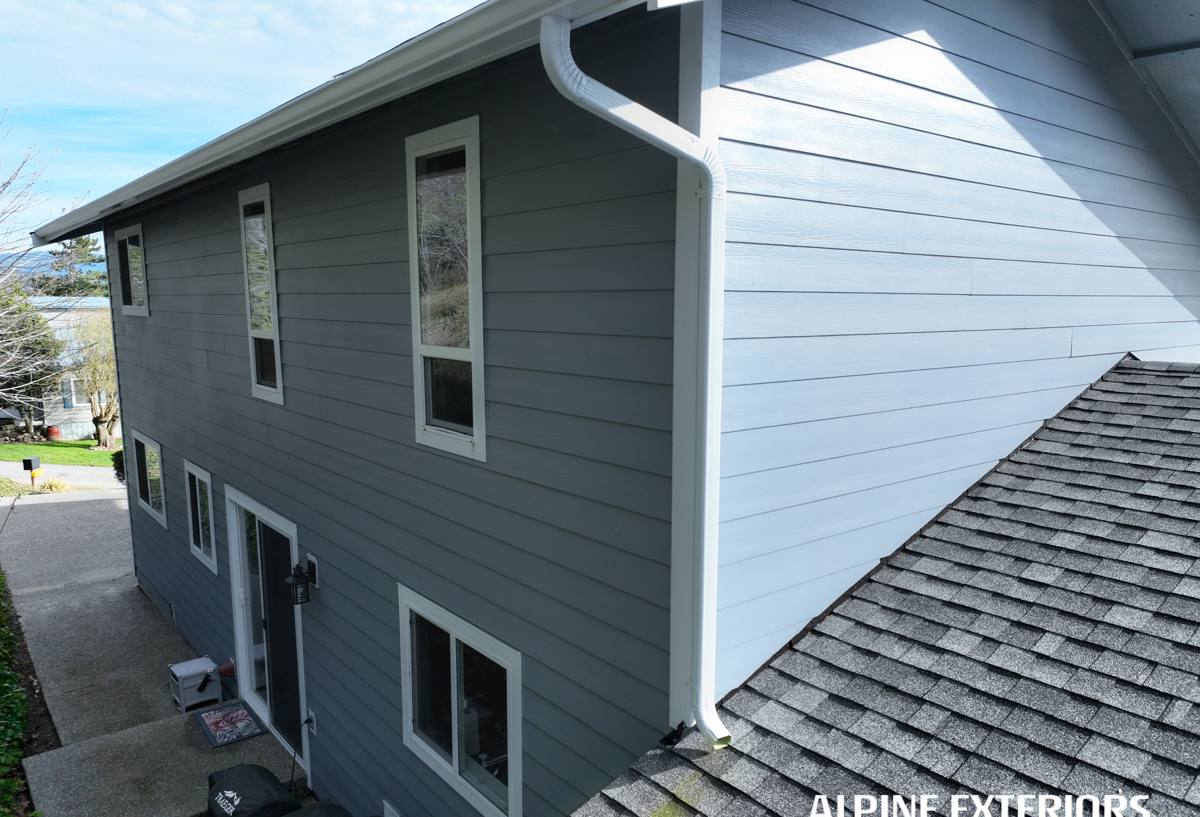
Signs a Nooksack Roof Is Ready for Replacement
What you can see from the ground
- Shingles that look dark, blotchy, or streaked — often algae or moss staining, not just dirt
- Granules collecting in gutters or at downspout outlets
- Shingle edges curling up or corners lifting
- Visible moss growth, especially on the shaded or north-facing slopes
- Sagging along the ridge line or over the eaves
- Flashing around chimneys, vents, or skylights that's rusted, lifted, or gapped
What shows up inside first
Roof failure in this climate rarely announces itself with a dramatic leak. It's usually a faint water stain on a ceiling that comes and goes with the weather, a musty smell in an attic or upper closet, or insulation that feels damp when it shouldn't. By the time water is dripping visibly, moisture has often been getting into the sheathing for one or more wet seasons already. If a roof is somewhere around 18–25 years old and showing any of these signs, it's worth a real inspection rather than another round of patch repairs.
What a Correct Roof Replacement Actually Involves
A roof replacement is more than stripping old shingles and nailing down new ones. In a climate that stays damp as long as this one does, the parts you don't see matter as much as the parts you do.
Tear-off and deck inspection
We remove the old roofing down to the deck so we can actually see the plywood or OSB underneath. This is the point where hidden moisture damage — soft spots, delaminated sheathing, rot around old vent penetrations — gets found and fixed. Covering over a compromised deck with new shingles just hides the problem for a few more years; it doesn't solve it.
Underlayment and ice/water protection
Given how much wind-driven rain this area sees, underlayment choice matters more here than it would in a drier region. We use synthetic underlayment across the field of the roof and self-adhering ice-and-water membrane at the eaves, valleys, and any low-slope transitions — the spots where wind pushes rain uphill under shingles instead of letting it run off.
Flashing
Chimneys, skylights, wall-to-roof transitions, and vent pipes are where the majority of roof leaks actually start, not out in the open field of shingles. We replace flashing rather than reusing old pieces whenever a roof is being torn off — reused flashing is one of the most common shortcuts that leads to a callback two or three winters later.
Ventilation
A roof that can't breathe traps moisture in the attic, which speeds up sheathing rot from underneath and can encourage mold regardless of how good the shingles above are. We check intake (soffit) and exhaust (ridge or roof vents) balance on every replacement — this is often the single most overlooked part of a roof system in this region.
Moss and algae resistance
Where budget and roof design allow, we recommend shingles rated for algae resistance (usually copper- or zinc-treated granules) on roofs with shaded, north-facing, or heavily tree-covered slopes. It won't make moss impossible, but it slows regrowth meaningfully compared to standard granules.
Roofing Material Options for This Climate
Most Nooksack homes are well served by architectural asphalt shingles, but the right product tier and details depend on the roof's exposure and how long the homeowner plans to stay in the house.
| Material | Typical Lifespan Here | Moss/Moisture Behavior | Best Fit |
|---|---|---|---|
| 3-tab asphalt shingle | 15–20 years | More vulnerable to moss and granule loss in shaded areas | Budget-driven projects, rental properties |
| Architectural (laminate) shingle | 25–30 years | Better wind and moisture resistance; algae-resistant options available | Most owner-occupied homes |
| Standing seam metal | 40–50+ years | Sheds moisture and moss builds up far less than on shingles | Long-term owners, steep or high-exposure roofs |
| Synthetic/composite shingle | 30–40 years | Good moisture resistance, higher upfront cost | Homeowners wanting a shingle look with metal-like durability |
We don't push one product across every roof. A shaded, low-slope roof under fir trees needs different material and ventilation decisions than a steep, open, south-facing roof — even on the same street.
Our Replacement Process, Start to Finish
- On-site inspection. We walk the roof (or use a ladder and binoculars where pitch or condition make walking it unsafe) and check the attic from inside for ventilation, moisture, and structural signs.
- Written estimate. A clear scope covering material, tear-off, deck repair allowances, flashing, ventilation, and cleanup — no vague "roofing package" line items.
- Scheduling around the weather. We plan tear-off days around forecasts, not just the calendar, and tarp any exposed deck immediately if weather turns before dry-in is complete.
- Tear-off and deck repair. Old roofing comes off, the deck is inspected, and any soft or damaged sheathing is replaced before anything new goes down.
- Dry-in. Underlayment and ice-and-water membrane go down the same day the deck is exposed — we don't leave a bare deck overnight in this climate.
- Flashing, shingles, and ventilation installation. Installed to manufacturer spec, not just "close enough."
- Cleanup and final walkthrough. Magnetic sweep for nails, gutter check for debris, and a walk-through so the homeowner can see the finished work and ask questions.
Cost Factors for a Nooksack Roof Replacement
Every roof is priced on its own specifics, but the same handful of factors drive most of the difference between bids:
| Factor | Why It Moves the Price |
|---|---|
| Roof size and number of planes | More squares and more cuts mean more material and labor |
| Pitch and access | Steep or high roofs need more safety setup and take longer |
| Deck condition | Rotten or soft sheathing found during tear-off adds repair cost |
| Number of penetrations | Chimneys, skylights, and multiple vents all need individual flashing work |
| Material tier | 3-tab, architectural, metal, and synthetic products span a wide price range |
| Ventilation upgrades | Adding or correcting intake/exhaust venting is often worth the modest added cost |
Be cautious of any bid that's dramatically lower than the others without a clear explanation — it's usually missing something, whether that's flashing replacement, deck repair allowance, or proper underlayment at the eaves.
Why Hiring a Crew That Already Works in Nooksack Matters
A roof built for a dry climate and shipped as a generic "best practice" doesn't hold up the same way here. A crew that regularly works Lynden and the surrounding Whatcom County communities already knows which slopes in this area collect moss fastest, how much wind-driven rain the valleys need to handle at the eaves, and which ventilation setups actually keep attics dry through a wet Pacific Northwest winter. That local pattern recognition is the difference between a roof that's technically installed to code and one that's actually built for the conditions it will face for the next 25-plus years.
It also matters for accountability. A contractor based in and around this area is easy to reach if a question comes up in year three, not just during the installation week.
After Installation: A Simple Maintenance Checklist
A new roof still needs a little seasonal attention in this climate to get its full lifespan:
- Clean gutters at least twice a year — clogged gutters back water up under the eaves
- Have overhanging branches trimmed back to reduce shade and debris buildup
- Do a visual check after any major windstorm for lifted or missing shingles
- Watch for early moss growth on shaded slopes and address it before it spreads
- Keep attic vents clear of insulation or debris so airflow stays balanced
- Schedule a quick professional look every few years, even with no obvious problems
Ready to Talk About Your Roof?
If your roof in Nooksack is showing its age, or you just want an honest read on how many years it has left, we're happy to take a look. The estimate is free, there's no pressure to book anything on the spot, and you'll get a clear explanation of what we see and why — use the form below to get started.