 Lynden Siding
 Why Nooksack Roofs Need to Be Built Differently
Nooksack sits inland from Bellingham Bay but still gets the marine air that moves through Whatcom County off the Strait of Georgia and Puget Sound. Combine that salt-tinged moisture with the rainfall this part of Washington sees most of the year, and you get a climate that is genuinely hard on roofing. It isn't one big storm that does the damage — it's the slow, steady exposure. Shingles that would hold up fine in a drier climate spend months at a time damp here, and that constant moisture is exactly what moss, algae, and granule loss feed on.
Metal roofing handles that combination better than most other materials, but only when it's specified and installed correctly for this specific environment. A metal roof installed the way it might be installed in a dry inland climate is not the same job as one installed correctly for Nooksack. This page covers what that difference actually looks like.
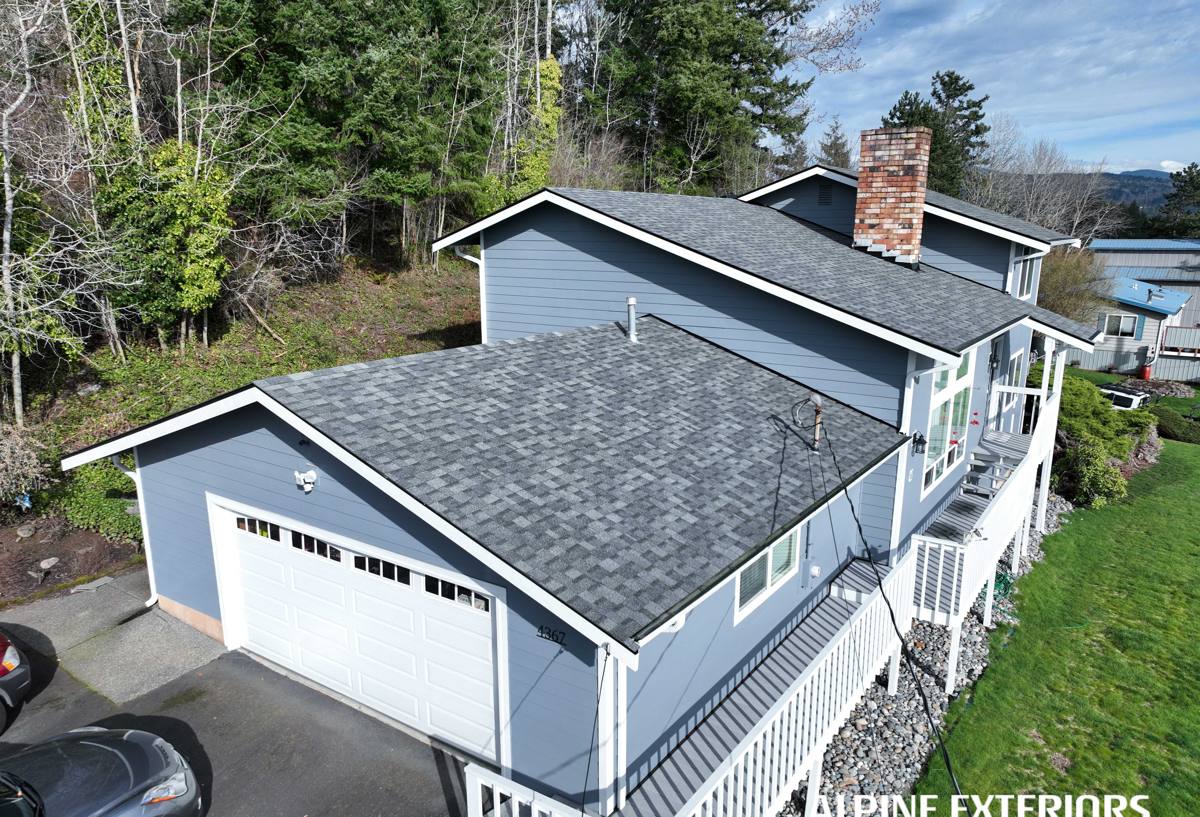
What Driving Rain and Salt Air Do to a Roof Over Time
Two things wear roofs out faster around here than almost anywhere else in the state:
Driving Rain
Wind-driven rain doesn't just fall straight down — it gets pushed sideways and upward under laps, around flashing, and into any gap that a calmer climate could get away with ignoring. Roofs here need tighter seams, properly lapped underlayment, and flashing detail that assumes water will try to travel uphill, because eventually it will.
Salt Air and Moisture
Airborne salt accelerates corrosion on any exposed metal — fasteners, flashing, panel edges — faster than it would inland. It also means the fastener and flashing material matters as much as the roofing panel itself. A roof is only as corrosion-resistant as its weakest metal component, which is usually the fasteners, not the panels.
On top of both of those, Whatcom County has a long moss season. Shaded roof sections, north-facing slopes, and anything under tree cover can stay damp for weeks at a stretch, giving moss and algae plenty of time to take hold on surfaces that allow it to grip.
Why Metal Roofing Fits This Climate
Metal doesn't solve every roofing problem, but it solves the specific problems Nooksack homes deal with:
- Moss and algae have almost nothing to grip. A smooth painted metal surface doesn't offer the texture that shingle granules do, so growth is far less likely to establish and much easier to wash off when it does.
- It sheds water fast. Steep water-shedding profiles and tight seams move rain off the roof quickly instead of letting it sit and soak in, which matters during weeks of steady drizzle.
- It doesn't absorb moisture. Unlike wood or composition shingles, metal panels don't hold water against the substrate, which reduces the conditions that lead to rot in the roof deck below.
- Properly coated panels resist fading and chalking from the freeze-thaw and wet-dry cycling this climate puts roofs through year after year.
The trade-off is that metal roofing is a bigger upfront investment than composition shingles, and it demands a more exacting installation. Get the installation wrong and you lose most of the advantage — get it right and you get a roof that's genuinely suited to Nooksack's weather for decades.
Panel Types: What We Recommend and Why
Not all metal roofing is the same product wearing a different name. The two main systems homeowners choose between are standing seam and exposed-fastener panels, and the difference matters more in a climate like this one than it would somewhere drier.
| Feature | Standing Seam | Exposed Fastener |
|---|---|---|
| Fasteners | Hidden under interlocking seams | Visible screws through the panel face |
| Long-term weathertightness | Higher — no exposed penetrations to fail | Depends on gasket condition over time |
| Maintenance | Minimal | Fastener gaskets should be checked periodically |
| Upfront cost | Higher | Lower |
| Best fit | Full roof replacements, long-hold homeowners | Outbuildings, budget-driven projects |
In a driving-rain, salt-air climate, the exposed fasteners on a screw-down panel are the first thing to wear — the rubber gaskets under those screws break down with UV and temperature cycling, and once they do, that's a direct path for water into the deck. Standing seam avoids that vulnerability entirely because the fastening is concealed and the water never sees a penetration point on the field of the panel. We install both, but for a primary residence in this area we generally steer people toward standing seam, and we're upfront about why: it's a maintenance and moisture-behavior decision, not a sales pitch.
Coatings and Fastener Material
The paint finish on the panel matters almost as much as the panel itself. A quality PVDF (often sold under the Kynar 500 name) finish resists fading and chalking far longer than a basic polyester coating, which matters in a climate that puts roofs through constant wet-dry and freeze-thaw cycling. For fasteners and flashing, we use corrosion-resistant stainless or coated steel components rather than standard galvanized hardware, given the salt exposure this area gets. Mixing incompatible metals — say, the wrong fastener against the wrong panel alloy — can set up galvanic corrosion that eats away at the contact point over time, so matching materials correctly isn't optional.
What a Correct Installation Actually Involves
The panels get the attention, but most metal roof failures in this climate trace back to what's underneath and around them, not the panels themselves.
- Ice-and-water shield at eaves, valleys, and penetrations — the areas where wind-driven rain is most likely to force its way under the panel edge
- A full synthetic underlayment across the deck as a secondary water barrier, not a partial or spot application
- Proper deck condition — any soft, rotted, or previously moisture-damaged sheathing gets replaced before a single panel goes down
- Flashing detail at every transition — chimneys, skylights, sidewalls, and roof-to-wall intersections are where leaks actually start, so these get built up in layers rather than caulked over
- Proper ventilation at the ridge and soffits, so moisture from inside the home isn't trapped against the underside of the deck
- Correct fastener spacing and torque — overdriven or underdriven fasteners on exposed-fastener systems are one of the most common causes of early leaks
Any one of these steps done poorly can undercut an otherwise good roofing panel. This is where the real quality difference between roofing crews shows up — not in the panel brand, but in the details most homeowners never see once the roof is finished.
Our Process for Nooksack Roofs
- On-site inspection and assessment — we look at the existing roof, deck condition, ventilation, and any moss or moisture issues specific to your home's exposure and shading
- Honest material recommendation — we walk you through panel type, gauge, and finish options based on your roof's actual conditions and your budget, not a one-size answer
- Written estimate — clear scope, materials, and timeline before any work starts
- Tear-off and deck repair — old roofing removed, deck inspected, and any damaged sheathing replaced
- Underlayment and flashing installation — the part that determines whether the roof actually stays dry
- Panel installation — precise alignment and fastening to spec for the panel system chosen
- Final walkthrough — we go over the finished roof with you before we consider the job done
Moss Season and Ongoing Care
Even a metal roof isn't entirely maintenance-free in a climate with Whatcom County's moss season. Debris — needles, leaves, seed pods — can still collect in valleys and against transitions, and where it does, it holds moisture against the panel and can encourage growth even on a metal surface. A periodic check and clear-out of debris, especially heading into the wetter months, keeps a metal roof performing the way it's supposed to. Compared to keeping moss off composition shingles, it's a far lighter lift — but "lighter" isn't the same as "none."
Cost Factors to Expect
Every roof is different, and we don't quote sight-unseen, but these are the main factors that move the price on a Nooksack metal roofing project:
| Factor | How It Affects Cost |
|---|---|
| Panel system | Standing seam runs higher than exposed-fastener panels |
| Roof complexity | Valleys, dormers, and multiple planes add labor and flashing work |
| Deck condition | Rotted or damaged sheathing found during tear-off adds repair cost |
| Gauge and coating | Heavier gauge and higher-grade PVDF finishes cost more upfront but last longer |
| Access and pitch | Steeper or harder-to-access roofs take more time and safety setup |
Broadly speaking, metal roofing costs more upfront than composition shingles, but the gap narrows over the life of the roof given how much less maintenance and how much longer a correctly installed metal roof typically lasts in this climate.
Why Hire a Crew That Already Works in Nooksack
A roofing crew that works this specific area day in and day out already knows which roof orientations hold moisture longest, which flashing details actually hold up against wind-driven rain off the valley, and which fastener and coating choices are worth the extra cost here versus somewhere drier. That's not something you can fully substitute with a generic installation manual. It shows up in small decisions throughout the job — where extra underlayment gets used even though code doesn't strictly require it, how tight the seams get set, which transitions get extra flashing layers — the kind of judgment calls that separate a roof that holds up for decades from one that starts showing problems in five years.
We're a Lynden-based crew, and Nooksack is part of the area we work regularly. That local familiarity is part of what you're paying for when you hire a roofer here, not just the panels and labor.
Ready to Talk About Your Roof?
If you're weighing metal roofing for a home in Nooksack, we're happy to take a look and walk you through what makes sense for your specific roof — no pressure, no hard sell. Fill out the form below for a free estimate.