 Lynden Siding
 Why Nooksack's Climate Is Tough on Siding
Nooksack sits in a part of Whatcom County where marine air off the Puget Sound region meets the moisture coming down off the Cascade foothills. That combination means homes here deal with three things at once: salt-laden air that accelerates corrosion on fasteners and hardware, long stretches of driving rain that push water sideways into wall assemblies, and a moss and algae season that can run most of the year in shaded, north-facing exposures. Any one of those is manageable. All three together, year after year, is what separates siding that looks good after a decade from siding that's failing by year eight.
Homes near the Nooksack River floodplain also tend to sit on ground that holds moisture longer after storms, which raises humidity right at the base of exterior walls — exactly where siding, trim, and flashing take the most abuse. A siding job that isn't specifically built for that reality is a maintenance problem waiting to happen.
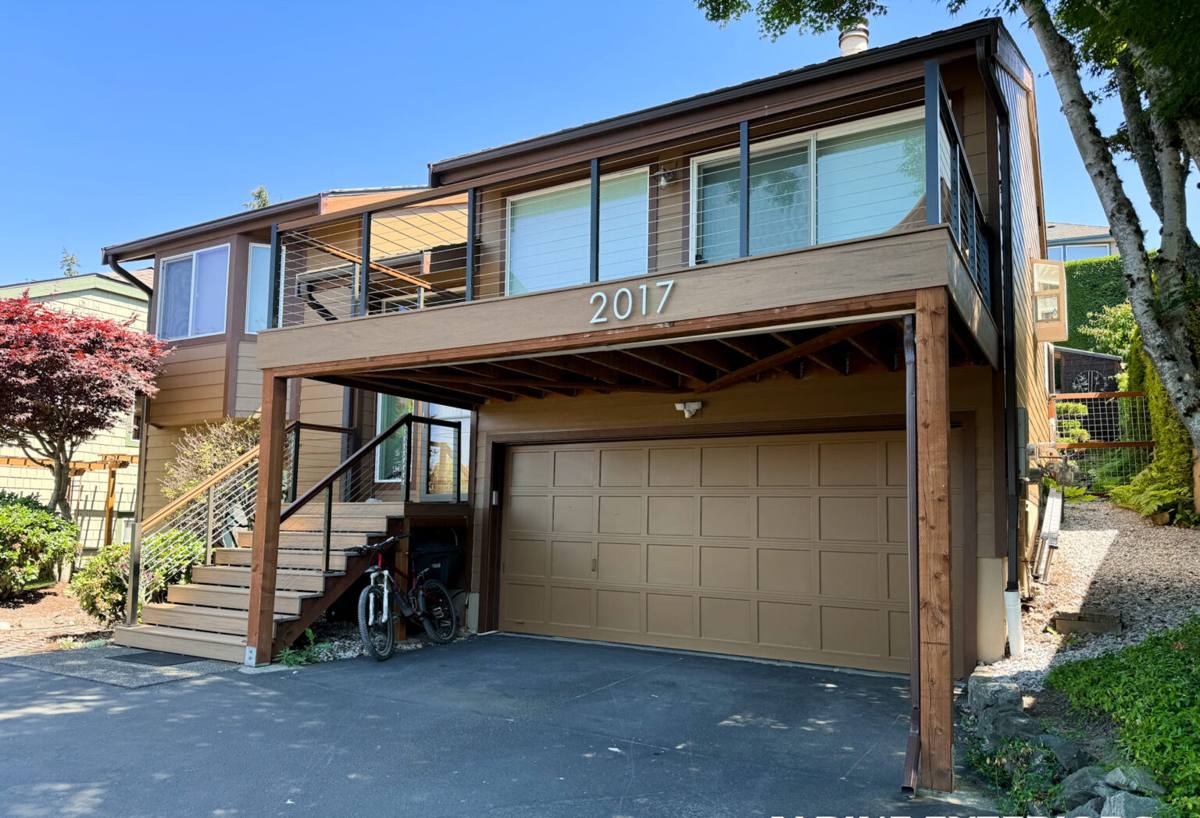
What Local Homes Actually Need From Their Siding
For Nooksack, "good siding" isn't just about color and style. It has to perform against specific stresses:
- Resistance to moisture absorption at the plank face and cut edges
- A factory finish that doesn't rely on the homeowner repainting every few years
- Fastener and flashing details that account for wind-driven rain, not just vertical rainfall
- A surface that doesn't feed algae and moss the way some porous or wood-based products do
- Non-combustible material, since dry-season wildfire smoke and ember exposure are a growing concern even in wetter parts of Western Washington
This is why we've standardized on one product system rather than offering a menu of siding brands. We install James Hardie fiber cement siding exclusively — not vinyl, not LP SmartSide, not cedar, not primed spruce, and not other fiber cement brands like Cemplank or Allura. We'll explain why below, but the short version is that Hardie's HZ5 product line is engineered specifically for climates like ours, and we'd rather stand behind one system we know cold than install several we have reservations about.
Why We Don't Install the Alternatives
Vinyl siding is affordable and low-maintenance in mild climates, but it expands and contracts more than fiber cement, and in driving rain it relies almost entirely on lap seams and J-channels staying tight over decades of thermal cycling. LP SmartSide is a wood-strand product with a resin coating — it holds paint well, but it's still an engineered wood product, and wood-based sidings are more sensitive to sustained moisture exposure at cut edges and butt joints than cement-based siding. Cedar and primed spruce look great initially but require ongoing painting, caulking, and vigilance against rot in a climate that gives wood very little time to dry out between storms. None of these are "bad" products in the right setting — they're just not what we're willing to put our name behind in a climate that stays this wet, this long.
Why James Hardie Fiber Cement Fits Nooksack
James Hardie siding is made from cement, sand, and cellulose fiber, which makes it dimensionally stable, non-combustible, and largely indifferent to the freeze-thaw and wet-dry cycling that wears down other materials here. The HZ5 formulation is specifically engineered for regions with heavy moisture exposure and freeze events, which describes Whatcom County winters well. The ColorPlus factory finish bakes color onto the plank under controlled conditions, giving it better fade and moisture resistance than field-applied paint — meaning fewer repaint cycles over the life of the siding, which matters when you're dealing with damp weather windows for outdoor painting anyway.
Hardie also backs its products with a strong, transferable warranty when installation follows their specifications. That warranty is only as good as the installation behind it, though — which is the part most homeowners don't get told about.
What a Correct Installation Actually Involves
Fiber cement siding is unforgiving of shortcuts in a way vinyl often isn't. The material itself is excellent; failures almost always trace back to installation details, not the product. On a Nooksack home, the details that matter most are:
| Detail | Why It Matters Here |
|---|---|
| Proper clearance from grade, decks, and roof lines | Keeps siding above splashback and standing moisture common after Nooksack's heavy rain events |
| Correct fastener type and spacing | Salt-influenced air accelerates corrosion on the wrong fastener material, leading to streaking and loosened boards |
| Rain screen or drainage gap behind the siding | Lets incidental moisture drain and dry instead of sitting against the wall sheathing |
| Flashing at every window, door, and penetration | Driving rain finds any gap; flashing is what actually stops water, not caulk alone |
| Sealed and primed cut edges | Factory finish protects the face; every field cut needs the same protection or it becomes a moisture entry point |
Any one of these done wrong won't show up immediately. It shows up in year three or four as staining, soft trim, or siding that's holding moisture behind it — long after the crew that installed it has moved on.
Our Process for a Nooksack Project
We run the same disciplined process on every Hardie install, adjusted for what we find on your specific home:
- Assessment — We check existing siding, sheathing, and trim for hidden moisture damage before quoting anything. This matters more in Nooksack than in drier parts of the state, since water intrusion isn't always visible from the outside.
- Prep and moisture barrier — Old siding comes off, damaged sheathing gets addressed, and a proper weather-resistive barrier and drainage plane go on before a single Hardie board is hung.
- Installation to Hardie spec — Correct fastener schedule, clearances, and flashing at every penetration, following the manufacturer's requirements exactly (this is also what keeps the warranty valid).
- Trim and joint detailing — Butt joints, corners, and trim transitions get sealed and finished so they shed water rather than trap it.
- Final walkthrough — We check clearances, caulking, and finish quality with you before calling the job done.
Fiber Cement vs. Other Siding Options
| Material | Moisture Behavior | Maintenance | Fire Resistance |
|---|---|---|---|
| James Hardie fiber cement | Dimensionally stable, engineered drainage details | Minimal repainting with ColorPlus finish | Non-combustible |
| Vinyl | Relies on seam integrity; can warp with heat/cold cycling | Low, but limited repair options if damaged | Combustible |
| LP SmartSide (engineered wood) | More sensitive to sustained moisture at cut edges | Periodic recoating recommended | Combustible |
| Cedar / primed wood | Absorbs moisture, prone to rot without diligent upkeep | Regular painting and sealing required | Combustible |
Maintenance in a Wet, Mossy Climate
Even the right siding needs some upkeep. In Nooksack, that mostly means keeping gutters clear so water isn't sheeting down the wall face, keeping vegetation and sprinklers from soaking the lower courses, and rinsing off moss or algae buildup on shaded sides before it takes hold — a soft wash is usually enough; fiber cement doesn't need harsh pressure washing or annual sealing the way wood does. Because the ColorPlus finish is baked on rather than field-applied, you're not on a repainting schedule the way you would be with cedar or primed wood siding.
Cost Factors for a Nooksack Home
Every home is different, but the main cost drivers on a fiber cement project here are consistent:
- Square footage and number of stories
- Condition of existing sheathing once old siding comes off
- Amount of trim, window, and corner detail work
- Whether a rain screen/drainage gap needs to be added over existing wall construction
- Access — steep roof lines, tight lot lines, or landscaping that limits staging
We'll always give you a specific, itemized number after seeing the home in person — broad estimates without an inspection tend to be wrong in one direction or the other.
Why a Crew That Already Works in Nooksack Matters
A crew that's already worked on homes in this part of Whatcom County knows which exposures take the worst weathering, which older homes tend to have hidden moisture issues behind the siding, and how local permitting and inspection expectations run. That's not something you can shortcut by reading a spec sheet — it comes from having done the work here before. It also means we're not guessing about how a HardieZone HZ5 product will actually hold up under Nooksack's specific mix of rain, humidity, and moss exposure; we've already seen it.
If you're weighing a siding replacement or new construction siding for a Nooksack property, we're happy to take a look and give you a straightforward, no-pressure estimate — no inflated urgency, just an honest read on what your home needs.