 Lynden Siding
 Why Decks Near Nooksack Wear Out Faster Than Homeowners Expect
Ask most homeowners in the Nooksack area why their deck failed, and they'll point to the boards — cupping, graying, maybe a soft spot near the stairs. The boards are usually just the part you can see. What actually shortens a deck's life out here is what's happening underneath and behind it: framing lumber that stays damp for months at a time, ledger connections that were never properly flashed, and a steady buildup of moss and algae that holds moisture against wood far longer than a dry-climate deck would ever experience.
Whatcom County's combination of salt-laden marine air, long stretches of driving rain, and a moss season that can run from fall through spring is hard on any exterior structure, but decks take the worst of it. They're horizontal, they collect standing water, and they're built low to the ground where airflow is limited. A deck that would last 20+ years in a drier region can start showing structural problems in half that time if it wasn't built — or isn't being replaced — with this climate in mind.
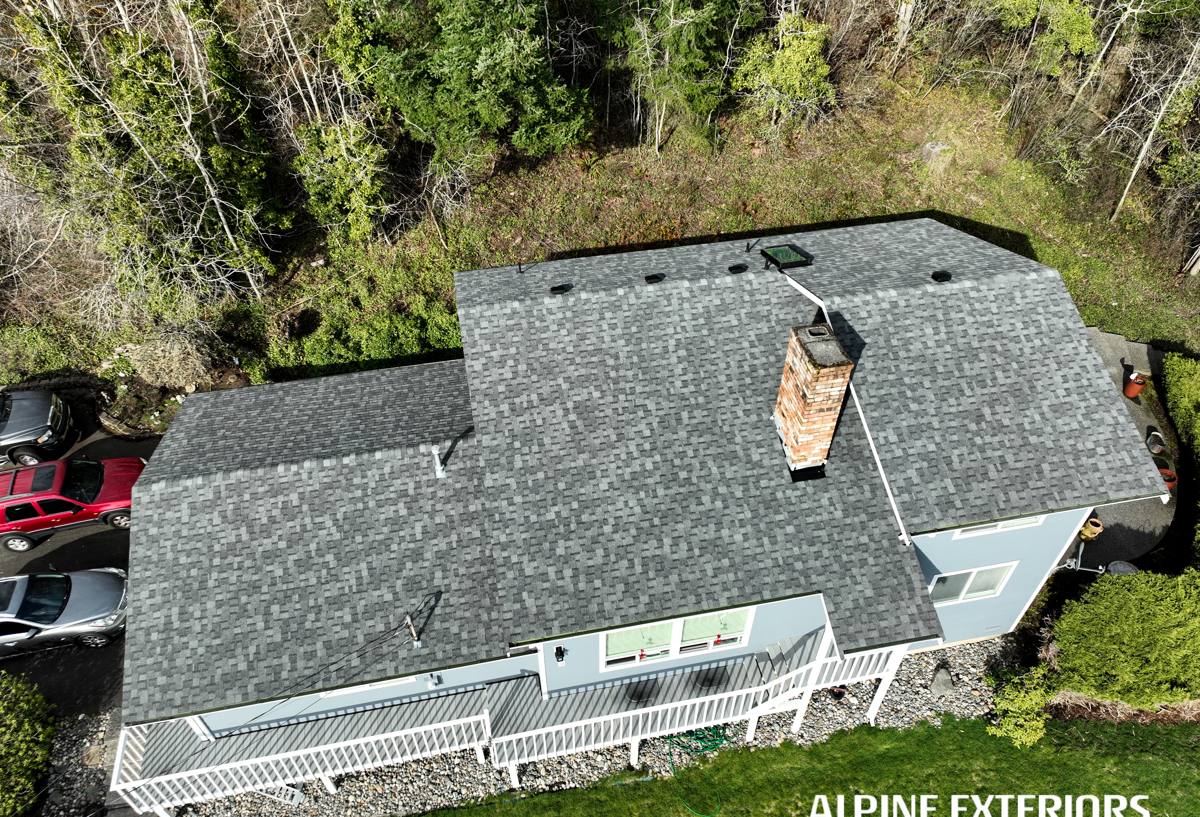
Signs a Deck Needs Full Replacement, Not Another Repair
Not every tired deck needs to come out. But there's a point where patching boards is just spending money to delay the inevitable. We look at a few things before recommending replacement over repair:
- Soft, spongy, or spring-back decking in multiple areas, not just one board
- Visible rot or dark staining at the ledger board where the deck meets the house
- Posts or footings that have shifted, settled, or show cracking at grade level
- Persistent moss or algae growth that returns within weeks of cleaning
- Railings that feel loose or wiggle at the post connections
- A deck older than 15-20 years that has never been opened up for inspection
If it's one bad board on an otherwise sound structure, we'll say so. If the framing is compromised, patching the surface just hides the problem for another season.
What a Correct Deck Replacement Actually Involves
A deck replacement done right is not just "new boards on old framing." It starts with a full tear-off down to the ledger and posts, so we can actually see the condition of the structure instead of guessing. From there, the job typically includes:
- Inspection and, where needed, replacement of ledger board and house-side flashing
- Verification or replacement of footings and post bases, checked for frost depth and bearing
- New pressure-treated framing sized and spaced for the decking material chosen
- Proper joist tape or flashing on top of joists to slow moisture intrusion at fastener points
- Decking, fascia, stairs, and railing installed to current code
- Final inspection of connections, spacing, and drainage before the job is called done
Skipping any of these steps to save money up front is exactly how homeowners end up replacing a deck twice in one decade instead of once in two.
Decking Material Options for Nooksack's Climate
There's no single "best" decking material — there's a best fit for how a homeowner uses the deck, what they want to maintain, and what budget they're working with. Here's how the common options compare for a moisture-heavy, moss-prone environment like this one:
| Material | Moisture Behavior | Maintenance | Typical Lifespan |
|---|---|---|---|
| Pressure-treated wood | Absorbs and releases moisture; prone to moss if not cleaned | Annual cleaning, periodic sealing | 10-15 years |
| Cedar | Naturally moisture-resistant, but surface still needs care | Sealing every 1-2 years for appearance | 15-20 years |
| Composite decking | Doesn't absorb water like wood; can still trap moisture underneath if airflow is poor | Occasional wash, no sealing | 25-30 years |
| PVC/capped composite | Fully moisture-resistant surface, best resistance to moss staining | Lowest maintenance of the group | 25-30+ years |
We don't push one product line over another as a rule. We do talk homeowners out of low-grade composite blends that trap moisture at the board edges — not because the material is bad, but because in a wet climate, poor edge sealing and inadequate airflow underneath will show up as staining and softness years before the warranty period ends. That's a maintenance and installation issue as much as a product one, and it's why our framing spec pays close attention to ventilation gaps regardless of what decking goes on top.
A Note on Railings and Fasteners
Whatever decking material is chosen, the hardware holding it together matters just as much. We use fasteners and connectors rated for exterior, high-moisture exposure — not standard interior-grade hardware that can corrode and stain the decking around it within a few wet seasons.
Moisture Management: The Part Most Deck Jobs Get Wrong
The single biggest predictor of how long a deck lasts near Nooksack isn't the decking brand — it's how well water is kept away from the framing underneath. Driving rain doesn't just fall straight down; wind-driven rain gets pushed sideways into ledger connections and post bases, which is exactly where most rot starts.
Our replacement process treats three moisture points as non-negotiable:
- Ledger flashing — the connection where the deck attaches to the house needs proper flashing that sheds water away from the wall assembly, not just caulk
- Footing drainage — footings and post bases need to sit above grade with drainage that doesn't pond water against the post
- Joist protection — a moisture barrier on top of each joist keeps screw penetrations from becoming entry points for standing water
None of this is visible once the deck is finished, which is exactly why it's tempting to skip on a budget job. It's also exactly why it's the difference between a deck that needs attention again in eight years and one that doesn't.
Permits and Local Code in Whatcom County
Most full deck replacements — especially anything involving new footings, structural framing changes, or a deck attached above a certain height — require a permit through the applicable local jurisdiction. Requirements can vary depending on whether a property falls under city or county authority, so we confirm what applies to a specific address before work starts rather than assuming.
Working with a crew that pulls permits and schedules inspections as a normal part of the job protects the homeowner two ways: it verifies the structure meets current code for footing depth, guardrail height, and stair geometry, and it avoids problems later if the property is sold and a buyer's inspector asks about unpermitted structural work.
Our Process for a Nooksack Deck Replacement
We keep the process straightforward and predictable:
- On-site assessment — we look at the existing structure, note what's salvageable versus what needs to come out, and talk through material options based on how the deck is actually used
- Written estimate — clear scope, materials, and price before any work begins
- Tear-off — full removal of decking and, where needed, framing, so nothing is hidden behind new boards
- Structural rebuild — footings, posts, ledger, and framing brought up to spec with proper flashing and drainage
- Decking and railing installation — installed per manufacturer spec to keep any material warranty intact
- Final walkthrough — we go over the finished deck with the homeowner before calling the job complete
Living With the Deck After Replacement
A properly built deck still needs some seasonal attention in this climate. Moss and algae will try to come back regardless of material, especially on shaded portions of a deck near tree cover. A yearly wash-down before the wet season sets in — plus keeping gutters and downspouts clear so runoff isn't draining onto the deck — does more to extend a deck's life than any single product choice. For wood decks, that also means checking the sealer coat isn't wearing thin in high-traffic areas.
Homes in and around Nooksack tend to hold onto moisture longer after a storm than homes further from the water or at higher elevation, simply because of how weather moves through this part of Whatcom County. A deck built with that in mind, rather than built to a generic national spec, holds up noticeably better.
Why Local Experience on This Specific Job Matters
Deck replacement looks similar on paper anywhere in the country, but the details that actually matter — flashing choices, footing drainage, how much ventilation to leave under composite decking — are regional. A crew that already works decks around Lynden and Nooksack has seen which shortcuts fail here specifically, not in theory. That's the difference between a deck spec that looks fine on a plan and one that's actually built for driving rain, salt air, and a long moss season.
If your deck is showing its age — or you just want an honest opinion on whether it needs a full replacement or something less — we're glad to come take a look. Estimates are free, there's no pressure, and you'll get a straight answer about what your deck actually needs. Use the form below to get started.