 Lynden Siding
 Nooksack's Climate Is Harder on Siding Than It Looks
Nooksack sits in the same marine-influenced weather pattern that shapes the rest of Whatcom County — moisture-laden air moving inland off Puget Sound and the Strait of Georgia, long stretches of driving rain, and a moss season that can run from early fall through late spring. Salt-tinged coastal air travels further inland here than most homeowners expect, and combined with the near-constant dampness, it creates conditions that are genuinely tough on exterior building materials.
None of this is dramatic weather. There's no hurricane risk, no wildfire-driven ember storms. The damage here is slow and cumulative: months of wet-dry cycling, moss and algae holding moisture against a wall for weeks at a time, and UV exposure during the brief dry summer stretch that dries out anything not built to handle it. Siding that isn't installed correctly for this climate doesn't fail overnight — it fails quietly, behind the surface, until a homeowner notices soft trim, peeling paint that keeps coming back, or a musty smell near an exterior wall.
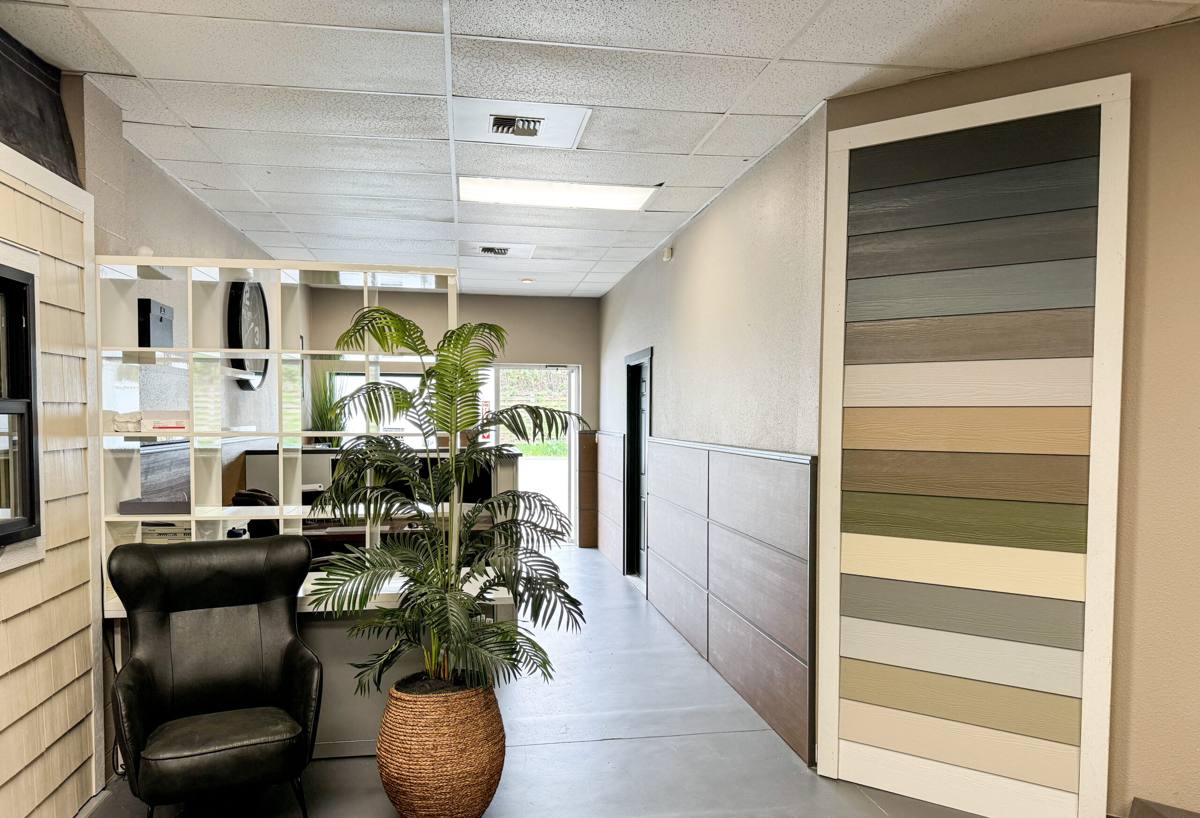
What Correct Siding Installation Actually Involves
Siding installation is often talked about like it's just cladding — boards go up, house looks new. In a climate like this one, the siding itself is only part of the system. What happens behind it determines whether that system lasts fifteen years or fifty.
Moisture Management Starts Before the First Board Goes Up
Before any siding is installed, the wall needs a properly lapped weather-resistant barrier, correctly integrated window and door flashing, kick-out flashing where rooflines meet walls, and adequate clearance between the bottom of the siding and grade, decks, or roofing. Skipping or rushing any one of these creates a path for water to get behind the siding — and in a climate this wet, water that gets behind the cladding doesn't dry out quickly. It sits, and it does its damage from the inside out, which is exactly why so many siding problems in this region are worse than they look from the driveway.
Fastener Pattern, Gaps, and Manufacturer Spec
Fiber cement siding has to be fastened, gapped, and joined according to the manufacturer's published installation instructions — not "close enough." That means correct nail placement and spacing, proper expansion gaps at butt joints and trim, and joint treatment that keeps water from wicking into the cut ends of the boards. It also means using a sealant rated for the product and finishing any field-cut edges with the manufacturer's touch-up system so bare fiber cement isn't left exposed to Whatcom County's rain. These aren't cosmetic details — they're what the warranty is built on, and they're the first things that go wrong when a crew is moving fast and not following spec.
Why We Install Only James Hardie Fiber Cement Siding
We standardized on James Hardie fiber cement for every home we side, including here in Nooksack, because it's engineered for exactly the conditions this area produces. It's non-combustible, it doesn't absorb and swell with moisture the way wood-based products can, and its ColorPlus factory finish holds color and resists the kind of mildew staining that shows up fast on siding sitting under moss cover for months at a time. Hardie's HZ5 product line is specifically engineered for wetter, freeze-prone climates like the Pacific Northwest, and it carries a strong transferable warranty when installed to spec. We don't install vinyl, LP SmartSide, primed spruce, or cedar — not because those products can't work anywhere, but because we've made a professional call that Hardie gives Nooksack homeowners the best combination of moisture performance, finish durability, and long-term value for what this climate puts a house through.
Our Nooksack Siding Installation Process
The process doesn't change based on neighborhood, but knowing the area's typical construction and moisture patterns lets us move through it efficiently and catch problems early.
- On-site assessment — we walk the exterior, check trim and window details, and look for existing moisture damage or rot before quoting the job.
- Sheathing and barrier inspection — once old siding is off, we inspect the sheathing underneath. Anything soft or water-damaged gets repaired or replaced before a new barrier goes on.
- Weather-resistant barrier and flashing — a properly lapped barrier and correct flashing at every window, door, and roof intersection go in before any siding is hung.
- Hardie siding installation — boards, panels, or shingles are installed to manufacturer spec: correct fastener pattern, gaps, and joint treatment throughout.
- Trim, caulking, and touch-up — trim is installed, joints are sealed with an appropriate sealant, and any field-cut edges are finished per Hardie's guidelines.
- Final walkthrough and cleanup — we walk the finished job with the homeowner and clear the site of old material and debris.
Choosing the Right Hardie Product Line for This Area
James Hardie makes several product lines, and the right one for a given home depends on its style, exposure, and how much upkeep the homeowner wants to deal with long-term.
| Product | Look | Best Fit For |
|---|---|---|
| HardiePlank lap siding | Traditional horizontal lap | Most homes; classic Pacific Northwest look |
| HardiePanel vertical siding | Board-and-batten or smooth vertical | Modern builds, accent walls, gable ends |
| HardieShingle siding | Staggered or straight-edge shingle | Craftsman and cottage-style homes |
| HardieTrim boards | Smooth or textured trim | Window casing, corners, fascia to match siding |
In a wetter, moss-prone area like this one, plank exposure width and the amount of horizontal trim on a home both affect how much moss and grime tend to collect over the years — something worth walking through during the estimate rather than deciding on looks alone.
What Siding Installation Costs Depend On in Nooksack
There's no single price for siding a house, and anyone who quotes one without seeing the home is guessing. The real cost drivers are consistent enough to lay out honestly.
| Cost Factor | Why It Matters |
|---|---|
| Home size and wall area | More square footage means more material and labor hours |
| Old siding removal and disposal | Tear-off adds labor and disposal cost but is necessary to inspect sheathing |
| Moisture or rot repair | Damaged sheathing or framing found during tear-off must be repaired before new siding goes on |
| Trim and architectural detail | Homes with more corners, gables, and window trim take more time to finish correctly |
| Siding profile chosen | Plank width, texture, and vertical vs. horizontal all affect material and labor cost |
| Accessibility | Multi-story walls, tight side yards, or landscaping obstacles add labor time |
The only way to get an accurate number is a walkthrough of the actual house, but understanding these factors ahead of time helps homeowners make sense of the estimate when it arrives.
Signs a Nooksack Home Needs New Siding Soon
Because moisture damage develops slowly here, it often shows up as small, easy-to-dismiss signs before it becomes a real problem. Worth checking for:
- Moss or algae staining that comes back within a few months of cleaning
- Soft or spongy spots when you press on the siding, especially near the bottom edge
- Paint that's peeling or bubbling again soon after repainting
- Boards that are cupping, warping, or visibly separating at the seams
- Gaps opening up around trim, windows, or corner boards
- A musty smell near an exterior wall inside the house
- Noticeably higher heating bills without another clear explanation
Any one of these on its own isn't necessarily an emergency, but a few together are usually a sign the siding system — not just the surface — needs a closer look.
Why Hiring a Crew That Already Works in Nooksack Matters
A crew that regularly works homes in and around Nooksack knows how the local moisture patterns, moss cycles, and typical construction of homes in this part of Whatcom County tend to interact — what kind of flashing details hold up, where moss tends to build fastest, and which parts of a wall system tend to show damage first. That local pattern recognition matters when you're deciding what to repair, what to replace, and how to detail the install so it holds up through another wet season instead of just looking good for the first one. It also means a shorter drive for a warranty follow-up or a question after the job is done, instead of waiting on a crew based somewhere else entirely.
If your Nooksack home needs new siding, or you're not sure whether what you're seeing is cosmetic or something more, we're happy to take a look. Reach out for a free, no-pressure estimate using the form below.