 Lynden Siding
 Why Siding in the Nooksack Area Wears Differently
Homes around Nooksack and Lynden sit in a stretch of Whatcom County where the weather doesn't let up for long. Marine air moves through off the Sound carrying a fine load of salt, driving rain comes sideways during fall and winter storms, and the valley's shade and humidity give moss and algae a long season to work with — often eight or nine months out of the year. None of that is dramatic on its own, but siding takes the cumulative hit. A panel that would age gracefully in a dry inland climate can show telltale wear here in half the time if it wasn't built or installed for this kind of exposure.
That's the backdrop for every repair call we take in this area. Before we talk about fixing a damaged section, it helps to understand what's actually attacking the siding and why the repair has to account for it — not just patch the visible problem.
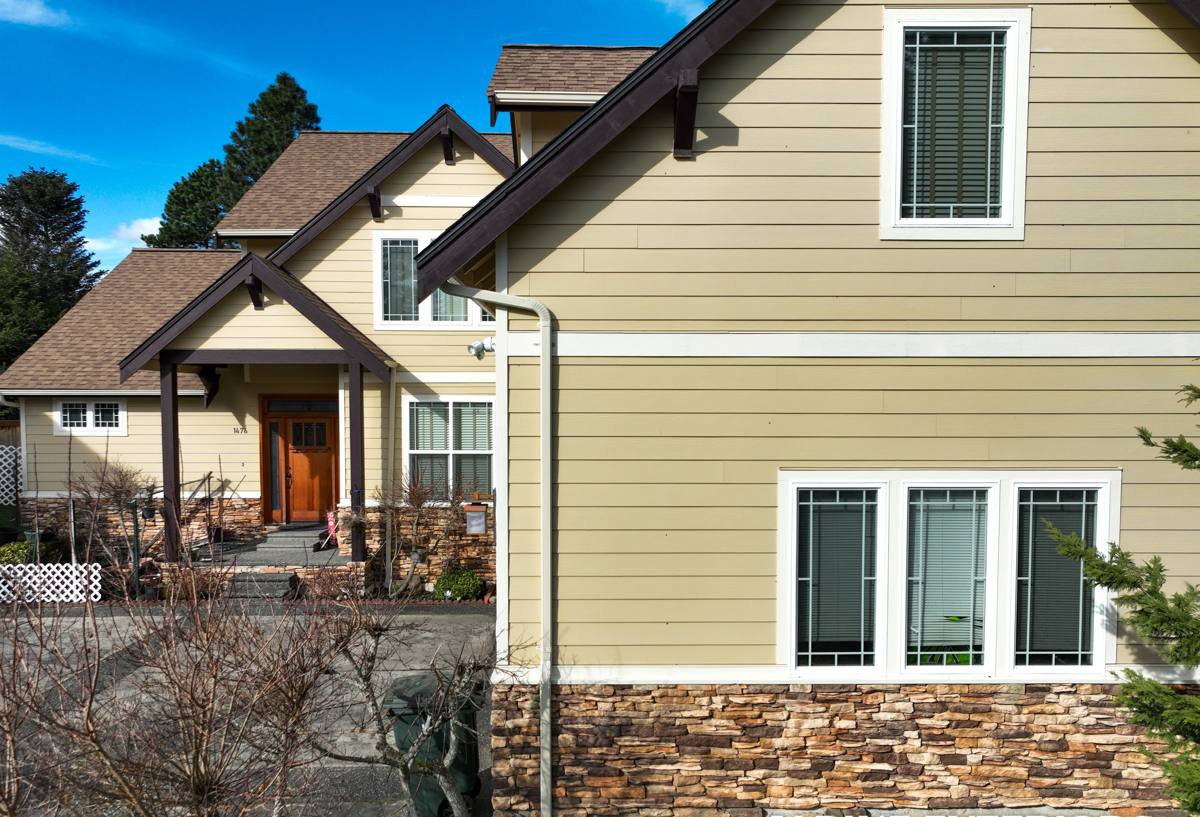
Signs Your Siding Needs Repair, Not Replacement
Most homeowners call us because something looks obviously wrong — a cracked board, a stain, a soft spot underfoot near an exterior wall. Some of those problems are isolated and repairable. Others are a sign the whole wall system is compromised. Here's what we look for during a repair inspection:
- Cracked, split, or chipped boards, especially near corners and window trim where impact and movement concentrate stress
- Dark streaking or green-black growth that keeps returning within weeks of cleaning, which usually means moisture is staying trapped behind the surface
- Soft or spongy siding when pressed, a sign that water has gotten behind the material and started breaking it down
- Gaps opening up at seams, butt joints, or trim where caulking has failed and shrunk away
- Visible fastener heads, popped nails, or panels pulling loose from the wall
- Peeling or bubbling paint on painted siding, which often points to moisture moving through the material itself, not just a surface coating failure
- Warping or bowing sections, particularly on walls that face prevailing wind and rain
A single cracked board near a downspout is a straightforward repair. Soft siding across multiple walls, or damage that keeps reappearing in the same spots after previous patch jobs, usually means there's an underlying water management problem that needs to be corrected as part of the fix — not just covered up again.
What a Correct Siding Repair Actually Involves
Diagnosing the Cause, Not Just the Symptom
Damaged siding is often a downstream symptom of something else: a failed flashing detail, a gap in the house wrap, caulking that was never meant to do the job it's being asked to do, or trim that's directing water into the wall instead of away from it. A repair that ignores the cause just buys a year or two before the same spot fails again. We start every repair by figuring out how water is actually getting in, not just where the damage shows.
Matching Material and Finish
Fiber cement siding that's been on a house for several years has weathered and faded slightly, and factory-finished boards have a specific texture and sheen that's hard to replicate with field-applied paint. A repair that stands out like a patch defeats the purpose. We work to match plank width, texture, and color as closely as the original product line allows, and we're upfront when an exact match isn't realistic — for example, if the original siding is discontinued or has faded enough that a factory-fresh board will look different until it weathers in.
Getting the Water Management Right
Correct installation means proper flashing above windows, doors, and trim; the right gap and clearance at the bottom of the wall; house wrap that laps correctly behind the new material; and fasteners driven to the manufacturer's specification, not just close enough. Skipping any of these steps is exactly how the same spot ends up damaged again in a few years, especially with the amount of driving rain this area sees.
Common Repair Scenarios We See Around Nooksack and Lynden
| What We Find | Typical Cause | What the Repair Involves |
|---|---|---|
| Cracked boards near corners or trim | Impact damage, or boards installed without expansion clearance | Remove and replace affected boards, restore correct clearance and fastening |
| Persistent moss and algae staining | Shade, moisture, and infrequent airflow along a wall | Clean, inspect for trapped moisture, treat surface, address any drainage or clearance issue found |
| Soft or delaminating siding near grade | Siding installed too close to soil, mulch, or a hard surface, holding moisture against the board | Replace damaged sections, correct ground clearance, redirect water flow |
| Failed caulking at seams and trim | Original sealant reaching end of service life, or a joint that was never designed to rely on caulk | Remove old sealant, correct the underlying flashing or lap detail, reseal properly |
| Damage clustered near downspouts or roof valleys | Concentrated water discharge hitting one section of wall repeatedly | Repair siding and correct water diversion so the same area isn't overloaded again |
Why We Only Repair With James Hardie Fiber Cement
We install and repair with James Hardie products exclusively — we don't work with vinyl, LP SmartSide, Cemplank, Allura, primed spruce, or cedar. That's a deliberate standard, not a brand preference we picked at random.
In a climate with this much sustained moisture and a long moss season, the material matters as much as the workmanship. Fiber cement is non-combustible and doesn't feed moisture the way wood-based products can when a seal fails. James Hardie's ColorPlus factory finish is baked on under controlled conditions, which holds up better against the fading and chalking that field-applied paint tends to show after a few Whatcom County winters. Their HZ5 product line is engineered specifically for climates like this one, with freeze-thaw and moisture cycling in mind. And when we do a repair, we're working with a system we know inside out — the fastening pattern, the clearances, the trim details — instead of guessing at how an unfamiliar product is supposed to go together.
If your existing siding is a different material, we'll still take a look and give you an honest assessment. In some cases a targeted repair in the existing material makes sense. In others, especially where damage is spreading, we'll explain why a Hardie repair or a partial re-side gives you a better long-term outcome than continuing to patch a product with known trade-offs in this climate.
Repair vs. Replacement: How We Decide
Not every damaged wall needs a full re-side, and we're not going to tell you it does. But a repair only makes sense if the underlying wall is sound. Here's how we weigh it:
| Factor | Favors Repair | Favors Replacement |
|---|---|---|
| Extent of damage | Isolated to one or two walls or sections | Spread across multiple walls or recurring in the same spots |
| Age and condition of remaining siding | Siding is otherwise in good shape and product is still available or closely matchable | Siding is near the end of its service life or discontinued with no reasonable match |
| Underlying wall condition | Sheathing and framing test dry and solid once siding is opened up | Rot or moisture damage found in sheathing or framing |
| Cause of damage | A fixable, localized issue like a flashing gap or impact damage | A systemic issue, such as siding installed with no clearance across the whole house |
We'll always give you the repair option when it's a genuinely sound choice. We only recommend replacement when the numbers and the wall condition actually point that way.
Our Repair Process
- On-site inspection of the damaged area and a broader check of the wall for related issues, not just the obvious spot
- Where possible, opening up the area to check the condition of the sheathing and house wrap underneath
- A clear, written explanation of what caused the damage and what the repair will involve, including whether we can closely match existing material
- Correcting the root cause — flashing, clearance, drainage — as part of the repair, not as a separate afterthought
- Installing new James Hardie material to manufacturer specification, with attention to fastening, gaps, and finish
- A final walkthrough so you can see the completed work and ask questions before we consider the job done
Why a Crew That Already Works This Area Matters
Siding repair done well requires knowing how a specific climate actually behaves against a wall, not just how to swap a board. A crew that regularly works in Lynden and the surrounding Whatcom County communities has already seen how moss builds up on north-facing walls near the river valley, how driving rain finds the same weak points on homes exposed to prevailing wind, and where original construction shortcuts tend to show up years later as water damage. That local pattern recognition is what keeps a repair from being a temporary fix — it's the difference between covering up damage and correcting what's actually causing it.
It also means someone answering your call understands the area you're describing without needing it explained, and can give you a straight answer about whether a repair will genuinely hold up through another wet season here.
Get an Honest Look at Your Siding
If you're seeing cracked boards, stubborn moss staining, or soft spots on your siding in Nooksack or anywhere around Lynden, it's worth getting a real assessment before the damage spreads or the underlying wall gets worse. We'll take a look, tell you honestly whether it's a repair or something bigger, and explain exactly what we'd do and why. Use the form below to request a free, no-pressure estimate.