 Lynden Siding
 Building Custom Decks for the Nooksack Area
Nooksack sits in the farmland and river bottom east of Lynden, where the Nooksack River cuts through Whatcom County on its way toward the Salish Sea. Lots out here tend to be larger and more open than in-town properties, with less tree cover in some spots and more mature shade in others, which means deck sites in this area see a wider range of sun, wind, and moisture exposure than a typical subdivision lot. A deck built for this stretch of the county needs to account for whichever end of that range your property falls on, not a generic average.
We've built and repaired decks throughout the Lynden and Nooksack area long enough to know which details hold up once the fall rains set in and don't really let up until spring. This page covers what a correctly built custom deck looks like out here — materials, framing, permitting, and upkeep — so you know what to ask for from any crew you hire, including us.
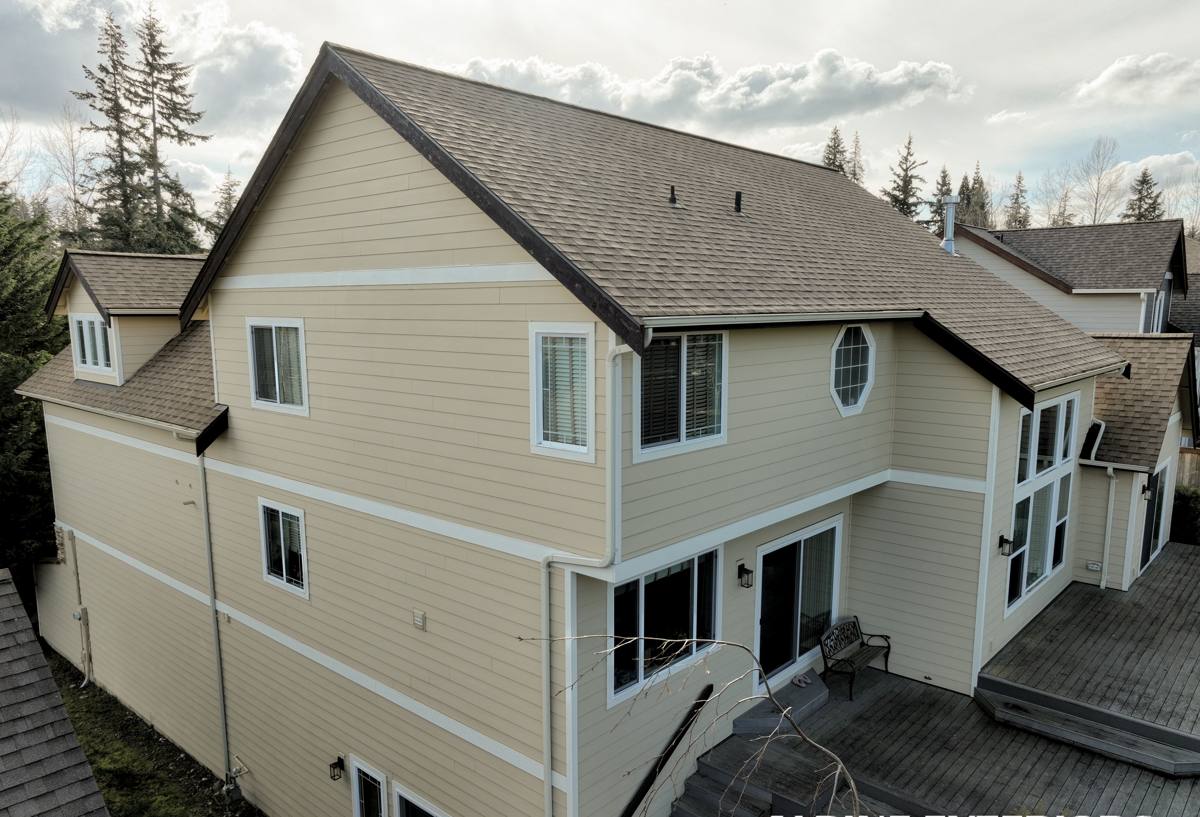
What This Climate Does to a Deck
Driving Rain and Standing Moisture
Whatcom County rain doesn't fall straight down for most of the wet season — wind pushes it sideways, into gaps and joints that a calmer, drier climate would never expose. Ledger connections, stair stringers, and anywhere two pieces of framing meet face to face are where that moisture collects and sits. A deck that isn't gapped and flashed correctly at those joints starts rotting from the inside long before the surface boards show any sign of trouble.
Moss and Algae
Between shaded spots along the river corridor and eight or more months of damp weather most years, moss and algae on deck boards is close to guaranteed if a deck doesn't get airflow and drainage underneath it. Moss holds moisture directly against the wood surface, and it's not just a cosmetic issue — a slick, mossy deck surface on stairs or a landing is a real fall hazard.
Salt-Influenced Marine Air
Marine air moving inland off Puget Sound and the Strait of Georgia still carries enough salt content to speed up corrosion on lower-grade metal hardware, even this far from open water. It's a slower process out here than right on the coast, but it's real, and it tends to show up first at hidden connections — joist hangers, structural screws, post bases — well before anyone notices anything on a visible railing bracket.
Decking Material Options
There's no single right material for every deck — it comes down to budget, how much upkeep you're willing to do, and how much sun or shade the site gets. Here's how the common choices actually compare for a build in this climate:
| Material | Upkeep | Moisture Behavior | Typical Lifespan |
|---|---|---|---|
| Pressure-treated pine | Cleaning plus re-staining every 2-3 years | Absorbs water; needs sealing to resist rot and moss growth | 15-20 years with upkeep |
| Cedar | Cleaning plus oil or stain every 1-2 years | Naturally rot-resistant, but still needs sealing in this climate | 20-25 years with upkeep |
| Composite decking | Occasional washing, no staining | Won't absorb water or rot, but can still grow surface mildew if never cleaned | 25-30+ years, manufacturer-backed |
| PVC decking | Lowest — occasional washing | Fully moisture-resistant; won't swell or splinter | 25-30+ years, manufacturer-backed |
We install all of these. What we won't do is lay composite or PVC decking over framing that wasn't built to handle it. Hidden-fastener composite systems need consistent joist spacing and real ventilation underneath, or moisture gets trapped instead of shed and the manufacturer's warranty won't hold up. The decking surface is only as good as what's underneath it.
Framing, Fasteners, and Footings
Everything about a deck that actually lasts in this climate comes down to what's under the boards.
- Ledger flashing: Where a deck attaches to the house, the ledger board needs proper flashing and a gap or membrane behind it so water sheds away from the wall framing instead of into it.
- Footings below frost depth: Post footings need to sit below the local frost line and bear on solid, undisturbed soil, not fill dirt, which shows up more often on river-bottom lots that have been graded or built up over the years.
- Coated or stainless fasteners: Every structural screw, joist hanger, and post base should be rated for both ground contact and treated-lumber contact, not general-purpose galvanized hardware.
- Joist tape on framing: A strip of self-adhering flashing tape across the top of each joist keeps deck screws from creating a wicking point where water sits against exposed wood.
- Airflow underneath: Skirted or low-clearance decks need vents or gaps so air can move underneath. A sealed-up space under a low deck is exactly where rot and moss get started out of sight.
Site and Design Considerations
Open, larger lots in the Nooksack area often mean more direct wind and sun exposure than a tree-lined in-town yard, which changes some practical decisions on a build. A deck facing open farmland may benefit from a windscreen or partial privacy panel on the exposed side, both for comfort and to cut down on wind-driven rain hitting the deck surface directly. On sloped sites near the river bottom, a multi-level deck or a design that steps down with the grade can avoid excessive fill or oversized footings. None of this is one-size-fits-all, which is why we walk the actual site before finalizing a layout rather than working off a standard plan.
Permits and Whatcom County Requirements
Most new decks, and any deck attached to a house above a certain height, require a building permit through Whatcom County. Requirements we routinely plan around include:
- Guardrails on any deck surface more than 30 inches above grade, built to code height and baluster spacing
- Frost-depth footings sized for local soil and load requirements
- Setbacks from property lines, which matter more on the larger, rural-style lots common around Nooksack
- Stair and landing requirements where the deck steps down to grade
We handle the permit application and inspection scheduling as part of the job. An unpermitted deck attached to a house is one of the more common issues we get called out to fix on older properties, and it usually surfaces at the worst possible time, when a homeowner is trying to sell and the missing permit turns into a real delay.
Our Process
- On-site visit: We walk the property, look at grade, drainage, sun and wind exposure, and how the deck will tie into the house, and talk through how you actually want to use the space.
- Design and material selection: We lay out size, layout, decking material, and railing style, and give you a clear, itemized quote before anything is ordered.
- Permitting: We submit and manage the Whatcom County permit application so you're not the one chasing paperwork.
- Framing: Footings, posts, beams, and joists go in first, built to the loads and spans the design calls for. This stage decides how the deck holds up, well before decking boards go down.
- Decking and railing installation: Boards, fascia, and railing go in with attention to fastening pattern, spacing for drainage, and a clean finish at every edge.
- Final walkthrough and inspection: We schedule the final inspection and walk the finished deck with you before calling the job done.
What Drives the Cost
Every deck gets priced on its own specifics, but these factors move the number the most:
| Factor | Why It Matters |
|---|---|
| Size and shape | Square footage plus corners, angles, and multiple levels all add framing and labor time |
| Decking material | Composite and PVC cost more upfront than wood but need far less long-term upkeep |
| Height above grade | Taller decks need more substantial footings, posts, and guardrail structure |
| Railing style | Cable, glass, or composite railing systems cost more than standard wood balusters |
| Site access and grading | Sloped or hard-to-reach river-bottom lots can add excavation and equipment costs |
| Permit and engineering | Larger or taller decks sometimes need stamped engineering in addition to the standard permit |
Keeping a Deck in Good Shape Year-Round
A well-built deck in this climate still needs some seasonal attention. A simple annual routine goes a long way:
- Sweep debris out from between boards and off the surface before fall rains set in
- Rinse or scrub off moss and algae buildup at least once a year, more often in shaded spots
- Check that gaps between boards haven't closed up with debris, which blocks drainage
- Look at fastener heads and railing connections for early rust or loosening
- Re-stain or re-oil wood decking on the schedule the product calls for, rather than waiting until it's visibly gray and dry
- Keep gutters and downspouts near the deck clear so runoff isn't dumping extra water onto or under it
Why a Crew That Already Works Nooksack Matters
A deck built by a crew that already knows this specific stretch of Whatcom County isn't guessing at how much moss pressure a shaded, north-facing deck will see, or whether a river-bottom lot holds water after a heavy week of rain. We've seen how decks in this area actually age over time, which details hold up and which ones fail first, and we build around that instead of applying a generic approach suited to a drier climate. That shows up in small decisions: fastener grade, flashing detail, footing depth, and how we grade the ground under the deck for drainage, all worked out before the first board goes down.
If you're planning a new deck or replacing one that's showing its age, we'd be glad to take a look at the site and give you a straightforward, no-pressure estimate. Just fill out the form below.