 Lynden Siding
 Siding in Nooksack Has a Climate Job to Do
Homes in and around Nooksack don't just need siding that looks good — they need a wall system that can shed water for months at a time, resist the salt-tinged air that drifts in off the Puget Sound region, and keep moss and algae from taking hold on north-facing walls that barely see direct sun from October through April. Whatcom County's climate is harder on exterior surfaces than most homeowners realize until they're scraping a windowsill or pulling soft board off a wall.
That's the backdrop for every siding decision we help Nooksack homeowners make. It's also why we don't treat siding as a cosmetic upgrade — it's a moisture-management system first, and a finish second. This page walks through what that means for a James Hardie fiber cement installation specifically in this area: what the climate demands, what a correct job looks like, and how our process protects the investment for the long haul.
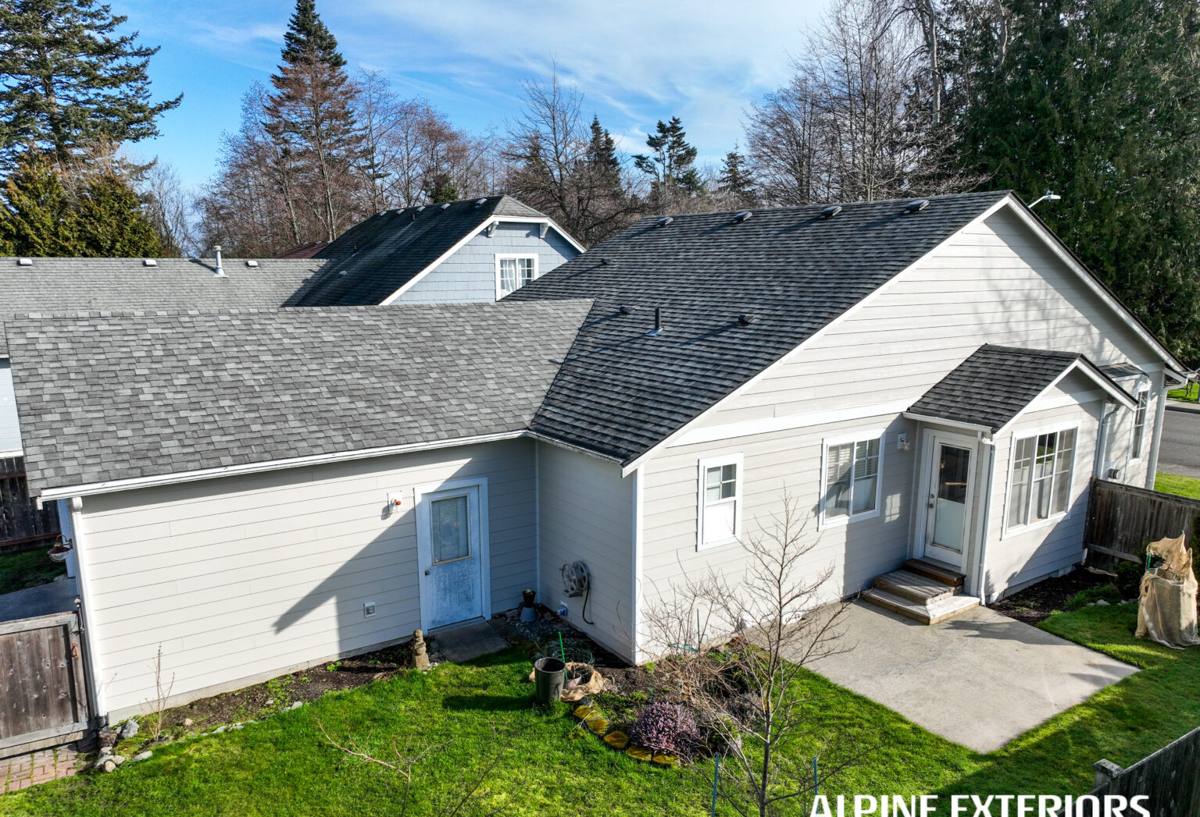
What Driving Rain and a Long Moss Season Actually Do to a Wall
Wind-driven rain doesn't just fall on a house — in this part of Washington it gets pushed sideways and up under laps, around trim, and into any gap that isn't properly flashed or caulked. Over a wet season that can run six or seven months, that moisture load adds up fast. A siding product or installation detail that's marginal in a drier climate can fail outright here.
Moss and algae are the other half of the equation. Shaded walls, roof overhangs, and the general dampness of a Whatcom County winter create ideal growing conditions. Left alone, moss holds moisture against the wall surface, which accelerates rot in wood-based products and stains and degrades painted finishes. Salt-bearing air moving inland adds a slow corrosive effect on fasteners and metal flashing that isn't rated for it.
None of this means Nooksack is an unusually harsh place to build. It means the margin for error in material choice and installation detail is smaller than it is in, say, eastern Washington. Products and techniques that get away with shortcuts in a dry climate get exposed here — often within a few wet seasons.
Why We Install Only James Hardie Fiber Cement
We made a decision as a company to install James Hardie siding exclusively — not vinyl, not LP SmartSide, not Cemplank or Allura, not primed wood or cedar. That's not a marketing position; it's a response to what we've seen this climate do to the alternatives over time.
Vinyl siding doesn't rot, but it isn't rigid enough to resist the kind of wind-driven rain and gusts common here, and its color is baked in rather than factory-cured onto a fiber cement substrate, so it fades and chalks over the years without the option of a durable refinish. Engineered wood products like LP SmartSide use wood strand cores that are more moisture-resistant than raw lumber, but they're still an organic substrate — any breach in the factory coating or a caulking joint that fails gives moisture a path into wood fiber, and that's a slow, hidden problem in a climate this wet. Primed wood and cedar are honest, attractive materials, but they demand a maintenance schedule — repainting, re-caulking, moss treatment — that most homeowners underestimate, and Whatcom County's moss season shortens the window between maintenance cycles considerably.
James Hardie fiber cement is manufactured from cement, sand, and cellulose fiber, cured to be dimensionally stable and non-combustible. It doesn't rot because there's no wood fiber for moisture to feed on. Its ColorPlus finish is baked on at the factory under conditions no field-applied paint job can match, which is why the color warranty holds up even through this area's UV and moisture cycles. That combination is why it's the only product we put our name behind.
The Hardie Product Lines That Fit This Climate
HZ5 Engineered for Wet, Freeze-Cycle Climates
James Hardie engineers its siding in different formulations for different climate zones. Whatcom County falls into the HZ5 category, which is formulated for regions that see significant moisture exposure and cold-weather cycling. That's a meaningful distinction — it means the board itself is manufactured to perform in exactly the conditions Nooksack sees every winter, not just siding pulled off a generic pallet.
Lap, Panel, and Shingle Profiles
HardiePlank lap siding is the most common choice for full-house applications and gives homes the traditional horizontal-lap look with a factory finish that holds up to repeated wetting and drying. HardiePanel is used for vertical applications, accent walls, and modern designs, and HardieShingle replicates a cedar-shake look without the maintenance burden that comes with actual cedar shingles in a mossy, damp climate. We help homeowners choose the profile that fits their home's style and exposure — a heavily shaded, rain-exposed wall may call for a different detailing approach than a sheltered south wall.
ColorPlus Technology
ColorPlus finishes are baked on in multiple coats at the factory and back it with a longer, stronger finish warranty than field-applied paint can offer. In a climate where repainting siding every several years is the alternative, that factory finish is one of the biggest practical advantages of the system.
What a Correct Installation Actually Involves
James Hardie siding is only as good as the installation behind it. The board can be the right product and still fail early if the water-management details underneath it are wrong — and those details are exactly where corners get cut.
Water Management Behind the Siding
Every wall needs a drainage plane — a weather-resistant barrier and, in most cases, a rainscreen gap — so that any water that gets past the siding has somewhere to go besides into the sheathing. Flashing at windows, doors, roof lines, and deck ledgers has to be integrated with that drainage plane correctly, not just caulked over. This is the single most common place we find problems on tear-offs of older siding jobs in this area.
Fastening and Clearances
Hardie specifies exact fastener types, spacing, and penetration depth, and those specs exist for a reason — under-driven or over-driven fasteners, or the wrong fastener material, are a direct path to early failure in a climate this wet. Siding also needs proper clearance from grade, roof lines, and horizontal surfaces like decks and patios, typically a minimum of several inches, so that splash-back and standing water don't sit against the bottom edge of the board.
Joints, Caulking, and Trim
Butt joints, corners, and trim transitions need to be treated with the right sealant and installed with the gaps Hardie specifies for expansion — sealing every joint tight with no room to move is as much a mistake as leaving gaps unsealed. Getting this wrong is invisible on installation day and shows up as staining, cracking, or moisture intrusion a few winters later.
Our Process From Estimate to Finished Wall
- On-site inspection of existing siding, sheathing, and any signs of moisture damage or moss buildup before we quote anything
- A written scope that specifies product line, profile, color, and the water-management details for your home's specific exposure
- Removal of old siding with an inspection of the sheathing underneath, so hidden rot or damage gets addressed before new siding goes up, not buried under it
- Installation of a code-compliant weather-resistant barrier and drainage plane, with flashing integrated at every penetration
- Installation of HZ5-rated Hardie siding to manufacturer fastening and clearance specifications
- Final walk-through covering caulking, trim details, and care guidance specific to Whatcom County's climate
We don't skip the tear-off inspection step, even when it adds time to the job. Covering damaged sheathing with new siding just delays a bigger repair, and in a climate this wet, that delay is usually short.
Comparing Siding Materials for a Nooksack Home
Every material has a real set of trade-offs. Here's how the main options stack up against the specific conditions Nooksack homes deal with — driving rain, prolonged dampness, and a long moss season.
| Material | Moisture/Rot Resistance | Moss & Algae Resistance | Ongoing Maintenance | Realistic Lifespan Here |
|---|---|---|---|---|
| James Hardie fiber cement | High — no organic fiber to rot | Good with routine washing | Low — factory finish, occasional cleaning | Multiple decades with correct install |
| Vinyl siding | High, but seams and panels can allow water behind | Moderate — surface growth is common | Low, but fading/chalking accelerates in UV and salt air | Shorter effective life due to fading and impact damage |
| LP SmartSide / engineered wood | Moderate — coating-dependent, wood core | Moderate to low in shaded, damp areas | Moderate — coating touch-up, caulk inspection | Shorter if coating or caulking is neglected |
| Cedar / primed wood | Low without diligent upkeep | Low — prone to moss and mildew | High — regular repainting, moss treatment | Shortest without a strict maintenance schedule |
This isn't a knock on any one product's engineering — it's an honest read of which materials tolerate this specific climate with the least ongoing effort from the homeowner. That's the read that led us to standardize on Hardie.
Caring for James Hardie Siding After Installation
One of the practical advantages of fiber cement in this climate is how little upkeep it demands compared to the alternatives — but "little" isn't "none." A short annual routine keeps it performing the way it's designed to.
- Rinse siding with a garden hose and soft brush once or twice a year, more often on shaded, moss-prone walls
- Check caulking at joints, trim, and penetrations annually and have any cracked or missing sealant redone promptly
- Keep gutters clear so overflow doesn't run down the wall face and hold moisture against the siding
- Trim back shrubs and landscaping so air can move across the wall and dry it out between rains
- Watch the bottom courses near grade and decks for staining, which usually means clearance or drainage needs attention
Why Hiring a Crew That Already Works in Nooksack Matters
Siding installation isn't identical everywhere Hardie is sold. A crew that installs primarily in dry climates may not default to the rainscreen details, flashing sequencing, and clearance discipline that Whatcom County's rain and moss season actually require — because in a drier region, those shortcuts don't get exposed as fast. A crew that works Nooksack and the surrounding Lynden area regularly has already seen what happens when those details are skipped, and builds every wall assuming the wet season will test it.
James Hardie also backs its ColorPlus finish and substrate with a strong, transferable warranty — but that warranty is tied to installation that meets the manufacturer's specifications. A contractor unfamiliar with HZ5 detailing can unintentionally void coverage through incorrect fastening or clearances, leaving a homeowner with a warranty claim that doesn't hold up. Working with a crew that installs Hardie as its sole product, day in and day out, in this exact climate, is the practical way to make sure the product's engineering and the installation actually match up.
If you're weighing a siding project on a Nooksack home, we're glad to walk the property with you, point out what the current siding and sheathing are telling us, and put together a straightforward estimate — no pressure, no upsell. Use the form below to get started.