 Lynden Siding
 Storm Damage Roof Repair in Everson
Everson sits close enough to the water and low enough in the Nooksack valley that its roofs take on a specific kind of punishment. Homes here deal with wind-driven rain off the Strait, a long wet season that keeps shingles saturated for months at a time, and a moss season that starts earlier and lasts longer than most homeowners expect. When a storm rolls through Whatcom County, the damage isn't always obvious from the ground. A few lifted shingles, a bent piece of flashing, or a soft spot around a vent boot can sit unnoticed for weeks while water works its way into the decking underneath.
This page covers what storm damage roof repair actually involves for homes in and around Everson and Lynden — what causes it, what a correct repair looks like, and how our process works when you call us after a wind event or a heavy rain.
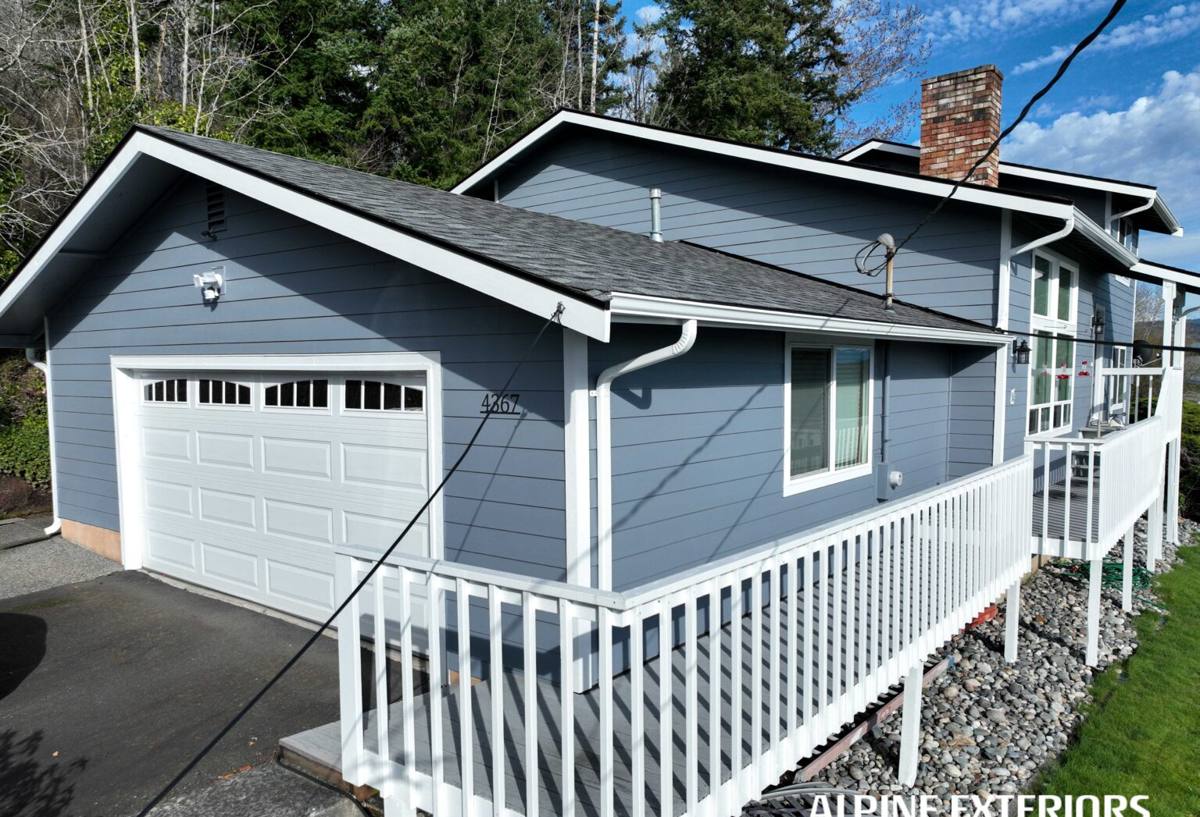
How Whatcom County Weather Damages Roofs
Wind-Driven Rain and Lifted Shingles
Straight-line wind gusts common to this part of Washington don't just tear shingles off outright — more often they lift the tab edge just enough to break the seal strip underneath without anyone noticing. Once that seal is broken, the shingle still looks fine from the ground, but rain gets driven up and under it during the next storm instead of running off. That's how a single windy afternoon in November turns into a slow leak discovered in February.
Salt Air and Fastener Corrosion
Everson isn't right on the coast, but salt-laden air still moves inland with the prevailing weather, and it's harder on exposed metal than most homeowners realize. Roofing nails, flashing seams, and vent collars that aren't corrosion-resistant can start to rust years before the shingles around them wear out. Corroded fasteners lose their grip, and flashing that rusts through at the seams stops shedding water the way it's supposed to.
Moss, Trapped Moisture, and Slow Rot
The long moss season here does more damage over time than any single storm. Moss holds moisture against the shingle surface, which accelerates granule loss and keeps the roof deck damp longer after every rain. On north-facing slopes and shaded sections — common on lots with mature trees around Everson — moss growth can get established in a single wet season if it isn't kept in check. Storm damage on a mossy roof also tends to be worse, because the shingles underneath are already softened and less able to seal back down after wind lifts them.
Signs Your Roof Has Storm Damage
Most storm damage is quiet at first. These are the things worth checking after any significant wind or rain event:
- Shingles that look curled, cracked, or slightly out of alignment with the row around them
- Granules collecting in gutters or at the base of downspouts after a storm
- Bent, lifted, or missing flashing around chimneys, vents, and roof-to-wall junctions
- Water stains on ceilings or in the attic, especially near exterior walls
- Soft or spongy-feeling spots on the roof deck when walked (a sign water has already reached the sheathing)
- Daylight visible through the roof deck from inside the attic
- Moss buildup that's thicker on one side of the roof, often where wind and shade combine
Any one of these on its own might not mean much. Two or three together, especially after a named storm or a stretch of heavy wind, is worth a proper inspection before the next rain finds the gap.
What a Correct Storm Damage Repair Involves
Inspection Before Any Work Starts
A real storm damage inspection means getting on the roof, not just looking at it with binoculars from the driveway. We check the shingle field for lifted or cracked tabs, pull back suspect areas to look at the seal strip and the felt or synthetic underlayment beneath, and check every flashing point — chimneys, skylights, vent boots, and the wall-to-roof transitions that are common on additions and dormers. If there's any sign water reached the deck, we check the attic side too, because a stain on the drywall is usually the last place the problem shows up, not the first.
Matching Materials and Proper Flashing
A patch that doesn't match the existing shingle in profile, color, or age sticks out and often performs worse than the surrounding roof because it doesn't shed water the same way. Where flashing needs to be replaced, we use corrosion-resistant metal appropriate for this climate, not whatever's cheapest, and we make sure it's properly lapped and sealed rather than just caulked over — caulk is a stopgap, not a repair.
Repair vs. Replace
Not every storm-damaged roof needs a full replacement, and not every roof can be sectionally patched and called done. The right call depends on a few factors:
| Factor | Favors Repair | Favors Replacement |
|---|---|---|
| Roof age | Under half its expected service life | Already near or past expected lifespan |
| Damage extent | Isolated to one slope or a few sections | Spread across multiple slopes or the whole roof |
| Decking condition | Solid, dry, no soft spots found | Soft, delaminated, or water-stained sheathing |
| Shingle match | Matching shingles still available | Discontinued or badly faded shingle line |
| Moss/granule condition | Minimal moss, granules intact | Heavy moss with visible granule loss roof-wide |
We'll always tell you honestly which side of that table your roof falls on. If a targeted repair will hold, we're not going to talk you into a full tear-off.
Our Process for Storm Damage Repairs
- Free on-roof inspection with photos of anything we find, including the parts you can't see from the ground
- A plain-language explanation of what caused the damage and what it will take to fix it correctly
- A written estimate broken out by scope — patch repair, flashing replacement, or full section replacement
- Repair work using materials matched to your existing roof, with proper flashing and fastening for this climate
- A final walk-through so you can see what was done before we consider the job complete
If your damage is tied to an insurance claim, we'll document what we find in a way that's useful for your adjuster, but we work for you — not the insurance company.
Insurance and Storm Damage Claims
Wind and storm damage is often covered under standard homeowner's policies, but coverage details and deductibles vary by carrier and policy. We're not insurance adjusters and won't promise a claim will be approved, but we can give you a clear, honest scope and cost estimate to bring to your insurer, and photo documentation of the damage we find. If you're not sure whether what you're looking at is worth filing a claim over, that's exactly the kind of question a free inspection is meant to answer.
Why It Matters to Hire a Crew That Already Works Everson and Lynden
A roofer who works Whatcom County regularly already knows what this climate does to a roof over time — which flashing details fail first in driving rain, which slopes hold moss longest, and how to tell storm damage from ordinary wear at a glance. That local experience matters more than it sounds like it should. A crew based somewhere dry, or one just passing through after a storm looking for quick work, doesn't have the same read on how this specific weather pattern behaves against different roof types, and they won't be around if a repair needs a follow-up visit.
We're local to this area, we stand behind the repairs we make, and we're not going anywhere after the truck pulls away.
Preventing the Next Round of Storm Damage
Once a storm-damaged roof is repaired, a little maintenance goes a long way toward keeping the next storm from doing the same damage again:
- Keep gutters and downspouts clear so wind-driven rain has somewhere to go instead of backing up under the roof edge
- Trim back branches that overhang the roof — they cause abrasion damage and hold moisture against shingles
- Address moss while it's light; letting it build up through a second wet season makes removal harder on the shingles
- Have flashing points checked every couple of years, since that's where storm damage most often starts
- After any major wind event, do a quick ground-level visual check, and call for an inspection if anything looks off
None of that prevents every possible storm from causing damage, but it closes off the easy paths water usually takes into a roof.
Get a Free, No-Pressure Estimate
If a recent storm has you wondering about the condition of your roof, or you've spotted one of the warning signs above, we're glad to take a look. The estimate is free, there's no pressure to move forward, and you'll get an honest answer about whether you're looking at a simple repair or something bigger. Use the form below to get started.