 Lynden Siding
 Deck Replacement in Everson: What Local Homes Are Up Against
Everson sits in the Nooksack River valley, a few minutes north of Lynden, and decks out here take a different kind of beating than decks in a dry inland climate. Whatcom County gets a long, wet shoulder season on both ends of summer, and Everson's low-lying river valley setting means ground moisture and humidity tend to linger after a storm has already moved through. Add in the marine-influenced air that moves across this part of Washington from Bellingham Bay and the Strait of Georgia, and you get a climate that's genuinely hard on exterior wood: constant damp, slow-drying shade pockets under trees, and a moss season that can stretch from October well into May.
None of that means a deck can't last. It means the deck has to be built and finished with that climate in mind from the first board. A lot of the decks we get called out to replace in Everson weren't bad designs when they went in — they just weren't detailed for how much water this region actually sees, and over ten or fifteen years that catches up with a structure.
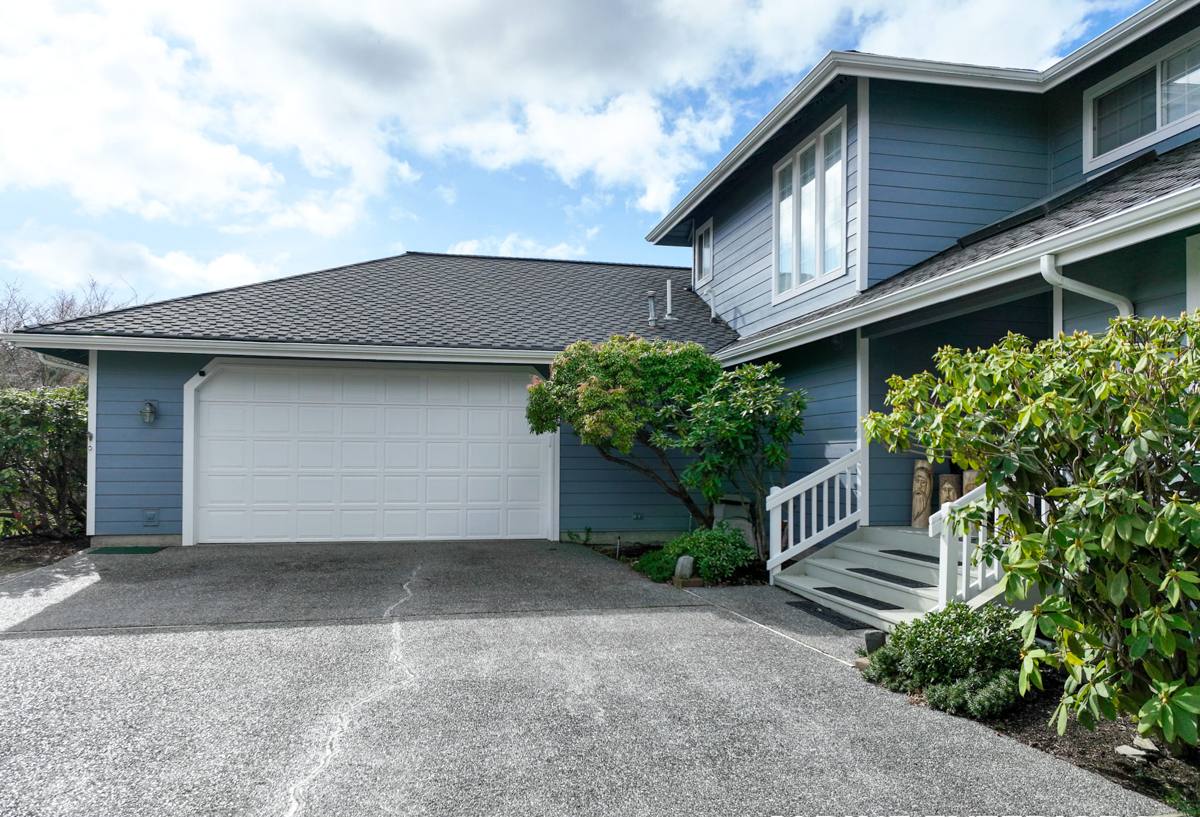
Signs Your Everson Deck Needs Replacing, Not Just Repair
Not every tired deck needs a full teardown. But there's a point where patching individual boards is just delaying a bigger, more expensive failure. We look for a few specific things before we recommend replacement over repair:
- Soft or spongy spots in the decking, especially near the house rim board or anywhere water tends to pool
- Ledger board attachment that's rusted, undersized, or missing proper flashing — this is the single most common structural issue we find
- Posts or joists with visible rot at ground contact or where they meet the deck surface
- Persistent moss or algae growth that returns within weeks of cleaning, which usually points to a moisture problem underneath, not just on top
- Railings that flex or feel loose, which often means the post connections have degraded
- A deck built before current code requirements for ledger attachment and joist hangers, common on older Everson properties
If it's mostly surface graying with a sound structure underneath, refinishing or a partial board swap can buy years. If the framing itself is compromised, repair work is just money spent postponing the inevitable.
What a Correct Deck Replacement Involves
It Starts Below the Decking, Not At It
The part of a deck homeowners see is the decking boards and railings. The part that actually determines how long the deck lasts is everything underneath: the ledger connection to the house, the footings, the joists, and how water is managed at every point where two materials meet. A deck can have beautiful composite boards on top and still fail in eight years if the ledger flashing was never done right.
The Details That Matter Most in This Climate
- Ledger flashing: A properly installed metal flashing with correct overlap and a water-resistant barrier behind it, so moisture is directed away from the house framing instead of into it
- Joist tape or cap protection: Sealing the tops of joists so fastener holes don't become entry points for standing water
- Footings sized and set below frost depth, with proper drainage around them so they aren't sitting in saturated soil through the wet months
- Board spacing and airflow underneath so the deck can actually dry out between rain events instead of holding moisture against the framing
- Fasteners and hardware rated for the wood treatment used, since standard fasteners corrode fast against modern ACQ-treated lumber
Skip any one of these and the deck may still look fine going up. The failures show up years later, usually as rot in places you can't see until a board finally gives way.
Choosing Materials That Actually Hold Up Here
There's no single "best" decking material — there's a best fit for how a homeowner uses the deck, their maintenance appetite, and their budget. In a climate with this much sustained moisture and moss pressure, some tradeoffs matter more than they would in a drier region.
| Material | How It Handles Our Climate | Maintenance | Typical Lifespan |
|---|---|---|---|
| Pressure-treated wood | Good structural performance if detailed correctly; surface is still wood, so it grays and can hold moss in shaded areas | Annual cleaning, refinish every 2-3 years | 15-20 years |
| Cedar | Naturally moisture- and insect-resistant, ages to a silver-gray patina, but softer surface shows wear | Cleaning and sealing every 1-2 years to hold color | 15-25 years |
| Composite decking | Doesn't absorb water the way wood does, resists rot, but can still support surface moss/algae in shaded, low-airflow spots | Periodic washing, no sealing or staining | 25-30+ years |
| PVC decking | Fully synthetic, essentially immune to rot and moisture absorption; best option for deeply shaded or ground-level installs | Occasional washing | 30+ years |
We're honest with Everson homeowners about the tradeoff most people don't expect: composite and PVC solve the rot problem, but they don't solve moss and algae by themselves. Anything sitting under tree cover or on the shaded north side of a house will need periodic cleaning regardless of material. What changes is whether that buildup is a cosmetic issue or a structural one underneath it.
Our Deck Replacement Process
- On-site evaluation: We inspect the ledger connection, framing, footings, and any drainage issues specific to your property before quoting anything.
- Honest repair-vs-replace recommendation: If a repair genuinely makes more sense, we'll say so.
- Design and material selection: We walk through decking, railing, and fastener options against your budget and how you actually use the space.
- Permitting: We handle the paperwork for anything that requires it (see below).
- Demo and disposal: Full teardown of the old structure, with proper disposal — not left in a pile on your property.
- Framing and flashing: This is where we spend the most care, since it's the part that determines longevity.
- Decking, railing, and finish work: Installed to manufacturer spec, with fastener spacing that accounts for our wet-season wood movement.
- Final walkthrough: We go over care and maintenance specific to the material you chose before we consider the job done.
Permits and Whatcom County Considerations
Deck replacement in Whatcom County, including Everson, typically requires a building permit when the deck is attached to the house, elevated above a certain height, or being rebuilt at a larger footprint than before — the exact thresholds depend on the specifics of your project and current code. Ledger attachment, guardrail height, and stair geometry are all inspected points, and they're also exactly the details that fail first when a deck is built off-code. We pull permits and coordinate inspections as part of the job rather than treating it as the homeowner's problem to sort out separately.
What Deck Replacement Typically Costs
Every deck is different, but the main cost drivers are consistent. This isn't a quote — it's what actually moves the number up or down:
| Factor | Why It Matters |
|---|---|
| Deck size and height off grade | Taller decks need more substantial footings, posts, and often stairs |
| Decking material | Pressure-treated is the lowest upfront cost; PVC and premium composites cost more but need far less upkeep |
| Railing style | Cable, glass, and composite railings cost more than standard wood balusters |
| Ledger and structural condition | Rotted rim boards or undersized framing found during demo add scope |
| Site access | Decks over difficult terrain or requiring material to be carried in cost more in labor |
| Permit and inspection requirements | Larger or taller decks trigger more inspection steps, which adds time to the schedule |
We give a firm, itemized quote after the on-site evaluation, not a ballpark over the phone — too much of the real cost depends on what we find once we open up the old structure.
Keeping a New Deck Looking Good Through Whatcom County Winters
Whatever material you choose, a little seasonal attention goes a long way in this climate. Here's what actually matters:
- Sweep leaves and debris off the deck surface regularly through fall — trapped organic matter is what feeds moss growth
- Clean moss and algae with a deck-safe cleaner before it gets a foothold, rather than after it's established
- Check and clear drainage gaps between boards each spring so water isn't pooling
- Reseal wood decking on the schedule appropriate to the product — don't wait until it's visibly gray and dry
- Inspect railing posts and stair connections annually for any looseness
- Trim back overhanging branches to improve airflow and sun exposure on shaded sections
Why a Crew That Already Works Everson Matters
A deck built by a crew that hasn't worked this specific climate tends to make the same mistakes: standard flashing details that work fine in a drier region but aren't enough for the amount of sustained rain the Nooksack valley sees, or decking laid without enough attention to shaded, slow-drying areas that are common on wooded Everson lots. We work throughout Lynden and the surrounding Whatcom County communities, including Everson, and we build every deck assuming it's going to see a genuinely wet nine months of the year — because it will.
We also know the local permitting process, which keeps a project moving instead of stalled waiting on paperwork nobody flagged up front. That's not a small thing when you're trying to get a deck finished before the weather turns.
If your Everson deck is showing its age, or you're just not sure whether it needs repair or full replacement, we're happy to take a look. Reach out for a free, no-pressure estimate using the form below.