 Lynden Siding
 Composite Decking Built for Everson's Wet, Mossy Climate
Everson sits along the Nooksack River in Whatcom County, close enough to the water and the coastal air pattern that moves through this part of Washington to feel it every winter. Homes here deal with a long wet season, heavy driving rain off the marine layer, and the kind of shaded, damp ground cover that grows moss on anything that stays wet for more than a day or two. A deck built for a drier climate simply doesn't hold up the same way out here. Composite decking, installed correctly for this specific environment, is one of the few outdoor living investments that actually gets easier to live with over time instead of harder.
This page is about one job, done right, for this one area: composite deck installation for Everson homeowners who want something that looks good, stays safe underfoot, and doesn't turn into a spring project every single year.
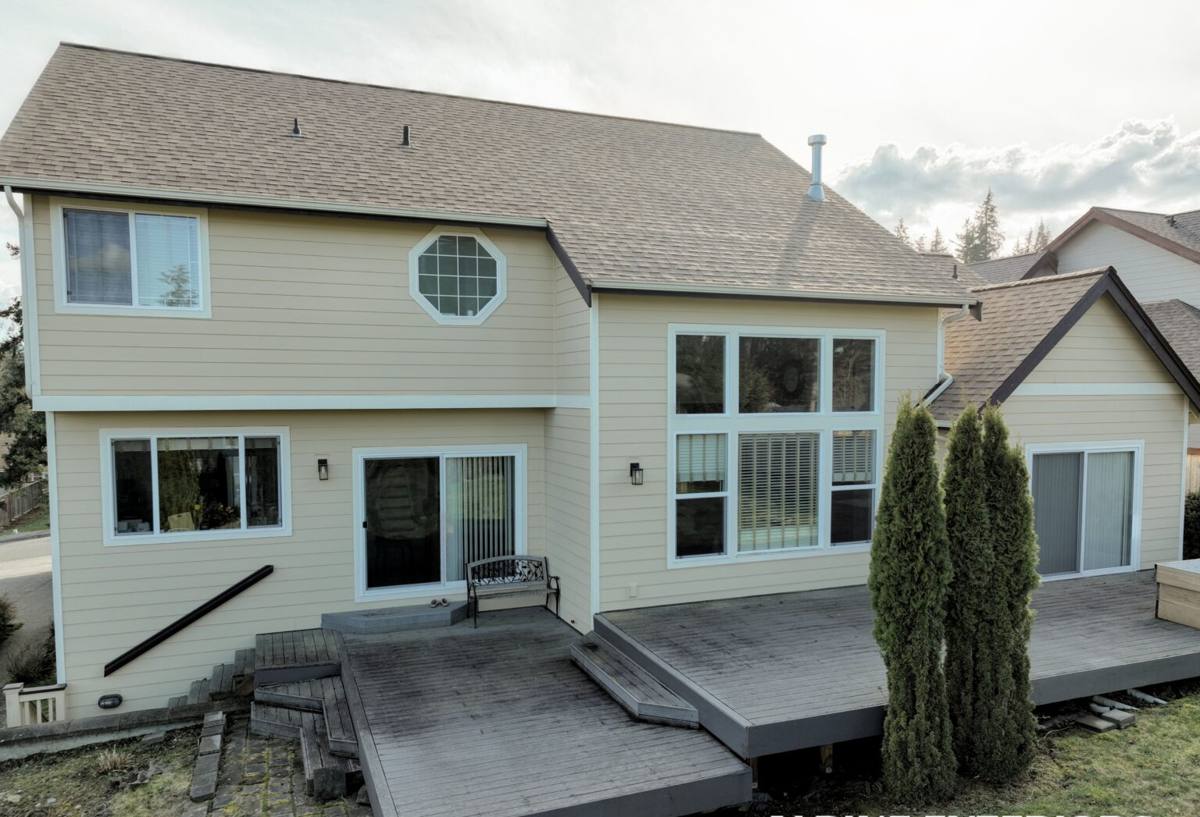
What Everson's Weather Actually Does to a Deck Over Time
It helps to understand the specific failure points before talking about the fix. In Everson and the surrounding Whatcom County towns, decks take damage from a few predictable directions:
- Standing moisture: Driving rain combined with shaded yards and slow-draining soil means deck boards and the structure underneath can stay damp for days after a storm passes.
- Moss and algae growth: Anything organic that sits in shade and moisture long enough grows moss. On wood decking this means slick, discolored boards and eventual surface rot.
- Salt and mineral air exposure: Coastal air carries fine salt and moisture that corrodes exposed fasteners and accelerates weathering on unprotected wood fibers.
- Freeze-thaw swings: Whatcom County gets enough cold snaps each winter that trapped moisture in wood decking can freeze, expand, and split boards or loosen fasteners over a few seasons.
None of this is unusual for the region — it's just the reality of building outdoor structures here. The point of a good composite deck installation is designing around these conditions from the start, not patching problems after they show up.
Why Composite Decking Makes Sense for This Climate
Composite decking isn't automatically the right answer for every homeowner or every budget, and we'll say that plainly. But for Everson's rain-and-moss climate specifically, it solves problems that wood decking structurally cannot.
| Factor | Composite Decking | Wood Decking |
|---|---|---|
| Moisture absorption | Very low — capped boards shed water instead of soaking it in | Absorbs moisture readily, especially at cut ends and fastener holes |
| Moss and algae resistance | Smooth, non-porous surface resists organic growth and rinses clean | Textured grain holds moisture and spores, feeding moss growth |
| Annual maintenance | Periodic cleaning, no sealing or staining required | Sanding, staining, or sealing needed most years to hold up |
| Fastener and hardware wear | Hidden or coated fastener systems reduce salt-air corrosion | Exposed fasteners corrode and stain the wood around them |
| Upfront cost | Higher material cost | Lower material cost, higher lifetime maintenance cost |
| Typical lifespan in this climate | 25+ years with minimal upkeep | 10–15 years before major repair or replacement, often sooner near moisture |
The honest trade-off is upfront price. Composite boards cost more per square foot than standard lumber. What you're buying is fewer callbacks, no annual sealing, and a surface that doesn't get dangerously slick under moss the way wood does. For a lot of Everson homeowners, especially on decks that see real shade or sit close to the ground, that trade pays for itself within a handful of seasons in avoided maintenance alone.
Where Wood Still Makes Sense
If you want a specific traditional look, plan to refinish it yourself as a hobby, or have a tight budget for a smaller deck, wood is still a legitimate choice — we install it too. We'll tell you straight if your project and expectations point toward wood instead of composite. This page is about doing the composite job correctly when that's the right call.
What a Correct Composite Deck Installation Involves
Composite decking fails early almost exclusively because of installation mistakes, not the material itself. In a climate like ours, a few details matter more than they would somewhere drier.
Substructure and Drainage
The framing underneath composite decking needs to be pressure-treated, properly spaced, and pitched slightly to shed water rather than pool it. In Everson's rainfall pattern, a deck built flat or with joists too tight to the ground traps moisture underneath, which shortens the life of the substructure even if the decking surface itself is composite.
Ventilation Underneath
Airflow beneath the deck keeps humidity from building up against the framing and the underside of the boards. Skirting or low clearance without vents is a common shortcut that causes problems years later, even with composite material on top.
Fastener Systems
Hidden fastener clips or coated composite-specific screws matter here. Standard exposed deck screws corrode faster in coastal air and can void the manufacturer's warranty on capped composite boards. We use fastener systems matched to the specific composite line being installed.
Expansion Gaps
Composite boards expand and contract with temperature more than people expect. Getting the gap spacing right at butt joints, picture-frame borders, and against the house keeps boards from buckling during a hot stretch or pulling apart during a cold one.
Flashing at the Ledger Board
Where the deck attaches to the house, proper flashing is what keeps driving rain from working its way behind the siding and into the wall framing. This is one of the most common places we find water damage on decks built without it, and it's invisible until it's a real problem.
Our Process, From Estimate to Finished Deck
- On-site assessment: We look at drainage, existing structure (if replacing a deck), sun and shade exposure, and how the space will actually be used.
- Design and product selection: We walk through board profiles, colors, and railing options based on your home and budget, with honest pros and cons for each.
- Written estimate: Clear scope, materials, and price before any work starts — no surprise change orders for things we should have caught up front.
- Demo and structural prep: Removal of the old deck if needed, framing repairs or new substructure built to current code and pitched for drainage.
- Composite installation: Boards, fastener systems, and railing installed to manufacturer spec, with attention to expansion gaps and ventilation.
- Final walkthrough: We go over the finished deck with you, including basic care, before we consider the job done.
Choosing Board Style, Color, and Railing
Composite decking comes in a range of board profiles and colors, and the right pick depends on how the deck sits relative to your house and yard. A few things worth thinking through:
- Darker board colors show less staining from tannins, leaves, and light moss haze, but run warmer underfoot in direct sun.
- Lighter and mid-tone colors show dirt and pollen more but stay cooler and often blend better with lighter-sided homes common in this area.
- Grooved-edge boards paired with hidden fasteners give the cleanest finished look with no visible screw heads.
- Composite or aluminum railing systems avoid the same rot and paint-peeling issues as wood railing, and hold up better against the same moisture that affects the deck surface.
Maintenance a Composite Deck Still Needs in Whatcom County
Composite decking is low-maintenance, not zero-maintenance. In this climate, a little seasonal attention goes a long way toward keeping it looking and performing like new.
- Sweep or blow off leaves and debris regularly, especially in fall, so organic matter doesn't sit and hold moisture against the boards.
- Rinse the deck surface a few times a year with a garden hose and mild soap to prevent early moss and mildew film from taking hold.
- Avoid pressure washing at close range or high PSI, which can damage the cap layer on some composite boards — a soft-bristle brush handles moss buildup safely.
- Check and clear drainage gaps between boards each fall before the heaviest rain sets in.
- Confirm underdeck ventilation isn't blocked by stored items, planters, or overgrown landscaping.
- Walk the railing and stair connections once a year and tighten anything that's worked loose.
Why Hiring a Crew That Already Works in Everson Matters
Composite deck installation looks straightforward from a product brochure, but the details that actually matter — drainage pitch, ventilation, flashing, fastener choice — are climate-specific. A crew that installs decks mainly in drier parts of the state may not build in the same margin for Whatcom County's rain and moss season. We work in Everson, Lynden, and the surrounding towns regularly, so we're building to what this climate actually does to a deck over ten and twenty years, not just what looks right on installation day.
We also know the practical side: permit expectations for the county, typical soil and drainage patterns on lots in this area, and how local weather timing affects scheduling a deck build without losing weeks to rain delays.
If you're planning a new composite deck or replacing an aging wood one, we're happy to walk the site, talk through honest options for your budget, and give you a straightforward estimate — no pressure, no upsell. Use the form below to get started.