 Lynden Siding
 Fiber Cement Siding Built for Everson's Weather
Everson sits inland along the Nooksack River in Whatcom County, but it still gets the full brunt of what makes Pacific Northwest siding work different from siding work almost anywhere else in the country: months of low, steady rain, marine air pushing in off the Salish Sea, and shaded, slow-drying yards that never fully catch a break from moisture. Siding in this area isn't just a weather barrier — it's fighting a long, damp season that gives moss, algae, and trapped water every advantage. Homes here need a siding material and an installation approach that account for that, not a product built for a drier climate and installed the same way it would be in Arizona or eastern Washington.
This page covers what fiber cement siding specifically needs to get right in Everson, what a correct installation actually involves, and how our process handles the details that matter most in this climate.
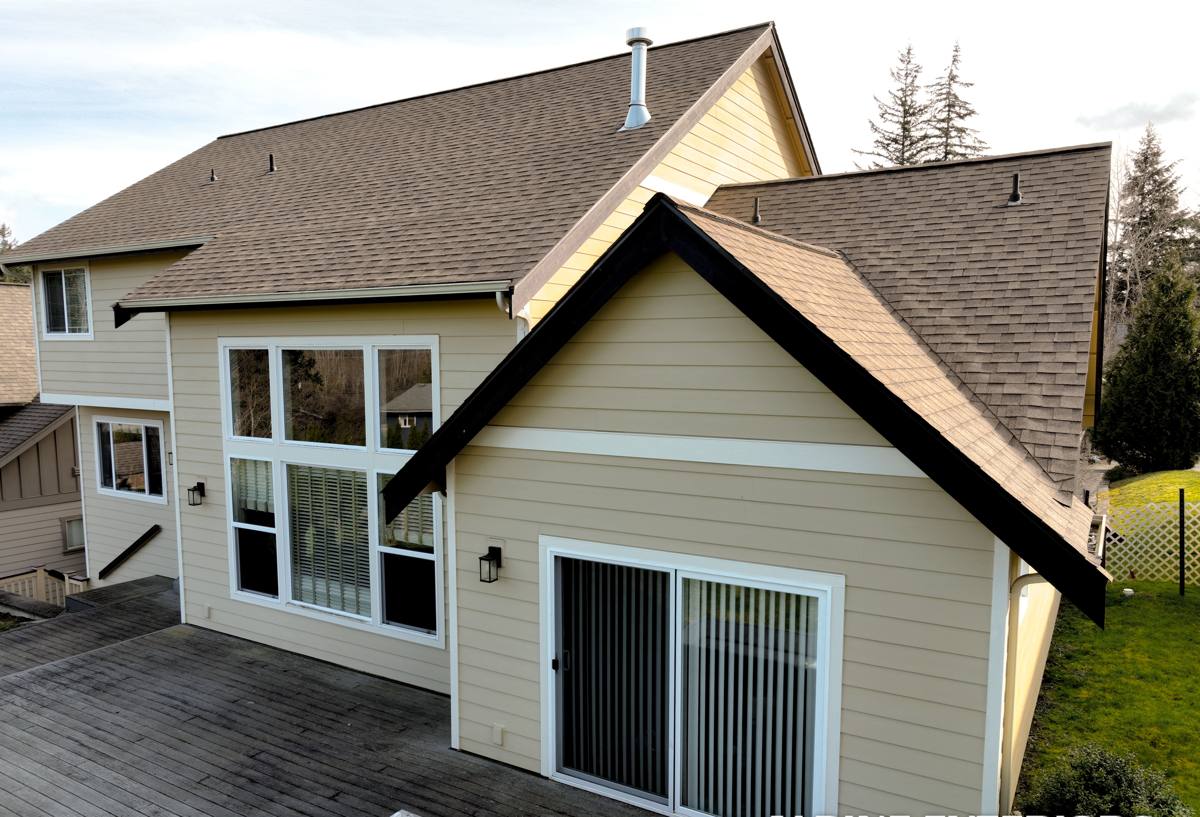
What Whatcom County Moisture Does to Siding
Before talking about the fix, it's worth being specific about the problem. A few things happen consistently to exterior siding in this part of Washington:
- Extended damp periods. Long stretches of overcast, drizzly weather mean siding surfaces — especially on north-facing and shaded walls — can stay damp for days at a time.
- Moss and algae growth. Shade, moisture, and mild temperatures are exactly what moss needs. Any siding material that holds surface moisture or has porous, absorbent facing is going to grow something green on it eventually.
- Driving rain against wall assemblies. Wind-driven rain doesn't just hit siding — it can push water sideways into laps, seams, and fastener penetrations if those details aren't sealed and flashed correctly.
- Salt-influenced marine air. Air moving inland off the Salish Sea carries moisture and mild salinity that accelerates corrosion on unprotected fasteners and metal trim over time.
None of this is unusual for the region — it's the baseline. But it means siding choices and installation shortcuts that would be minor problems in a drier climate become real, recurring maintenance headaches here.
Why Fiber Cement Is the Right Call for This Climate
Fiber cement siding is made from cement, sand, and cellulose fiber, cured into a dense, stable board. That composition matters directly in Everson's climate:
It doesn't feed moss and mildew the way wood does
Wood and wood-composite sidings are organic material — moss, algae, and fungal growth can take hold in the surface itself, not just sit on top of it. Fiber cement is inorganic. Moss can still grow on a dirty or shaded surface, but it's growing on the coating, not into the substrate, which makes it far easier to clean off without damaging the material underneath.
It holds paint and factory finish without the swelling problems
Wood siding expands and contracts with moisture cycles, which is what eventually cracks paint film and opens up seams for water intrusion. Fiber cement is dimensionally stable — it doesn't swell and shrink the way solid or engineered wood products do, so a factory-applied finish holds its bond far longer under repeated wet-dry cycling.
It's non-combustible
Not a moisture point, but worth stating plainly: fiber cement doesn't burn. That's a meaningful difference from wood-based sidings, and it's one of the reasons we standardized on it.
We install James Hardie fiber cement exclusively — not other fiber cement brands, and not vinyl, LP SmartSide, or wood alternatives. Hardie's ColorPlus factory finish and HardieZone engineered product lines are built specifically to handle high-moisture, high-UV-variation climates like ours, and the company backs the product with a strong transferable warranty. We'd rather install one product system we trust completely and install correctly every time than offer a menu of materials with different weak points.
What a Correct Installation Actually Involves
Fiber cement siding is only as good as the installation behind it. Most of the siding failures we get called out to inspect in this region aren't material failures — they're installation shortcuts that let water get where it shouldn't. On a proper job, that means:
Weather-resistive barrier and flashing first
A correctly lapped weather-resistive barrier goes on before any siding, with flashing integrated at every window, door, and penetration so water is directed out and down, never trapped behind the cladding.
Correct clearances
Siding needs a minimum gap above roof lines, decks, and grade — typically several inches — so splash-back and standing water don't wick into the bottom edge of the boards. This is one of the most commonly skipped details on rushed jobs, and it's one of the most damaging to skip in a wet climate.
Proper fastening
Corrosion-resistant fasteners, driven at the manufacturer-specified pattern and depth — not overdriven, not underdriven. Overdriven fasteners crack the board's fiber cement face and create a water entry point that's easy to miss until the damage is already done underneath.
Sealed and caulked joints — but not over-caulked
Butt joints, trim intersections, and penetrations need the right sealant in the right places. Just as important: not caulking places that are designed to drain, which traps water instead of releasing it.
Painted or factory-finished cut edges
Every field-cut edge needs to be sealed or coated before installation. An unsealed cut edge is one of the fastest ways moisture gets into the board core.
Our Installation Process
- On-site assessment. We look at your home's current siding condition, wall assembly, drainage paths, and any moisture or moss damage already present, then walk you through what we're seeing.
- Written estimate and product selection. We help you choose the right HardieZone line, profile, and ColorPlus finish for your home, and give you a clear, itemized estimate — no vague allowances.
- Tear-off and substrate inspection. Old siding comes off and we check the sheathing underneath for rot or damage before anything new goes on. Problems found here get addressed before we cover them up, not buried.
- Weather barrier and flashing installation. This is the step that determines whether the wall stays dry for the next 30+ years, and we don't rush it.
- Siding installation to manufacturer spec. Correct clearances, fastening, and joint treatment throughout — the details covered above, applied consistently, not just on the visible parts of the house.
- Final walkthrough. We go over the finished work with you directly and cover care and maintenance specific to your home's exposure.
Comparing Siding Materials in a High-Moisture Climate
| Factor | James Hardie Fiber Cement | Vinyl | Cedar / Wood |
|---|---|---|---|
| Moisture absorption | Very low — inorganic composition | Doesn't absorb, but seams and gaps allow water behind the panel | Absorbs directly, drives swelling and rot |
| Moss and algae resistance | Surface only — cleans off without damaging the board | Surface growth possible in shaded, damp areas | Can take hold in the wood fiber itself |
| Finish longevity | Factory-baked ColorPlus finish, resists fading and cracking | Color is through-body but can fade and become brittle over time | Paint/stain needs reapplication every few years |
| Fire performance | Non-combustible | Combustible, can soften and warp near heat | Combustible |
| Typical lifespan when correctly installed | 30+ years | 20-30 years, but seams and fasteners degrade sooner | 15-25 years with regular maintenance |
This table reflects general material behavior, not a guarantee for any specific home — the installation quality behind any of these materials has as much impact on real-world performance as the material itself.
Ongoing Care for Everson Homes
Fiber cement siding is low-maintenance, not no-maintenance. In this climate, a little seasonal attention goes a long way toward keeping it looking and performing the way it should:
- Rinse siding down once or twice a year, especially on shaded, north-facing walls where moss and grime build up fastest.
- Keep gutters clear so overflow isn't running down the siding face or pooling at the base of a wall.
- Trim back shrubs and trees that keep siding shaded and damp longer than the rest of the house.
- Check caulking at trim joints and penetrations every year or two, and have any cracked or missing sealant replaced before it becomes a leak path.
- Watch for any siding sections staying visibly wet longer than the rest of the house after rain — that's usually a sign of a drainage or flashing issue worth having looked at.
Why Hire a Crew That Already Works in the Everson Area
Siding installation detail requirements don't change dramatically from one Whatcom County town to the next, but a crew that regularly works Lynden, Everson, and the surrounding area already has a working sense of what local wall assemblies, older home construction, and seasonal moisture patterns tend to look like. That familiarity shows up in small ways — knowing to look twice at flashing on homes of a certain age, knowing which wall orientations in this area tend to hold moss, and not treating a rainy forecast as a reason to rush a step that shouldn't be rushed.
It also means we're not driving in from out of the area for a warranty callback or a maintenance question five years down the road. We're already here.
Getting Started
If your Everson home's siding is showing moss buildup, cracked caulking, peeling paint, or soft spots near the base, it's worth having it looked at before those small signs turn into sheathing damage. We'd be glad to walk your property, answer questions honestly — including why we only install James Hardie fiber cement — and put together a clear, no-pressure estimate. Use the form below to get in touch.