 Lynden Siding
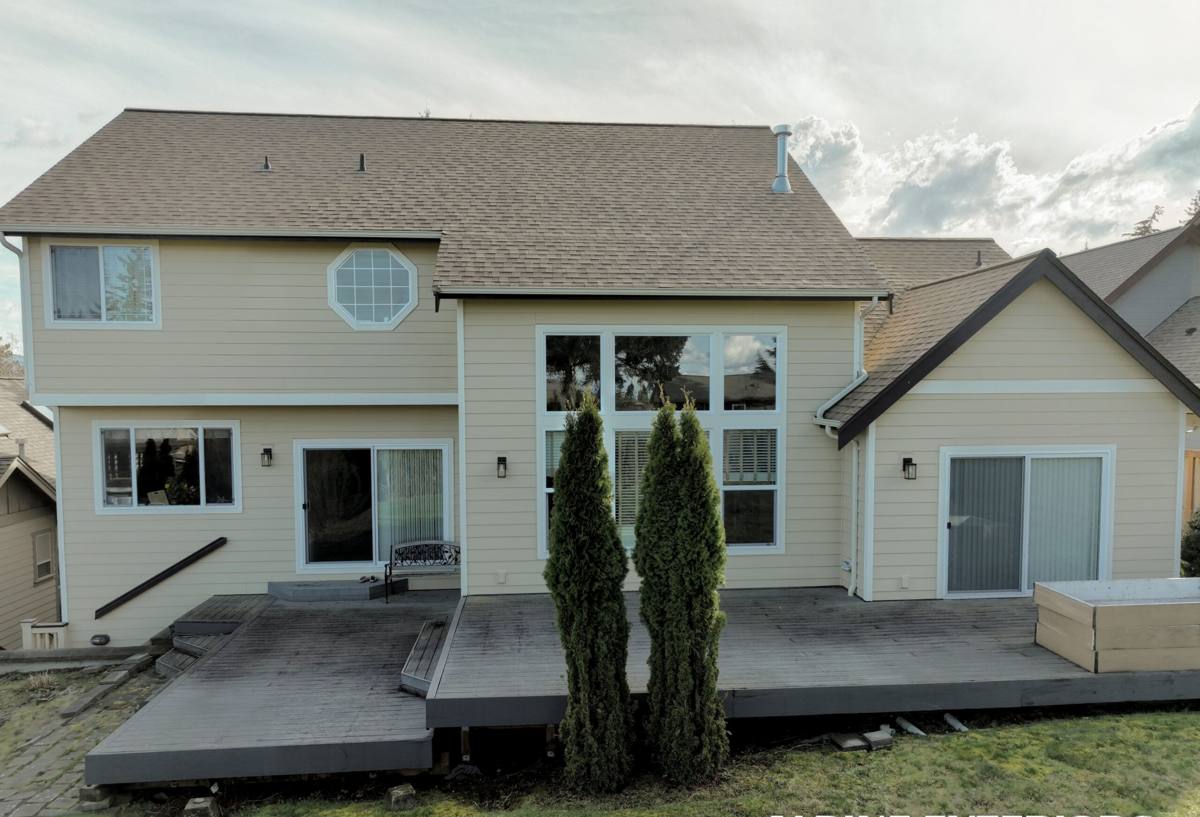
 Deck Building in Everson: Built for the Weather That's Actually Here
Everson sits along the Nooksack River in Whatcom County, close enough to the Salish Sea that the same moisture-laden air, driving rain, and long gray stretches that shape the rest of the county show up here too — often with the added humidity of the river bottom and the shade of mature trees along many lots. A deck built for a drier climate, or built to a generic national spec, does not hold up the same way here. The framing, the fasteners, the flashing details, and even the choice of decking material all need to account for how much water this region sees and how slowly it dries out between storms. That's the lens we build every Everson deck through.
What Local Weather Actually Does to a Deck Over Time
Driving Rain and Standing Moisture
Whatcom County doesn't just get rain — it gets rain that comes in sideways off the water and settles into a low gray drizzle that can last for days. On a deck, that means water finds its way into every gap, seam, and fastener hole that isn't properly sealed. Ledger boards attached to the house without correct flashing are one of the most common failure points we see on older decks, because water tracks down the siding, behind the ledger, and into the house rim joist where it rots quietly for years before anyone notices.
Moss and Algae in Shaded Yards
Many Everson properties have mature trees or sit close to the river corridor, which means partial shade for a good part of the day. Combined with the region's long wet season, that shade turns into a long moss season on any horizontal wood surface that doesn't get direct sun and airflow. Moss holds moisture against the wood surface, which accelerates rot in untreated or poorly finished lumber, and it makes deck boards slick and genuinely dangerous underfoot — a real concern on stairs.
Freeze-Thaw Cycling
Whatcom County winters aren't brutal, but they do dip below freezing often enough, especially with cold air draining down from the foothills, that water trapped in wood fibers or in poorly compacted footing soil will freeze, expand, and slowly work joints and fasteners loose. It's a slower failure mode than rot, but it compounds the same underlying problem: water that had nowhere to go.
Getting the Structure Right the First Time
A deck's structure is the part nobody sees once it's finished, but it's the part that determines whether the deck is still solid in fifteen years or needs to be torn apart in five. For Everson's ground conditions and climate, that comes down to a few non-negotiables:
- Footings dug below the local frost depth and set on undisturbed or properly compacted soil — not just poured on whatever the ground looked like that day
- Ledger boards flashed with proper step flashing and a water-resistant barrier behind them, never just caulked and bolted to the siding
- Joist hangers and structural fasteners rated for exterior, treated-lumber contact — mismatched hardware corrodes fast in this climate and weakens the connection from the inside out
- Joist spacing set for the actual decking material chosen, since composite and PVC boards often need tighter spacing than solid wood to avoid flexing or sagging over time
- Airflow underneath the deck, especially on lower or ground-level builds, so moisture has somewhere to go instead of sitting trapped under the boards
Footing Depth and Spacing
| Structural Factor | Why It Matters in Everson |
|---|---|
| Footing depth | Must clear local frost depth so freeze-thaw cycling doesn't heave the posts over winter |
| Ledger flashing | Prevents water tracking behind the house band board — the single most common source of hidden rot |
| Post spacing | Tighter spacing reduces deflection under snow load or a full deck of guests, especially on composite decking |
| Under-deck ventilation | Keeps moss and mildew from forming underneath where nobody checks until there's a problem |
Choosing the Right Decking Material for This Climate
There's no single "best" decking material — there's a best material for a given budget, sun exposure, and how much upkeep a homeowner actually wants to do. Given Everson's rain and shade patterns, here's how the common options actually perform:
| Material | Upfront Cost | Maintenance Burden | How It Handles Local Moisture |
|---|---|---|---|
| Pressure-treated wood | Lowest | Annual cleaning, periodic sealing or staining | Good if sealed and maintained; neglected boards will grey, split, and grow moss faster than any other option |
| Cedar | Mid | Regular sealing to hold color and resist moisture | Naturally more rot-resistant than treated pine, but still needs consistent upkeep in a wet, shaded yard |
| Composite | Higher | Occasional washing, no sealing or staining | Handles standing moisture and moss growth far better, though lower-quality composite can still trap moisture at fastener points |
| PVC / capped polymer | Highest | Lowest — mostly just washing | Best moisture and moss resistance of the group; the tradeoff is upfront cost and a different look/feel underfoot |
We install all of the above. Our recommendation depends honestly on the site: a sunny, well-drained backyard can get a lot of life out of well-maintained wood, while a shaded lot near mature trees or the river corridor usually does better long-term with composite or PVC, simply because the maintenance schedule required to keep wood healthy in that much shade is more than most homeowners realistically keep up with.
Our Deck Building Process
- On-site assessment: we walk the actual lot — sun exposure, drainage, slope, and how the deck will tie into the house — before recommending anything
- Design and material selection: layout, footing plan, and decking material chosen for the site conditions, not a one-size-fits-all default
- Permitting: we handle the permit application and inspection scheduling required for the build
- Footings and framing: footings poured to frost depth, ledger flashed correctly, framing built to span and load requirements
- Decking, railing, and stairs: installed with fastening patterns matched to the material to avoid squeaking, cupping, or loosening over time
- Final walkthrough: we go over the finished deck with the homeowner, including what maintenance (if any) the chosen material needs going forward
Permits and Code in Whatcom County
Most new deck construction and many significant deck replacements in Whatcom County require a building permit, particularly once the deck is attached to the house or elevated above a certain height. Permit requirements exist for good reason here — proper ledger attachment and footing depth are exactly the details that keep a deck from failing quietly over a few wet winters. We pull the necessary permits as part of the build and coordinate the required inspections, so homeowners aren't left navigating that process solo or discovering after the fact that unpermitted work complicates a future home sale.
Maintaining a Deck Once It's Built
Whatever material a deck is built from, a little seasonal attention goes a long way in this climate. A basic yearly routine keeps most problems from ever starting:
- Sweep off leaves and debris regularly through fall — trapped organic matter holds moisture against the boards and feeds moss growth
- Check and clear gaps between boards where debris and standing water tend to collect
- Inspect the ledger board area and any spot where the deck meets the house siding for signs of staining or softness
- For wood decks, re-seal or stain on the manufacturer's recommended schedule — don't wait until the wood looks grey and dry
- Wash composite or PVC decking periodically to prevent mildew film from building up, especially in shaded areas
- Check railing posts and stair connections yearly for looseness, particularly after a hard winter
Why It Matters to Hire a Crew That Already Works in Everson
A deck built from a generic regional spec sheet, without accounting for a specific lot's shade, drainage, and exposure, is a deck that starts showing problems years before it should. Crews that work Everson and the surrounding Lynden area regularly know which yards need extra attention to under-deck airflow, which sites are prone to moss because of tree cover or river-bottom humidity, and how local permitting actually works — not just what a code book says in the abstract. That local pattern recognition is the difference between a deck that needs real repair work at year eight and one that's still solid at year twenty-five.
If you're planning a new deck or replacing one that's showing its age, we're happy to come take a look and talk through what makes sense for your specific lot — no pressure, no obligation. Use the form below to request a free estimate.