 Lynden Siding
 Window Replacement in Everson: Built for This End of the Nooksack Valley
Everson is a small farming community on the Nooksack River, a few miles east of Lynden in Whatcom County. It sits far enough inland that people here sometimes assume they're spared the coastal weather that hammers waterfront towns, but the marine-influenced climate that defines exterior work across this whole corner of Washington reaches well past the shoreline. Moist air off the Sound pushes up the valley, rain arrives sideways more often than straight down, and the mild, overcast stretches that stack up for months at a time give moss and mildew plenty of time to work on anything that stays shaded or damp. A window sits right at the seam between the inside of a house and all of that weather, so it's usually the first thing to show the strain when something wasn't installed right.
Lynden Siding Company works window replacement into the same service area we cover for siding, roofing, and decks, because Everson properties are close enough to home base that we're out here regularly, not bidding a job from across the county and hoping the crew shows up on schedule. That matters for a farming community with a lot of older houses, outbuildings, and rural lots spread out along the valley floor. This page is about window replacement specifically for Everson — what the climate actually does to windows here, what a correct installation involves, and how the process works from first estimate to final walkthrough.
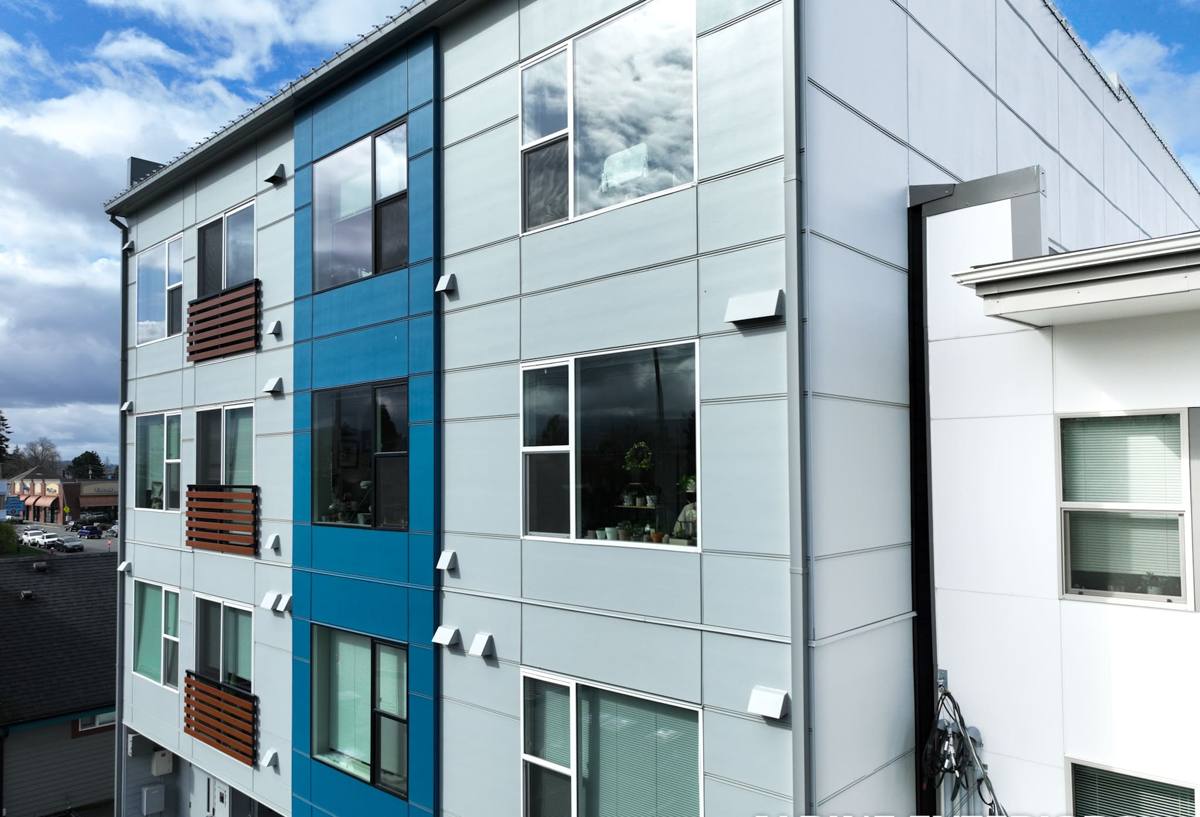
What the Local Climate Does to Windows Here
Salt-Tinged Air and Hardware Corrosion
Everson doesn't sit on open water, but Whatcom County's air carries a steady trace of salt well inland, and it accumulates on window hardware, screen frames, and fasteners over years of exposure. Lower-grade hardware finishes tend to show pitting, stiffness, or discoloration first, particularly on windows facing the prevailing weather. It's a slow process, which is exactly why it's easy to miss until a window that used to latch smoothly starts fighting you.
Wind-Driven Rain and Flashing Failures
Rain in this valley rarely falls straight down. It gets pushed sideways into window flashing, head trim, and the sill beneath the frame, and that sideways load is a far better test of installation quality than of the window itself. A quality window installed with sloppy flashing will still leak. A modest window installed with correctly pitched flashing and a proper sill pan usually won't. Nearly all of the water damage we find around windows traces back to how the opening was flashed, not to the window brand.
A Long Moss Season and Sill Rot
Shaded walls, tree-lined property lines, and sills that don't drain cleanly hold moisture longer here than they would in a drier climate, and that moisture feeds moss and mildew growth and, on wood-framed windows, slow rot at the sill and lower corners. On the many farm and older-vintage properties around Everson, this shows up on outbuildings and secondary structures as much as it does on the main house, since those often get less attention over the years.
Full-Frame Replacement vs. Insert Replacement
Everson has a real mix of housing stock — newer builds on smaller in-town lots alongside older farmhouses and rural properties where windows may not have been touched in decades. That mix matters for how we approach a replacement. Insert replacement fits a new window into the existing frame and leaves the surrounding siding and trim largely undisturbed. It's faster, less invasive, and a good fit when the existing frame is structurally sound and was reasonably well flashed to begin with. Full-frame replacement removes the window down to the rough opening and rebuilds the flashing from scratch. It costs more and takes longer, but it's the honest call when there's already moisture damage at the sill or jambs, or when the original installation was never flashed correctly — which we see more often on older farmhouses that have gone through several rounds of amateur repairs over the years. We'll tell you which situation you're actually in rather than defaulting to whichever option is easier to sell.
What Actually Drives the Cost of a Window Replacement
Every project is different, but the same handful of factors move the price up or down on nearly every job we quote. Understanding them ahead of time makes the estimate conversation a lot more useful.
| Cost Factor | Why It Matters | Typical Cost Impact |
|---|---|---|
| Full-frame vs. insert replacement | Full-frame involves rebuilding flashing and often patching siding and trim | Medium to High |
| Number of openings | Per-window cost drops somewhat as the total count on a project goes up | Scales with project size |
| Frame material chosen | Vinyl, fiberglass, wood, and aluminum carry different material and labor costs | Low to High |
| Existing rot or moisture damage | Framing repair has to happen before a new window goes in, not after | Variable, sometimes significant |
| Window size and style | Large picture windows, bays, and egress units cost more than standard sizes | Medium to High |
| Site access | Rural properties, second-story openings, or tight access can add labor time | Low to Medium |
We walk through these factors on-site rather than quoting a flat per-window number sight unseen, because on a lot of Everson properties the real cost driver isn't the window at all — it's what we find once the old one comes out.
Installation Details We Don't Treat as Optional
Most window failures in this climate aren't failures of the window product — they're shortcuts taken during installation that don't show up until a wet season or two later. On every job, regardless of budget, that means:
- A properly pitched sill pan that sheds water outward instead of letting it pool under the frame
- Head flashing integrated with the housewrap or building paper above the opening, lapped correctly so water sheds down and out
- Jamb flashing tied into the surrounding wall assembly rather than relying on caulk as the only defense
- Weep holes and drainage paths left clear and functional, never sealed shut during installation
- Corrosion-resistant fasteners and hardware suited to a consistently damp, salt-influenced climate
- Insulation and air sealing around the frame that doesn't trap moisture against the framing
None of these add meaningfully to the cost of the window itself, but skipping any one of them is what turns a window that should last decades into one that's leaking behind the wall inside a few years.
Signs an Everson Home's Windows Need Attention
- Visible fogging or condensation trapped between panes, usually a sign of a failed seal
- Noticeable drafts or a cold spot near a window that's supposedly closed
- Soft, discolored, or spongy trim and sill material, especially on shaded or weather-facing walls
- A window that's become difficult to open, close, or latch compared to how it used to work
- Peeling paint or bubbling finish on wood-framed windows
- Visible gaps, cracked caulk, or daylight around the frame viewed from inside
- Water staining on interior wall or ceiling surfaces near a window
Any one of these is worth a look. Caught early, most point to a repair or resealing job rather than a full replacement. Left through another wet season, several of them point to water damage already working its way into the surrounding wall framing.
How a Window Replacement Project Actually Runs
We start with an on-site estimate, not a phone quote, because window pricing genuinely depends on what we find once we're looking at the actual openings, trim, and framing condition. From there, a typical project moves through a few clear stages: precise measurement of each opening, ordering the windows to spec, removal of the old units, inspection of the framing and sill for hidden rot or moisture damage before anything new goes in, installation with the flashing and sealing details covered above, exterior trim work to match the surrounding siding, and a final walkthrough to confirm every window operates correctly and seals properly. If we find rot or damage once an old window is out, we'll show you what we found and talk through the repair before proceeding, not after the fact on a final invoice. Most straightforward insert projects on a handful of windows can be completed in a single day; full-frame work or larger whole-house projects run longer depending on scope.
Why Hiring a Crew That Already Works Everson Matters
A crew that installs and repairs windows around this valley through every season gets a feel for how the weather actually behaves on real houses over years, not just how a product performs on paper. That shows up in practical judgment calls: how much attention a shaded, tree-lined wall on a rural property needs compared to an open lot with no wind break, how a sill pan should be pitched for the amount of water a given elevation actually collects, and which flashing details are worth the extra time on install day so a homeowner isn't dealing with a leak two winters later. It also means understanding that an older farmhouse with decades of prior repairs needs a different starting assumption than a newer build on a smaller in-town lot — and not treating every Everson property the same way just because they're a few miles apart.
Beyond Windows: Siding, Roofing, and Decks
Windows are the focus of this page, but the same climate that wears on a window wears on the rest of an exterior too. Lynden Siding Company also handles siding, roofing, and deck work, and on siding specifically we install James Hardie fiber cement as our standard, chosen for how it holds up against sustained moisture and moss compared to lower-cost alternatives. If a window project on your Everson property turns up moisture damage in the surrounding siding or trim, or a roofline detail that's letting water in above a window, we can address it as part of the same visit instead of sending you off to find a second contractor.
Get a Free, No-Pressure Estimate
If your Everson home has windows that are fogging, drafty, hard to operate, or simply past their useful life, we're glad to come take a look and give you a straightforward, honest read on what it actually needs. Use the form below to schedule a free estimate — no pressure, no upsell script, just a clear answer about your windows.