 Lynden Siding
 Roof Repair for Everson Homes, Built Around Whatcom County Weather
Everson sits in the part of Whatcom County where weather doesn't do anything halfway. Winters bring long stretches of driving rain that comes in sideways more often than straight down, summers are humid enough to keep roofs damp under the shade line for weeks at a time, and the salt-tinged air that moves inland off the Sound settles into fasteners, flashing, and vent boots year-round. None of that is dramatic on its own, but stacked together over years it's exactly the combination that shortens the life of a roof faster than the shingles themselves would suggest.
Roof repair here isn't about patching a hole and moving on. It's about understanding why that spot failed first, whether the surrounding roof is heading the same direction, and fixing the actual cause instead of just the symptom. That's the standard we hold every repair to, whether it's a single cracked shingle or a full section of storm damage.
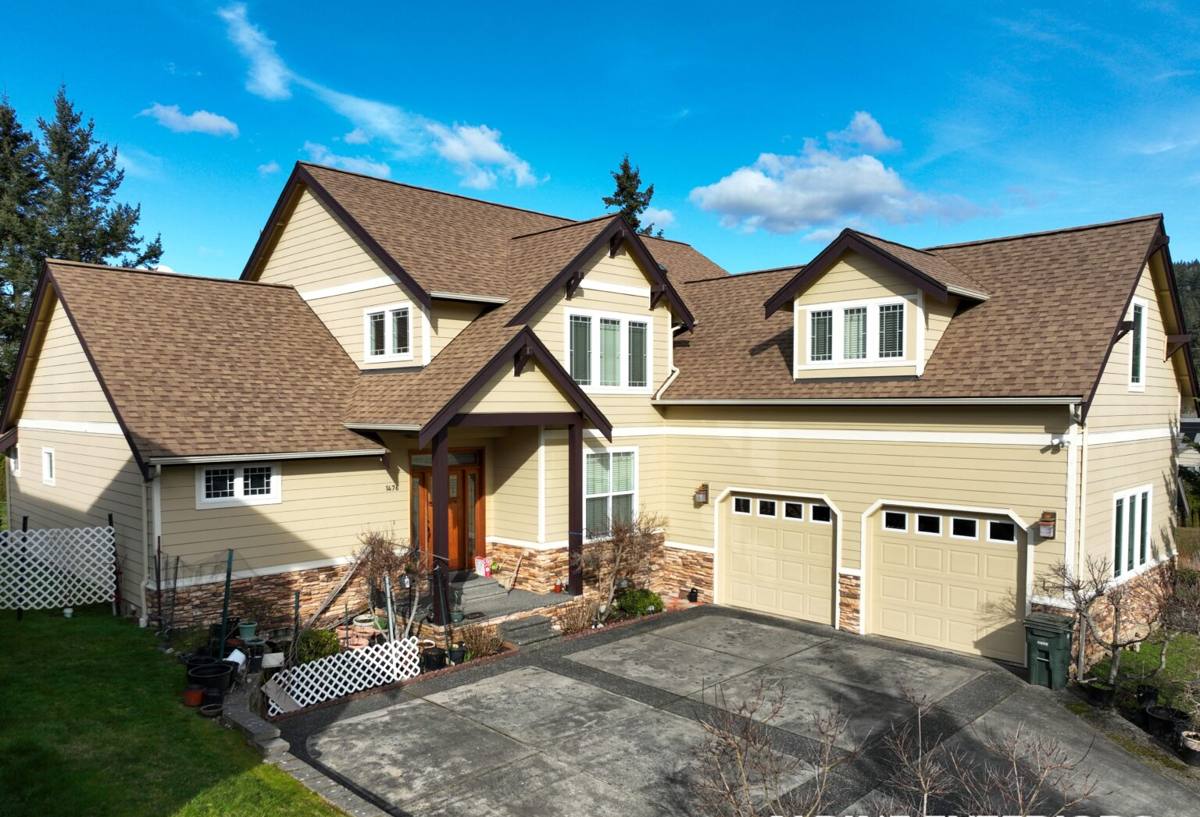
Signs Your Everson Roof Needs Attention
Most roof problems don't announce themselves with a dramatic leak. They show up as small, easy-to-ignore details first. If you're seeing any of the following, it's worth having a professional take a look before the next round of heavy rain finds the gap:
- Dark streaking or thick moss growth concentrated on the north-facing or shaded slopes
- Granules collecting in gutters or at downspout outlets, especially after wind or hail
- Shingles that look cupped, curled at the edges, or are visibly missing
- Soft or discolored spots on ceilings or in the attic, particularly near chimneys, vents, or skylights
- Flashing that looks lifted, rusted, or has visible gaps where it meets a wall or chimney
- Daylight visible through the roof deck when viewed from inside the attic
- Ice or debris damming along the eaves after winter storms
Any one of these on its own might be minor. Two or three together usually means water has already found a way past the surface layer, even if it hasn't shown up as a ceiling stain yet.
What a Correct Roof Repair Actually Involves
Diagnosing the Real Cause
A patch job that ignores the source of the problem tends to fail again within a season or two. Before we touch a shingle, we look at the roof deck condition underneath, the flashing details around penetrations, the attic ventilation, and how water is actually moving across that section of roof during a storm. In a climate like this one, a leak at a vent boot is often a ventilation or flashing problem, not just a worn-out gasket.
Flashing and Transitions
Flashing around chimneys, skylights, dormers, and roof-to-wall transitions is where most repair calls in this area actually originate. It's a small amount of material doing a disproportionate amount of the work, and it's the first thing to fail when driving rain pushes water sideways under an edge instead of straight off a slope.
Underlayment and Deck Condition
If moisture has been sitting under a damaged section for a while, the underlayment and even the roof deck itself can be compromised. A repair that only replaces the visible shingles without checking what's underneath is a repair that's likely to need doing again.
Matching Existing Materials
On a repair — as opposed to a full replacement — matching the existing shingle profile, color, and exposure matters both for weatherproofing continuity and for how the roof looks afterward. We source materials that match as closely as possible rather than using whatever is on the truck.
Common Roof Problems We See Around Everson and Lynden
Moss and Trapped Moisture
The long moss season in this part of Whatcom County isn't just a cosmetic issue. Moss holds moisture directly against the shingle surface, and over time that moisture works its way under tabs and into fastener lines. Roofs with heavy shade or north-facing slopes are especially prone to it.
Wind-Driven Rain
Storms that bring rain in at an angle put stress on details that a straight-down rain would never test — ridge caps, exposed nail heads, and the seams around chimneys and skylights. These are the areas that tend to fail first during a hard Whatcom County storm system.
Fastener and Flashing Corrosion
Salt-tinged air moving inland accelerates corrosion on exposed metal fasteners, flashing, and vent boots faster than most homeowners expect. Once a fastener starts to corrode, it loses its grip and the shingle around it becomes vulnerable to wind lift.
Gutter and Roof-Edge Interaction
Clogged or undersized gutters back water up under the first course of shingles, especially during the heavy, sustained rain events typical of this area. A roof edge that looks fine from the ground can still be taking on water at the fascia line.
Repair vs. Replacement: How We Decide
Not every roof problem calls for a full replacement, and not every roof problem should be treated as a quick patch. We walk through the same factors on every job to give an honest recommendation.
| Factor | Favors Repair | Favors Replacement |
|---|---|---|
| Roof age | Under roughly two-thirds of expected material lifespan | Nearing or past expected lifespan |
| Extent of damage | Localized to one section or detail | Spread across multiple slopes |
| Deck condition | Solid, no rot or soft spots | Soft decking or widespread moisture damage |
| Typical cost range | A few hundred to a few thousand dollars, depending on scope | Full-roof pricing, quoted after inspection |
| Underlying cause | Isolated event (storm damage, one failed flashing detail) | Systemic aging (widespread granule loss, brittle shingles) |
We'll always recommend the repair when the roof genuinely supports it. A roof that still has years of service left doesn't need to be replaced just because one section had a problem.
Our Roof Repair Process
- On-site inspection of the damaged area, the surrounding roof, and the attic where accessible
- Straightforward explanation of what's causing the problem, not just what's visible on the surface
- Written estimate outlining the scope of work and materials before anything begins
- Repair work performed with materials matched to your existing roof where possible
- Final check of flashing, fasteners, and the repaired area to confirm the fix holds under real conditions
We don't upsell a repair into a replacement unless the roof itself makes that case. If a repair is the right call, that's what we'll do.
Materials We Work With
Most homes in and around Everson are roofed with asphalt composition shingles, with some standing-seam metal and a smaller number of cedar or specialty roofs. For asphalt repairs, we match shingle weight and exposure to blend with the existing roof rather than leaving a visibly patched section. For metal roofing, repairs focus on seam integrity and fastener condition, since a single failed fastener on a metal roof can allow water to travel a surprising distance before it shows up as a leak indoors.
We're selective about underlayment and flashing materials specifically because of the climate here. Lower-grade felt underlayment and thin, uncoated flashing tend to underperform in a region with this much sustained moisture exposure, so we default to materials built to hold up under that kind of repeated wet-dry cycling — not because a cheaper option is unusable everywhere, but because it isn't the right match for what an Everson roof actually deals with.
Why a Crew That Already Works in Everson Makes a Difference
A roofing crew that regularly works Everson and the surrounding Lynden area already has a working sense of how local weather patterns actually behave on a roof — which slopes hold moss, which flashing details tend to fail first, and how fast a small leak can turn into a deck problem during a wet stretch. That familiarity shortens the diagnosis phase and helps avoid guesswork.
There's also a practical side to it: a local crew can typically respond faster when a repair is time-sensitive, and is easier to reach for a follow-up check if you have questions after the work is done.
Maintaining Your Roof After a Repair
A good repair extends the life of the roof, but a few habits help protect that investment:
- Keep gutters clear, especially heading into the heavier rain months
- Have moss growth treated or removed before it spreads across a full slope
- Trim back overhanging branches that keep shaded sections of roof damp longer than the rest
- Schedule a visual inspection after any major windstorm
- Address small issues — a lifted shingle, a loose fastener — before the next hard rain, not after
If you're seeing signs of roof damage on your Everson or Lynden home, or just want an honest read on where your roof stands, we're happy to take a look. Reach out for a free, no-pressure estimate using the form below.