 Lynden Siding
 Windows Built for Life Near Wiser Lake
Homes around Wiser Lake sit in a stretch of Whatcom County where the weather doesn't do anything halfway. Winters bring long stretches of low cloud and standing moisture. Storms roll in off the water with wind-driven rain that finds every gap in a window frame. And because the lake keeps the air around it humid for much of the year, moss and algae get a head start on any surface that stays damp — including window sills, tracks, and the wood trim around older units. Add in the salt-tinged marine air that moves inland from the Sound on a west wind, and you've got a combination that's genuinely harder on windows than what homes fifty miles inland deal with.
None of that is a reason to panic about your windows. It's a reason to make sure they're installed correctly the first time, with materials and techniques that match what this specific area throws at a house. That's the whole point of this page: not a generic rundown of window types, but what actually matters for a window installation on or near Wiser Lake.
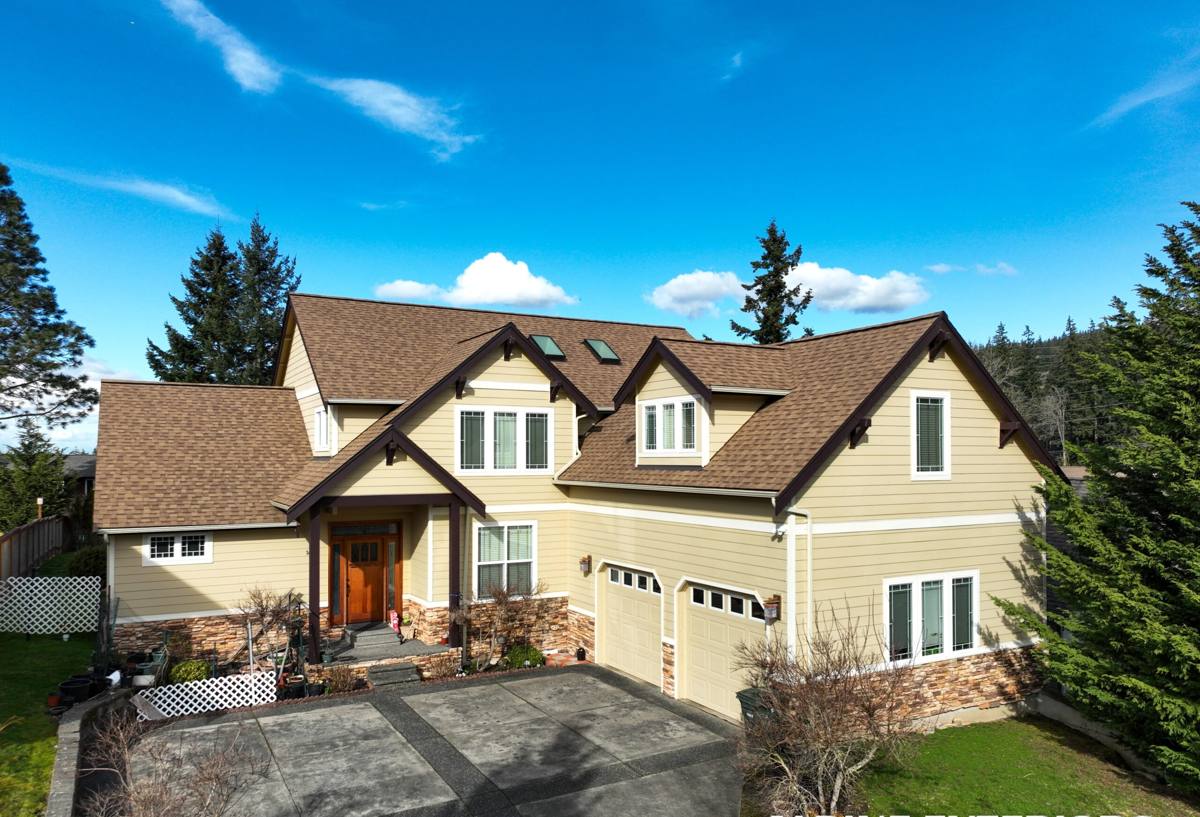
What the Local Climate Does to Windows
Moisture Intrusion
Driving rain doesn't fall straight down here — it comes in sideways during a storm, which means it's testing the seal around every window on the windward side of your house. A window that was installed without a proper sill pan or with sealant applied as an afterthought will eventually let water behind the frame. Once that happens, the damage isn't cosmetic. It's rot in the framing, mold in the wall cavity, and a repair bill that's a lot bigger than the original installation would have cost.
Moss and Organic Growth
Lynden's moss season runs long — often eight months or more of conditions damp enough to support growth on anything that doesn't dry out quickly. On windows, that shows up as green film on sills, tracks that gum up and stop draining, and wood trim that stays soft and dark instead of shedding water. Correct installation includes drainage details that keep water moving off the sill instead of pooling, which starves moss of the standing moisture it needs to take hold.
Marine Air and Hardware Corrosion
Salt-laden air doesn't stay at the coast — it travels, and over years it works on any exposed metal hardware: hinges, cranks, locks, and screws. Cheaper hardware finishes pit and seize up faster in this kind of air. Part of doing this job right is choosing hardware rated for coastal or marine exposure, even for homes that aren't right on the water.
What a Correct Window Installation Actually Involves
A lot of window problems trace back not to the window itself but to how it was put in. The unit is only as good as the opening it sits in and the flashing details around it. A correct installation includes:
- Removing the old window down to the rough opening and inspecting the framing for rot or moisture damage before anything new goes in
- Installing a sloped sill pan so any water that gets past the outer seal drains outward, not into the wall
- Applying self-adhered flashing tape in the correct shingle-lap order — sill, jambs, then head — so water always sheds downward and outward
- Shimming the unit level, plumb, and square, and checking it operates smoothly before final fastening
- Insulating the gap between the frame and rough opening with low-expansion foam or backer rod, never packed too tight, to avoid bowing the frame
- Sealing the exterior trim with a high-quality, paintable sealant rated for the temperature swings and UV exposure of this climate
- Confirming weep holes and drainage tracks are clear and functioning before calling the job done
Skip or rush any one of these steps and the window can look fine for a year or two before problems show up. That's part of why we don't treat window installation as a quick swap-and-go job.
Our Process for Wiser Lake Homes
1. On-Site Assessment
We walk the exterior and look at each window's exposure — which walls take the brunt of the wind and rain, which stay shaded and damp longest, and where existing moisture or rot damage might already be hiding under trim or siding.
2. Product Selection
We talk through frame materials, glass packages, and hardware based on that exposure, not a one-size-fits-all recommendation. A window on the lake-facing side of a house often needs a different spec than one tucked under an eave on the leeward side.
3. Careful Removal and Opening Prep
Old windows come out cleanly, and we inspect and repair any framing damage before a new unit goes in. Installing a new window into a compromised opening just locks the existing problem behind new trim.
4. Installation to Manufacturer and Code Spec
Flashing, sill pans, insulation, and fastening are done to manufacturer instructions and current code requirements, not shortcuts. This is also what keeps the manufacturer's warranty valid — most warranties are void if the installation instructions weren't followed.
5. Final Check and Cleanup
Every window gets operated, checked for square and smooth function, and inspected for a clean, sealed exterior finish before we consider the job finished.
Choosing the Right Frame Material
There's no single "best" window material — it depends on budget, maintenance appetite, and how exposed the opening is. Here's how the common options stack up for a climate like this one:
| Frame Material | How It Handles This Climate | Maintenance |
|---|---|---|
| Vinyl | Good moisture resistance, won't rot; performance varies a lot by manufacturer quality | Low — occasional cleaning |
| Fiberglass | Excellent resistance to swelling, warping, and UV; handles temperature swings well | Low — very stable material |
| Wood (clad exterior) | Warm interior look; exterior cladding protects wood from direct moisture exposure | Moderate — interior wood still needs periodic attention |
| Aluminum | Strong and slim-profile, but conducts cold and can show condensation in this humidity | Low, but check hardware for corrosion over time |
For most Wiser Lake homes, we lean toward vinyl or fiberglass on exposed walls specifically because of how well they shed moisture and resist the freeze-thaw and humidity cycling this area sees. That's a professional judgment based on maintenance and moisture behavior — not a knock on other materials, which can be a great fit in the right application.
What Affects the Cost of a Window Installation
Every home is different, so we won't quote a number without seeing the openings, but these are the factors that move the price:
| Factor | Why It Matters |
|---|---|
| Number and size of windows | More or larger openings mean more material and labor |
| Frame material and glass package | Fiberglass and upgraded low-E or triple-pane glass cost more than standard vinyl and double-pane |
| Condition of the existing opening | Rot repair or reframing adds labor beyond a straight swap |
| Full-frame vs. insert replacement | Full-frame replacement (removing old frame down to studs) costs more but is often necessary when there's water damage |
| Exposure and access | Second-story or hard-to-access windows take more time and equipment |
As a broad range, homeowners in this area typically see per-window installed costs somewhere in the mid-hundreds to low-thousands of dollars depending on size, material, and whether it's an insert or full-frame job. We'll give you exact numbers once we've looked at your specific windows.
Signs Your Windows Need Attention
You don't have to wait for a window to fail completely before it's worth a look. Watch for:
- Fogging or condensation between panes — a sign the seal has failed and the insulating gas has escaped
- Soft, dark, or crumbling wood trim around the frame
- Windows that are hard to open, close, or lock, or that don't sit flush anymore
- Visible moss or green staining that keeps coming back on sills or tracks no matter how often it's cleaned
- Noticeable drafts or a cold spot near the window in winter
- Peeling paint or bubbling on interior trim near the window, which often points to trapped moisture
- Rising energy bills without another clear explanation
Why a Local Crew Matters
Window installation isn't just about the product — it's about matching that product and installation method to the specific conditions of the site. A crew that works Wiser Lake and the surrounding Lynden area regularly already knows which walls in this neighborhood tend to take the worst weather, what Whatcom County's permitting and code requirements look like, and how local moisture and moss patterns actually behave over a full year, not just on the day of installation. That local knowledge shows up in better flashing decisions, better material recommendations, and fewer callbacks.
It also matters after the job is done. If a warranty issue or an unexpected leak comes up two winters from now, you want a contractor who's still local, still reachable, and still stands behind the work — not a crew that came through once from out of the area and moved on.
Get an Estimate
If your windows near Wiser Lake are showing their age, drafting, or just due for an honest evaluation, we're happy to take a look. Reach out for a free, no-pressure estimate using the form below, and we'll walk your home's specific exposure and give you a straight answer on what it needs.