 Lynden Siding
 Windows Built for Custer's Coastal Exposure
Custer sits close enough to the Strait of Georgia and the bay-side lowlands of northern Whatcom County that homes here take a different kind of weathering than houses further inland around Lynden. Salt-laden air off the water, wind-driven rain that comes in sideways during winter storms, and a long wet season that keeps north-facing surfaces damp for months all work on window frames, sills, and seals in ways that dry-climate window products were never designed to handle. If you've noticed sticky sashes, fogged glass, soft spots in the sill, or a draft that wasn't there five years ago, that's not bad luck — it's the local climate doing exactly what it does to unprotected or aging windows.
We install and replace custom windows for homes in and around Custer, and we size every job to what this specific stretch of Whatcom County throws at a house, not a generic weatherproofing spec written for a different part of the state.
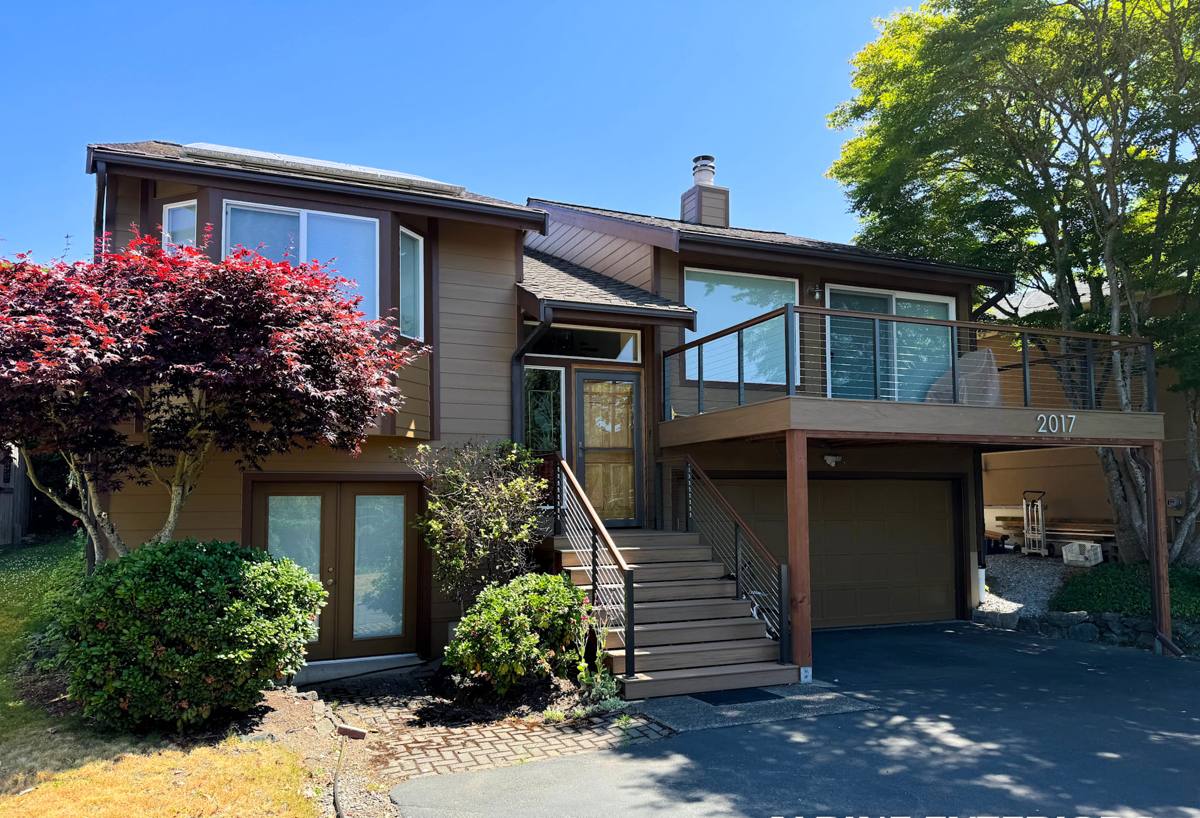
What Custer's Climate Actually Does to Windows
Salt Air
Airborne salt from the nearby coastline settles on exterior surfaces and accelerates corrosion on hardware — hinges, cranks, locks, and screws — faster than it would inland. Cheaper window hardware and lower-grade aluminum components show pitting and stiffness years before they should. It also degrades certain sealants and finishes over time, which is why hardware quality and finish selection matter more here than in a lot of the county.
Driving Rain
Storms coming off the water don't just fall — they push. Wind-driven rain finds any gap in flashing, any compressed or cracked weatherstrip, and any spot where sealant has pulled away from the frame. Once water gets behind a window unit, it doesn't dry out quickly in this climate, and that's when framing and sill damage starts, usually out of sight until it's advanced.
Moss Season
Whatcom County's long wet stretch, roughly October through April, keeps shaded and north-facing window surfaces damp for extended periods. Moss and algae can take hold on sills, in corners, and along exterior trim, holding moisture against wood and painted surfaces and slowly breaking down finishes that would otherwise last for years.
Signs a Custer Home Needs Window Attention
- Sashes that stick, bind, or won't stay latched — often an early sign of frame swelling or hardware corrosion
- Visible fogging or moisture between panes on double or triple-glazed units, meaning the seal has failed
- Soft, discolored, or spongy wood at the sill or lower frame corners
- Drafts or a noticeable temperature difference near the window on windy days
- Peeling or bubbling paint/finish concentrated on one side of the house (usually the side that takes the weather)
- Moss, algae, or dark staining building up on sills and exterior trim
- Higher heating bills without any other obvious explanation
What a Correct Window Installation Involves
A window replacement that's going to hold up in this environment isn't just popping a new unit into an old opening. It's a sequence, and skipping steps is exactly how homeowners end up with the same problems again in a few years.
1. Opening Assessment
Before anything is ordered, we check the rough opening for hidden rot, soft framing, or prior water intrusion. This is the step that gets skipped by installers trying to move fast, and it's the one that determines whether the new window will actually stay dry.
2. Flashing and Moisture Barrier
Proper flashing — sill pan, jamb flashing, and head flashing integrated correctly with the house wrap or weather-resistive barrier — is what actually keeps wind-driven rain out, not the caulk bead around the trim. This detail matters more in Custer than in a lot of places because the wind direction during storms is fairly consistent off the water, and it tends to load pressure onto the same wall faces year after year.
3. Precise Fit and Shimming
An out-of-square or poorly shimmed window will bind, won't seal evenly, and puts uneven stress on the frame. We set every unit level, plumb, and square before securing it.
4. Insulation and Air Sealing
The gap between the window frame and the rough opening gets properly insulated and air-sealed — not overpacked with expanding foam, which can bow frames, and not left loose, which lets moist air condense inside the wall cavity.
5. Exterior Sealant and Trim
Exterior sealant is a backup to good flashing, not a substitute for it. We use sealants rated for coastal, high-moisture exposure and finish trim work so water sheds away from the opening rather than pooling against it.
6. Final Function and Weather Check
Every window gets operated, latched, and inspected before we consider the job done — smooth operation, tight seal, and correct alignment.
Choosing the Right Window for a Custer Home
Frame material and glazing matter more here than in a drier inland climate. We walk homeowners through the honest trade-offs rather than pushing one product line.
| Frame Material | Coastal/Moisture Performance | Maintenance | Typical Trade-off |
|---|---|---|---|
| Vinyl | Good — won't rot or corrode, handles moisture well | Low | Less rigid over very large spans; color choices more limited |
| Fiberglass | Very good — dimensionally stable, resists salt-air wear | Low | Higher upfront cost than vinyl |
| Wood-clad | Good if maintained — cladding protects the wood core | Moderate to high | Interior wood needs periodic attention; failure at the cladding seam can trap moisture |
| Bare Aluminum | Poor in salt air without upgraded finish — prone to pitting and corrosion near the coast | Moderate | We generally steer Custer homeowners away from this unless it's a marine-grade, specially finished product |
Glazing is worth just as much attention as frame material. Double-pane, low-E glass is standard and performs well; homes on more exposed lots or older single-pane holdouts often see a real difference in comfort and condensation control moving to a higher-performance glazing package. We'll size the recommendation to the house and the budget rather than defaulting to the most expensive option.
Where We're Selective About Products
We don't install every window product on the market. Some lines use hardware or finish specs that hold up fine in drier regions but wear out faster under sustained salt exposure, and some cladding or seal designs are more sensitive to installation error in wind-driven rain conditions. Our standard is picking products with a track record in coastal Pacific Northwest conditions specifically, backed by a manufacturer warranty structure that's actually workable if something does need service.
Our Process for a Custer Window Project
- On-site assessment: We look at existing windows, framing condition, exposure direction, and note anything specific to the property.
- Honest recommendation: We explain what's actually needed versus what's optional, with real cost factors, no pressure.
- Measurement and ordering: Custom sizing so units fit the actual openings, not a generic stock size forced into place.
- Installation: Proper flashing, sealing, and finish work as outlined above, done by a crew that installs windows regularly, not as a side task.
- Walkthrough: We check operation and seal quality with the homeowner before we consider the job complete.
Why a Crew That Already Works Custer Matters
Whatcom County is not one uniform climate. A crew that mostly works dry, sheltered lots inland doesn't always think about wind direction, salt exposure, or the extended damp season the way a crew that regularly works closer to the water does. We work on homes throughout the Lynden and greater Whatcom County area, including Custer, and we bring the same flashing and moisture-management standards to every job because we've seen firsthand what happens when those details get skipped on a coastal-exposed property. That's the difference between a window that looks fine at handoff and one that's still performing correctly five winters later.
A Few Things to Ask Any Contractor Before You Hire
- Do you flash the opening with a sill pan and integrate it with the house wrap, or rely mainly on caulk?
- What frame material do you recommend for a property with coastal exposure, and why?
- Is your crew licensed and insured for work in Washington State?
- What's the manufacturer's warranty on the window itself, and what's your labor warranty on the install?
- Can you walk me through how you'll handle an opening if you find hidden rot or moisture damage once the old window is out?
If your Custer home has windows that are sticking, drafting, fogging, or just showing their age against the weather, we're happy to take a look and give you a straightforward assessment. Reach out for a free, no-pressure estimate using the form below — no obligation, just an honest read on what your windows actually need.