 Lynden Siding
 Why Decks in Sumas Wear Out Faster Than Homeowners Expect
Sumas sits in a corner of Whatcom County where weather doesn't let up for long stretches of the year. Between salt-laden air drifting in from the coast, driving rain that comes in sideways during winter storms, and a moss season that can stretch from October through April, an exterior deck here is under constant low-grade attack. None of these forces are dramatic on their own. The damage shows up slowly, in ways that are easy to miss until a board flexes underfoot or a railing post feels a little loose.
Most deck problems we see in this area aren't caused by one bad storm. They're caused by moisture finding a way into wood or fastener connections and staying there. Wood that's constantly damp doesn't get a chance to dry out between rain events, and that's when rot, fastener corrosion, and soft framing take hold. A deck repair done right in Sumas has to account for that reality, not just patch the visible symptom.
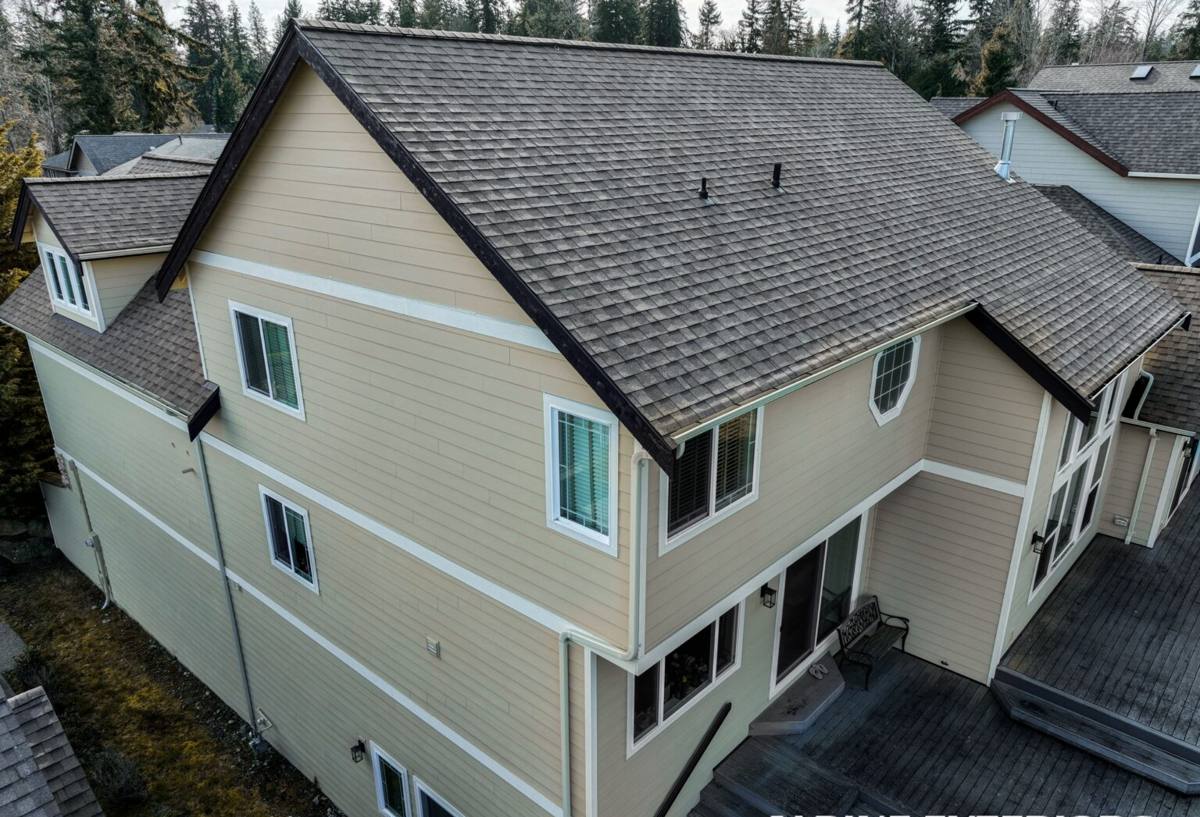
Signs a Sumas Deck Needs Repair
Homeowners usually call us because of one obvious problem, but a proper inspection almost always finds a few more. Here's what we look for, and what it usually means:
- Soft or spongy decking — usually trapped moisture under the board surface, often from debris or moss holding water against the wood.
- Rust streaks around screws or nails — a sign fasteners are corroding, which weakens the actual connection between boards and framing.
- A wobbly railing or post — often traced back to a rotted post base or a loose ledger connection, not just a loose bolt.
- Gaps opening between deck boards — normal seasonal movement to a point, but excessive gapping can mean the boards themselves are drying out and cupping.
- Dark green or black staining on the surface — moss and algae growth, which holds moisture against the wood and accelerates decay underneath.
- Separation where the deck meets the house — a ledger board issue, which is one of the more serious structural concerns on any deck.
Why the Ledger Board Gets Extra Attention
The ledger is the board that attaches the deck to the house itself, and it's the single most important structural connection on most decks. In a climate with this much sustained rain, the ledger is also the spot most likely to trap water against the house's structure if it wasn't flashed correctly to begin with. We check this connection on every repair call, even when it isn't the reason someone called us, because a failure here isn't a cosmetic issue — it's a safety issue.
What a Correct Deck Repair Actually Involves
A repair that only replaces what's visibly broken tends to fail again within a year or two, because it doesn't address why the damage happened. Our approach starts with figuring out the cause, not just the symptom.
Structural Assessment
Before any boards come off, we get underneath the deck and check the framing: joists, beams, posts, and footings. We're looking for soft spots, checking that hardware hasn't corroded past the point of holding load, and confirming the structure is still sound where it matters most. This is also where we catch ledger flashing problems that aren't visible from the top.
Fastener and Hardware Evaluation
Galvanized or coated fasteners that have started to rust are a common failure point on older decks in this region. Replacing a rotted board but reusing corroded screws just sets up the next repair call. We match fasteners and structural hardware to what the wood and connection actually need, not whatever is fastest to install.
Decking and Railing Repair
Individual boards that are soft, cupped, or split get replaced rather than patched — there's no reliable way to "fix" wood that's already breaking down internally. Railings get the same scrutiny, since a railing that looks fine but has a rotted post base is a real fall hazard, not just a cosmetic complaint.
Finish and Protection
Once the structural and surface work is done, sealing or finishing the deck appropriately for this climate matters more than most homeowners realize. A deck that goes back together without the right protective finish is right back on the same decay timeline it just came off.
Repair or Replace? How We Help You Decide
Not every deck problem needs a full rebuild, and not every deck is worth repairing indefinitely. We walk through this honestly with every homeowner rather than defaulting to the more expensive option.
| Factor | Leans Toward Repair | Leans Toward Replacement |
|---|---|---|
| Framing condition | Joists and posts are solid, only isolated soft spots | Widespread rot in multiple structural members |
| Ledger connection | Properly flashed, no ongoing water intrusion | Poor original flashing causing repeat damage |
| Age of deck | Under 15 years, built with decent materials | Original construction is older and undersized by today's standards |
| Extent of damage | Contained to a few boards or one railing section | Damage spread across most of the surface and substructure |
| Homeowner goals | Wants to extend the life of what's there | Wants a size, layout, or material change anyway |
Most of the calls we get in Sumas fall into the repair column — a solid deck with a handful of failure points caused by moisture exposure over time. We'll tell you plainly if we think a repair is a temporary fix rather than a real solution.
Our Process on a Deck Repair Call
- On-site inspection — we check the deck from above and below, including framing, fasteners, and the ledger connection.
- Honest assessment — you get a clear explanation of what's actually wrong, what caused it, and what's involved in fixing it correctly.
- Written scope and estimate — no vague verbal quotes; you see what's being repaired and why before work starts.
- Repair work — structural fixes first, then decking, railings, and hardware, matched to what the specific damage requires.
- Finish and protection — appropriate sealing or finishing so the repair holds up through the next wet season, not just through summer.
- Final walkthrough — we go over what was done and what to watch for going forward.
Materials and Hardware Choices for This Climate
What we use for a repair depends on what's already there and what the deck needs, but a few principles guide every job in this area. Fasteners and structural connectors need corrosion resistance suited to sustained moisture exposure, not just a basic coated screw. Replacement decking needs to match the performance of the surrounding boards, whether that's a wood species suited to wet climates or a composite product, and we'll explain the maintenance trade-offs of each rather than pushing one option. Flashing at the ledger and any other point where the deck meets the house gets treated as non-negotiable, since it's the detail most likely to cause repeat problems if it's cut short.
Maintenance That Extends a Repaired Deck's Life
A repair is only as good as the upkeep that follows it. Given how long moss season runs here, a little seasonal attention goes a long way toward avoiding another repair call down the road.
- Sweep debris and standing moss off the deck surface regularly through fall and winter, not just once a year.
- Check railings and stair connections for movement at least once a season.
- Keep gutters and downspouts clear so runoff isn't draining directly onto or under the deck.
- Re-inspect the ledger and framing every couple of years, especially after a rough winter.
- Reapply sealer or finish on the schedule appropriate to the product used, before it starts visibly wearing thin.
Why It Matters to Hire a Crew That Already Works in Sumas
Deck repair looks straightforward until the specific conditions of a region get involved. A crew that mostly works drier climates may not think twice about a ledger flashing detail that's critical here, or may default to fasteners that hold up fine somewhere else but corrode within a few years under Whatcom County's rain and salt air. Working in and around Lynden and Sumas regularly means we're not guessing at what causes deck failures in this specific stretch of Washington — we've already seen the patterns.
It also means straightforward logistics: showing up for the inspection, getting materials sourced without long delays, and being reachable afterward if something needs a second look. A repair isn't finished when we drive away; it's finished when it's still holding up the following winter.
Get a Straight Answer About Your Deck
If your deck in Sumas has a soft board, a wobbly railing, or you're just not sure whether it needs a repair or something more involved, we're happy to take a look. We'll give you a plain-English assessment of what's going on and what it would take to fix it right — no pressure, no upsell. Reach out below for a free estimate.