 Lynden Siding
 Decks in Custer Take a Different Kind of Beating
Custer sits close enough to the water to catch salt-laden air moving in off the Sound, and that air doesn't stop at the shoreline — it travels inland and settles on everything outdoors, including your deck. Combine that with Whatcom County's driving rain and a moss season that can stretch from fall clear through spring, and you have a climate that's genuinely hard on exterior wood and hardware. A deck built for a drier region, or built without this coastal exposure in mind, tends to show its age fast here: soft spots, corroded fasteners, and a slick green film that never fully goes away.
Deck replacement in this area isn't just a cosmetic upgrade. Done right, it's a chance to correct the moisture and ventilation problems that shortened the life of the old structure in the first place. Done wrong — same materials, same details, just newer lumber — you're signing up for the same failure on a faster timeline.
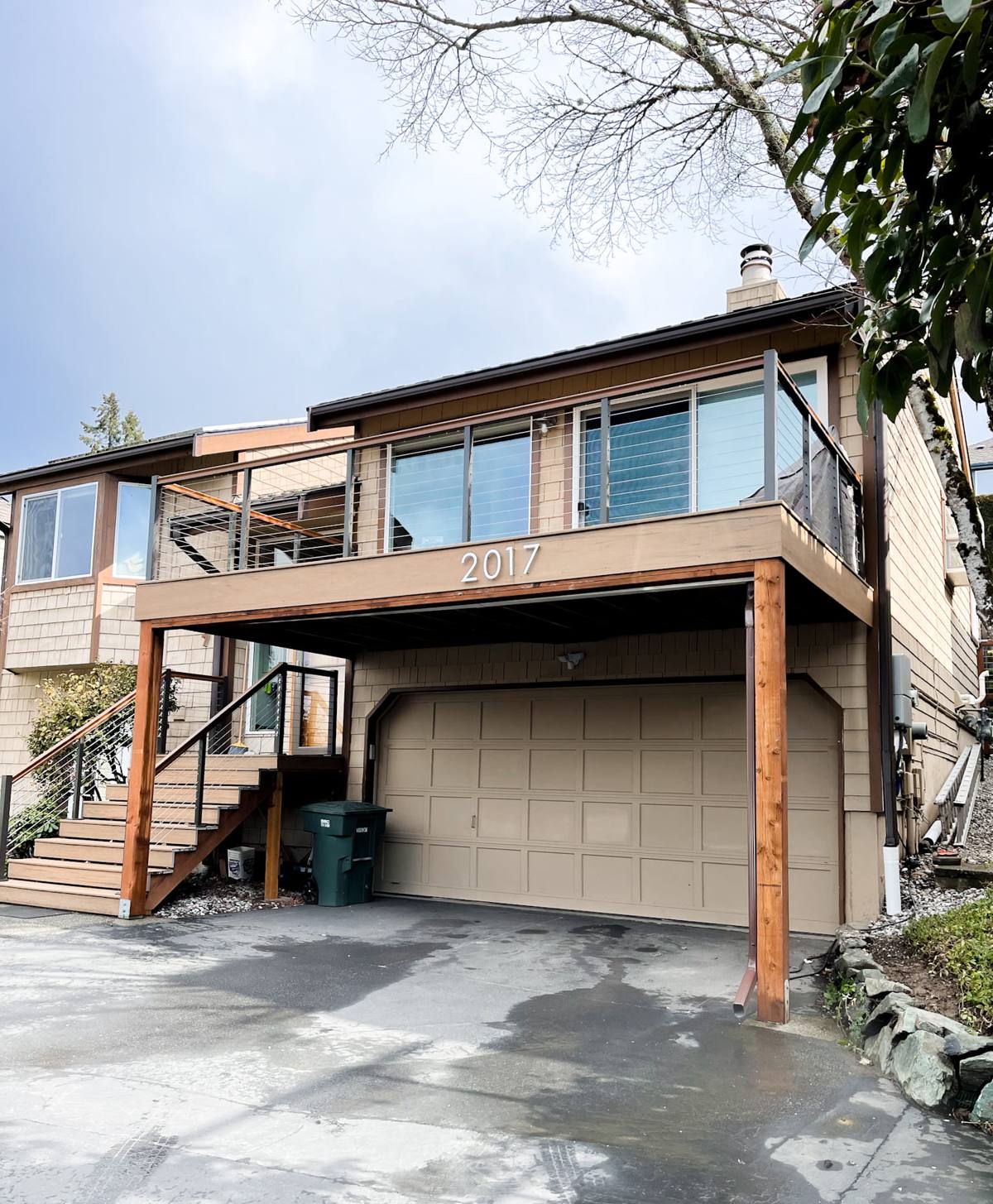
Signs Your Deck Has Reached the End of Its Service Life
Not every tired-looking deck needs full replacement. Boards can sometimes be swapped, ledger flashing can sometimes be corrected, and railings can often be reset without tearing the whole structure down. But there's a point where repair stops making financial or safety sense. Here's what tells us a deck in the Custer area is past the point of patching:
- Soft, spongy, or spring-loaded decking underfoot, especially near the house or in low spots that hold water
- Visible rot or dark staining at the ledger board where the deck meets the house
- Rusted, black-streaked, or crumbling fasteners and joist hangers
- Posts that have shifted, settled, or show rot at the base where they meet the ground or concrete
- Persistent moss or algae growth that comes back within weeks of cleaning, even on a sealed surface
- Railings that flex or feel loose when leaned on — a structural issue, not a cosmetic one
- A deck more than 20-25 years old built with materials or hardware that wouldn't meet current code
If you're seeing two or more of these, it's usually more cost-effective to replace than to keep chasing individual repairs.
What a Correct Deck Replacement Actually Involves
A deck replacement is only as good as what's underneath the boards you can see. In a climate that stays wet for months at a stretch, the details most homeowners never think about are exactly the ones that determine whether the new deck lasts 10 years or 30.
Footings and Framing
Posts and footings need to be sized and set for actual load and soil conditions, not just matched to what was there before. Old footings are often undersized or set too shallow, and framing lumber from a prior build may already be carrying hidden rot into the new structure if it's reused without inspection. We evaluate the substructure on its own merits rather than assuming it's fine because the old deck stood on it for years.
Ledger Board and Flashing
This is the single most common failure point on decks in wet climates. The ledger board bolts directly to the house, and if the flashing behind it isn't installed correctly — or is missing entirely — water tracks straight into the house framing. You often can't see this problem from the deck surface; it shows up later as rot in the rim joist or, worse, inside the wall. Correct flashing detail here is non-negotiable on every replacement we do.
Decking Surface
Board selection, spacing, and fastening pattern all affect how well a deck sheds water and resists moss buildup. Gaps that are too tight trap debris and moisture between boards; gaps that are too wide look sloppy and catch heels. We set spacing to account for seasonal wood movement and drainage, not just visual preference.
Fasteners and Hardware
Salt-influenced air accelerates corrosion on standard fasteners. Hardware rated for coastal or treated-lumber exposure costs more up front but avoids the rust streaking and structural weakening that shows up within a few years when the wrong fasteners get used.
Decking Material Comparison for This Climate
There's no single "best" decking material — the right choice depends on budget, maintenance tolerance, and how much moss and moisture exposure the deck will see. Here's an honest comparison for a Whatcom County setting:
| Material | Upfront Cost | Moisture & Moss Behavior | Maintenance | Typical Lifespan |
|---|---|---|---|---|
| Pressure-treated pine | Lowest | Absorbs moisture readily; needs sealing to resist moss and staining | Annual cleaning and periodic re-sealing | 15-20 years with upkeep |
| Cedar | Mid-range | Naturally rot-resistant, but still needs sealing to hold its color and resist surface moss | Sealing every 1-2 years; regular cleaning | 20-25 years with upkeep |
| Composite decking | Higher | Doesn't absorb water the way wood does; moss sits on the surface rather than growing into the material, making cleanup easier | Periodic washing, no sealing or staining | 25-30+ years, per manufacturer warranty |
| PVC decking | Highest | Fully moisture-resistant surface; best resistance to staining and moss adhesion | Occasional washing | 25-30+ years, per manufacturer warranty |
We don't push one material on every job. A covered deck with good airflow can do fine in cedar or treated pine for decades. A low, shaded, or ground-level deck that stays damp most of the year is usually a better candidate for composite or PVC, simply because it spends less time drying out between rain events.
How We Handle a Custer Deck Replacement, Start to Finish
- On-site assessment — We inspect the existing structure from the ground up: footings, framing, ledger connection, and surface condition, so you know exactly what's failing and why before any decision gets made.
- Honest scope and estimate — You get a clear, written estimate that separates structural work from surface work, so you understand what you're paying for and why.
- Permitting — Where required, we handle the permit paperwork with Whatcom County or the applicable jurisdiction so the work is inspected and documented correctly.
- Demolition and disposal — Old decking, framing, and hardware are removed and hauled off; we check the house connection point for hidden damage once the old ledger board comes off.
- Structural rebuild — Footings, posts, framing, and ledger flashing are built or corrected to current code, not just replicated from the old deck.
- Decking and railing installation — Surface material goes down per manufacturer spec, with fastening and spacing set for local moisture and temperature swings.
- Final walkthrough — We go over the finished deck with you, including care and maintenance specific to whatever material you chose.
Permits and Code Considerations in Whatcom County
Most deck replacements that involve structural changes — new footings, a raised deck, or a deck attached to the house — require a building permit through the county or the applicable local jurisdiction. Guardrail height, baluster spacing, and stair geometry all have code minimums, and older decks built before current code was adopted often fall short in one or more of these areas even if they look fine at a glance. Replacing a deck is the natural point to bring all of this up to current standard, since it's far more expensive to correct later. We handle the permit process as part of the job rather than leaving it for the homeowner to sort out separately.
Why a Crew That Already Works Custer Makes a Difference
We're based in Lynden, and Custer is close enough that it's regular territory for us — not a special trip. That matters in a few practical ways. We already know what this climate does to a deck over five, ten, and twenty years, because we've replaced decks that were built with the wrong assumptions for this area. We're not learning coastal moisture behavior on your project. We're also close enough to respond quickly if something needs a follow-up look after the job is done, rather than scheduling around a long drive from out of the area. And because Whatcom County permitting and inspection processes are ones we work with regularly, there's less back-and-forth and fewer surprises during the build.
Keeping a New Deck Ahead of Moss and Moisture
A well-built deck still needs a small amount of seasonal attention in this climate — the difference is that the maintenance becomes routine upkeep instead of damage control. A few habits go a long way:
- Sweep leaves and debris off the surface regularly through fall, especially between boards where they trap moisture
- Rinse or lightly scrub moss growth as soon as it appears rather than letting it establish over a season
- Check that gaps between deck boards and the house siding stay clear so water can drain and air can circulate
- Re-seal wood decking on the manufacturer's recommended schedule, not just when it visibly needs it
- Walk the deck once a year and check railings, stair connections, and any spots that feel different underfoot
None of this is complicated, but skipping it is exactly how decks in this region end up needing early replacement instead of lasting the decades they're built for.
If your deck in the Custer area is showing rot, soft spots, or moss that won't quit, we're glad to come take a look. The estimate is free, there's no pressure attached to it, and you'll get a straight answer about whether you're looking at repair or replacement — just fill out the form below to get started.