 Lynden Siding
 Birch Bay Sits in a Tougher Spot Than Most of Whatcom County
Birch Bay homes take a beating that inland Lynden properties simply don't see. You're dealing with salt-laden air rolling off the water, wind-driven rain that hits siding sideways instead of straight down, and a moss season that can stretch for most of the year in the shaded, damp pockets between homes. Siding that performs fine twenty minutes inland can fail years early out here if it isn't installed correctly, or if it was never suited to a marine environment in the first place.
We're a Lynden-based crew, and Birch Bay is part of our regular service area — not a once-in-a-while trip. That matters more than it sounds like it should, and we'll get into why below. First, it helps to understand exactly what this stretch of Whatcom County coastline does to exterior siding over time.
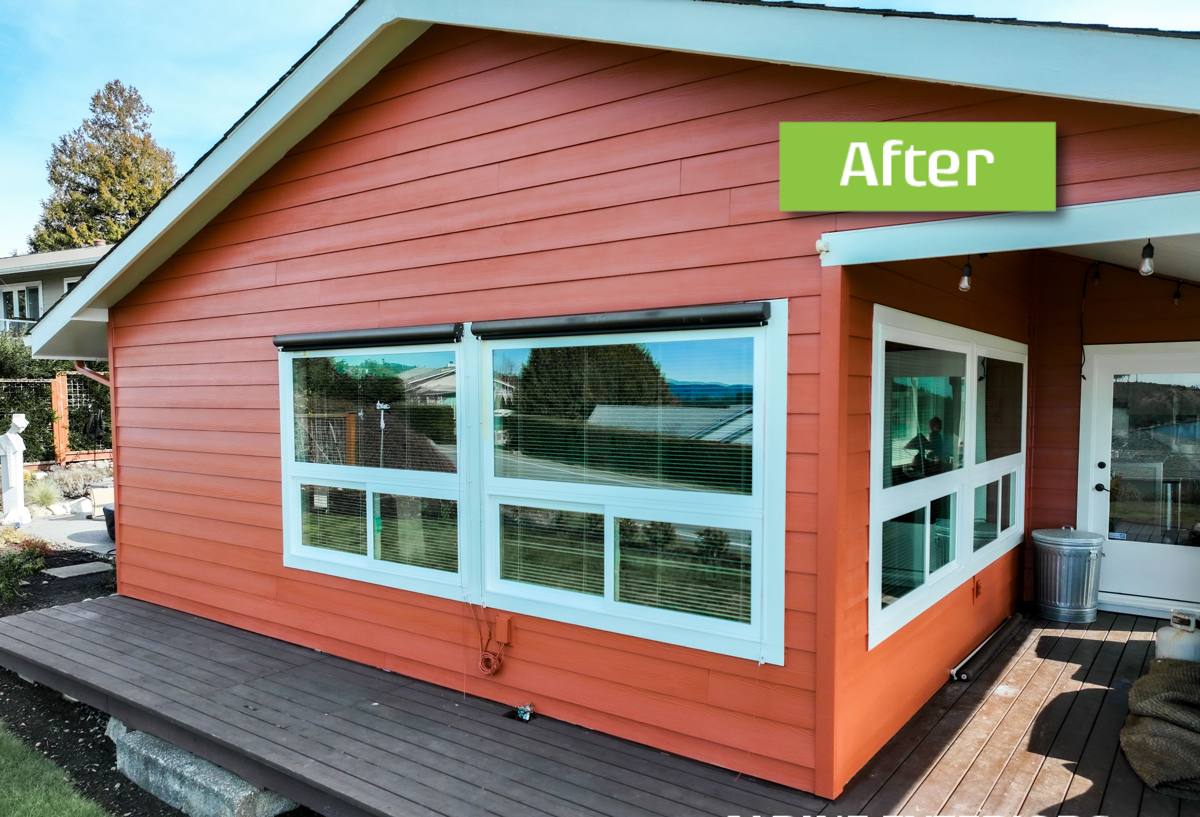
What Salt Air, Driving Rain, and Moss Actually Do to Siding
Salt Air
Airborne salt doesn't just sit on the surface — it works into fasteners, trim joints, and any exposed edge where a coating has thinned or chipped. Over years, that accelerates corrosion in metal components (nails, screws, flashing) and can dull or degrade lower-quality paint finishes faster than the same product would wear a few miles inland. Homes closer to the water get this worse than homes set back, but the whole Birch Bay area sees more of it than typical Lynden lots.
Driving Rain
Wind off the water doesn't let rain fall straight down — it pushes it sideways into wall assemblies, seams, butt joints, and anywhere siding meets a window, door, or corner trim. A siding system that relies on caulk alone to keep water out, or that's installed with tight, non-draining joints, will eventually let moisture behind the panel. Once that happens, the problem isn't cosmetic anymore — it's rot in the sheathing and framing behind the siding.
Moss and Prolonged Dampness
Shaded north- and west-facing walls near mature trees or close-set lots stay damp longer after every rain event. That's exactly where moss and algae take hold. On absorbent or poorly sealed siding materials, prolonged dampness also means slower drying cycles, which shortens the material's working life regardless of what the manufacturer's spec sheet claims under lab conditions.
Why We Only Install James Hardie Fiber Cement Out Here
We made the decision years ago to install James Hardie fiber cement exclusively — not vinyl, not LP SmartSide, not primed wood, not other fiber cement brands. In a coastal-influenced environment like Birch Bay, that decision isn't about brand loyalty. It's about which siding material actually holds up to salt air, wind-driven rain, and sustained moisture without an early replacement conversation five to ten years down the road.
What Makes Hardie Fit This Climate
- Non-combustible core. Fiber cement doesn't feed a fire the way wood-based products can, which matters for any home near dry brush or vegetation in summer months.
- Engineered for moisture, not just painted against it. Hardie's HZ product lines are formulated specifically for wetter, harsher climates like the Pacific Northwest, rather than being a one-size-fits-all national product.
- Factory-applied ColorPlus finish. The color and protective coating are baked on at the factory under controlled conditions — a more consistent, durable bond than field-applied paint, which matters when salt air is working against the finish every day.
- Doesn't rot, swell, or delaminate the way wood-based or wood-adjacent products can when moisture gets behind them repeatedly over a rainy season.
- Strong transferable warranty backed by a manufacturer with a long track record, which carries real weight if you sell the home later.
We're not going to tell you every other product on the market is worthless — plenty of them have a place. But for this specific coastline, with this specific combination of salt, wind-driven rain, and moss pressure, fiber cement engineered for the job is what we're willing to put our name on. That's why it's the only thing we install.
What a Correct Installation Actually Involves
The siding material is only part of the equation. Most siding failures we get called out to inspect — regardless of brand — trace back to installation shortcuts, not the product itself. A correct James Hardie installation in a Birch Bay environment includes:
- A properly lapped weather-resistant barrier behind the siding, with all penetrations sealed before a single board goes up
- Correct flashing at every window, door, and roofline intersection — this is where wind-driven rain finds its way in if it's skipped or rushed
- Manufacturer-specified fastener placement, type, and spacing (undriven or overdriven nails are a common source of early failure and warranty denial)
- Proper clearance between siding and grade, decks, patios, and roof lines to prevent constant moisture contact
- Correctly sized gaps at butt joints and trim, sealed with a quality sealant rated for the application — not just caulked tight and hoped for
- Factory-primed or ColorPlus-finished cut edges sealed in the field, since a raw cut edge is the fastest path for moisture intrusion
Skip any one of these steps and you can end up with a home wearing the right siding material, installed in a way that still lets Birch Bay's climate win.
How We Approach a Birch Bay Project
Site Assessment
We look at more than the existing siding. Wall orientation relative to prevailing wind and rain, tree cover and shade patterns that affect drying time, existing moisture damage at trim and penetrations, and the condition of the sheathing underneath all factor into the plan before we quote anything.
Tear-Off and Inspection
Once old siding comes off, we inspect the sheathing and framing underneath. This is often the first time a homeowner sees the actual condition of their wall assembly, and it's the point where hidden moisture damage — if there is any — gets addressed before new siding goes back up, not buried underneath it.
Weather Barrier and Flashing
This step gets rushed on a lot of jobs because it's invisible once the siding goes on. We treat it as the most important part of the install, particularly on walls that take direct wind-driven rain.
Installation to Manufacturer Spec
James Hardie publishes detailed installation requirements for a reason — their warranty depends on following them, and in a demanding coastal climate, so does the actual performance of the siding. We install to that spec, not to a shortcut version of it.
Final Inspection and Walkthrough
Before we call a job finished, we walk the exterior with the homeowner, checking joints, trim, caulking lines, and clearances together.
Climate Factor vs. What It Demands From the Installation
| Birch Bay Condition | Real Risk to Siding | What the Install Must Get Right |
|---|---|---|
| Salt air | Corrosion at fasteners and trim, faster finish wear | Corrosion-resistant fasteners, factory-cured ColorPlus finish, sealed cut edges |
| Wind-driven rain | Water pushed sideways into joints and penetrations | Correct flashing, weather barrier lapping, sealed penetrations |
| Extended moss/damp season | Prolonged surface moisture, slower drying on shaded walls | Proper clearance from grade/decks, ventilated wall assembly, moisture-resistant material |
| Coastal wind exposure | Panel movement, loosened fasteners over time | Manufacturer-spec fastener spacing and pattern for the exposure category |
Why Hiring a Crew That Already Works This Coastline Matters
Siding installation isn't identical everywhere in Whatcom County. A crew that mostly works drier, more sheltered inland lots doesn't necessarily think about wind orientation, salt exposure, or extended damp cycles the same way a crew that's regularly out at Birch Bay does. We're based in Lynden and this area is part of our normal route — we're not learning the local conditions on your project.
That familiarity shows up in small decisions that add up: which walls get extra attention at the flashing details, where clearance from grade needs to be more generous than the bare minimum, and which trim details tend to take the worst of the weather here. It also means we're not a stranger if something needs a warranty follow-up or a maintenance question five years from now — we're still local, still working this coastline.
Maintaining Hardie Siding in a Salt Air and Moss Environment
James Hardie siding is low-maintenance compared to wood or vinyl, but "low-maintenance" in a Birch Bay environment isn't "no-maintenance." A simple annual routine keeps it performing the way it's supposed to:
- Rinse the exterior once or twice a year to clear salt residue and organic buildup, especially on north- and west-facing walls
- Check caulking at trim, windows, and joints annually — sealant is the first thing to age out, well before the siding itself does
- Trim back vegetation and tree limbs that keep a wall shaded and slow to dry
- Address any moss or algae growth promptly rather than letting it establish, using a gentle wash rather than aggressive pressure washing that can force water behind panels
- Have gutters and downspouts checked so runoff isn't dumping extra water directly onto siding or foundation areas
Signs Your Current Siding Is Already Losing to the Climate
If your home's siding is starting to show any of the following, it's worth having it looked at before small issues become structural ones:
- Soft or spongy spots when pressed, especially near the bottom edges or trim
- Persistent moss or dark staining that returns quickly after cleaning
- Visible gaps, warping, or separation at joints and corners
- Paint or finish that's peeling, chalking heavily, or fading unevenly
- Rust streaks running from fasteners or trim pieces
Any one of these can be minor on its own. Several together, especially on a wall that faces prevailing wind and rain, usually means moisture has already found its way behind the siding.
If you're in Birch Bay and want an honest read on your current siding — or you're planning ahead for a replacement — we're glad to come take a look. The estimate is free, there's no pressure, and you'll get a straight answer about what your home actually needs.