 Lynden Siding
 Siding Replacement in Custer: What the Job Actually Has to Solve
A full siding replacement is a different job than a repair, and it's a different job than siding installed on new construction. On an existing Custer home, replacement means dealing with whatever the last several decades of weather have already done to the walls behind the old cladding, correcting whatever wasn't done right the first time, and putting up a system that's built to handle what this specific stretch of Whatcom County throws at it going forward. That's the job this page is about: not siding in general, and not why we only install James Hardie, but what a correct siding replacement actually involves on a Custer property, and why it's worth having done by a crew that already works here.
Custer sits in open, flat agricultural land a few miles inland from the Salish Sea, close enough to Birch Bay, Drayton Harbor, and the Canadian border that salt-laden marine air, wind-driven rain, and a long moss season are routine conditions here, not occasional weather events. None of those three things destroys siding on their own. What they do is expose every weak point in an installation — an unsealed cut edge, a missed flashing lap, a fastener that's corroding slowly under a trim board — years before the same shortcuts would show up in a drier, more sheltered climate. Replacement is the point where we get to fix that, not just cover it up with new material.
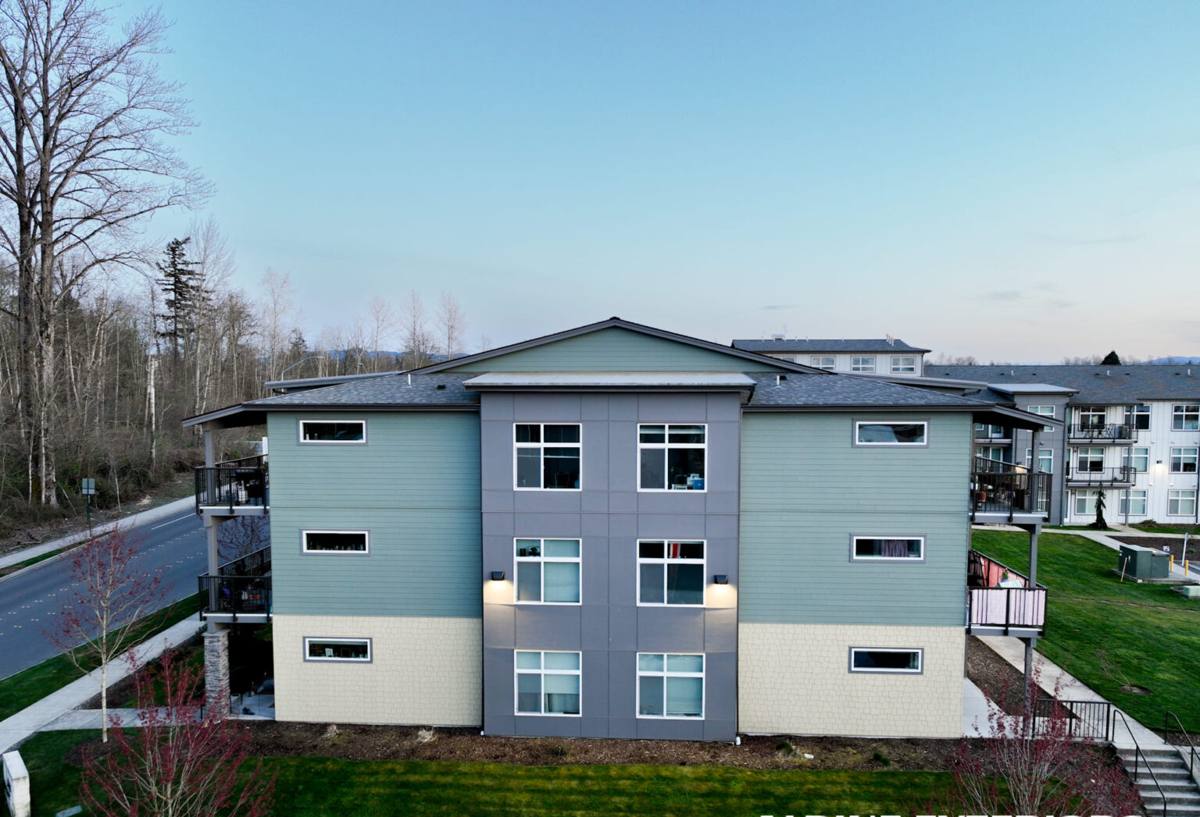
Repair or Full Replacement? How We Make the Call
We don't default to recommending a full re-side just because a homeowner calls about siding problems. Plenty of issues on Custer homes are legitimately fixable without tearing the whole wall down to the studs — a handful of cracked or missing panels after a windstorm, isolated moss staining on one shaded elevation, or a caulk joint that's failed around a single window. Those get repaired.
Full replacement becomes the right call when the damage is widespread rather than isolated, when the siding material itself is failing structurally (soft, swollen, or delaminating panels rather than just cosmetic wear), or when repeated moisture intrusion has been going on long enough that we can't be confident the sheathing underneath is still sound without opening up the wall to check. On older Custer homes, especially ones that have never had the siding replaced, it's common to find that the visible surface damage is only telling part of the story.
Questions We Actually Ask on a Custer Property
- Is the damage concentrated on one or two wall sections, or is it showing up across most of the house?
- Is the siding material itself compromised (soft, warped, delaminating) or is the problem limited to trim, caulk, and flashing details?
- How old is the current siding, and does the home have any documented replacement history?
- When we probe a damaged section, does the sheathing underneath feel sound, or is there give and softness suggesting the moisture has already spread?
What a Correct Siding Replacement Involves
Here's the sequence we actually follow on a Custer re-side, and why each step matters in this particular climate.
- On-site inspection and estimate. We walk the whole exterior, not just the area the homeowner called about, checking sun and wind exposure, shade patterns that feed moss growth, and any visible signs of trapped moisture before writing up a scope and number.
- Tear-off. Old siding comes off in full, not patched around. This is also when we remove any old trim, flashing, or house wrap that's being replaced as part of the job.
- Sheathing inspection and repair. With the wall exposed, we check the sheathing for rot, soft spots, and past water damage. Anything compromised gets cut out and replaced before anything new goes up — covering damaged sheathing with new siding just hides a problem that keeps getting worse behind the wall.
- Weather-resistive barrier. A new house wrap goes on correctly lapped, shingle-style, so water sheds down and out rather than working its way behind seams.
- Flashing at every penetration. Windows, doors, hose bibs, vents, and any other wall penetration get flashed to direct water out and away from the opening, not just caulked over. This is the detail that determines whether wind-driven rain actually stays out.
- Installation to manufacturer spec. Fastener type, placement, and spacing; clearances above grade, decks, and rooflines; and factory-cut edges used wherever possible, with field cuts sealed per spec. This is also what keeps the manufacturer's warranty intact.
- Trim, caulking, and finish detail. The parts of the job that get looked at closest — corners, window and door trim, and transitions where siding meets roofline or foundation.
- Final walkthrough. We go over the finished job with the homeowner, confirm it matches the agreed scope, and cover basic care and maintenance expectations before calling it done.
The Sheathing Question: What's Actually Under the Old Siding
This is the part of a replacement that's impossible to fully scope from a written estimate alone. On a lot of older Custer properties, decades of moss holding moisture against a shaded wall, or years of a flashing detail that was never quite right, can leave sheathing damage that isn't visible from the outside until the old siding comes off. We build a reasonable sheathing-repair allowance into the estimate based on what we can see and what's typical for the home's age and exposure, but we treat it as an estimate, not a guarantee, and we walk the homeowner through what we find and what it costs to fix before proceeding — not after the fact.
Why Full Replacement Means James Hardie, Not a Material Match
We install James Hardie fiber cement exclusively, so a full replacement on a Custer home always means a switch to Hardie regardless of what was on the walls before — vinyl, cedar, primed spruce, or an engineered wood product. That's a professional standard, not an upsell: fiber cement is dimensionally stable, non-combustible, and holds its factory-applied ColorPlus finish far longer under salt air and UV exposure than a field-painted or vinyl surface does. Hardie's HZ5 product line is specifically engineered for regions with sustained moisture and freeze-thaw cycling, which fits this part of Whatcom County closely. A full replacement is the one point in a home's life where switching material systems doesn't cost anything extra in demolition, since the old siding is already coming off entirely.
What Drives the Cost of a Full Siding Replacement
Every estimate is specific to the house, but these are the factors that consistently move the number on a Custer property:
| Factor | How It Affects the Job |
|---|---|
| Total square footage and number of stories | More wall area and harder-to-access upper stories both add material and labor time |
| Sheathing condition once old siding is off | Rot or soft spots found during tear-off add repair cost that can't be fully known until then |
| Amount of trim and detail work | Homes with more windows, corners, and roofline transitions take more labor per square foot |
| Siding profile chosen (lap vs. panel) | Different Hardie product lines and reveal widths carry different material and install costs |
| Site access and staging space | Tight lots or limited equipment access can add labor time versus an open, easy-to-stage property |
| Time of year | Scheduling during a wetter stretch of the calendar can extend timelines and require extra weather protection |
Signs a Custer Home Is Due for Full Replacement, Not a Patch
- Soft, spongy, or visibly swollen siding across multiple wall sections, not just one isolated spot
- Moss or dark staining that returns within weeks of cleaning, especially on shaded or north-facing walls
- Warping, cupping, or delamination visible across more than a small patch of the exterior
- Musty odors or staining on interior walls that back up to exterior siding, suggesting moisture has already reached the wall cavity
- Rust streaking from multiple fastener locations, a sign hardware corrosion is widespread rather than isolated
- Original siding older than 25-30 years with no documented replacement, especially on a property with heavy tree cover or shaded exposure
- Rising energy bills alongside visible drafts, which can point to a compromised weather barrier behind aging siding
What to Expect During the Project
A full re-side is a visible, active project on the property for its duration — expect a staging area for materials and a dumpster or disposal setup for the old siding, and expect the crew to be on-site through most of a typical workday. We tarp and protect landscaping near the work area, and if a stretch of driving rain moves through mid-project, exposed wall sections get weather-protected rather than left open overnight. Most single-family homes run one to two weeks from tear-off to final walkthrough, though sheathing repairs, home size, and weather can extend that. We give a realistic timeline at the estimate stage rather than a best-case number that assumes nothing goes wrong.
A Practical Checklist Before You Hire for Siding Replacement in Custer
- Get a written scope that spells out tear-off, sheathing repair contingency pricing, house wrap, flashing detail, and the specific Hardie product line and color
- Confirm current Washington contractor licensing and active liability insurance
- Ask how sheathing damage found during tear-off is priced and approved before work continues
- Ask whether the crew is manufacturer-certified for James Hardie installation, not just generally experienced with siding
- Ask what happens to your property and landscaping during tear-off and how debris and disposal are handled
- Get the payment schedule and warranty terms — both product and installation — in writing before signing
Why a Crew That Already Works Custer Matters
We're based right here in Custer, which means the crew doing your tear-off and installation isn't learning this climate on your house. Working these job sites through every season, not just when the weather cooperates, shapes real decisions on a re-side — which wall orientations on a given property stay wet longest and need extra flashing attention, how much sheathing damage is typical to expect on a home of a certain age and exposure, and which install-day shortcuts simply don't hold up out here even if they'd pass fine somewhere drier. It also means that if a warranty question or a maintenance issue comes up years down the road, it's a call to a crew that's still working in the same town, not a company that's moved on.
If your Custer home needs a full siding replacement, or you're not sure yet whether repair or replacement is the right call, we're glad to walk the property and give you a straightforward, no-pressure estimate. Reach out using the form below to get started.