 Lynden Siding
 Why Kendall Roofs Wear Differently Than Roofs Inland
Kendall sits inside the Lynden area of Whatcom County, close enough to the water that salt-laden air is a constant, low-grade factor working on every exposed surface of a home — including the roof. On its own, salt air is a slow problem. Combined with the region's long, wet fall-through-spring stretch of driving rain, and the moss season that can run eight or nine months out of the year on shaded, tree-covered lots, it adds up to a roofing environment that punishes shortcuts. A shingle roof built to a bare-minimum spec somewhere drier and sunnier simply doesn't hold up the same number of years here.
None of this means asphalt shingle roofing is a poor choice for Kendall — it's still the most practical, cost-effective roofing material for the vast majority of homes in this area. It means the installation details matter more here than they do in a mild, dry climate, and a roof that's installed correctly for this specific environment will noticeably outlast one that isn't.
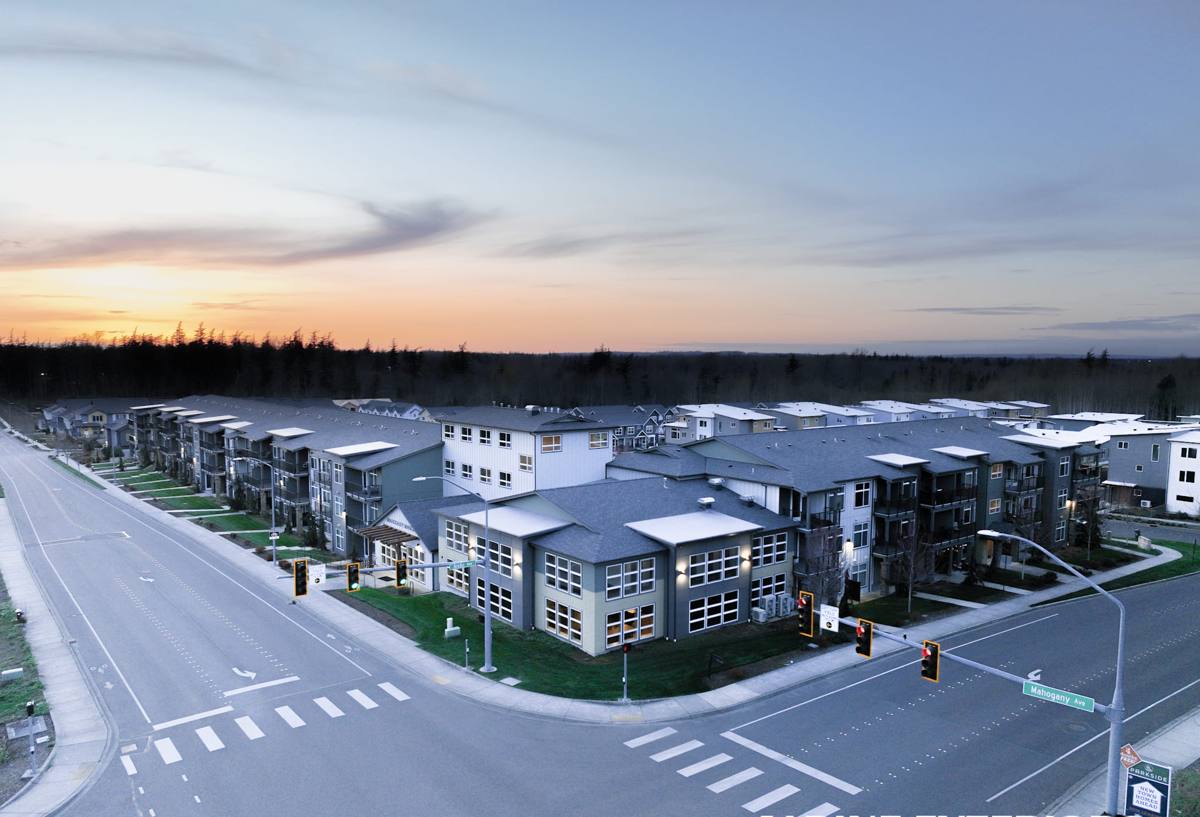
What a Correctly Installed Shingle Roof Looks Like Here
"Correct" isn't a marketing word — it's a specific list of things that either happened during your install or didn't. In a climate with this much sustained moisture exposure, we treat the following as non-negotiable, not upgrades:
Deck and Underlayment
Before a single shingle goes down, the roof deck gets inspected for soft spots, delamination, and old nail damage. Any bad sheathing gets replaced — covering over a compromised deck just hides a problem that will show up as a leak later. Ice-and-water shield membrane goes down at eaves, valleys, and around every penetration, and full synthetic underlayment covers the rest of the deck. In a market with this much annual rainfall, underlayment isn't a formality; it's the roof's actual last line of defense if wind-driven rain ever gets under a shingle tab.
Fastening and Flashing
Shingles get nailed with a six-nail pattern in the manufacturer's specified nailing zone, not the four-nail minimum that's common in calmer climates — Whatcom County gets its share of windstorms, and a roof that's only fastened to code minimum is more likely to lose tabs in a bad blow. Every penetration — plumbing vents, chimneys, skylights — gets step flashing or purpose-built flashing boots, not just a bead of sealant. Valleys are either closed-cut or open metal, done consistently rather than mixed on the same roof.
Moss, Algae, and the Long Wet Season
Moss doesn't show up because a roof is old — it shows up because a section of roof stays damp and shaded long enough for spores to take hold. North-facing slopes, sections under overhanging trees, and valleys where debris collects are the usual starting points. Once moss gets a foothold, it lifts shingle edges, holds water against the granule surface, and accelerates granule loss, which is what actually shortens a shingle's life. Algae staining — those dark streaks — is a related but separate issue caused by airborne algae rather than moss, and it's mostly cosmetic, though it does indicate a roof that stays wet longer than it should.
For a roof in a moss-prone part of Kendall, we typically recommend algae-resistant (AR) shingles, which have copper-infused granules that discourage growth, along with a zinc or copper strip installed just below the ridge on the sun-exposed side. Rain washes trace metal down the roof face and keeps new growth from establishing. It's not a permanent fix — nothing is — but it meaningfully extends the time between cleanings.
We also tell homeowners plainly: never pressure wash a shingle roof to remove moss. High-pressure water strips granules right along with the moss, which does more long-term damage than the moss itself. Moss removal should be done by hand with a soft brush or low-pressure application of an appropriate treatment, working from the ridge down, on a dry day.
Choosing the Right Shingle for Kendall's Exposure
Not every asphalt shingle product is a good match for salt air, sustained rain, and heavy moss pressure. Here's how the common options compare for this specific environment:
| Shingle Type | Typical Lifespan | How It Handles Local Conditions | Best Fit |
|---|---|---|---|
| 3-tab (standard) | 15–20 years | Lighter weight, less wind resistance; moss and algae take hold faster without AR treatment | Budget-driven projects, secondary structures |
| Architectural / laminate | 25–30 years | Heavier, better wind rating, holds up well to driving rain with proper install; available in AR versions | Most Kendall homes — the standard recommendation |
| Impact-resistant (Class 4) | 25–30+ years | Reinforced mat resists granule loss and cracking; higher upfront cost, sometimes offset by insurance discounts | Homes wanting maximum durability or insurance incentives |
For most Kendall homes, we point people toward algae-resistant architectural shingles. They cost more than 3-tab up front but the extra wind rating and moss resistance translate directly into fewer callbacks and a longer service life in this specific climate — which is the math that actually matters, not the sticker price alone.
Ventilation and Moisture Control
A shingle roof doesn't fail from the outside alone — a lot of premature roof problems in this region start with poor attic ventilation trapping moisture from the inside. Warm, humid indoor air rises into the attic, and without balanced intake (soffit vents) and exhaust (ridge vent or box vents), that moisture condenses on the underside of the deck. Over a wet Whatcom County winter, that can rot sheathing from below while the shingles above look fine.
When we replace a roof, we check the existing ventilation and correct it if it's undersized or unbalanced — usually by adding continuous ridge vent and confirming soffit intake isn't blocked by insulation. This isn't an upsell; it's part of making sure the new shingles actually reach their expected lifespan instead of failing early from moisture nobody could see.
Our Process, Start to Finish
- Walk-around and attic check — we inspect the roof surface, flashing, gutters, and attic ventilation before writing a scope, not after.
- Written estimate — a clear scope of work and pricing, no vague allowances.
- Scheduling around the weather — given how much rain this area gets, we plan tear-off days with a real weather window and keep the deck covered if conditions turn.
- Tear-off and deck repair — old material comes off, the deck gets inspected, and any soft or damaged sheathing is replaced before anything else goes down.
- Underlayment, flashing, and shingle install — done in the order and to the fastening spec described above.
- Cleanup — a magnetic sweep for nails and full debris haul-away.
- Final walkthrough — we go over the finished roof with the homeowner before calling the job done.
What Homeowners Can Do Between Roofing Projects
A shingle roof's lifespan isn't only about the install — a little seasonal attention goes a long way in a climate like this one. A simple maintenance checklist for Kendall homeowners:
- Clear gutters and valleys of leaves and debris at least twice a year — clogged valleys hold water against shingles and feed moss growth.
- Check shaded, north-facing roof sections for early moss growth each spring and fall.
- Trim back tree limbs that overhang the roof to cut down shade and let sections dry out between rains.
- Look at flashing around chimneys, skylights, and vent pipes annually for lifted edges or cracked sealant.
- Never pressure wash the roof surface — use soft-wash or hand methods only.
- After any significant windstorm, do a visual check from the ground for missing or lifted tabs.
What Actually Drives the Cost of a Kendall Roofing Project
Every roof is priced individually, but the same handful of factors move the number up or down on most jobs in this area:
| Factor | Why It Matters |
|---|---|
| Roof pitch and access | Steeper roofs and difficult access (tight lots, tall trees) take longer and require more safety equipment |
| Tear-off layers | Removing multiple existing layers costs more in labor and disposal than a single-layer tear-off |
| Deck condition | Rotted or delaminated sheathing found during tear-off has to be replaced before shingles go down |
| Shingle grade | 3-tab, standard architectural, and impact-resistant shingles carry different material costs |
| Ventilation upgrades | Adding or correcting ridge and soffit ventilation adds material and labor but protects the investment |
| Flashing and penetrations | More chimneys, skylights, and vent pipes mean more custom flashing work |
We don't publish a flat per-square price because these factors genuinely change the number from one Kendall roof to the next — a walk-around and written estimate is the only honest way to price a specific home.
Why a Crew That Already Works in Kendall Makes a Difference
A roofing crew that regularly works the Kendall area around Lynden has already seen how the local combination of salt air, driving rain, and moss plays out on real roofs — which streets tend to have heavier tree cover, which orientations hold moss longest, and how the local permitting process with the county works. That familiarity shows up in small but real ways: scheduling tear-offs around realistic weather windows instead of guessing, recommending AR shingles where moss history warrants it instead of defaulting to whatever's cheapest, and catching ventilation problems that a crew unfamiliar with the area's humidity patterns might not think to check. A roof is a long-term investment, and hiring a crew with an actual track record in this specific climate — not just general roofing experience — is one of the more practical ways to protect it.
If you're weighing a re-roof or repair for a Kendall-area home, we're happy to take a look and give you a straight, no-pressure estimate — use the form below to get started.