 Lynden Siding
 Decks Around Wiser Lake Take a Beating Nobody Talks About
Wiser Lake sits just outside Lynden, and homes around it deal with a version of Whatcom County weather that's a little more intense than what you'll find a few miles into town. Between the open water, the tree cover ringing the lake, and the low-lying ground, decks here stay damp longer than decks on a dry, sunny lot. Add in the region's driving winter rain, the salt-tinged air that moves inland off the Salish Sea, and a moss season that can run from October clear through April, and you've got a structure that's under near-constant moisture pressure for most of the year.
None of that means a deck at Wiser Lake is doomed. It means the build has to account for standing water, slow-drying shade, and organic growth in ways a deck replacement crew that mostly works dry inland subdivisions might not think through by default. That's the whole point of this page: what a deck near Wiser Lake actually needs, and what a correct replacement looks like when it's done by people who already know this stretch of Whatcom County.
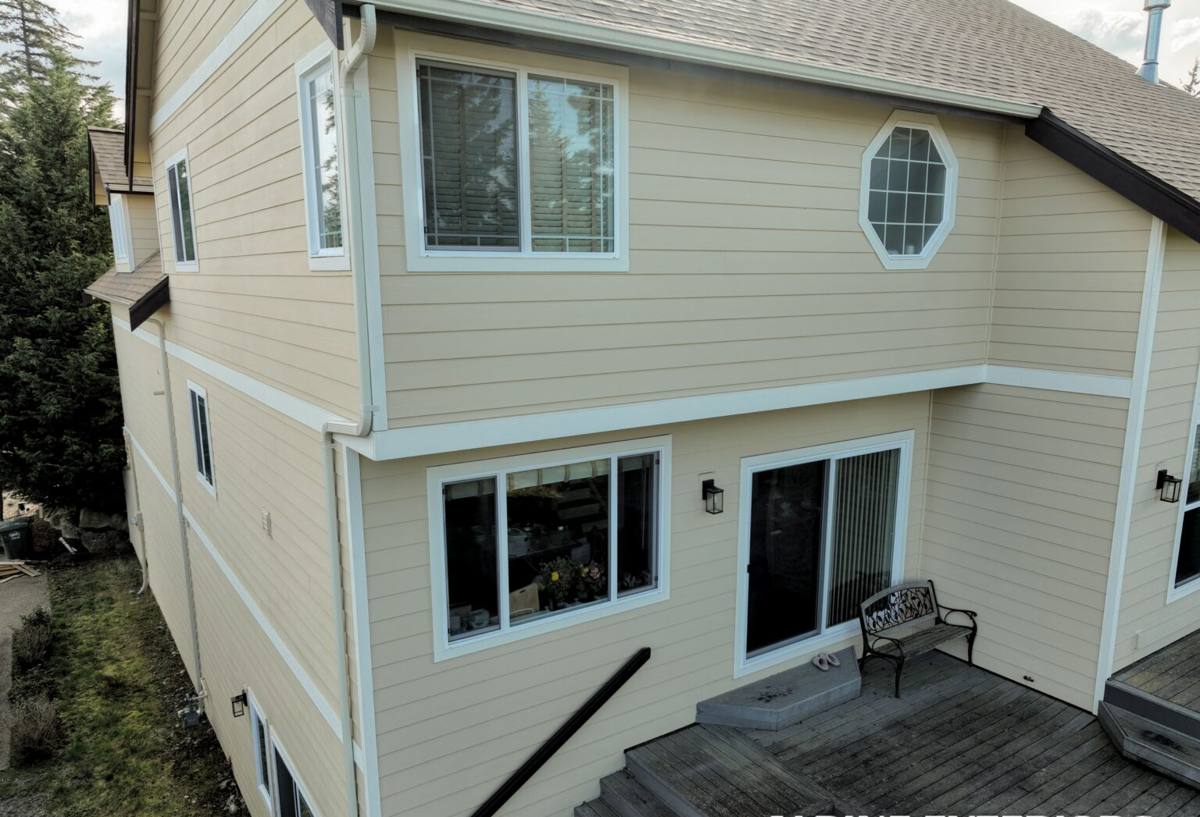
Signs a Wiser Lake Deck Needs Replacing, Not Patching
Homeowners often call us wanting a repair, and sometimes that's the right call. But there's a point where patching boards on a failing structure just delays a bigger problem — and near water, that point tends to arrive earlier than people expect. A few signs we look for on a walkthrough:
- Soft or spongy decking, especially in shaded areas or spots that stay wet after the rest of the deck has dried
- Green or black staining that keeps coming back within weeks of cleaning — a sign moisture is trapped, not just sitting on the surface
- Ledger board separation or gaps where the deck meets the house, which can let water track into the wall framing
- Rust streaking around fasteners, which usually means the hardware is failing faster than the wood around it
- Posts or footings that feel loose, wobble under weight, or sit in soil that stays saturated after storms
- Railings that flex more than they should — a safety issue as much as a cosmetic one
If you're only seeing one or two of these in one area, a repair might genuinely be enough. If you're seeing several, or the deck is old enough that the framing underneath hasn't been touched in decades, replacement is usually the more honest recommendation — and it's cheaper in the long run than repairing the same soft spot twice.
What a Correct Deck Replacement Involves Here
Starting Below the Boards, Not At Them
A deck replacement that only swaps the decking and leaves the substructure alone isn't a real replacement — it's a resurfacing. Around Wiser Lake, where ground moisture and shade slow everything down, we treat the framing, footings, and ledger connection as the parts that actually determine how long the deck lasts. New decking on tired framing just means you're back here again in a few years.
Sequencing That Respects the Site
Lake-adjacent lots often have limited equipment access, established landscaping the homeowner wants to keep, and soil that doesn't drain the way a typical inland yard does. We plan footing work, material staging, and demolition around those realities instead of forcing a standard sequence onto a non-standard lot.
Choosing Decking Material for a Damp, Moss-Prone Property
There's no single "best" decking material — there's the best material for your specific site, budget, and how much upkeep you want to sign up for. For a property that sits in shade part of the day and stays humid near the water, here's how the common options actually compare.
| Material | Moisture & Moss Behavior | Maintenance | Typical Lifespan |
|---|---|---|---|
| Pressure-treated lumber | Absorbs and releases moisture with the seasons; needs sealing to resist moss staining | Annual cleaning, resealing every 2-3 years | 15-25 years with upkeep |
| Cedar | Naturally moisture- and insect-resistant, but greys and can host moss if left unsealed | Cleaning and finish renewal every 1-2 years | 15-20 years with upkeep |
| Composite / PVC boards | Doesn't absorb water or feed moss the way wood fibers do, though surface film and pollen can still grow algae if never cleaned | Occasional washing, no sealing or staining | 25-30+ years, manufacturer-dependent |
We install all three depending on what the homeowner wants, but we're straightforward about the trade-off: composite costs more up front and saves you the sealing and staining cycle every couple of years, while wood costs less initially but only holds up if someone actually keeps up with the maintenance. On a shaded, moisture-heavy lot near the lake, that maintenance gap tends to show up faster than it would on a drier property in town.
Fasteners and Hardware Matter As Much As the Boards
We use fasteners and structural connectors rated for wet, coastal-influenced exposure — not the standard hardware that's fine on a dry inland lot but starts rusting and staining the decking within a couple of seasons near the lake. This is a small line item that gets skipped more often than it should.
The Parts Nobody Sees: Ledger, Flashing, and Footings
Most deck failures we're called out to replace didn't start with the decking boards — they started with water getting into a connection point that was never properly flashed or sealed.
Ledger Board Flashing
Where the deck attaches to the house is the single most common failure point on any deck, and it's especially unforgiving in a climate with as much sustained rain as Whatcom County gets. Correct flashing keeps water from tracking behind the siding and into the rim joist. We treat this connection as a structural and moisture-control detail, not an afterthought.
Footings in Wet, Low-Lying Ground
Soil near a lake doesn't drain like soil on higher, sandier ground. Footings need to be set to the proper frost depth and on stable soil, not just poured wherever the old posts happened to sit. If the original deck's footings were undersized or set shallow, we address that during replacement rather than building a new deck on an old, marginal foundation.
Permits and Shoreline Considerations
Properties near a lake can fall under additional review depending on setback from the water and the scope of the work. We pull the required permits and handle that coordination with Whatcom County as part of the job, so you're not left guessing whether your new deck is actually compliant.
Our Process, Start to Finish
- On-site assessment — We walk the existing deck, check the framing and footings from underneath where possible, and talk through what you actually use the space for.
- Honest scope and estimate — You get a clear breakdown of what needs full replacement versus what can be reused safely, with material options priced out.
- Permitting — We handle the Whatcom County paperwork, including any shoreline or setback review the site requires.
- Demolition and disposal — Old decking, framing, and hardware removed and hauled off the site.
- Structural rebuild — New footings, framing, ledger flashing, and hardware installed to current code, not just to match what was there before.
- Decking and railing installation — Your chosen material installed with attention to drainage and airflow underneath, which matters more here than on a dry lot.
- Final walkthrough — We go over the finished deck with you, including what maintenance it'll need and roughly when.
Keeping a Wiser Lake Deck in Good Shape After Replacement
A well-built deck near the lake still needs seasonal attention — that's just the reality of this climate. A short checklist that covers most of it:
- Sweep leaves and organic debris off the deck regularly in fall, especially in shaded corners where moss gets a foothold first
- Clean the surface at least once a year with a deck-safe cleaner to knock back algae and moss before it stains
- Check that gaps between boards stay clear so water can drain through instead of pooling
- Reseal wood decking on the schedule your material calls for — don't wait until it's visibly greying or absorbing water
- Look underneath once a year for soft framing, rust on fasteners, or standing water near the footings
- Trim back overhanging branches that keep the deck shaded and slow to dry after rain
Why a Crew That Already Works Wiser Lake Matters
Deck replacement isn't exotic work, but a crew that's only ever built on dry, open, inland lots will make different assumptions than one that's used to lake-adjacent ground, shade patterns, and moss cycles. We already know which framing details fail first in this kind of exposure, what footing depth actually holds in this soil, and which materials are worth the extra cost here versus where a simpler build is genuinely fine. That familiarity shows up in fewer surprises during the job and a deck that's built for the conditions it'll actually sit in, not generic conditions from a different part of the state.
We're a local Lynden-based crew, and Wiser Lake is inside our regular service area — not a special trip. If you're weighing repair versus replacement, or just want an honest look at what your current deck needs, we're glad to come take a look. Reach out for a free, no-pressure estimate using the form below.