 Lynden Siding
 Ferndale sits close enough to Bellingham Bay and the Strait of Georgia that salt-laden air is a daily fact of life for anything built outside, and that's before you account for the region's long, wet winters. A deck that would last two decades in a dry inland climate can start failing structurally in half that time here if it wasn't built — or isn't being replaced — with this specific environment in mind. We build and replace decks throughout Whatcom County, and Ferndale properties get a particular combination of stresses: coastal moisture, driving rain that gets pushed sideways into ledger boards and railing posts, and a moss season that can run from October through May.
This page covers what deck replacement actually involves when it's done right for a Ferndale property, what to look for when you're deciding between repair and replacement, and how our process works from first look to final walkthrough.
Why Ferndale Decks Wear Out the Way They Do
Three things drive most of the deck failures we see in this area, and they compound each other.
Salt Air
Proximity to the water means airborne salt settles on fasteners, flashing, and any exposed metal hardware. Standard galvanized screws and joist hangers corrode faster here than they would twenty miles inland. Corroded fasteners don't just look bad — they lose holding strength, which is a structural problem, not a cosmetic one.
Driving Rain
Whatcom County storms don't always fall straight down. Wind-driven rain gets pushed under railing caps, behind fascia boards, and into the joint where a deck ledger meets the house. That's the single most common point of hidden rot we find on older decks — the ledger board and the rim joist behind it, both hidden from view until the decking and skirting come off.
Moss and Prolonged Dampness
A long, mild, wet season means moss and algae get a real foothold on horizontal wood surfaces, especially on decks that sit in partial shade or under overhangs. Moss holds moisture against the wood surface for weeks at a time. On sealed or well-ventilated decks that's a maintenance nuisance. On decks with poor drainage, no gap between boards, or failing sealant, it becomes a slow rot problem that's invisible from the top until a board finally gives.
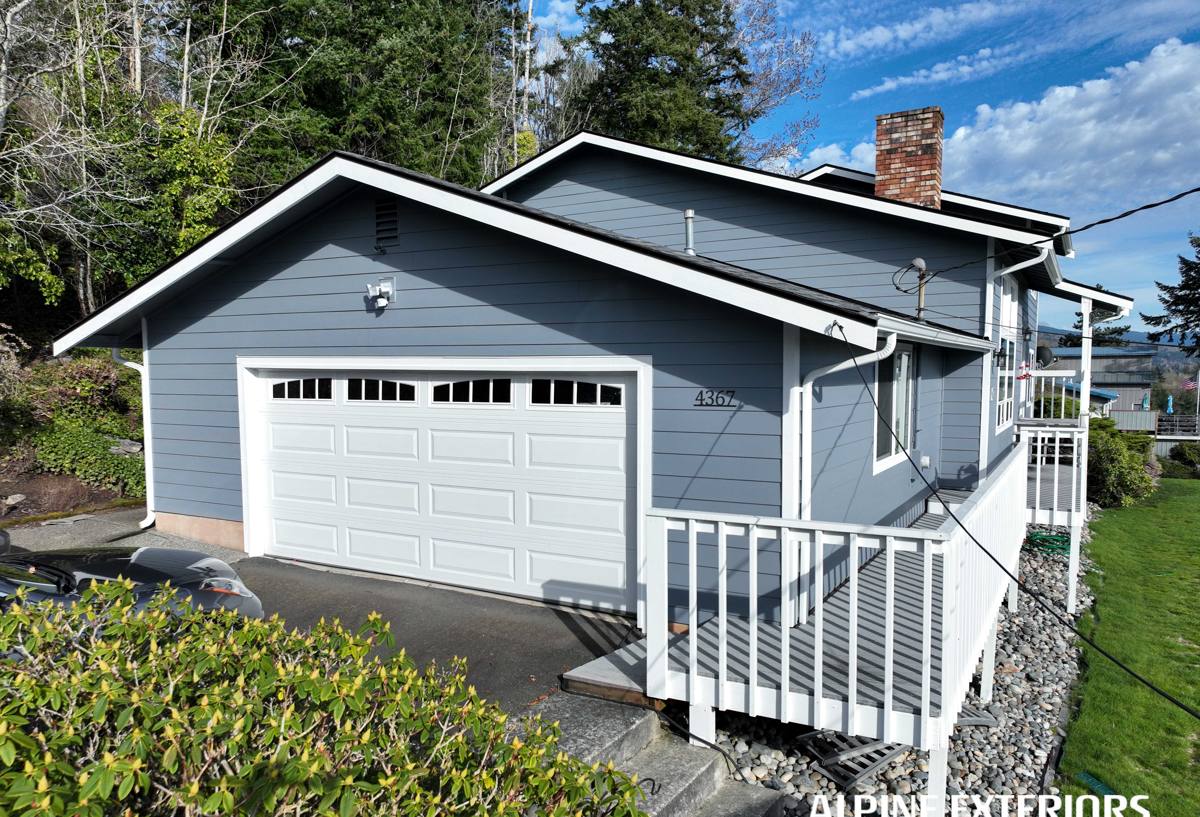
Repair or Replace? Signs to Look For
Not every tired-looking deck needs to be torn out. But there's a point past which patching becomes a waste of money because the structure underneath is compromised. Here's what tells us which side of that line a deck is on.
- Soft, spongy, or springy spots underfoot — usually rotted joists or sheathing under the decking
- A ledger board that's dark, swollen, or separating slightly from the house band board
- Railing posts that wiggle at the base, even if the railing itself looks fine
- Rust streaks below joist hangers or fastener heads
- Visible daylight or gaps where flashing should be sealing the ledger-to-house joint
- Stair stringers that flex or show splitting at the notches
- A deck more than 20-25 years old that has never had its structural framing inspected
- Persistent moss or standing water in the same spots every winter, even after cleaning
If it's just surface graying, a few popped screws, or worn boards on an otherwise sound frame, a repair or resurfacing can make sense. If the ledger or joists are compromised, replacement is the honest answer — patching decking on top of a rotted frame just hides the problem until it fails.
What a Correct Deck Replacement Actually Involves
A deck replacement isn't just swapping old boards for new ones. Done properly, it starts from the ground up.
Footings and Posts
We check whether existing footings meet current code depth and bearing requirements. In this soil and climate, undersized or shallow footings are a common shortcut on older decks, and frost heave combined with saturated soil can shift posts over time. Where footings are undersized or the concrete has cracked, we replace them rather than build on top of a questionable base.
Ledger Attachment and Flashing
This is the single most important detail on a Ferndale deck given how much wind-driven rain the ledger takes. A correctly installed ledger uses proper flashing that sheds water away from the house band board, structural lag bolts or through-bolts (not just nails or deck screws), and a clear gap or flashing detail that keeps water from wicking behind the board. We pull old ledgers apart and inspect the band board behind them — if there's rot there, that gets addressed before anything new goes back up.
Joists, Hardware, and Fasteners
Given the salt air exposure, we spec stainless or heavy-duty coated fasteners and joist hangers rather than standard galvanized hardware wherever budget allows, especially on decks closer to the water side of Ferndale. Joist spacing gets set for the decking material chosen, not just copied from the old layout.
Decking, Drainage, and Airflow
Board spacing, ventilation underneath the deck, and drainage away from the foundation all affect how fast moss and rot take hold again. We build in the airflow and spacing the material calls for rather than tightening gaps for a cleaner look at the expense of drying time.
Decking Material Options for This Climate
There's no single right answer for every household — budget, maintenance appetite, and how the deck gets used all matter. Here's how the common options actually perform under Whatcom County coastal conditions.
| Material | How It Handles Salt Air & Rain | Maintenance | Typical Lifespan Here |
|---|---|---|---|
| Pressure-treated lumber | Good if sealed and re-coated on schedule; end grain and fastener points are the weak spots | Annual inspection, re-seal every 2-3 years | 15-25 years with upkeep |
| Cedar | Naturally rot-resistant but softer; needs sealing to resist moisture cycling | Re-seal every 1-2 years, moss removal | 15-20 years with upkeep |
| Composite decking | Doesn't rot or absorb moisture into the board itself; hardware and framing still need attention | Periodic cleaning, no sealing needed | 25-30+ years (manufacturer-dependent) |
| PVC decking | Fully moisture-resistant board; best for high-exposure, shaded, or moss-prone areas | Low — occasional washing | 25-30+ years |
Composite and PVC cost more up front but remove the wood-decay variable entirely from the board surface, which matters more here than in a drier climate — the framing underneath still needs to be built and maintained correctly regardless of what decking material sits on top.
Our Deck Replacement Process
We keep this straightforward and don't skip the parts that don't show once the new decking is down.
- On-site assessment — We inspect the existing deck from the ground up: footings, ledger, joists, and the band board behind the ledger, not just the visible surface.
- Written scope and estimate — You get a clear breakdown of what's being replaced, what materials are involved, and why, before any work starts.
- Demo and structural inspection — Once the old decking is off, we can see the framing directly. If we find rot or damage beyond what was visible, we tell you before proceeding, not after.
- Framing, footings, and ledger work — Structural repairs or replacements happen first, with flashing and fastener choices matched to the coastal exposure.
- Decking, railing, and stairs — Installed to the spacing and fastening pattern the material manufacturer specifies, not shortcut for speed.
- Final walkthrough — We go over the finished deck with you, including what maintenance it needs and when.
Cost Factors Worth Understanding Upfront
Deck replacement costs vary a lot based on size, material, and how much structural work is needed underneath — we won't quote a number without seeing the deck. But these are the factors that actually move the price.
| Factor | Why It Matters |
|---|---|
| Deck size and footprint shape | Square footage plus complexity of angles, levels, or built-in features |
| Decking material chosen | Composite and PVC cost more per board than pressure-treated but require far less upkeep |
| Condition of the existing framing | Rotted joists, ledger, or footings add labor and material beyond simple resurfacing |
| Height and access | Elevated decks with stairs, multiple levels, or difficult site access take longer to build safely |
| Railing style and code requirements | Current code height and baluster spacing may differ from an older deck's original build |
| Hardware grade | Stainless or coated fasteners cost more than standard galvanized but hold up better to salt air |
Maintaining a New Deck in Ferndale's Climate
A well-built deck still needs regular attention in this environment — the goal is to keep water and moss from getting a foothold rather than dealing with damage after the fact.
- Sweep debris and standing leaves off the deck surface regularly, especially in fall
- Clean moss and algae off boards before it spreads, using a deck-safe cleaner rather than a pressure washer on wood
- Check railing posts and stair connections yearly for movement
- Reseal wood decking on the schedule appropriate to the product — don't wait until it looks gray and worn
- Keep gutters and downspouts clear so runoff isn't dumping directly onto or under the deck
- Confirm underdeck ventilation isn't blocked by stored items, planters, or debris buildup
- Have the ledger and framing inspected every few years, particularly after a hard winter
Why It Matters That We Already Work in Ferndale
A crew that mostly works dry, inland conditions can build a technically fine deck that still underperforms here, because the failure points in this climate aren't obvious unless you've seen them repeatedly — a ledger that looks fine from underneath but has been taking wind-driven rain from one direction for years, a footing that was adequate on paper but sits in ground that stays saturated longer than expected, hardware that was rated for general outdoor use but not for salt exposure this close to the water. We've replaced decks across Whatcom County, including properties with the same coastal exposure Ferndale sees, and we build accordingly rather than defaulting to a generic spec sheet. That local knowledge shows up in the details — flashing choices, fastener grade, drainage, and where we tell a homeowner a repair is genuinely fine versus where it's a temporary fix on a structural problem.
If your deck is showing its age or you're not sure whether it needs a repair or a full replacement, we're happy to take a look and give you an honest read on it. Fill out the form below for a free, no-pressure estimate.