 Lynden Siding
 Deck Repair Built for Laurel's Wet Winters and Long Moss Season
Laurel sits in one of the shadier, more tree-covered pockets of Whatcom County, and that changes how a deck ages here compared to a more open, sun-exposed lot closer to town. Between the tall conifer cover, the driving rain that comes off the Sound, and a moss season that can run six months or longer in a wet year, decks in this area take on moisture in ways a lot of homeowners don't fully see until a board gives underfoot or a railing post starts to wobble. We've repaired enough decks in and around Laurel to know the pattern: it's rarely one dramatic failure. It's small, ignored moisture problems that quietly compound over several winters.
This page covers what deck repair actually involves when it's done right, what we typically find on decks in this specific area, and how to think about repair versus replacement before you spend money on either.
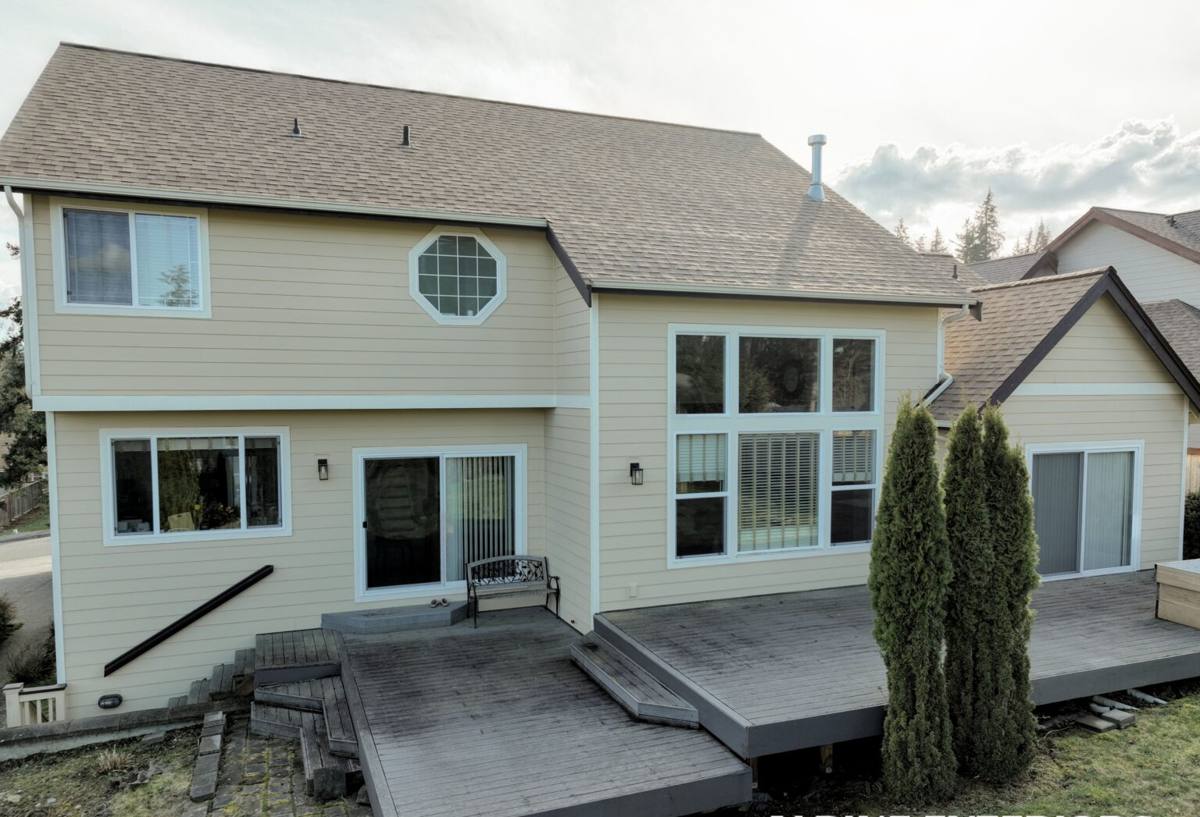
Why Laurel's Climate Is Hard on Decks
Three things work against a deck here, and they work together rather than separately.
Shade and standing moisture
Homes tucked under mature trees get less direct sun on the deck surface, which means less natural drying between rain events. Wood and even composite decking that never fully dries stays cooler and damper than it should, which is exactly the condition moss, algae, and eventually rot need to take hold.
Driving rain and wind-blown moisture
Whatcom County storms don't always fall straight down. Wind-driven rain gets pushed sideways into ledger connections, under railing caps, and into any gap where flashing or caulking has started to fail. Over time, water finds its way into places it was never supposed to reach.
A long, active moss season
Moss doesn't just look bad — it holds moisture directly against the decking surface and fasteners. A deck with a thin moss film in October can have soft, spongy boards by spring if nothing is done about it.
What a Correct Deck Repair Actually Involves
A repair that only addresses the board you can see is a repair that will need to be redone in a year or two. A correct job looks underneath the surface first.
Ledger board and house connection
This is where the deck attaches to the home, and it's the single most important structural connection on the whole structure. We check the flashing, the fastener pattern, and whether water has been tracking behind the ledger into the rim joist. This is also the area most likely to hide long-term damage because it's the hardest for a homeowner to inspect without pulling boards.
Framing: joists, beams, and posts
Surface boards can look fine while the framing underneath is soft. We probe joists and beams with an awl at connection points, checking for the give that signals rot rather than sound wood. Post bases, where wood meets concrete or a metal bracket, are a common failure point because they trap moisture against the end grain.
Fasteners and hardware
Older decks are often held together with fasteners that were never rated for ground contact or long-term wet exposure. Corroding nails and screws lose their holding strength well before they look obviously rusted, and mismatched or incorrect hardware is one of the most common issues we find on repair calls.
Decking boards and railings
Individual boards, guardrails, and stair stringers get evaluated on their own. It's common for one section of a deck — usually the shadiest or least-ventilated part — to need attention while the rest of the structure is sound.
Common Issues We Find on Laurel Decks
- Soft or spongy decking boards near the house, where drainage is worst
- Moss buildup between boards holding moisture against the wood or composite surface
- Ledger flashing that was installed incorrectly or has failed over time, allowing water behind the board
- Rot at post bases where wood sits close to grade or against concrete
- Loose or wobbly railings from posts that have lost their grip in rotted framing
- Fastener corrosion, especially on decks built before ground-contact-rated hardware was standard
- Stair stringers weakened from water running down and pooling at the base
Repair or Replace? How We Help You Decide
Not every deck problem calls for a full rebuild, and not every "just fix this one board" request is actually the cheaper long-term answer. We walk through a few honest factors with every homeowner before recommending either path.
| Factor | Favors Repair | Favors Replacement |
|---|---|---|
| Framing condition | Joists and beams probe solid, only surface boards affected | Rot found at multiple structural connections |
| Age of structure | Deck is under 15-20 years old | Original build is older and nearing typical service life |
| Extent of moisture damage | Isolated to one section or a few boards | Spread across ledger, framing, and decking together |
| Ledger and flashing condition | Flashing intact, connection sound | Flashing failed or missing, water tracked into the house rim joist |
| Homeowner goals | Budget-focused, extending current deck's life | Wanting a layout change, upgraded railing, or different decking material |
Our default recommendation is always the option that solves the actual moisture problem, not just the symptom. A repair that leaves a bad ledger flashing detail in place isn't a repair we'll stand behind.
Our Deck Repair Process
1. On-site inspection
We walk the full deck, probe suspect areas, and check the ledger connection, framing, posts, and decking surface individually. We'll show you exactly what we find, in plain terms, before anything is proposed.
2. A clear repair plan
You get a written scope that separates what's structural, what's cosmetic, and what's optional. If a section is sound, we say so — we're not looking to expand a small job into a bigger one.
3. The repair itself
Rotted framing and boards are cut back to solid wood, not just covered over. Flashing and fastener details are corrected as part of the work, not treated as an upsell. Any decking or railing sections being replaced are matched to the existing material as closely as possible unless you'd rather upgrade.
4. Cleanup and a final walkthrough
We clear debris, check that railings and stairs are solid underfoot, and walk the finished work with you before we consider the job done.
Decking Material Considerations During a Repair
When we're replacing sections rather than the whole deck, matching materials matters — both for appearance and for how the repaired area will age alongside the rest of the structure.
| Material | What to Know for a Repair |
|---|---|
| Pressure-treated wood | Most common existing material in this area; easy to match, but needs regular sealing to keep pace with moss and moisture exposure |
| Cedar | Ages well visually but is softer and more prone to rot at ground contact points if not detailed carefully |
| Composite decking | Lower maintenance surface, but repairs require matching the specific board profile and color; framing underneath still needs the same moisture attention |
We won't push a full composite conversion on a repair call just to sell a bigger job — plenty of sound wood decks just need the moisture problem addressed and the existing material maintained.
Keeping a Laurel Deck Healthy After Repair
A repair holds up much longer with a little seasonal attention, especially in a shaded, moss-prone spot.
- Sweep debris and needles off the surface regularly through fall, when buildup is heaviest
- Rinse or gently brush moss off boards before it has a chance to establish and hold moisture
- Check that gaps between boards stay clear so water can drain instead of pooling
- Re-seal or re-stain wood decking on the manufacturer's recommended cycle, not just when it looks faded
- Look at the ledger and post bases once a year for early signs of moisture intrusion
- Trim back overhanging branches where practical to let more air and light reach the deck surface
Why Hiring a Crew That Already Works Laurel Matters
A deck repair estimate written for a sunny, open lot doesn't always account for what's actually happening on a shaded Laurel property. We know which details tend to fail first in this specific microclimate — the ledger flashing, the post bases, the boards nearest the house — because we've opened up enough of them to see the pattern repeat. That means a faster, more accurate inspection and a repair plan that addresses the real cause rather than the visible symptom.
Whatcom County's mix of coastal moisture and heavy tree cover isn't something every contractor deals with regularly. Working locally means we're not guessing at how your deck will hold up through the next wet season — we're basing the plan on what we've already seen hold up, and what hasn't.
Get an Honest Look at Your Deck
If your deck has a soft spot, a wobbly railing, or a moss problem that keeps coming back, it's worth having someone look at the framing before it gets worse or more expensive to fix. We offer free, no-pressure estimates for Laurel homeowners — use the form below to get a straightforward inspection and a clear plan for what your deck actually needs.