 Lynden Siding
 Why Bellingham Decks Take a Beating
A deck in Bellingham or Lynden doesn't fail the way a deck does in a dry climate. Out here, the damage is slow and mostly hidden until it isn't. Salt-tinged air off the Sound, months of driving rain, and a moss season that can run from October through May all work on wood and fasteners at the same time, in the same places, year after year. By the time a board feels soft underfoot or a railing wobbles, the underlying framing has usually been losing strength for a while.
This is a local service page, and we mean that literally. Deck repair in Bellingham isn't a different service than deck repair anywhere else — but the failure patterns, the timing of the work, and the materials that hold up here are specific to Whatcom County's climate. A crew that only sees a handful of decks a year in this weather is guessing at things a crew that works here every week already knows.
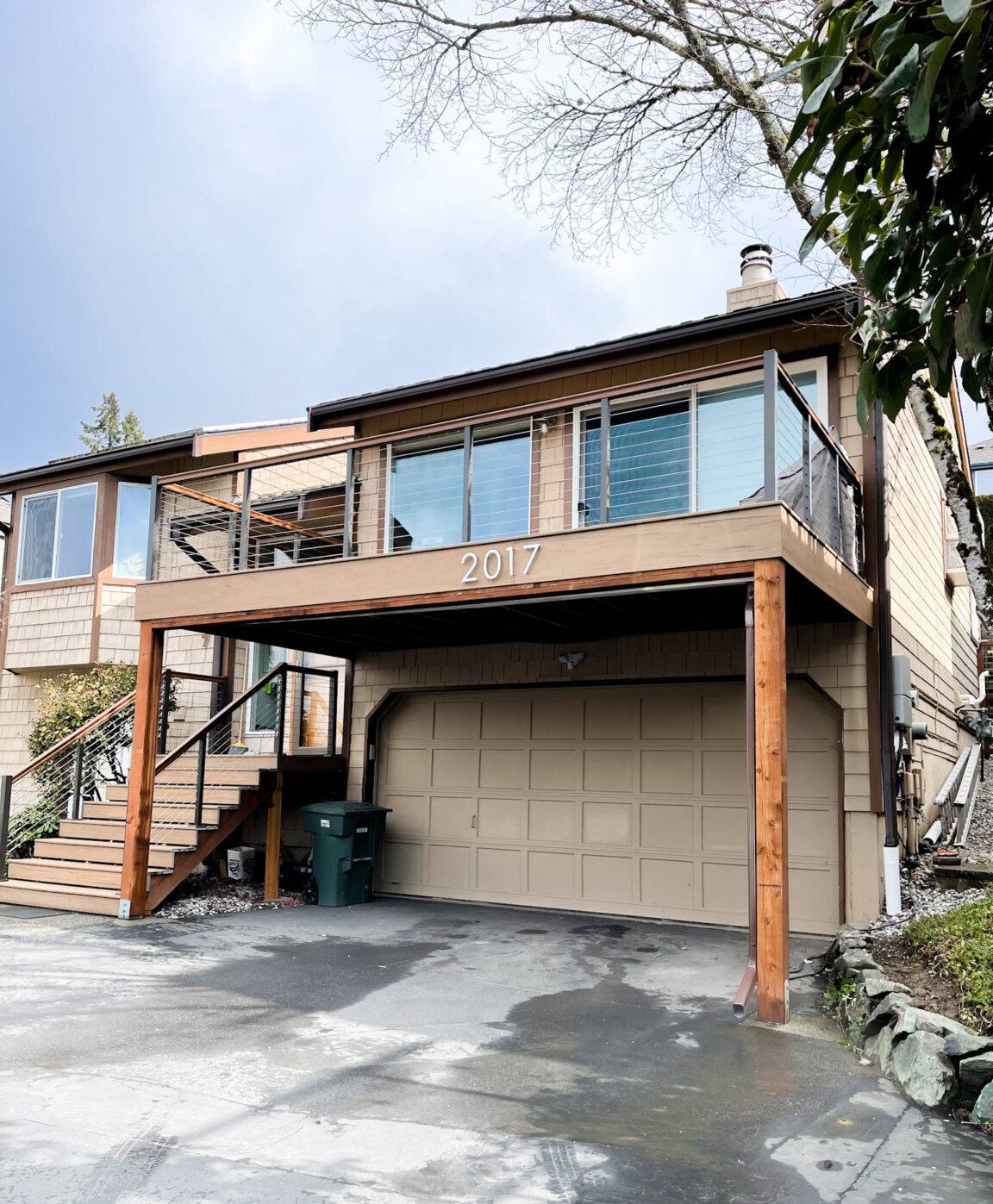
Signs Your Deck Needs Repair, Not Just Cleaning
Homeowners often assume a tired-looking deck just needs a pressure wash and a coat of stain. Sometimes that's true. Other times, the surface grime is hiding something structural. Here's how to tell the difference before you call anyone:
- Soft or spongy spots underfoot, especially near the house or along the outer edge — usually rot, not just wear
- Rust streaks running down from screws or nails, or fasteners that spin freely without biting
- Gaps or movement where the deck meets the house (the ledger board) — this is a safety issue, not cosmetic
- Railings or stair posts that flex when you lean on them
- Persistent green or black film that comes back within weeks of cleaning
- Cracked or split boards concentrated in shaded, low-airflow areas
If you're only seeing surface graying or light moss, that's maintenance. If you're seeing any of the items above, it's repair — and in Bellingham's climate, the gap between "needs repair" and "needs replacement" can close faster than people expect once moisture gets past the surface.
Common Deck Problems We Find in Bellingham and Lynden Homes
Ledger Board Rot
The ledger board — the piece that bolts the deck directly to the house — is the single most important structural connection on most decks, and it's also the one most exposed to trapped moisture. When flashing is missing or was installed wrong originally, rain gets behind the ledger and just sits there, held against the wall by the deck itself. In a climate with as much annual rainfall as Whatcom County gets, that's a slow, steady rot cycle that can go on for years before it shows on the surface.
Post Bases and Fastener Corrosion
Deck posts that sit in or near standing water, and the metal connectors and fasteners around them, take the brunt of the salt-air exposure common closer to the coast. Older galvanized hardware wasn't always rated for the corrosion this area produces, and once fasteners start rusting they lose grip strength well before they look obviously bad.
Moss, Algae, and Trapped Moisture
A long moss season means organic growth isn't a once-a-year nuisance here — it's closer to a constant, especially on shaded or north-facing decks. Moss holds moisture directly against the wood surface, which accelerates rot underneath even while the deck still looks structurally fine from a few feet away.
Loose Railings and Stair Connections
Railings take repeated wet/dry cycling and repeated hand contact, and their fasteners are often smaller and more exposed than the deck's main structural connections. They tend to loosen before other parts of the deck show problems, which makes them a useful early-warning sign if you check them.
Repair or Replace? How We Make That Call
Not every damaged deck needs to be torn out. The decision usually comes down to how much of the structure is still sound versus how much has been compromised, and where the damage sits.
| Factor | Leans Toward Repair | Leans Toward Replacement |
|---|---|---|
| Framing condition | Joists and beams solid; damage limited to decking boards | Rot or corrosion found in multiple joists or beams |
| Ledger board | Sound, properly flashed | Rotted, unflashed, or improperly attached to the house |
| Age of structure | Under roughly 15 years, built to a reasonable standard | Original construction quality unknown or clearly substandard |
| Extent of damage | Isolated boards, posts, or railing sections | Damage spread across most of the deck |
| Code compliance | Current railing height, spacing, and footings meet code | Structure predates current code and doesn't meet it |
Cost tends to track this same logic. A localized repair — a handful of boards, a rusted-out post base, a re-secured railing section — is a modest job. Extensive ledger, framing, or footing work starts to approach a meaningful fraction of full replacement cost, and at that point we'll tell you honestly if replacement is the better long-term value. We don't pad small jobs into big ones, and we don't sell replacement when repair will hold up.
What a Correct Deck Repair Involves
A repair that's done right addresses the cause of the damage, not just the symptom. Our process on a deck repair generally looks like this:
- Full structural inspection — we check framing, ledger attachment, post bases, and fasteners from underneath, not just the walking surface
- Moisture and rot mapping — probing suspect areas to find the actual extent of soft or compromised wood, since visible damage is often smaller than the real problem
- Flashing correction — if the ledger board is missing proper flashing, we fix that as part of the repair, since replacing rotted wood without fixing the water path just restarts the clock
- Framing and hardware replacement — rotted joists, posts, or corroded connectors are replaced with corrosion-resistant hardware appropriate for this climate
- Decking and railing repair — damaged boards and railing components are replaced to match, or upgraded if you want a lower-maintenance surface going forward
- Final check for drainage and airflow — because a repair that doesn't improve how water and air move around the deck will likely fail again in a similar timeframe
Materials We Use for Repairs
What we use depends on what's already there and what you want going forward. For wood decks, we match species and grade where possible and use fasteners and connectors rated for coastal exposure — standard hardware store galvanized hardware often isn't enough for the corrosion this climate produces. For composite or PVC decking, repairs are more about correct fastening and proper substructure support, since the surface material itself doesn't rot but the framing underneath still can.
If a homeowner is repairing a wood deck for the second or third time in the same problem areas, we'll usually raise the option of transitioning those specific sections to a composite or PVC board at the surface level while keeping the wood framing underneath — it's a way to cut down on recurring moss and moisture maintenance without a full rebuild. That's a trade-off decision, not something we push; solid wood decking, properly maintained, still holds up fine here.
DIY Checklist: Inspect Your Deck Before the Fall Rains
Whatcom County's wet season does the most damage to decks that go into it already compromised. A short inspection before the rain sets in can catch problems while they're still cheap to fix:
- Push on railings and stair posts — anything that flexes needs attention
- Check for gaps or dark staining where the deck meets the house
- Look underneath for sagging joists, soft wood, or rusted connectors
- Test a few boards with a screwdriver tip — wood that dents easily is likely rotted
- Clear moss and debris from between boards so water can drain instead of pooling
- Confirm downspouts and gutters aren't dumping water directly onto or under the deck
If any of these turn up something concerning, it's worth getting a second set of eyes on it before winter, not after.
Why Hire a Crew That Already Works Bellingham
Deck repair looks like a simple trade until the damage is hidden behind flashing that was never installed, or framing that was undersized to begin with. A crew that works Bellingham and Lynden regularly has already seen the recurring construction shortcuts and climate-driven failure points specific to this area — which ledger flashing details tend to fail, which post base setups trap water, which fastener grades hold up and which don't. That familiarity shows up as fewer surprises mid-job and repairs that are sized to fit the actual problem rather than guessed at.
It also matters for permitting and code questions on older decks, since requirements have changed over the years and a deck that was legal when built may not meet current railing or footing standards. A local crew knows what's likely to come up during inspection and can flag it before it becomes a surprise.
If your deck is showing any of the signs above, or you just want an honest read on whether it needs repair or replacement, we're glad to take a look. Use the form below to request a free, no-pressure estimate.